Category Archives: civil war

John Reynolds Gives Battle: Gettysburg Day One

IronBrigade10161001

Friends of Padre Steve’s World

This is another section of my text on the Battle of Gettysburg dealing with General John Reynold’s and his decision to give battle as the cavalrymen of John Buford fought a delaying action against the Confederate forces of A.P. Hill and Harry Heth. 

I hope that you enjoy.

Peace

Padre Steve+

On the night of June 30th Reynolds was awash in reports, some of them conflicting and even though he was without Meade’s course of action for the next day “concluded that Lee’s army was close by and in force.” [1] He spent the night at his headquarters “studying the military situation with Howard and keeping in touch with army headquarters.” [2] Howard noted Reynolds anxiety and “received the impression that Reynolds was depressed.” [3] After Howard’s departure Reynolds took the opportunity to get a few hours of fitful sleep before arising again at 4 a.m. on July 1st.

When morning came, Reynolds was awakened by his aide Major William Riddle with Meade’s order to “advance the First and Eleventh Corps to Gettysburg.” [4] Reynolds studied the order and though he expected no battle that morning, expecting “only moving up to be in supporting distance to Buford” [5] took the prudent and reasonable precautions that his Confederate opponents A.P. Hill and Harry Heth refused to take as they prepared to move on Gettysburg.

His troops were in fine spirits that morning even though it had been busy. After a breakfast of hardtack, pork and coffee the troops moved out. An officer of the Iron Brigade noted that the soldiers of that brigade were “all in the highest spirits” while Lieutenant Colonel Rufus Dawes of the “placed the fifes and drums at the head of the Sixth Wisconsin and ordered the colors unfurled” as the proud veterans marched forward into the sound of the raging battle to the tune of “The Campbell’s are Coming.” [6]

Though Reynolds was not expecting a fight he organized his march in a manner that ensured if one did happen that he was fully prepared. The precautionary measures that he took were those that any prudent commander having knowledge that strong enemy forces were nearby would take. Reynolds certainly took to heart the words of Napoleon who said “A General should say to himself many times a day: If the hostile army were to make its appearance in front, on my right, or on my left, what should I do?”[7]

This was a question that A.P. Hill and Harry Heth seemed not to consider on that warm and muggy July morning when Heth was committing Lee’s army to battle on his own authority. Reynolds was also about to commit the Army of the Potomac to battle, but unlike Heth who had no authority to do so, Reynolds “had at least been delegated the authority for making such a decision” [8] by his army commander George Meade. Though Meade was unaware of what was transpiring in the hills beyond Gettysburg he implicitly trusted the judgement of Reynolds, and Meade been with the advanced elements of Reynold’s wing he too “probably would have endorsed any decision he made.” [9]

Reynolds placed himself with the lead division, that of Wadsworth, and “directed Doubleday to bring up the other divisions and guns of the First Corps and had ordered Howard’s Eleventh Corps up from Emmitsburg.” [10] Reynold’s also understood the urgency of the situation and “wanted all the fighting troops to be up front, so he instructed Howard not to intermingle his supply wagons with his infantry. Similar instructions had been given to Abner Doubleday; to ensure that the First Corps wagons would wait until the Eleventh Corps foot soldiers had passed.” [11]

Instead operating in the normal fashion of rotating units on the march, Reynolds opted to save time. Since Wadsworth’s First Division was further advanced than his other First Corps divisions, Reynolds instructed it to move out first with Cutler’s brigade in the lead followed by the Iron Brigade under Brigadier General Solomon Meredith. In doing so Reynolds countermanded the order of the acting corps commander Doubleday who had ordered Wadsworth’s division to allow the other divisions of First Corps to pass his before advancing. Reynolds told Wadsworth that Doubleday’s order “was a mistake and that I should move on directly.” [12]

He went forward with Wadsworth’s division and gave Doubleday his orders for the coming engagement. Doubleday later recalled that when Reynolds arrived to discuss the situation that Reynolds:

“read to me the various dispatches he had received from Meade and Buford, and told me that he should go at once forward with the leading division – that of Wadsworth – to aid the cavalry. He then instructed me to draw in my pickets, assemble the artillery and the remainder of the corps and join him as soon as possible. Having given me these orders, he rode off at the head of the column, and I never saw him again.” [13]

Reynolds ordered Howard’s Eleventh Corps to follow First Corps and according to Doubleday directed an aid of Howard to have Howard “bring his corps forward at once and form them on Cemetery Hill as a reserve.” [14]Howard received the order and since his troops were ready to move out “no time was lost in setting them in motion.” [15] While some writers believe that Reynolds directed Oliver Howard to prepare Cemetery Hill as a fallback position [16] there is more evidence that points to Howard selecting the that commanding hill himself. [17] Regardless of which is correct the result was that both Reynolds and Howard recognized the importance of the position and took action to secure it.

Likewise Reynolds ordered Sickles’ III Corps to come up from Emmitsburg where that corps had bivouacked the previous night. [18] Sickles had heard the guns in the distance that morning and sent his senior aide, Major Henry Tremain to find Reynolds. Reynolds told Tremain “Tell General Sickles I think he had better come up” but the order left Sickles in a quandary. He recalled “he spend an anxious hour deciding what to do” [19] for he had “been ordered by Meade to hold his position at Emmitsburg” [20] and Sickles sent another rider to Reynolds and awaited the response of his wing commander instead of immediately advancing to battle on 1 July and it would not be until after 3 P.M. that he would send his lead division to Gettysburg.

According to Doubleday Reynolds’s intention was “to fight the enemy as soon as I could meet him.” [21] Reynolds rode forward with some of his staff into the town as the infantry of the First Corps and the Eleventh Corps moved advanced. As they rode through the town Reynolds and his party were met by “a fleeing, badly frightened civilian, who gasped out the news that the cavalry was in a fight.” [22] When he came to the Lutheran Seminary he came across Buford. It was a defining moment of the Civil War, a moment that shaped the battle to come. It has been recounted many times and immortalized on screen in the movie Gettysburg, a time “when the entire battle would come down to a matter of minutes getting one place to another.” [23]

As the rough and tumble Kentuckian, Buford, and Reynolds, the dashing Pennsylvanian, discussed the situation they had to know that odd that they were facing. With close to 32,000 rebels from the four divisions of Hill’s and Ewell’s corps closing in from the west and the north and with only about 18,000 men of First Corps, Eleventh Corps and Buford’s cavalry division to meet them, the odds were not in his favor, but unlike other battles that the army of the Potomac faced, this time the army and its commanders were determined not to lose the battle and not to retreat and for the first time John Reynolds “led the advance” and for the first time in the war “might have some say about fighting.” [24]

Reynolds and Buford committed their eighteen thousand men against Lee’s thirty-two thousand in a meeting engagement that develop into a battle that would decide the outcome of Lee’s invasion. Likewise it was a battle for the very existence of the Union. Abner Doubleday noted the incontestable and eternal significance of the encounter to which Buford and Reynolds were committing the Army of the Potomac on July 1st 1863:

“The two armies about to contest on the perilous ridges of Gettysburg the possession of the Northern States, and the ultimate triumph of freedom or slavery….” [25]

Even though they understood that they were outmanned and outgunned by the advancing Confederates, both Buford and Reynolds knew that this was where the battle must be waged. It was here on this spot, for the ground gave them an advantage that they would not have elsewhere; but only if they could hold on long enough for the rest of the army to arrive. As Alan Nolan wrote: “this Pennsylvania ground – was defensible, and behind it, through the town, loomed Cemetery Hill, another natural point of defense if the battle at Seminary Ridge went against the Federals.” [26]
200px-Gettysburg_Day1_1045

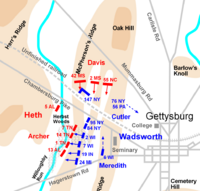
Reynolds vs. Heth July 1st

When John Buford saw Reynolds infantry advancing as the Confederates increased the pressure on his outnumbered cavalry, he remarked to a staff member “now we can hold this place.” [27] Buford was not mistaken, when Reynolds rode up to the scene of the battle on Seminary Ridge he greeted Buford, who was in the cupola of the seminary. He called out “What’s the matter John?” to which Buford replied “The devil’s to pay” before he came down to discuss the tactical situation with Reynolds. [28] Buford explained the situation noting that “I have come upon some regiments of infantry…they are in the woods…and I am unable to dislodge them.” [29]

Reynolds needed no other convincing. He asked Buford if he could hold and quickly sent off a number of messages. One officer wrote: “The Genl ordered Genl Buford to hold the enemy in check as long as possible, to keep them from getting into town and at the same time sent orders to Genl Sickles…& Genl Howard to come as fast as possible.” [30]Additionally, Reynolds sent a message to Meade stating: “The enemy are advancing in strong force. I fear they will get to the heights beyond the own before I can. I will fight them inch by inch, and if driven into the town, I will barricade the streets and hold them back as long as possible.” [31] He directed Major Weld of his staff to take it to Meade with all haste as Weld recalled: “with the greatest speed I could, no matter if I killed my horse.” [32] When Meade received the report he was concerned, but with great confidence in Reynolds’s ability he remarked “Good!…That is just like Reynolds; he will hold on to the bitter end.” [33]

After dictating his instructions and sending off his messengers, Reynolds then did what no senior Confederate commander did during the entirety of the battle, he rode back and took personal charge of the movements of his troops to hurry them forward. Unlike Heth who so badly misjudged the tactical situation, he had taken note of the ground and recognized from Buford’s reports that “the Confederates were marching only on that single road and thus would not be able to push their forces to the front any faster than Reynolds could reach the battlefield with his First Corps divisions.”[34] It was a key observation on his part which again allowed him to make appropriate decisions as to how he shaped the battle.

explorepahistory-a0h4p1-a_349

Reynolds leadership at this point might be considered reckless by the standards of our day when senior commanders control battles from miles away with the help of real time intelligence and reporting, including live video feeds, or even the standards of the Second World War. But then in the Civil War a commander in combat could only really control the actions of troops that he could see and because of the time that it took to get messages to subordinate commanders, and the real possibility that verbal orders could be badly misinterpreted in the heat of battle.

Reynolds exercised command directing infantry formations into battle and assisting his artillery battery commanders in the placement of their guns. This was far different than the way that most senior Confederate leaders, including Lee, Longstreet, Hill and Ewell directed their units during the battle of Gettysburg. But such action such action was in keeping with Reynolds’s character, especially in the defense of his home state. Reynolds’ philosophy of command regarding volunteer troops was that they “were better led than driven” [35] and as such he led from the front and Abner Doubleday noted that Reynolds was “inflamed by at seeing the devastation of his native state, was most desirous of getting at the enemy as soon as possible.” [36]

iron brigade forward

“For God’s Sake Forward!” McPherson’s Ridge

John Reynolds recognized that time was of the essence if his forces were to hold the ground west of the town selected a shortcut around the town for First Corps. Those forces were directed across the fields near the Condori farm toward the back side of Seminary Ridge, with Reynolds’ staff helping to remove fences to speed the advance. [37] It was not an easy advance as the troops had to move across the farm fields at an oblique and have to “double-quick for a mile and a quarter in the thick humidity just to reach the seminary.” [38]One member of the corps recalled “I never saw men more willing to fight than they were at Gettysburg.” [39]

Recognizing that “after two full hours of fighting, Buford’s troopers”fighting on McPherson’s Ridge, were “at the limits of their endurance,”Reynolds ordered Wadsworth’s brigades “to bolster the cavalry and oppose the rebel infantry coming at them.” [40]

As troops arrived Reynolds directed them into position. He directed the artillery of Captain James Hall’s 2nd Maine Battery to McPherson’s Ridge instructing Hall “I desire you to damage their artillery to the greatest possible extent, and to keep their fire from our infantry until they are deployed….” [41]

The leading infantry of First Corps was Major General James Wadsworth’s understrength division containing just two brigades, just over 3000 soldiers, its losses from Chancellorsville not being made good and as the result of the loss of regiments discharged because their enlistments had expired. [42] Wadsworth was not a professional soldier, but like many generals on both sides was a political general who despite his lack of military experience was a natural leader of men. Wadsworth was “a vigorous white-haired old man who had been a well-to-do gentleman farmer in New York State before the war” [43] and he “had interrupted his service in the war to run for and lose his state’s governorship the preceding fall.” [44] He ran against the anti-war, anti-administration and frequently pro-Southern Copperhead Horatio Seymour, but he did not leave the army in order return to the state to mount a personal campaign “on the ground that it did not befit a soldier.” [45]

“What the gray haired general lacked in experience and skill, he compensated with a fighting spirit.” [46] Oliver Howard of Eleventh Corps said that Wadsworth was “always generous and a natural soldier” [47]and while Wadsworth was no professional but he performed admirably on July 1st 1863. Wadsworth was beloved by his men because he demonstrated true concern and care for their living conditions and training and on that morning Wadsworth was commanding his division leading it into action with “an old Revolutionary War saber in his hand.” [48] The gallant Wadsworth would be mortally wounded ten months later leading a division of Gouverneur Warren’s Fifth Corps in the opening engagements of the Wilderness. Secretary of the Navy Gideon Welles noted in his diary when Wadsworth died that Wadsworth “should, by right and fair-dealing, have been at this moment Governor of New York…No purer or single-minded patriot than Wadsworth has shown himself in this war. He left home and comforts and wealth to fight the battles of the Union.” [49]

With their gallant commander at their head the division may not have had much in force in the way of numbers, but the units of the division were “good ones,”composed of hardened combat veterans that went into battle with an eye to victory. In the van was Brigadier General Zylander Cutler’s brigade of New Yorkers and Pennsylvanians, the “celebrated Bucktails.” [50] When they were mustered into service the soldiers of the 13th Pennsylvania had adopted a “bucktail” attached to their service caps as a distinctive insignia, a practice that spread to other regiments of the brigade and for which the brigade became known throughout the army.

Cutler had spent much of his early life in Maine working in a number of fields and businesses. He made a fortune several times and lost it, first when his mill burned down, but he rebuilt his businesses and diversified and “as a leading businessman, Cutler was elected to the Maine senate, college trusteeships and a railroad directorship, but he was financially ruined by the panic of 1866 and moved to Milwaukee to start his career over again.” [51] The tough-minded Cutler had some previous military experience fighting Indians as a member of the Maine militia and was made Colonel of the 6th Wisconsin. Cutler was described by one of his soldiers as “being as “rugged as a wolf” and was “a tenacious fighter, a trait that endeared him to the tough-minded Gibbon.” [52] After Antietam Gibbon recommended Cutler for promotion to Brigadier General and command of the Iron Brigade, but Cutler had been wounded at the bloody Battle of Brawner’s Farm and Solomon Meredith gained a promotion and command of that celebrated brigade. However, in on November 29th 1862 having recuperated from his wounds Cutler was promoted to brigadier general and received command of his Bucktails in March of 1863. The brigade saw only minor action at Chancellorsville and Gettysburg would be the fierce brigadier’s first chance since being wounded to command in combat.

This fine brigade was followed by Brigadier General Solomon Meredith’s “Iron Brigade” composed of westerners in their distinctive black “Jefferson Davis” or “Hardie” hats. The brigade had been initially commanded by Major General John Gibbon, now commanding a division in Winfield Scott Hancock’s Second Corps. Gibbon turned the brigade into one of the finest in the army. At the Battle of Turner’s Gap on South Mountain during the Antietam campaign, the brigade earned its name.

After that bloody battle George McClellan exclaimed “They must be made of Iron!” and Hooker replied, “By the Eternal, they are iron! If you had seen them at Bull Run as I did, you would know them to be iron.”[53] In the fierce battle at South Mountain the brigade had lost over a quarter of its strength, but had gained a share of immortality among the ranks of the United States Army. “The Western soldiers immediately seized on this as their title, and the reputation of the brigade and its new name were soon broadcast around Federal campfires.” [54] The regiments of the brigade rivalled many Regular Army units in effectiveness and discipline and “the black hats became their trademark.” [55] Often committed to the fiercest battles the brigade had been decimated, but now along with the Bucktails it advanced up down Seminary Ridge and up the back side of McPherson’s Ridge. A member of an artillery battery who saw the Bucktails and the Iron Brigade advance recalled:

“No one…will ever again see those two brigades of Wadsworth’s Division – Cutler’s and the Iron Brigade – file by as they did that morning. The little creek made a depression in the road, with a gentle ascent on either side, so that from our point of view the column, as it came down the slope and up the other, had the effect of huge blue billows of men topped with a spray of shining steel, and the whole spectacle was calculated to give nerve to a man who never had one before.” [56]

Reynolds directed Cutler’s Bucktails to proceed north of the Cashtown Pike and then “called the Iron Brigade into action on the south side” [57]leading the hearty Westerners himself. Reynolds directed then Wadsworth to take change of the action on the north side of the road while he looked after the left. [58] When Reynolds made that decision he made another. He ordered the 6th Wisconsin of the Iron Brigade into reserve, leaving the Iron Brigade a regiment short but giving him the advantage of having a ready reserve which “permitted them to take full advantage of their interior lines, shift their strength about, and apply it where most needed.” [59]

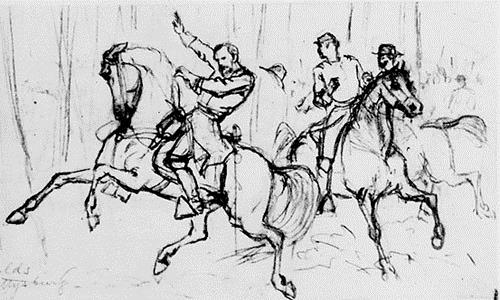
At about 10:30 the 2nd Wisconsin advanced into the woods Reynolds urged them forward: “Forward men, for God’s sake and drive those fellows out of those woods….” [60] As he looked around toward the seminary to see the progress of reinforcements, Reynolds was struck in the back of the neck by a bullet and fell dead. “Had it come a short time earlier, Reynolds’s death might have thrown the I Corps into fatal confusion.” [61] But Doubleday, who command now fell was up to the task on that sultry July morning.

MenBrooklyn

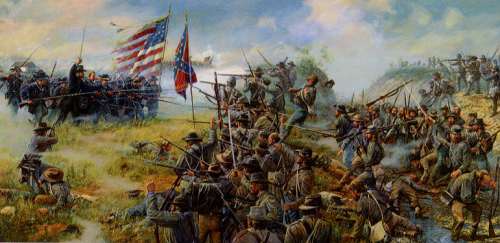
Cutler’s brigade moved north and engaged Davis’ men near the railroad cut. Here the Cutler’s line was “hardly formed when it was struck by Davis’s Confederate brigade on its front and right flank.” [62] His troops were heavily outnumbered by the advancing Confederates and Davis’ troops initially had the upper hand. In a savage fight they inflicted massive casualties on Cutler’s regiments which outnumbered and being flanked were ordered to withdraw by Wadsworth in order to save them, with the exception of one regiment, the 147th New York nicknamed the Ploughboys which “did not get the order” [63] and though isolated held its ground, “with the support of a fresh six-gun battery whose gunners simply refused to quit.” [64]This was the 2nd Maine Battery under the command of Captain James Hall. Though caught in a cross fire of Rebel artillery and assailed by skirmishers Hall’s artillerymen gamely continued the fight withdrawing by sections, “fighting a close canister range and suffering severely.” [65] The New Yorkers and Hall’s battery battled the Mississippians and the “Ploughboys fell “like autumn leaves; the air was full of lead.” [66]
railroad_cut

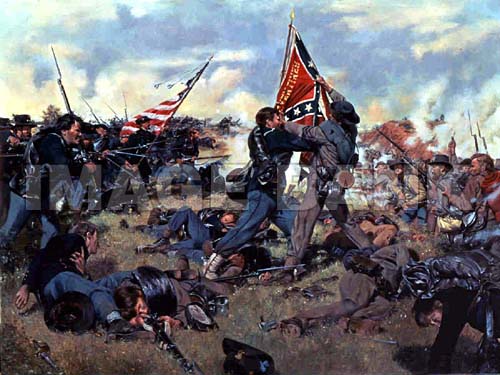
The inexperienced Davis and his green troops were buoyed by this “gratifying local success” [67] and attempted to exploit it. At this point the Confederates were fatigued by the long march and the fighting and the troops of the 2ndMississippi and 55th North Carolina “were all jumbled together without regiment or company.” [68] Davis attempted to use the unfinished railroad cut “as cover for getting on the enemy’s flank without exposure.” [69]It was a decision that Davis lived to regret. As his troops his units crowed into it, the two regiments of Cutler’s brigade south of the turnpike, the 14th Brooklyn and the 95th New York turned to meet them and were joined by the reserve regiment of the Iron Brigade, the 6nd Wisconsin under Lieutenant Colonel Rufus Dawes. Dawes ordered an immediate advance and called out to Major Edward Pye of the 95th “Let’s go for them Major.” The 6th Wisconsin and the New Yorkers took the Confederates in the flank with enfilade fire, “it was like shooting fish in a barrel.” [70] Dawes’ men slaughtered many of those unfortunate soldiers, and the battle soon became a hand to hand struggle as North Carolinians and Mississippians struggled with the Wisconsin men and New Yorkers.
fightforthecolors2la

The melee in and around the cut did not last long:

“for the Confederates were unable to resist their attackers….From the brow of the cut Dawes shouted down to the Confederates below him: “Where is the colonel of this regiment?” A Confederate field officer heard him and replied, “Who are you?” Dawes answered, “I command this regiment. Surrender or I will fire.” [71] Dawes’s men took over 200 prisoners, [72] and the battle flag of the 2ndMississippi. [73]

The charge had last but minutes yet had shattered Joe Davis’s brigade. Davis was wholly unprepared for this reverse and signaled his forces to pull back convinced that “a heavy force was…moving rapidly to our right.” [74] However, the cost to the 6th Wisconsin was great, “Dawes estimated that 160 men of the 6th fell, not including the brigade guard, whose casualties he did not know.” [75]

Brigadier General Solomon Meredith’s Iron Brigade, which had been brought forward by Doubleday hit Archer’s brigade in the front in the woods on McPherson’s Ridge. Meredith was an unmarried North Carolina Quaker who had moved to Indiana in 1840 owning little more than the clothes that he was wearing. He became a farmer but found politics more to his liking and was elected as a county sheriff and to the state legislature. When the war came he was serving as the Clerk of Wayne County. Meredith, like so many volunteer officers on both sides owed much of his advancement in the army to his political connections. In Meredith’s case this was to Meredith’s friend Governor Oliver Morton. Critics of Meredith decried his appointment as Colonel of the 19thIndiana as “a damnable swindle.” [76] Yet Meredith commanded the regiment effectively and received command of the brigade in November 1862. John Gibbon, the regular officer who initially commanded the brigade was critical of Meredith’s appointment but the soldiers appreciated their kind, six-foot seven-inch tall commander who they affectionately knew as “Long Sol.”But despite the carping of his political enemies and the opposition of Gibbon, Meredith like so many others like him who, “extroverted and ambitious by nature, accustomed to asserting themselves, these men did the best that they could, for themselves and their responsibilities, and they somehow sufficed” [77] though they had no formal military training or experience.

As the Iron Brigade advanced toward McPherson’s Ridge and engaged the enemy, Doubleday “urged the men…to hold it all hazards.” Doubleday later wrote that the troops of the brigade, “full of enthusiasm and the memory of their past achievements they said to me proudly, “If we can’t hold it, where will you find men who can?” [78]

Animated by the leadership of Reynolds and now Doubleday they “rushed to the charge, struck successive heavy blows, outflanked and turned the enemy’s right, captured General Archer and a large portion of his brigade, and pursued the remainder across Willoughby Run.”[79] The effect was dramatic as the Iron Brigade overwhelmed Archer’s brigade, whose soldiers now realized they were facing “the first team.” Members of the Iron Brigade recalling the voices of Confederate soldiers exclaiming “Here are those damned black-hat fellers again…’Taint no militia-that’s the Army of the Potomac.” [80] As they attempted to withdraw they piled up at a fence near Willoughby Run and were hit in the flank by “a Michigan regiment that had worked its way around through the woods to the south.” [81] Archer’s Confederates were unable to resist the assault of the Iron Brigade, “Some fled; others threw down their arms and trembling asked where they should go, while others simply dropped their rifles and ducked through the Union formations to the Union rear.”[82]

As for their commander, Archer the ignominy only got worse. “A muscular Irish private in the 2nd Wisconsin ran forward and seized General Archer bodily and made a prisoner of him.” [83] Coddington wrote: “It was a bad moment for the Army of Northern Virginia, and Archer gained the unenviable distinction of being the first of its general officers to be captured after Lee took command.” [84] Doubleday, who knew Archer from the old army, wrote of meeting Archer after that very angry general after had been taken prisoner and roughed up by the aforementioned Private Maloney. Doubleday greeted his old comrade saying: “Archer! I’m glad to see you,” and reached out his hand to greet his friend, to which Archer replied “Well, I’m not glad to see you by a damn sight” and refused to shake Doubleday’s hand. [85]

With the Archer’s brigade whipped and Davis’s in flight Solomon Meredith pulled back the brigade and “was reforming his lines when a shell exploded near him.” [86] Meredith’s horse was killed and fell on him and the tall general was struck in the head by a shell fragment which fractured his skull and rendered him hors d ’combat for the rest of the battle.

Contrary to the reports of many of the Confederates involved, stating that they were outnumbered, some of which have achieved nearly mythic status in some accounts of the battle, the forces engaged were relatively evenly matched. [87]Clifford Dowdey says that the Iron Brigade “heavily outnumbered the one brigade they met. Archer’s….” [88] Such accounts are usually based on the reports of Heth and other confederate commanders. Heth in his after action report wrote that “Archer, encountered heavy masses in his front, and his gallant little brigade, after being almost surrounded by overwhelming forces in front and on both flanks, was forced back….” [89]

However, such was not the case. The reason for this repulse was not that the Union forces had “overwhelming forces” or “greatly superior numbers.” Instead the Archer’s brigade and the Iron Brigade were fairly evenly matched with Archer having about 1,130 men and the Iron Brigade 1,400 while Davis outnumbered Cutler nearly two to one having between 2,400 and 2,600 men in the battle to Cutler’s 1,300. [90]

Following the repulse of Archer and Davis’s brigades by Reynolds’s First Corps, Heth withdrew his badly mauled brigades back to Herr’s Ridge in order to reform them and bring up the brigades of Brockenbrough and Pettigrew before he could resume his attack. In his next assault he would also be supported by Pender’s fresh division which was now coming up.

Coddington notes that the outcome of the opening engagement came down to leadership and “the superior tactical skills of the Northern generals,”who “created a reserve force” with one regiment of the Iron Brigade which “permitted them to take full advantage of their interior lines, shift their strength about, and apply it where most needed.” [91] It was a “calculated risk,” for it assumed that the depleted Iron Brigade could handle Archer’s brigade effectively with only four of their five assigned regiments. [92]Again, even with the loss of Reynolds it was a case of Harry Heth being out-generaled, this time by Abner Doubleday. Heth “had not exercised the close field command by means of which Doubleday had won the brief, furious action.” [93]
death of reynolds

The Death of Reynolds

Reynolds was dead, but the series of command decisions reached by Reynolds under the pressure of a meeting engagement “where neither side held an immediate advantage” [94] were critical to the army. Likewise, because he had effectively communicated his intent to his subordinate commanders they were able to continue the fight despite his death, and his superiors and successors were able to effectively continue the battle that he had initiated. When he went into action he had “barely a third of his corps available, and confronting a force of unknown size, he had put himself at the head of his troops to lead them in a vigorous attack.” [95]

Though shaken by Reynolds’ loss, the Union troops fought on at McPherson and Seminary Ridge under the command of Doubleday until the assault of Ewell on their left and the arrival of Pender’s fresh division forced them from their positions. However Reynolds’s death was a major blow for the Federal forces for it “removed from the equation the one person with enough vision and sense of purpose to manage this battle.” [96] Despite this Reynolds, by pushing forward with his troops on McPherson’s Ridge ensured that Howard was able to secure Cemetery Hill and Cemetery Ridge, without which Gettysburg would have been lost.

The contrast between Reynolds and his opponents was marked. Hill was ten miles away from the action. Heth was too far to the rear of his troops to direct their advance when they ran into trouble and did not begin to take control until after the brigades of Davis and Archer had staggered “back up the ravine, with Davis’s temporarily wrecked.” [97] In contrast to Heth, Reynolds “hurried to the front, where he was able to inspirit the defense and throw troops into the decisive zone.” [98] At every point in the brief encounter John Reynolds showed himself superior to his opponents as he directed the battle. “Dedicated to an aggressive forward defense in the vanguard of the entire Army of the Potomac, Reynolds, at the cost of his own life had blunted the Rebel thrust and bought valuable time that permitted the balance of Meade’s army to take possession of the coveted high ground….” [99]

Though he paid for his efforts with his life but his sacrifice was not in vain. Reynolds’s tactics “gave the First Corps room for maneuver in front of Gettysburg and upset General Hill’s timetable.” [100] Harry Hunt noted: “…by his promptitude and gallantry he had determined the decisive field of the war, and he opened brilliantly a battle which required three days of hard fighting to close with a victory.” [101]

Notes

[1] Ibid. Pfanz Gettysburg: The First Day p.48

[2] Ibid. Coddington The Gettysburg Campaign: A Study in Command p.261

[3] Ibid. Pfanz Gettysburg: The First Day p.48

[4] Ibid. Coddington The Gettysburg Campaign: A Study in Command, p.261

[5] Ibid. Sears, Gettysburg. p. 158

[6] Nolan, Alan T. The Iron Brigade: A Military History Indiana University Press, Bloomington IN, 1961 and 1994 pp.233-234

[7] Napoleon Bonaparte, Military Maxims of Napoleon in Roots of Strategy: The Five Greatest Military Classics of All Time edited by Phillips, Thomas R Stackpole Books Mechanicsburg PA 1985 p.410

[8] Ibid. Sears, Gettysburg. p. 165

[9] Ibid. Pfanz Gettysburg: The First Day p.49

[10] Ibid. Nolan The Iron Brigade p.233

[11] Trudeau, Noah Andre. Gettysburg: A Testing of Courage, Harper Collins Publishers, New York 2002 p.159

[12] Ibid. Trudeau, Gettysburg: A Testing of Courage p.156

[13] Doubleday, Abner Chancellorsville and Gettysburg: Campaigns of the Civil War VI Charles Scribner’s Sons, Bew York 1882 pp.70-71

[14] Ibid. Doubleday Chancellorsville and Gettysburg p.71

[15] Carpenter, John A. Sword and Olive Branch: Oliver Otis Howard Fordham University Press, New York 1999 p.51

[16] Ibid. Pfanz Gettysburg: The First Day p.76

[17] Green, A. Wilson. From Chancellorsville to Gettysburg: O. O. Howard and Eleventh Corps Leadership in The First Day at Gettysburg edited by Gallagher, Gary W. Kent State University Press, Kent Ohio 1992 p. 70

[18] Ibid. Sears, Gettysburg. p. 158

[19] Keneally, Thomas American Scoundrel: The Life of the Notorious Civil war General Dan Sickles Anchor Books, a Division of Random House, New York 2003 p.275

[20] Swanberg, W.A. Sickles the Incredible Copyright by the author 1958 and 1984 Stan Clark Military Books, Gettysburg PA 1991 p.202

[21] Ibid. Trudeau, Gettysburg: A Testing of Courage p.156

[22] Ibid. Sears, Gettysburg. p. 165

[23] Ibid. Guelzo, Gettysburg: The Last Invasion p.142

[24] Ibid. Nichols Toward Gettysburg p.200

[25] Ibid. Doubleday Chancellorsville and Gettysburg p.68

[26] Ibid. Nolan The Iron Brigade p.235

[27] Ibid. Guelzo, Gettysburg: The Last Invasion p.142

[28] Ibid. Sears, Gettysburg. p. 172

[29] Ibid. Guelzo, Gettysburg: The Last Invasion p.143

[30] Ibid. Trudeau, Gettysburg: A Testing of Courage p.172-173

[31] Schultz, Duane The Most Glorious Fourth: Vicksburg and Gettysburg July 4th 1863. W.W. Norton and Company New York and London, 2002 p.202

[32] Ibid. Trudeau, Gettysburg: A Testing of Courage p.173

[33] Huntington, Tom Searching for George Gordon Meade: The Forgotten Victor of GettysburStackpole Books, Mechanicsburg PA 2013 p.154

[34] Ibid. Sears, Gettysburg. p. 166

[35] Ibid. Coddington The Gettysburg Campaign: A Study in Command, p.277

[36] Doubleday, Abner. Chancellorsville and Gettysburg: Campaigns of the Civil War – VI Charles Scribner’s Sons, New York 1882 p.68

[37] Ibid. Pfanz Gettysburg: The First Day p.75

[38] Ibid. Guelzo, Gettysburg: The Last Invasion p.145

[39] Ibid. Wert The Sword of Lincoln p.275

[40] Foote, Shelby, The Civil War, A Narrative. Volume Two Fredericksburg to Meridian Random House, New York 1963 p.469

[41] Gottfried, Bradley The Artillery of Gettysburg Cumberland House Publishing, Nashville TN 2008 pp.28-29

[42] Ibid. Sears, Gettysburg. p. 34 Sears notes that in between Chancellorsville and Gettysburg, First Division of I Corps had lost a full brigade due to the expiration of enlistments.

[43] Catton, Bruce The Army of the Potomac: Glory Road Doubleday and Company, Garden City New York, 1952 p.270

[44] Ibid. Sears, Gettysburg. p. 34

[45] Ibid. Catton The Army of the Potomac: Glory Road p.271

[46] Ibid. Wert The Sword of Lincoln p.275

[47] Ibid. Howard Autobiography of Oliver Otis Howard 5995 of 9221

[48] Ibid. Catton The Army of the Potomac: Glory Road p.271

[49] Girardi, Robert I. The Civil War Generals: Comrades, Peers, Rivals in Their Own Words Zenith Press, MBI Publishing, Minneapolis MN 2013 p.184

[50] Ibid. Sears, Gettysburg. p. 34

[51] Ibid. Nolan The Iron Brigade p.16

[52] Tagg, Larry The Generals of Gettysburg: The Leaders of America’s Greatest Battle Da Capo Press Cambridge MA 1998 Amazon Kindle Edition p.19

[53] Hebert, Walter H. Fighting Joe Hooker University of Nebraska Press, Lincoln and London 1999. Originally published by Bobbs-Merrill, New York 1944 p.137

[54] Ibid. Nolan The Iron Brigade p.130

[55] Ibid. Nolan The Iron Brigade p. 54

[56] Ibid. Nolan The Iron Brigade p. 234

[57] Ibid. Catton The Army of the Potomac: Glory Road p.271

[58] Ibid. Pfanz Gettysburg: The First Day pp.75-76

[59] Ibid. Coddington The Gettysburg Campaign: A Study in Command, p.275

[60] Ibid. Coddington The Gettysburg Campaign: A Study in Command, p.271

[61] Longacre, Edward G. John Buford: A Military Biography Da Capo Press, Perseus Book Group, Cambridge MA p.194

[62] Ibid. Hunt, The First Day at Gettysburg in Battles and Leaders of the Civil War Volume III, The Tide Shifts p.277
[63] Ibid. Catton The Army of the Potomac: Glory Road p.272

[64] Dowdy, CliffordLee and His Men at Gettysburg: The Death of a Nation Skyhorse Publishing, New York 1986, originally published as Death of a Nation Knopf, New York 1958 p.96

[65] Ibid. Hunt, The First Day at Gettysburg in Battles and Leaders of the Civil War Volume III, The Tide Shifts p.277
[66] Ibid. Pfanz Gettysburg: The First Day p.86

[67] Ibid. Dowdy Lee and His Men at Gettysburg p.96

[68] Ibid. Pfanz Gettysburg: The First Day p.104

[69] Ibid. Dowdy Lee and His Men at Gettysburg p.96

[70] Ibid. Dowdy Lee and His Men at Gettysburg p.97

[71] Ibid. Pfanz Gettysburg: The First Day p.112

[72] Ibid. Guelzo, Gettysburg: The Last Invasion p.153

[73] Ibid. Sears, Gettysburg. p. 178

[74] Ibid. Guelzo, Gettysburg: The Last Invasion p.153

[75] Ibid. Pfanz Gettysburg: The First Day p.109

[76] Ibid. Nolan The Iron Brigade p.20

[77] Ibid. Nolan The Iron Brigade p.173

[78] Ibid. Doubleday Chancellorsville and Gettysburg p.73

[79] Hunt, Henry. The First Day at Gettysburg in Battles and Leaders of the Civil War Volume III, The Tide Shifts. Edited by Robert Underwood Johnson and Clarence Clough Buel Castle, Secaucus NJ p.277

[80] Ibid. Catton The Army of the Potomac: Glory Road p.273

[81] Foote, Shelby, The Civil War, A Narrative. Volume Two Fredericksburg to Meridian Random House, New York 1963 pp.470-471

[82] Ibid. Pfanz Gettysburg: The First Day p.99

[83] Ibid. Catton The Army of the Potomac: Glory Road p.274

[84] Ibid. Coddington The Gettysburg Campaign: A Study in Command, p.271

[85] Ibid. Foote The Civil War, A Narrative. Volume Two Fredericksburg to Meridian p.470

[86] Ibid. Tagg The Generals of Gettysburg p.17

[87] Ibid. Foote The Civil War, A Narrative. Volume Two Fredericksburg to Meridian p.469 Even Foote in his account of Archer’s brigade makes the comment “Staggered by the ambush and outnumbered as they were….”

[88] DowdyLee and His Men at Gettysburg: The Death of a Nation p.95

[89] Luvaas, Jay and Nelson Harold W editors. The U.S. Army War College Guide to the Battle of Gettysburg South Mountain Press, Carlisle PA 1986 p.9

[90] Ibid. Coddington The Gettysburg Campaign: A Study in Command, p.274

[91] Ibid. Coddington The Gettysburg Campaign: A Study in Command, p.274

[92] Ibid. Coddington The Gettysburg Campaign: A Study in Command, p.274

[93] Ibid. Dowdy Lee and His Men at Gettysburg: The Death of a Nation p.97

[94] Ibid. Sears, Gettysburg. p. 168

[95] Ibid. Coddington The Gettysburg Campaign: A Study in Command, p.277

[96] Ibid. Trudeau, Gettysburg: A Testing of Courage p.171

[97] Ibid. DowdyLee and His Men at Gettysburg: The Death of a Nation p.97

[98] Krick, Robert K. Three Confederate Disasters on Oak Ridge: Failures of Brigade Leadership on the First Day of Gettysburg in The First Day at Gettysburg edited by Gallagher, Gary W. Kent State University Press, Kent Ohio 1992 p.113

[99] Ibid. Tagg The Generals of Gettysburg p.12

[100] Ibid. Coddington The Gettysburg Campaign: A Study in Command, p.277

[101] Ibid. Hunt, The First Day at Gettysburg in Battles and Leaders of the Civil War Volume III, The Tide Shifts p.277
1 Comment

Filed under civil war, Gettysburg, History, leadership, Military, us army

A Spirit of Unbelief: Confederates Before Gettysburg

Lieutenant General A. P. Hill

Friends of Padre Steve’s World,

I’m hoping to take a few days off from writing about current events and spend a few days reposting some of my writings about the Battle of Gettysburg.

Peace,

Padre Steve+

When Robert E. Lee learned of the Army of the Potomac’s presence north of the Potomac River he ordered his widely dispersed army concentrate near Cashtown and Gettysburg. It was a complicated movement that involved at least five major operations: the shift of the bulk of Ewell’s Second Corps from its planned attack on Harrisburg, the redirection of Early’s division east from its position on the Susquehanna to the west, the movement of Hill’s Third Corps from the area around Cashtown to a position east of Gettysburg, Longstreet’s First Corps north to Chambersburg and Cashtown and the cavalry brigades of Beverly Robertson, Grumble Jones and John Imboden which were to join the army in Pennsylvania. The movement “would take at least two days – the 29th and the 30th of June – and perhaps more…the complete its concentration, especially since the rains had “made the roads very muddy,” forcing “the infantry” to march off the roads….” [1]

Lieutenant General A.P. Hill’s Third Corps that was nearest of Lee’s major units to Cashtown and Gettysburg. Major General Harry Heth’s division led the corps and arrived at Cashtown on June 29th. His division was followed by that of Major General Dorsey Pender which arrived on the 30th. Hill ordered his last division under the command of Major General Richard Anderson to remain behind at “Fayetteville until July 1, when he would join the rest at Cashtown.” [2]

Cashtown was important as a road junction and because it “was situated at one of the few gaps in the Pennsylvania Mountains” and because one of the roads emanating from it “snaked eight miles to another community called Gettysburg.” [3] However the order to concentrate the army at Cashtown presented its own problems. First was the matter of forage. There was not enough room for all the units ordered to Cashtown to have adequate areas to forage, as:

“each division would (by the standard required of nineteenth-century armies) require a circle twelve and a half miles around its encampments to forage (for water, firewood, and feed for men and horses); one single regiment could denuded an acre of woodland just for firewood every three days.” [4]

Likewise, because of the limited road network, Cashtown was becoming a choke point which as his units closed in slowed their movement and created massive traffic problems and confusion. Hill ordered Heth’s division to take the lead and advance to Cashtown on the 29th. The units of Hill’s corps had to endure heavy rains on the 29th which slowed their march and Heth halted at Cashtown knowing that the army would concentrate there while Pender’s division moved into the area his division had vacated.

Early in the morning of June 30th Harry Heth decided to undertake a foraging expedition to Gettysburg to “search the town for army supplies (shoes especially), and to return the same day.” [5] It was the first in a series of miscalculations that brought Lee’s army into a general engagement that Lee wished to avoid and it is hard to comprehend in light of Lee’s orders not to precipitate a fight.

However, the expedition had taken a toll on the soldiers, especially in terms of shoes, clothes and equipment. The “long march over the hard macadam roads of the North had played havoc with the scraggly foot coverings of Lee’s men.” [6] After muster on the morning of June 30th Heth ordered Johnston Pettigrew’s “brigade to Gettysburg in search of supplies, especially badly needed shoes, which were badly needed by his the men of his division.” Heth, for a reason he never elaborated on decided that there must be shoes in Gettysburg. Perhaps he did not know that the town had been picked clean by John Gordon’s brigade of Jubal Early’s division just a few days before, but for whatever reason he believed this to be the case.

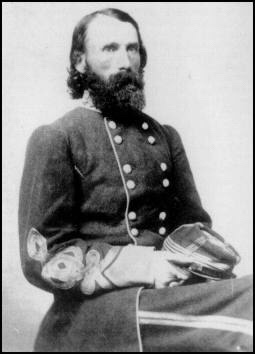
Hill’s Third Corps had been formed as part of the reorganization of the army following Stonewall Jackson’s death after the Battle of Chancellorsville. Hill had a stellar reputation as a division commander; his “Light Division” had distinguished itself on numerous occasions, especially at Antietam where its timely arrival after a hard forced march from Harper’s Ferry helped save Lee’s army late in the battle. At Chancellorsville Hill briefly succeeded Jackson until he too was wounded.

Hill was recommended for promotion to Lieutenant General and command of the new Third Corps by Lee on May 24th 1863. He was promoted over the heads of both Harvey Hill and Lafayette McLaws. The move displeased Longstreet who considered Lafayette McLaws “better qualified for the job.” Likewise there were others who felt that the command should have gone to Harvey Hill, now commanding the Department of North Carolina who’s “record was as good as that of Stonewall Jackson…but, not being a Virginian, he was not so well advertised.” [7]

Ambrose Powell Hill was slightly built and high strung. “Intense about everything” Hill was “one of the army’s intense disbelievers in slavery.” [8] Hill was an 1847 graduate of West Point and briefly served in Mexico but saw no combat. He spent some time in the Seminole wars but due to frequent bouts of ill-health he spent much of his career in garrison duty along the East Coast. Since he was prone to sickness he was assigned to the office of Coastal Survey, a Navy command from 1855 through 1861. Despite pleas from his superiors and his own opposition to secession and slavery, Hill resigned his commission just before Virginia’s secession.

At the outbreak of the war he “received his commission as colonel, and soon trained one of Johnston’s best regiments in the Valley.” [9] He commanded a brigade under Longstreet on the Peninsula and was promoted to Major General and command of the Light Division in May 1862, leading it with distinction, especially at Antietam where his march from Harper’s Ferry and timely arrival on the afternoon of September 17th saved the army of Northern Virginia from utter and complete destruction. He was plagued by health problems which had even delayed his graduation from West Point, health issues that would arise on the first day at Gettysburg.

Hill’s Third Corps was emblematic of the “makeshift nature of the reorganization of the whole army.” [10] It was composed of three divisions. His best and most experienced division was that of the recently promoted and hard fighting Major General Dorsey Pender. Pender’s division was built around four excellent brigades from Hill’s old “Light Division” one of which Pender had commanded before his promotion. Hill had strongly recommended Pender’s promotion during the reorganization, a proposal which was accepted by Lee. Pender, though a fierce fighter and excellent leader, found command of a division to be a heavy burden. He was “an intelligent, reflective man, deeply religious and guided by a strong sense of duty….” [11]

Hill’s second experienced division was that of Major General Richard Anderson. This division had been transferred from Longstreet’s First Corps during the reorganization. Longstreet resented losing the division to Hill, with who he had previously run afoul and this was yet another issue which failed to endear Hill to Longstreet. [12]

The unassuming Anderson had distinguished himself as a brigade and division commander in Longstreet’s corps, but in “an army of prima donnas, he was a self-effacing man, neither seeking praise for himself nor winning support by bestowing it on others.” [13] At Chancellorsville Anderson fought admirably and Lee wrote that Anderson was “distinguished for the promptness, courage and skill with which he and his division executed every order.” [14] With four seasoned brigades under excellent commanders it was a good addition to the corps, although the transition from Longstreet’s stolid and cautious style of command to Hill’s impetuous style introduced “another incalculable of the reshuffled army.” [15]

Major General Harry Heth’s division was the final infantry division assigned to Third Corps. The division was new and had was cobbled together from two brigades of Hill’s old Light Division and “the two new brigades that Jefferson Davis had forced on an already disrupted army organization.” [16] The organization of this division as well as its leadership would be problematic in the days to come, especially on June 30th and July 1st 1863. The hasty and makeshift organization under leaders who had not served together, many of who were new to command, as well as units which had not fought together spelled trouble.

Harry Heth, like Dorsey Pender was also newly promoted to his grade and the action at Gettysburg would be his first test in division command. Heth was a native Virginian. He came from a family that well connected both socially and politically. He had a social charm had “many friends and bound new acquaintances to him” readily. [17] Heth was a cousin of George Pickett. He was a West Point graduate and classmate of Hill. At West Point Heth had an undistinguished academic career and graduated last in the class of 1847. His career in the ante-bellum army was typical of many officers, he served “credibly in an 1855 fight with Sioux Indians” but his real claim to fame was in authoring the army’s marksmanship manual which was published in 1858. [18]

Major General Harry Heth

Heth’s career with the Confederate army serving in western Virginia was undistinguished but he was a protégé of Robert E. Lee who recommended him as a brigade commander to Jackson before Chancellorsville. Tradition states that of all his generals that Heth was the only one “whom Lee called by his first name.” [19] A.P. Hill when writing Lee about the choice of a successor for the Light Division noted that Heth was “a most excellent officer and gallant soldier” but in the coming campaign “my division under him, will not be half as effective as under Pender.” [20] Douglas Southall Freeman noted that Heth was “doomed to be one of those good soldiers…who consistently have bad luck.” [21]

Heth’s division was composed of two depleted brigades from the Light Division which had taken heavy casualties at Chancellorsville. One brigade, commanded by the hard fighting former regular army officer Brigadier General James Archer. Archer was from Maryland and a graduate of Princeton University who had given up a law practice to join the army. Described as a “little gamecock” who “had no sense of fear” [22] Archer had saved the Confederate line at Fredericksburg leading a desperate counterattack at Prospect Hill. The brigade was composed of four veteran regiments, but was now down to barely 1200 soldiers in the ranks by the time it arrived at Cashtown. However, the brigade which was recruited from Alabama and Tennessee was “well led and had a fine combat reputation.”

But the second brigade was more problematic. This was the Virginia brigade under the command of “the plodding, uninspiring Colonel John Brockenbrough.” [23] Brockenbrough was an “1850 of the Virginia Military Institute and a farmer,” who had “entered the Confederate service as Colonel of the 40th (Virginia) in May 1861.” [24] The brigade had once been considered one of the best in the army had deteriorated in quality following the wounding of its first commander Brigadier General Charles Field. Heth took command of it at Chancellorsville where both he and the brigade performed well. The brigade had taken very heavy casualties and now was reduced to under 1000 effectives. When Heth was promoted the lack of qualified officers left it under the command of its senior colonel, John Brockenbrough.[25] Lee did not consider Brockenbrough “suited for promotion” but “could be counted on to keep together a command sadly reduced in numbers.” [26]

Heth’s  third brigade came from Mississippi and North Carolina and was commanded by the “stuffy and ambitious” [27] Brigadier General Joe Davis.  Davis’s uncle was President Jefferson Davis. Davis served on his uncle’s staff for months during the early part of the war but had no combat experience, never leading as much as a company. [28] One author noted that Davis’s promotion to Brigadier General was  “as unadulterated an instance of nepotism as the record of the Confederacy offers.” [29] Davis’s subordinate commanders were no better; one of them, William Magruder was so incompetent that J.E.B. Stuart suggested that “he have his commission revoked.” In Magruder’s outfit only one of the nine field grade officers in his brigade had military training, and that was because he was a graduate of the Naval Academy, hardly fitting for service in the infantry. [30] This brigade was also a makeshift operation with two veteran regiments including the 11th Mississippi which had “gone through blood and fire together on the Peninsula through Antietam.” [31] After Antietam, these units were then paired with two new regiments and a new politically connected commander and sent to the backwater of North Carolina where they saw no action. The veteran regiments “mistrusted not only their commander, but the reliability of its yet untested units.” [32]

Brigadier General Johnston Pettigrew

Heth’s largest brigade was new to the army. Commanded by the North Carolina academic Brigadier General Johnston Pettigrew it had no combat experience. Pettigrew himself was considered a strong leader. He had been badly wounded at Seven Pines and thinking his wound mortal “he refused to permit his men to leave the ranks to carry him to the rear.” [33] He was captured but later paroled and returned to the army to command a brigade later in the year.

Hill was under the impression that Meade’s army was still miles away, having just come from meeting Lee who assured him that “the enemy are still at Middleburg,” (Maryland) “and have not yet struck their tents.” [34] With that assurance Heth decided to use June 30th to send Pettigrew’s brigade on the foraging expedition to Gettysburg. An officer present noted that Heth instructed Pettigrew “to go to Gettysburg with three of his regiments present…and a number of wagons for the purpose of collecting commissary and quartermaster stores for the use of the army.[35]

However Heth did instruct Pettigrew in no uncertain terms not to “precipitate a fight” should he encounter “organized troops” of the Army of the Potomac. [36] Heth was specific in his report that “It was told to Pettigrew that he might find in the town in possession of a home guard,…but if, contrary to expectations, he should find any organized troops capable of making resistance., or any part of the Army of the Potomac, he should not attack it.” [37]

That in mind anyone with the slightest experience in handling troops has to ask the question as to why Heth would employ “so many men on a long, tiring march, especially as without a cavalry escort he took the risk of sending them into a trap” when his “objects hardly justified” using such a large force. [38] Edwin Coddington is particularly critical of Heth in this regard.

Likewise it has to be asked why the next day in light of Lee’s standing orders not to provoke an engagement that Hill would send two divisions, two thirds of his corps on what was supposedly reconnaissance mission. Some have said that Hill would have had to move to Gettysburg on July 1st anyway due to forage needs of the army, [39] but this is not indicated in any of Hill or Heth’s reports.

As his troops neared Gettysburg Pettigrew observed the Federal cavalry of Buford’s 1st Cavalry Division as they neared the town. He received another report “indicating that drumming could be heard in the distance – which might mean infantry nearby, since generally cavalry generally used only bugles.” [40] He then prudently and in accordance with his orders not to precipitate a fight “elected to withdraw rather than risk battle with a foe of unknown size and composition.” [41] His troops began their retrograde at 11 a.m. leaving Buford’s cavalry to occupy the town at ridges. One Confederate wrote “in coming in contact with the enemy, had quite a little brush, but being under orders not to bring a general engagement fell back, followed by the enemy.” [42]

Upon returning Pettigrew told Hill and Heth that “he was sure that the force occupying Gettysburg was a part of the Army of the Potomac” but Hill and Heth discounted Pettigrew’s report. [43] “Heth did not think highly of such wariness” and “Hill agreed with Heth” [44] Hill believed that nothing was in Gettysburg “except possibly a cavalry vedette.” [45] Hill was not persuaded by Pettigrew or Pettigrew’s aide Lieutenant Louis Young who had previously served under both Hill and Pender. Young reported that the “troops that he saw were veterans rather than Home Guards.” [46] Hill reiterated to both that he did not believe “that any portion of the Army of the Potomac was up” but then according to Young Hill “expressed the hope that it was, as this was the place he wanted it to be.” [47] 

Part of the issue was related to the fact that Pettigrew, though highly intelligent, and who had been an observer of wars in Europe was not a professional soldier. Likewise, since had was new to the Army of the Northern Virginia he was an unknown to both Hill and Heth. As such they dismissed his report. In their casual dismissal of Pettigrew’s report, the West Point Graduates Hill and Heth may have manifested an often typical “distain for citizen soldiers…a professional questioning a talented amateur’s observations” [48]

Pettigrew was “aghast at Hill’s nonchalant attitude” [49] while Young was dismayed and later recalled that “a spirit of unbelief” seemed to cloud the thinking of Hill and Heth. [50] In later years Young wrote that the “blindness in part seems to have come over our commanders, who slow to believe in the presence of an organized army of the enemy, thought that there must be a mistake in the report taken back by General Pettigrew.” [51]

Since neither man believed Pettigrew’s report, Heth asked Hill “whether Hill would have any objection to taking his division to Gettysburg again to get those shoes.” Hill replied “none in the world.” [52] It was to be a fateful decision, a decision that brought about a series of events which in turn led to the greatest battle even fought on the American continent.

Lee’s biographer and apologist Douglas Southall Freeman wrote “On those four words fate hung” [53] and in “that incautious spirit, Hill launched Harry Heth’s division down the Chambersburg Pike and into battle at Gettysburg.” [54]

Notes

[1] Guelzo, Allen C. Gettysburg: The Last Invasion Vintage Books a Division of Random House, New York 2013 p.128

[2] Coddington, Edwin B. The Gettysburg Campaign, A Study in Command A Touchstone Book, Simon and Shuster New York 1968 p.194

[3] Robertson, James I. Jr. General A.P. Hill: The Story of a Confederate Warrior Random House, New York 1987

[4] Ibid. Guelzo, Gettysburg: The Last Invasion p.128

[5] Ibid. Coddington, The Gettysburg Campaign, A Study in Command p. 263

[6] Ibid. Robertson A.P. Hill p.205

[7] Foote, Shelby, The Civil War, A Narrative. Volume Two Fredericksburg to Meridian Random House, New York 1963 p.453

[8] Ibid. Dowdy, Lee and His Men at Gettysburg: The Death of a Nation p.79

[9] Ibid. Freeman Lee’s Lieutenant’s a Study in Command p.109

[10] Ibid. Dowdy, Lee and His Men at Gettysburg: The Death of a Nation p.88

[11] Ibid. Dowdy, Lee and His Men at Gettysburg: The Death of a Nation p.85

[12] Ibid. Dowdy, Lee and His Men at Gettysburg: The Death of a Nation p.86

[13] Ibid. Dowdy, Lee and His Men at Gettysburg: The Death of a Nation p.86

[14] Ibid. Freeman Lee’s Lieutenant’s a Study in Command p.512

[15] Ibid. Dowdy, Lee and His Men at Gettysburg: The Death of a Nation p.86

[16] Ibid. Dowdy, Lee and His Men at Gettysburg: The Death of a Nation p.87

[17] Ibid. Freeman Lee’s Lieutenant’s a Study in Command p.527

[18] Krick, Robert K. Three Confederate Disasters on Oak Ridge: Failures of Brigade Leadership on the First Day of Gettysburg in The First Day at Gettysburg edited by Gallagher, Gary W. Kent State University Press, Kent Ohio 1992 p.96

[19] Ibid. Krick. Three Confederate Disasters on Oak Ridge p.96

[20] Ibid. Freeman Lee’s Lieutenant’s a Study in Command p.527

[21] Ibid. Freeman Lee’s Lieutenant’s a Study in Command p.46

[22] Ibid. Guelzo, Gettysburg: The Last Invasion p.134

[23] Sears, Stephen W. Gettysburg. Houghton Mifflin Co. Boston and New York 2003 p.55

[24] Pfanz Harry W. Gettysburg: The First Day University of North Carolina Press, Chapel Hill and London 2001 p.118

[25] Ibid. Dowdy, Lee and His Men at Gettysburg: The Death of a Nation p.87

[26] Ibid. Freeman Lee’s Lieutenant’s a Study in Command p.529

[27] Ibid. Guelzo, Gettysburg: The Last Invasion p.133

[28] Ibid. Freeman Lee’s Lieutenant’s a Study in Command p.533

[29] Ibid. Krick. Three Confederate Disasters on Oak Ridge p.99

[30] Ibid. Krick. Three Confederate Disasters on Oak Ridge p.101

[31] Ibid. Guelzo, Gettysburg: The Last Invasion p.134

[32] Ibid. Guelzo, Gettysburg: The Last Invasion p.134

[33] Ibid. Freeman Lee’s Lieutenant’s a Study in Command p.136

[34] Ibid. Guelzo, Gettysburg: The Last Invasion p.131

[35] Trudeau, Noah Andre. Gettysburg: A Testing of Courage, Harper Collins Publishers, New York 2002 p.128

[36] Ibid. Sears Gettysburg p.136

[37] Ibid. Trudeau Gettysburg: A Testing of Courage, p.129

[38] Ibid. Coddington, The Gettysburg Campaign, A Study in Command p. 263

[39] Ibid. Guelzo. Gettysburg: The Last Invasion p.131 This argument does have merit based on the considerations Guelzo lists but neither Hill, Heth or Lee make any mention of that need in their post battle reports.

[40] Ibid. Trudeau Gettysburg: A Testing of Courage, p.130

[41] Gallagher, Gary. Confederate Corps Leadership on the First Day at Gettysburg: A.P. Hill and Richard S. Ewell in a Difficult Debut in The First Day at Gettysburg edited by Gallagher, Gary W. Kent State University Press, Kent Ohio 1992 p.42

[42] Ibid. Trudeau Gettysburg: A Testing of Courage, p.135

[43] Ibid. Coddington, The Gettysburg Campaign, A Study in Command pp. 263-264

[44] Foote, Shelby, The Civil War, A Narrative. Volume Two Fredericksburg to Meridian Random House, New York 1963 p.465

[45] Ibid. Pfanz Gettysburg: The First Day p.27

[46] Ibid. Gallagher, Gary. Confederate Corps Leadership on the First Day at Gettysburg p.42

[47] Ibid. Pfanz. Gettysburg: The First Day p.27

[48] Ibid. Gallagher, Gary. Confederate Corps Leadership on the First Day at Gettysburg p.42

[49] Ibid. Guelzo. Gettysburg: The Last Invasion p.131

[50] Ibid. Coddington, The Gettysburg Campaign, A Study in Command p. 264

[51] Ibid Pfanz Gettysburg: The First Day p.27

[52] Ibid. Coddington, The Gettysburg Campaign, A Study in Command p. 264

[53] Ibid. Freeman Lee’s Lieutenant’s a Study in Command p. 563

[54] Ibid. Krick. Three Confederate Disasters on Oak Ridge p.94

5 Comments

Filed under civil war, Gettysburg, History, leadership, Military, us army

Resist the Dystopian Law and Order of Trump or be Condemned by History

Friends of Padre Steve’s World,

I love the virtues of the law. When I was in seminary I had friends who asked me why I wasn’t in law school and they didn’t mean it as a compliment. In high school and college debate classes I could be assigned to debate for positions that I abhorred and destroy my opponents by using precedent, history, and even appealing to emotion. Honestly had I not felt a real call to the ministry and later the priesthood I would have become a lawyer, which is something that I occasionally think about doing but at my age I find little motivation to follow, I think that as a priest, historian, and stand-up philosopher and ethicist I can do more with the time required to become a lawyer at my age, but I digress…

The problem is that I see far too many people, especially those in power to be all in favor of being for “law and order” and harsh actions against those alleged lawbreakers while not only excusing, but wholeheartedly supporting the most lawless of Presidents and his policies, almost all of which are based on the most unconstitutional, undemocratic, and inhuman ideas seen in a Western nation since the time of Hitler. To be a “law and order” supporter of President Trump one must subscribe to racism, sexism, homophobia, paranoia, nationalism, and scorn for humanity and even the law itself. If you do not subscribe to that, if you dissent in any way you are an enemy of the President and since the President equates personal loyalty with patriotism an enemy of the state.

Let’s revisit a little bit of history.

The founding fathers of the United States were considered lawbreakers, traitors, and rebels by King George III and his government. One of my distant ancestors. Henry Dundas, Viscount Melville, then serving as Lord Advocate and a member of the House of Lords called them traitors to the Crown. He actually coined the word starvation because he recommended that the rebellious colonies be starved into submission, earning him the nickname of Starvation Dundas. But he was a law and order kind of guy.

In the years after the passage of the Fugitive Slave Act of 1850 people living in Free States could be prosecuted for harboring escaped slaves in the name of the law, even if they were in complete obedience to the laws of their home state. The fact is that at that time States rights only mattered if you were supporting the rights of Slave owners and Slave states. The Dred Scott decision showed this to be fact. To be law and order at that time one had to support white supremacy and the institution of slavery, even if you lived in a Free State. Please don’t get me started on the post-Reconstruction and Jim Crow eras, you can read all of that in my book Mine Eyes Have Seen the Glory’s: Race, Religion, Ideology, and Politics in the Civil War Era when it eventually gets published.

Let’s go now to an even more uncomfortable subject, Nazi Germany and the Holocaust. To be law and order in the Nazi State was to support its racist laws. If you defended or harbored Jews, or for that matter even criticized the policies of the Nazi State you were a criminal. That was the case in Germany as well as the counties that it conquered or occupied. If you harbored or protected Jews you were a criminal. Conversely if you turned in a Jew or informed on their protectors you were obeying the law, thus those who hid and protected people like Anne Frank were criminals while those who turned her and her family in were obeying the law.

In our day President Trump, his administration, and his supporters have turned U.S. law, international law, and basic humanity and I dare say Christian morality on their head in regards to immigrants, legal and illegal alike; racial and ethnic minorities, women, LGBTQ citizens, the free press, and political opponents. Most egregiously this is happening on the Southwestern border of the United States where thousands of children have been separated from their parents who are being prosecuted simply because they are seeking asylum and freedom in a country that they believe stands higher than the countries that they are fleeing.

The policies of the Trump administration are even worse than those of previous administrations, Republican and Democrat, none of which can be called truly humanitarian or in accordance with the principles of the Declaration of Independence. Instead our government and most Republicans have adopted the ideology of King George III and Starvation Dundas; that of the Know Nothings, that of the slaveholder, that of the Jim Crow segregationists, and worst of all that of the Nazi State.

To obey the law is to stand against the principles of the Sermon on the Mount, the Declaration of Independence, the United States Constitution, the Four Freedoms, as well as the principles laid down by the United States and its allies at Nuremberg where Supreme Court Justice Robert Jackson stated before the trials ever started:

“If certain acts of violation of treaties are crimes, they are crimes whether the United States does them or whether Germany does them, and we are not prepared to lay down a rule of criminal conduct against others which we would not be willing to have invoked against us.”

Jackson’s words do not matter to this President or his loyal followers, nor of the words of the Declaration or the Constitution.

I do not recognize my country anymore and I hope almost beyond hope that something will stop our slide into the abyss that Trump and his supporters are bringing upon us. I have to agree with Major General Henning Von Tresckow, a Plotter against Hitler who died in the aftermath of Operation Valkyrie:

“I cannot understand how people can call themselves Christian and not be furious opponents of the Hitler regime.”

He also wrote:

“We have to show the world that not all of us are like him. Otherwise, this will always be Hitler’s Germany.”

Today we simply have to change one word in either of Von Tresckow’s quotes, Trump for Hitler and we also must seriously consider the words of Von Tresckow:

“A man’s moral worth is established only at the point where he is ready to give up his life in defense of his convictions.”

All of us have to show the world that we are not Trump’s America. If we do not we will most deserving of the condemnation of God and history on the United States.

So until tomorrow,

Peace,

Padre Steve+

1 Comment

Filed under christian life, civil rights, civil war, ethics, faith, History, holocaust, laws and legislation, leadership, nazi germany, News and current events, Political Commentary

I Will Support and Defend… Reflections on 35 Years of Commissioned Service in the Age of Trump

Friends of Padre Steve’s World,

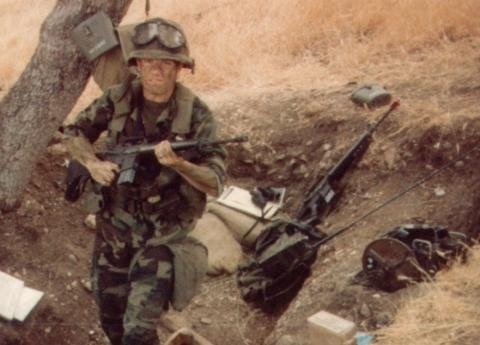
Thirty-five years ago today I swore an oath as a newly commissioned officer in the United States Army. It is an oath that along with my baptismal, confirmation, marriage, and ordination vows is the most important in my life. Almost two years before that I swore an enlistment oath on August 25th 1981.

It was a hot and smoggy summer day in Van Nuys California when drove into the parking lot of the old Armory on Van Nuys Boulevard in my 1975 yellow Chevy Monza with a black vinyl top. That night the San Francisco Giants defeated the St. Louis Cardinals by a score of 4-2 and the Baltimore Orioles defeated the Seattle Mariners 6-5 in 12 innings.  In less important news the Voyager II space craft reached its lowest orbit around Saturn.

Getting out of the car I walked into the offices of the Headquarters, 3rd Battalion 144th Field Artillery of the California Army National Guard.  I had in my sweaty hands the paperwork from the Army ROTC detachment at UCLA the “Bruin Battalion” accepting me into the program and allowing me to enlist simultaneously in the National Guard.

I was met by the Headquarters Battery Commander, Captain Jeff Kramer who after my commissioning would allow me to borrow his sword and sword belt to wear at my wedding with my Dress Blue Uniform.  Jeff finished his career as a full Colonel in the California National Guard. He took me to Major Charles Armagost the battalion S-1 who rapidly had a clerk type up my enlistment papers and administered the oath of enlistment below:

I, do solemnly swear that I will support and defend the Constitution of the United States and the State of California against all enemies, foreign and domestic; that I will bear true faith and allegiance to the same; and that I will obey the orders of the President of the United States and the Governor of California  and the orders of the officers appointed over me, according to law and regulations. So help me God.

That was the beginning of what has turned out to be a very long strange trip.

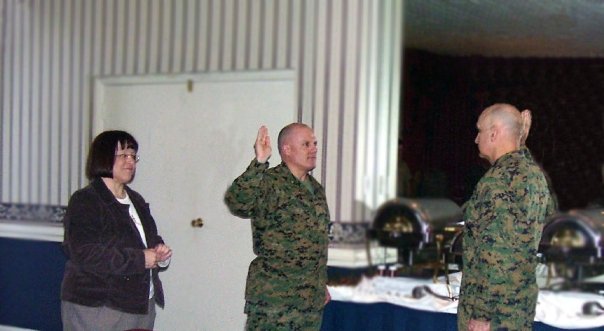
Renewing the Oath on my Promotion to Lieutenant Commander 2006

In June of 1983 I was commissioned as a Second Lieutenant and I took a different oath, an oath of office versus enlistment, I would repeat it again in February 1984 when I was promoted to First Lieutenant, March of 1987 when promoted to First Lieutenant, and in December 1995 when I was promoted to Major. I swore variations of it in both the Texas and Virginia Army National Guard as well before I commissioned as a Navy Lieutenant  February 9th 1999.  I renewed it in April 2006 upon my promotion to Lieutenant Commander and September of 2011 when I was promoted to Commander. That oath states:

I do solemnly swear that I will support and defend the Constitution of the United States against all enemies, foreign and domestic; that I will bear true faith and allegiance to the same; that I take this obligation freely, without any mental reservation or purpose of evasion; and that I will well and faithfully discharge the duties of the office on which I am about to enter. So help me God.

Since I swore the oath the first time  I have served in Europe, Asia and the Middle East, at sea and ashore in war and peace.  I have served as a Company Commander and a Staff Officer before becoming a Chaplain. I believe that even today  that there is no greater honor than to serve this country.

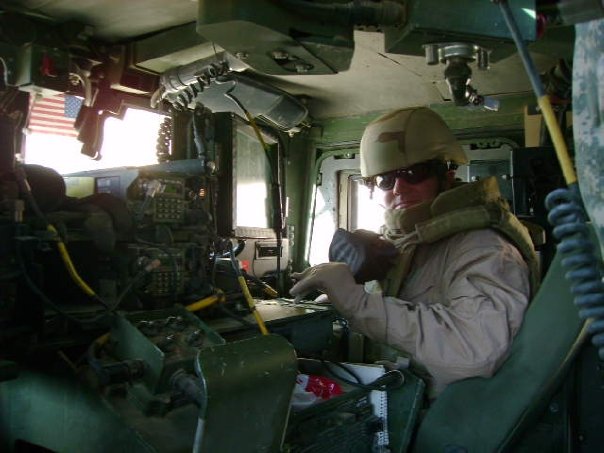
Iraq 2007

It is hard to believe that it has been 35 years.  I do take the oath of office quite seriously especially the part about defending the Constitution against all enemies foreign and domestic.  I have served 30 years I have served under six Presidents

I have not completely agreed with the actions or policies of each President and Congress that I have served. While I have deeply held political views they have never kept me from serving under administrations that I have disagreed with on major policies.  Officers may have strong political views but those must always be subordinated to our oath to support and defend the Constitution.

One of my favorite heroes of the American Civil War, General Winfield Scott Hancock said “We are serving one country and not one man.” Hancock was a states rights Democrat who remained in the Union because he did not believe that secession was legal.  He had no political friends in Washington and he served valiantly during and after the war.  When asked about his opinion on what to do when their home state of Virginia seceded from the Union by his friends and fellow officers George Pickett, Lewis Armistead and Dick Garnett before the war in California he said “I shall not fight upon the principle of state-rights, but for the Union, whole and undivided.”

This is not the case in much of the world. Many militaries swear allegiance to the ruler, the state, ruling political party or the majority religion.  The officers in many Moslem nations combine their oath with the Bya’ah which includes a personal oath to the King or Sheik and the Islamic statement of faith.

The British military swears an oath to the Queen and her successors:

“I  swear by Almighty God that I will be faithful and bear true allegiance to Her Majesty Queen Elizabeth II, her heirs and successors and that I will as in duty bound honestly and faithfully defend Her Majesty, her heirs and successors in person, crown and dignity against all enemies and will observe and obey all orders of Her Majesty, her heirs and successors and of the generals and officers set over me.”

The Red Army of the Soviet Union swore an oath to “to protect with all his strength the property of the Army and the People and to cherish unto death his People, the Soviet homeland and the government of Workers and Peasants, also to respond at the first call from the government of Workers and Peasants to defend the homeland, the USSR.”

Germany has had a rather perilous history with oaths sworn by the military.  The Imperial Army swore an oath to the Kaiser but when the Kaiser abdicated and the Weimar Constitution was ratified German Officers and Soldiers took this oath: “I swear loyalty to the Reich’s constitution and pledge, that I as a courageous soldier always want to protect the German Nation and its legal institutions, (and) be obedient to the Reichspräsident and to my superiors.”  The history of the Republic shows that many officers and soldiers, especially those that had served under the Kaiser resented this oath.

In 1933 Hitler changed the oath to this  “I swear by God this sacred oath, that I will render unconditional obedience to Adolf Hitler, the Fuhrer of the German Reich and people, Supreme Commander of the Armed Forces, and will be ready as a brave soldier to risk my life at any time for this oath.” The current German military oath states: “I swear to serve loyally the Federal Republic of Germany and to defend bravely the right and the freedom of the German people. So help me God.”

All oaths hold potential dangers but those of the United States military officer corps is perhaps the best thought out oath in the world.  The oath is to the Constitution, not a person, political party or religion.  The efficacy of the oath is based on the honor of those that swear to uphold it.  In times of national turmoil it is important for officers and enlisted personnel to ensure that remember that fact.


I pray that I will be faithful to the oath and the people that I serve in the coming years.  It is an honor to still remain in the service of this country.  I have served under six Presidents but until 2017 I never believed that I would fear the actions of the President so much that I would based on my oath to the Constitution as well as my ordination vows that I would preach against those actions in a military chapel.

But I remember that my oath is to the Constitution and not any President. I also know that as a Chaplain that I uphold the faith and values of the church that has endorsed me to remain in service as a Chaplain. My call is to serve all of those in my care, and to provide for their rights to the free exercise of religion under the First Amendment. That also extends to the rights of non-believers to not have a state religion shoved down their throats. It also means that I need to speak truth to those in power.  I also remember the words of German General Ludwig Beck who lost his life in the failed attempt on Hitler’s life on July 20th 1944:

“It is a lack of character and insight, when a soldier in high command sees his duty and mission only in the context of his military orders without realizing that the highest responsibility is to the people of his country.” 

Beck had served 35 years before Hitler came to power and initially supported him and many of his goals, but five years later he realized that it was Hitler leading the nation to war and Germany to its destruction. His words are also something that I hold on to today and because of that I will continue to speak out when the President, his appointees, and supporters speak and act against the Constitution, the law, the American people, and against the principles that the country was founded upon, most importantly the words of the Declaration of Independence which states the most revolutionary concept ever promulgated:

“We hold these truths to be self-evident, that all men are created equal, that they are endowed by their Creator with certain unalienable Rights, that among these are Life, Liberty and the pursuit of Happiness…”

It then goes on to attack the actions of the British Crown, of which many are being repeated by President Trump and his administration.

I may not be a soldier in high command, but I do realize that my highest duty is not to obey without questioning or criticizing the actions of the President when they go against the Constitution, the law, international treaties that the United States has pledged to uphold, and basic human rights. Thus the oath that I first swore to uphold 35 years ago still matters.

Padre Steve+

Leave a comment

Filed under civil rights, civil war, ethics, faith, History, laws and legislation, leadership, Military, News and current events, Political Commentary

In Today’s Struggle for Principle with Trump there Will be No Republican Stephen A. Douglas

Stephen A. Douglas

Friends of Padre Steve’s World,

As I watch President Trump’s administration attack the law, the Constitution, and violate the civil rights and human rights of citizens as well as people who have come to the United States to flee oppression and danger at home; to threaten freedom of speech and freedom of the press; to categorize political opponents inside and outside of his party as traitors; to legitimize the most repressive dictatorial regimes while attacking longstanding allies; even as he works to destroy the work of American Presidents and diplomats to build a world order that has brought great benefit to the United States and the world by defeating the Nazis, Imperial Japan, and eventually the Soviet Union. He has chosen the choice of being a rogue superpower rather than being the moderating and stabilizing force in the world that it has played since World War Two. Robert Kagan wrote in the Washington Post yesterday:

“The United States’ adversaries will do well in this world, for Trump’s America does not want war. It will accommodate powers that can harm it. It will pay them the respect they crave and grant them their spheres of interest. Those that depend on the United States, meanwhile, will be treated with disdain, pushed around and used as pawns. At times, they will be hostages to be traded for U.S. gain. The United States and the postwar liberal order protected them and helped them prosper, but it also left them vulnerable to any American leader willing to offer them up as sacrifices to appease aggressors. That is a kind of realism, too… It recognizes no moral, political or strategic commitments. It feels free to pursue objectives without regard to the effect on allies or, for that matter, the world. It has no sense of responsibility to anything beyond itself.”

The President and his administration show little regard for the Constitution and established law in this country and our treaties and agreements with other nations. He appoints men and women who had they been Germans after the Second World War would have been charged with war crimes and crimes against humanity to high office. He defends White Nationalists and Neo-Nazis. He confounds loyalty to himself with patriotism and loyalty to the country.

He uses propaganda to demonize those who seek law and justice. In any normal time a cry would arise from his own party saying “no more,” but his party does nothing, and even those leaders who occasionally speak out against his policies take no actions because they are afraid of retribution. That happened to long time conservative Congressman Mark Sanford in South Carolina this week when the President tweeted his support for his primary opponent. During the primary season White Nationalists, self-proclaimed Nazis, and other Trump supporters advocating the most extreme, unconstitutional and abhorrent positions often swept the field against conservatives who themselves would have been considered extremists just a few years ago. The GOP is on the Party if Trump and it took less than two years to become so.

Barbara Tuchman wrote in her book The March of Folly: From Troy to Vietnam something that we are observing up close and personal as President Trump and his administration flounder in a sea of make believe, a cloud cuckoo land of alternative facts, alternative truth, and alternative history:

“Wooden-headedness, the source of self-deception, is a factor that plays a remarkably large role in government. It consists in assessing a situation in terms of preconceived fixed notions while ignoring or rejecting any contrary signs. It is acting according to wish while not allowing oneself to be deflected by the facts.”

To be true, the Trump administration is not the first in history, in fact not even in our own country to ignore facts when making decisions. However, it is remarkable in its ability not only to shun facts but to make up its own narrative that depends on denying reality while impugning the character, honesty, and decency of those who present facts and truth that is verifiable. To be sure, competence and prudence are not and probably will never be marks of President Trump, his closest advisors, or his enablers in Congress. My hope is that some Republican in either the House or Senate rises up to confront the ineptitude and folly being demonstrated on a daily basis.

President James Buchanan

In some ways the incompetence and refusal to deal with reality by the Trump administration reminds me of the administration of James Buchanan during the years before the American Civil War. Buchanan’s collusion with Chief Justice Roger Taney regarding the Dred Scott decision before his inauguration stained him from the beginning and poisoned his relationship with Congress by declaring that the Congress never had the right to limit slavery as it had in the Missouri Compromise. Buchanan’s presidency is considered by most historians to be the worst in American history, incompetent, arrogant, and ineffective.

Likewise, Buchanan’s attempt to jam the Lecompton Constitution through Congress as a reward to Southern Democrats blew up in his face. The Lecompton Constitution was a gerrymandered bill which ignored the will of the vast majority of Kansas’s settlers who were anti-slavery. The work of the pro-slavery element in Kansas was so onerous that it brought Republicans and Northern Democrats together for the first time as Southern Democrats threatened secession if Kansas was not admitted as a Slave State. Ignoring warnings that supporting a measure that would open the door to slavery in all the western territories would split his party, Buchanan pushed on. His intransigence on the matter brought Democratic Senator Stephen A. Douglas of Illinois to the fore in opposing it. Nicknamed “the Little Giant,” Douglas was the odds on favorite to be the Democratic nominee for the Presidency. Douglas was not against the institution of slavery, and he was a racist, but he had no tolerance for those who would upend carefully crafted compromises to expand it through the whole country. Thus he  took his case to the floor of the Senate and to the President himself.

The Confrontation between the Senator and the President was unparalleled. Douglas recalled, “The Lecompton constitution, I told Buchannan bluntly, was a blatant fraud on the people of Kansas and the process of democracy, I warned him not to recommend acceptance of it. With his head titled forward in that bizarre habit of his, he said that he intended to endorse the constitution and send it to Congress. “If you do,” I thundered, “I’ll denounce it the moment that it is read.” His face turned red with anger. “I’ll make Lecompton a party test,” he said. “I expect every democratic Senator to support it.” I will not, sir!

Angry and offended by the confrontation of Douglas, Buchanan cut the senator off and issued his own threat to Douglas and his political career saying, “I desire you to remember that no Democrat ever yet differed from an administration of his own choice without being crushed….Beware of the fate of Tallmadge and Rives,” two senators who had gone into political oblivion after crossing Andrew Jackson.” The redoubtable Senator from Illinois was undeterred by the President’s threat and fought back, “Douglas riposted: “Mr. President, I wish to remind you that General Jackson is dead, sir.”  It was an unprecedented action by a sitting Senator, to confront a President of one’s own party and threaten to oppose him in Congress was simply not done, but now Douglas was doing it, but doing so to his President’s face, and the consequences for him, his party, and the country would be immense.

Undeterred by facts, Buchanan and Southern Democrats fought for the bill’s passage. When Buchanan’s supporters pushed for Lecompton’s approval and the admission of Kansas as a Slave State, Douglas fired back, warning “You do,” I said, “and it will lead directly to civil war!” I warned the anti-Lecompton Democrats of the North that the President intended to put the knife to the throat of every man who dared to think for himself on this question and carry out principles in good faith. “God forbid,” I said “that I ever surrender my right to differ from a President of the United States for my own choice. I am not a tool of any President!”

Under Douglas the Northern Democrats joined with Republicans for the first time to defeat the admission of Kansas as a Slave State. Douglas recalled the battle:

“After the Christmas recess, the Administration unleashed its heavy horsemen: Davis, Slidell, Hunter, Toombs, and Hammond, all southerners. They damned me as a traitor and demanded that I be stripped of my chairmanship of the Committee on Territories and read out of the Democratic party. Let the fucking bastards threaten, proscribe, and do their worst, I told my followers; it would not cause any honest man to falter. If my course divided the Democratic party, it would not be my fault. We were engaged in a great struggle for principle, I said, and we would defy the Administration to the bitter end.”

Douglas and his supporters did just that, Buchanan and his supporters were outfought and outmaneuvered by Douglas’s Democrats and their Republican allies. The bill was sent back to Kansas where in a new election the people of Kansas voted solidly against the Lecompton Constitution. In the following Congressional elections the thoroughly discredited Democrats lost their majority, their party now hopelessly divided with Southerners determined to destroy Douglas at any cost, even if it meant losing the presidency, the conflict opened the door for the election of Abraham Lincoln in 1860.

I wonder if there will be a Republican in the Congress with the courage that Stephen A. Douglas displayed in confronting the incompetent and vindictive President Buchanan during the Lecompton Crisis. Will there be a Republican with enough courage to stop the insanity of the Trump administration even if it means in the short term to divide the party and doom their political future? Honestly I doubt it as does conservative Republican political strategist Rick Wilson. Wilson wrote:

“Nothing you do matters to this Congress. No matter what damage you inflict on our economy, our alliances, trade, our stature in the world, our role as an exemplar of democratic values, our ability to serve as an honest broker in the international community, and our security, Paul Ryan and Mitch McConnell will lay supine before you.” 

But if Trump’s march of folly is to be stopped, someone in the Republican Senate or House will have to have the courage to stand up and defend the necessity of thinking for themselves, and doing what is right, sadly there is no Stephen Douglas in today’s GOP.

Have a great day.

Peace

Padre Steve+

8 Comments

Filed under civil rights, civil war, Foreign Policy, History, laws and legislation, national security, News and current events, Political Commentary

They Silently Gather ‘Round Me: Memorial Day 2018

Friends of Padre Steve’s World,

After the end of the American Civil War, the poet Walt Whitman reflected on the human cost of it. Whitman wrote,

“Ashes of soldiers South or North,

As I muse retrospective murmuring a chant in thought, The war resumes, again to my sense your shapes, And again the advance of the armies.

Noiseless as mists and vapors, From their graves in the trenches ascending, From cemeteries all through Virginia and Tennessee, From every point of the compass out of the countless graves,

In wafted clouds, in myriads large, or squads of twos or threes or single ones they come, And silently gather round me…”

Memorial Day is always an emotional time for me, especially since I returned from Iraq in 2008, and this weekend I have been thinking about the men and women that I knew who died in action or died after they left the service, some at their own hand, unable to bear the burdens and trauma that they suffered while at war. I was reminded of them again at the memorial service that we conducted for the sailors and soldiers from our base who have died in action since September 11th 2001. In an age where less than one percent of Americans serve in the military, I think that it is important that we take the time to remember and reflect on the human cost of wars.

I think of the battlefields that I have served on in Al Anbar Province, the one my father served on at An Loc, Vietnam, or the battlefields and the graveyards I have been to, Verdun, Waterloo, Arnhem, Normandy, Belleau Wood, Luxembourg, the Shuri Line, the Naktong River, Yorktown, Chancellorsville, Antietam, Stone’s River, Bentonville, Gettysburg, the wrecks of the USS Arizona and USS Utah at Pearl Harbor, and so many more, I think about the men and women who never returned. To me all of these places are hallowed ground, ground that none of us can hallow, the sacrifices of the men who gave their last full measure of devotion have done that better than we can ever do.

There are some songs that are haunting yet comfort me when I reflect on the terrible costs of war, even those wars that were truly just; and yes there are such wars, even if politicians and ideologues demanding revenge or vengeance manage to mangle the peace following them. Of course there are wars that are not just in any manner of speaking and in which the costs far outweigh any moral, legal, or ethical considerations, but I digress…

Joshua Lawrence Chamberlain, the hero of the Battle of Little Round Top at Gettysburg wrote something that talks about the importance and even the transcendence of the deeds of those who lost their lives in those wars fought and died to achieve.

In great deeds, something abides. On great fields, something stays. Forms change and pass; bodies disappear; but spirits linger, to consecrate ground for the vision-place of souls… generations that know us not and that we know not of, heart-drawn to see where and by whom great things were suffered and done for them, shall come to this deathless field, to ponder and dream; and lo! the shadow of a mighty presence shall wrap them in its bosom, and the power of the vision pass into their souls.”

Elton John wrote and performed this song, Oceans Away on the centenary of the First World War. It speaks of the men that never came home, and he related it to those who continue to go off to war today.

I hung out with the old folks

In the hope that I’d get wise

I was trying to bridge the gap

Between the great divide

Hung on every recollection

In the theater of their eyes

Picking up on this and that

In the few that still survive


Call em up

Dust em off

Let em shine

The ones who hold onto the ones, they had to leave behind

Those that flew, those that fell,

The ones that had to stay,

Beneath a little wooden cross


They bend like trees in winter

These shuffling old grey lions

Those snow-white stars still gather

Like the belt around Orion

Just to touch the faded lightning

Of their powerful design

Of a generation gathering

For maybe the last time

Oceans away

Where the green grass sways

And the cool wind blows

Across the shadow of their graves.

Shoulder to shoulder back in the day

Sleeping bones to rest in earth, oceans away

Call em up

Dust em off

Let em shine

The ones who hold onto the ones, they had to leave behind

Those that flew, those that fell,

The ones that had to stay,

Beneath a little wooden cross

Oceans away

Elton John “Oceans Away”

Likewise I find myself thinking about all those times alone overseas, and realize that many did not come home. The song I’m Dreaming of Home or Hymne des Fraternisés from the film Joyeux Noel which was adapted by French composer Philippe Rombi from the poem by Lori Barth I think speaks for all of us that served so far away, both those who returned and those who still remain oceans away.

I hear the mountain birds

The sound of rivers singing

A song I’ve often heard

It flows through me now

So clear and so loud

I stand where I am

And forever I’m dreaming of home

I feel so alone, I’m dreaming of home


It’s carried in the air

The breeze of early morning

I see the land so fair

My heart opens wide

There’s sadness inside

I stand where I am

And forever I’m dreaming of home

I feel so alone, I’m dreaming of home


This is no foreign sky

I see no foreign light

But far away am I

From some peaceful land

I’m longing to stand

A hand in my hand

… forever I’m dreaming of home

I feel so alone, I’m dreaming of home.

Please take the time to remember those who whose spirits still dream of home, oceans away.

Until tomorrow,

Peace,

Padre Steve+

1 Comment

Filed under civil war, History, Military, music, world war one

Memorial Day: “To Take Increased Devotion…”

Major General John Logan

Friends of Padre Steve’s World,

I detest the overly recreational and commercialized hype of how we Americans “celebrate” Memorial Day. It is a time for contemplation and remembering those who have given their last full measure of devotion to our country.

Abraham Lincoln summed it up well in his conclusion of the Gettysburg Address:

“It is rather for us to be here dedicated to the great task remaining before us — that from these honored dead we take increased devotion to that cause for which they gave the last full measure of devotion — that we here highly resolve that these dead shall not have died in vain — that this nation, under God, shall have a new birth of freedom — and that government of the people, by the people, for the people, shall not perish from the earth.”

As we contemplate the importance of Memorial Day and remember the men and women who gave their lives for this country it is important to remember why we do this. Memorial Day grew out of local observances following the Civil War, a war that claimed the lives of over 620,000 American Soldiers from the Union and the Confederacy. New demographic studies by historians estimate the losses at closer to 750,000. Hundreds of thousands of other people had they lives shattered by the war, killed, wounded, maimed, crippled, and shattered in mind and spirit, the country in many places devastated by war’s destruction. If we use the 620,000 number as our yardstick, it would have meant that 2.5% of the population of the country died in the war. People needed to make sense of the terrible losses that often wiped out the younger male populations of the small towns and communities from which most of these men, and a few women hailed.

To put this in perspective, if the same number of Americans were to die today in a way the total would be over seven million people, seven million my friends. The war reached into every home in some way, and sadly or perhaps thankfully we have no concept of such losses today.

In 1868, Major General John Logan who had been an excellent corps commander during the war was serving as the Commander of the nation’s first true Veterans organization, the Grand Army of the Republic which gave those veterans a place of refuge in a country that was leaving them behind and forgetting their sacrifice in the name of westward expansion and a growing economy. Let’s face it, money has almost always been more important to Americans than the troops who sacrificed their lives for the nation, but I digress…

Anyway General Logan issued this order on May 5th 1868:

HEADQUARTERS GRAND ARMY OF THE REPUBLIC, General Orders No.11, WASHINGTON, D.C., May 5, 1868

  1. The 30th day of May, 1868, is designated for the purpose of strewing with flowers or otherwise decorating the graves of comrades who died in defense of their country during the late rebellion, and whose bodies now lie in almost every city, village, and hamlet church-yard in the land. In this observance no form of ceremony is prescribed, but posts and comrades will in their own way arrange such fitting services and testimonials of respect as circumstances may permit.

We are organized, comrades, as our regulations tell us, for the purpose among other things, “of preserving and strengthening those kind and fraternal feelings which have bound together the soldiers, sailors, and marines who united to suppress the late rebellion.” What can aid more to assure this result than cherishing tenderly the memory of our heroic dead, who made their breasts a barricade between our country and its foes? Their soldier lives were the reveille of freedom to a race in chains, and their deaths the tattoo of rebellious tyranny in arms. We should guard their graves with sacred vigilance. All that the consecrated wealth and taste of the nation can add to their adornment and security is but a fitting tribute to the memory of her slain defenders. Let no wanton foot tread rudely on such hallowed grounds. Let pleasant paths invite the coming and going of reverent visitors and fond mourners. Let no vandalism of avarice or neglect, no ravages of time testify to the present or to the coming generations that we have forgotten as a people the cost of a free and undivided republic.

If our eyes grow dull, other hands slack, and other hearts cold in the solemn trust, ours shall keep it well as long as the light and warmth of life remain to us.

Let us, then, at the time appointed gather around their sacred remains and garland the passionless mounds above them with the choicest flowers of spring-time; let us raise above them the dear old flag they saved from dishonor; let us in this solemn presence renew our pledges to aid and assist those whom they have left among us a sacred charge upon a nation’s gratitude, the soldier’s and sailor’s widow and orphan.

  1. It is the purpose of the Commander-in-Chief to inaugurate this observance with the hope that it will be kept up from year to year, while a survivor of the war remains to honor the memory of his departed comrades. He earnestly desires the public press to lend its friendly aid in bringing to the notice of comrades in all parts of the country in time for simultaneous compliance therewith.

III. Department commanders will use efforts to make this order effective.

By order of

JOHN A. LOGAN, Commander-in-Chief

N.P. CHIPMAN, Adjutant General

Official: WM. T. COLLINS, A.A.G.

General Logan’s order is remarkable in its frankness and the understanding of the war in the immediate context of its conclusion. In 1868 the day would be observed at 183 cemeteries in 27 States and the following year over 300 cemeteries. Michigan was the first state to make the day a holiday and by 1890 all states in the North had made it so. In the South there were similar observances but the meaning attributed to the events and the sacrifices of the Soldiers of both sides was interpreted quite differently. In the North the Veterans overwhelmingly saw themselves as the saviors of the Union and the liberators of the Slaves. In South it was about the sacrifices of Confederate soldiers in what became known as the “Lost Cause.” But in both regions and all states, the surviving Soldiers, family members and communities honored their dead.

Oliver Wendell Holmes Jr.

In 1884 Oliver Wendell Holmes Jr. and Frederick Douglass both spoke about the meaning of the sacrifice made by so many.

Holmes, a veteran of the war who had been wounded at Antietam ended his Decoration Day 1884 speech:

“But grief is not the end of all…Our dead brothers still live for us, and bid us think of life, not death, — of life to which in their youth they lent the passion and glory of the spring. As I listen, the great chorus of life and joy begins again, and amid the awful orchestra of seen and unseen powers and destinies of good and evil our trumpets sound once more a note of daring, hope, and will.”

Frederick Douglass

Douglass, the former slave and abolitionist who lobbied Lincoln for emancipation and to give Blacks the chance to serve their country had two of his sons serve in the war spoke these wars:

“Dark and sad will be the hour to this nation when it forgets to pay grateful homage to its greatest benefactors. The offering we bring to-day is due alike to the patriot soldiers dead and their noble comrades who still live; for, whether living or dead, whether in time or eternity, the loyal soldiers who imperiled all for country and freedom are one and inseparable.”

It is important for the country not to forget those who served and the cost of those who have given the last full measure of devotion to duty and those who still carry the scars of war on their bodies and in their minds and spirits. I am one of the latter and I have known too many of the former.  Maybe that is why am so distrustful of those who advocate for war but have no skin in the game.

An Alsatian-German Soldier named Guy Sajer wrote in his book The Forgotten Soldier: 

“Too many people learn about war with no inconvenience to themselves. They read about Verdun or Stalingrad without comprehension, sitting in a comfortable armchair, with their feet beside the fire, preparing to go about their business the next day, as usual…One should read about war standing up, late at night, when one is tired, as I am writing about it now, at dawn, while my asthma attack wears off. And even now, in my sleepless exhaustion, how gentle and easy peace seems!”

I agree with him and pray that those who direct the course of this nation will take the words of General Logan, Oliver Wendell Holmes Jr., Frederick Douglass and Guy Sajer to heart before they embark on war, and when they remember those that have served.

May we never forget the sacrifices made by these men and women and those who continue to fight and sometimes die today.

Peace

Padre Steve+

Leave a comment

Filed under civil war, History, Military

The Offering We Bring: the Observance of Memorial Day


decoration-day1

Friends of Padre Steve’s World,

This is Memorial Day weekend and for the vast majority of Americans, even those who loudly claim to “support the troops” the weekend is little more than an opportunity to start the summer. There will be ball games and picnics, parties and concerts, as well as road trips, and some will even honor the military personnel that are currently serving; however, that is not why we observe Memorial Day.

Memorial Day is observed to honor the lives and sacrifice of those men and women who died in the service of the country. Its roots go back to May 1865 when newly freed Blacks in Charleston South Carolina took the time to honor the fallen Union soldiers by dedicating a cemetery to them. I’ll go back to that in a bit.

Frederick Douglass discussed the meaning of Memorial Day in 1884:

“Dark and sad will be the hour to this nation when it forgets to pay grateful homage to its greatest benefactors. The offering we bring to-day is due alike to the patriot soldiers dead and their noble comrades who still live; for, whether living or dead, whether in time or eternity, the loyal soldiers who imperiled all for country and freedom are one and inseparable.”

Memorial Day, at one time known as Decoration Day is one of our most sacred civil holidays that we observe in the United States, or at least it should be. It was a holiday born out of the shedding of the blood of about 750,000 American soldiers, from the North and the South in the Civil War, a singular event that still echoes in our history and in some sense defines who we are and it is important that we come to understand its meaning and history.

racecourse_t600

The Racecourse Cemetery

The first observance of what we now know as Memorial Day is fascinating and it needs to be remembered. Frederick Douglass was absolutely right when he spoke the words that I began this article, and we need to remember the humble beginnings of this day which was first marked by recently freed slaves in Charleston South Carolina on May 1st 1865. They did so barely two weeks after Abraham Lincoln was assassinated and three weeks after Robert E. Lee surrendered the Army of Northern Virginia at Appomattox Court House.

The acrid smell of smoke of the last battles of the American Civil War was still lingering over many towns and cities in the South on May 1st 1865. Charleston, the hotbed of secession was particularly hard hit during the war. In 1861 Cadets of the Citadel and South Carolina militia forces began the war with the bombardment of Fort Sumter. Union Forces laid siege to the city in late 1863, a siege which ended with the city’s surrender to Union forces under the command of William Tecumseh Sherman on 18 February 1865. The day of the surrender was somewhat ironic. Charleston, the city most associated with the opening of the conflict surrendered to Union forces on the fourth anniversary of the inauguration of Jefferson Davis as President of the Confederacy. By the time of its surrender much of the city had been destroyed by Union siege artillery and naval forces.

As a Confederate stronghold Charleston had also been the home of three of the Prisoner of War Camps. One was located in the Charleston City Jail and the other at Castle Pinckney which had been one of the ante-bellum U.S. Army installations in the city. A third camp was erected on the site of the Washington Race Course and Jockey Club in 1864. This was an open air camp and Yale Historian David Blight wrote that “Union soldiers were kept in horrible conditions in the interior of the track; at least 257 died of exposure and disease and were hastily buried in a mass grave behind the grandstand.”

By the end of the war most of the white population of the city had left and most of those remaining were recently freed slaves. After their liberation and the city’s occupation by Federal forces, which included the famous 54th Massachusetts as well as the 20th, 35th and 104th US Colored Troops Regiments; about 28 recently liberated Black men went to work and properly reinterred the 257 Union dead on the raceway and built a high fence around it. They inscribed “Martyrs of the Race Course” on an arch above the cemetery entrance.

6a01b8d0781960970c01b7c7901048970b-320wi

On May 1st over 10,000 Black Charlestonians gathered at the site to honor the fallen. Psalms, Scriptures and prayers were said, hymns were sung and many brought flowers. A parade of 2800 children covered the burial ground with flowers. They were followed by members of the Patriotic Association of Colored Men and the Mutual Aid Society. This society’s members provided relief supplies to Freedmen and provided aid to bury those Blacks who were too poor to afford burial. More citizens followed many laying flower bouquets on the graves. Children then led the singing of The Star Spangled Banner, America and Rally around the Flag. The Brigade composed of the 54th Massachusetts and the 35th and 104th Colored Regiments marched in honor of their fallen comrades. Following the formalities many remained behind for a picnic.

Other communities established their own Memorial Day observances in the years following the war, but the event in Charleston was the first. The first “Official” commemoration was on 30 May 1868 when Union General John Logan who headed the veteran’s organization called The Grand Army of the Republic appealed to communities to honor the dead by holding ceremonies and decorating the graves of the fallen.

In the South three different days served a similar purpose. In Virginia people commemorated the day on June 3rd, the birthday of Confederate President Jefferson Davis, the Carolinas marked the day on 10 May, the birthday of General Thomas “Stonewall” Jackson. In much of the Deep South the event was conducted April 26th, the anniversary of the surrender of General Joseph Johnson’s Army to General William Tecumseh Sherman. For many in the South, still attempting to come to grips with their defeat the day would become about “The Lost Cause” or “the defense of Liberty” or “States Rights” and the war was often referred to as the “War of Northern Aggression.”

The “Martyrs of the Racecourse” cemetery is no longer there. The site is now a park honoring the fascinatingly complex Confederate General and post-Reconstruction Governor of South Carolina Wade Hampton. An oval track remains in the park and is used to run or walk by the local population and cadets from the Citadel. Thankfully, at long last in 2010, one hundred and forty-five years after the dedication of that cemetery a marker was placed in that park commemorating the cemetery and the event that we now recognize as the first Memorial Day.

First-Memorial-Day-honoring-257-Union-soldier-martyrs-10000-freedmen-march-led-by-3000-children-05011865

African American Children saluting the Union Dead years later

The Union dead who had been so beautifully honored by the Black population were moved to the National Cemetery at Beaufort South Carolina by the 1880s. Some state that the reason for this was that the cemetery had fallen into neglect, and this may be the case, but the event and their memory conveniently erased from memory of Charlestonians.

I do not think that this would have happened had the people who had the bodies moved simply restored and maintained the cemetery. Had not historian David Blight found the documentation we probably still would not know of this touching act by former slaves who honored those that fought the battles, and gave their lives to win their freedom. Blight wrote in 2011 in the 1870s Charleston “had no place for the former slaves’ march on their masters’ racecourse.”

The African American population of Charleston understood the bonds of slavery and oppression. They understood the tyranny of prejudice in which they only counted as 3/5ths of a person. They understood and saw the suffering of those that were taken prisoner while attempting to liberate them from the tyranny of slavery. They stand as an example for us today.

But their suffering was not over. Within little more than a decade Blacks in the South would be subject to Jim Crow and again treated by many whites as something less than human. The struggle of they and their descendants against the tyranny of racial prejudice, discrimination and violence over the next 100 years would finally bear fruit in the Civil Rights movement, some of whose leaders, like the Reverend Doctor Martin Luther King Jr. would also become martyrs. Unfortunately that struggle is not over.

Frederick Douglass spoke to Union Veterans on Memorial Day 1878. His words, particularly in light of the war and the struggles of African Americans since and the understanding of what those who were enslaved understood liberation to be are most significant to our time. It was not merely a war based on sectionalism or even “States rights,” it was a war of ideas, a war of diametrically opposed ideologies. He said:

“But the sectional character of this war was merely accidental and its least significant feature. It was a war of ideas, a battle of principles and ideas which united one section and divided the other; a war between the old and new, slavery and freedom, barbarism and civilization; between a government based upon the broadest and grandest declaration of human rights the world ever heard or read, and another pretended government, based upon an open, bold and shocking denial of all rights, except the right of the strongest.”

Douglass’s words were powerful then and they resonate today as many of the same ideas that were the cause of the Civil War and were continued during Jim Crow are still alive. Unfortunately there are those in our society who labor daily to establish the “rights” of the strongest over the weak, the poor, the powerless and minorities of all kinds. Of course such actions, often wrapped in the flag, patriotism and buttressed with cherry picked quotes (many of which are fake, changed or taken out of context) from some of our founders are designed to re-establish the oligarchy of the power of the few, much like the men who owned the lives of the slaves and poor whites in the ante-bellum American South. Such actions do nothing but demean and trample the sacrifice of those who fought for freedom and the only remedy is to fight them with the full knowledge of truth.

american-flag

I do hope that today we will observe Memorial Day in a fitting manner. Let us honor those Americans who died that others might be free. Let us look back at what freedom actually means and not forget the sacrifices of those that gave, and still give their lives in the “last full measure of devotion to duty” that others might live. This is especially true in an era where the racial and religious hatred and prejudice of Southern Slave Power, and Northern Know Nothings, that enslaved African Americans, exterminated Native American, invaded and Mexico, and treated Irish, German, Asian, and other immigrants, Roman Catholics, and Jews as enemies is raising its head as White Supremacists take their cue from the President that such behavior is acceptable.

Take a moment on Monday at noon to pause what you are doing and go silent for at least one minute, and remember.

Peace

Padre Steve+

Leave a comment

Filed under civil rights, civil war, History, Military, News and current events, Political Commentary

Integrity, Truthfulness, Purity, and Singleness of Purpose: Winfield Scott Hancock and what the United States Needs Today

hancock


Friends of Padre Steve’s World,

I visit Gettysburg a lot and I also write about it a lot. When I make those visits I am always humbled and learn something new. I only wish that most Americans and our leaders of both political parties as well as most media types and pundits could grasp what I experience on each visit to the “hallowed ground” of Gettysburg.

Quite honestly I do not think that the vast majority Americans regardless of their party affiliation or ideology  understand, appreciate or value in the slightest the sacrifices of the men who fought and in many cases died to preserve the Union at Gettysburg. Even among those who do I think that the object of their appreciation are the military aspects of the battle often taken in isolation, not the profound strategic dimensions of what this battle as well as the fall of Vicksburg in the west at the same time had on the war.

Nor do I think that they appreciate the massive political, ideological and social effects bought about by those Union victories in ending the war and how those effects redound to us today. This is especially true of the pundits, politicians and preachers, the “Trinity of Evil” as I call them whose shrill voices urge on divisions between our people; including some that call out for violence to maintain their groups social, economic or religious advantages over others. Quite a few even lament the fall of the South and the institution including the washed up rock and roll musician of the political right Ted Nugent who wrote in the Washington Times in July 2012: “I’m beginning to wonder if it would have been best had the South won the Civil War.” More recently when President Trump talked of the moral equivalence of the opposing sides at Charlottesville I was reminded of just how hateful and morally bankrupt such feelings are, I am sure that General Hancock would be appalled that an American President would make that kind of stand.

All of that concerns me as an American and a historian; because I realize how dangerous such historical ignorance and visceral propaganda is in the life of any nation. Thus when I go to Gettysburg, or for that matter any other battlefield of our American Civil War the sacrifices of those men and what they fought to maintain are again imprinted on my heart.

Abraham Lincoln eloquently noted about those soldiers who fought to turn back the Confederate tide at Gettysburg in his Gettysburg Address:

“But, in a larger sense, we can not dedicate — we can not consecrate — we can not hallow — this ground. The brave men, living and dead, who struggled here, have consecrated it, far above our poor power to add or detract. The world will little note, nor long remember what we say here, but it can never forget what they did here. It is for us the living, rather, to be dedicated here to the unfinished work which they who fought here have thus far so nobly advanced. It is rather for us to be here dedicated to the great task remaining before us — that from these honored dead we take increased devotion to that cause for which they gave the last full measure of devotion — that we here highly resolve that these dead shall not have died in vain — that this nation, under God, shall have a new birth of freedom — and that government of the people, by the people, for the people, shall not perish from the earth.”

While I am an idealist I am also a pragmatist. I respect the right of others, even those that disagree with things that I very much believe in and support. Like it or not the keystone of our governmental system is one of compromise. That being said having relatives that fought on both sides of the American Civil War that I am not a sectionalist. Nor am I a person that attempts to use the political system to ensure that others have to follow my religious beliefs or to enrich certain groups. The democracy that is part of our republic’s system of government is not a perfect system by any means. In fact as the great English Prime Minister Winston Churchill noted “democracy was the worst form of government except for all the others.”

Thus I appreciate military men who maintain their oath to the nation in times of great conflict not abandoning it to support causes that they know are wrong because the people of their state, or interest group seek to divide that Union. Winfield Scott Hancock was one of those kind of men, as was George Meade, and John Buford, all of whom played key roles in defeating the Confederates at Gettysburg.

Hancock, who earned the title “Hancock the Superb” was the commander of the Union Second Corps at Gettysburg. Upon the death of John Reynolds early on the first day of battle Hancock was appointed by George Meade as commander of the Federal Left Wing, in effect becoming Meade’s deputy commander for the rest of the battle. He was seriously wounded as Pickett’s Charge came to its bloody end at “the Angle” even as his dear friend Confederate General Lewis Armistead lay mortally wounded a few hundred yards away.

Hancock is an interesting character. He was from Pennsylvania but was a Democrat. He was not a Republican like Lincoln. Hancock was not a political ideologue but was since he was a Democrat he was suspect by leaders in the party establishments of both parties; Republicans for being a Democrat, and Democrats for serving under Lincoln. As such he never was given independent command of an Army but remained the beloved commander of the Union Second Corps.

As the nation split and friends went their separate ways Hancock gave some advice to his best friend, Lewis Armistead and their commander, Brigadier General Albert Sidney Johnston who were preparing to leave the Union in early 1861. In response to the states rights arguments of his friends he made himself clear. He fully believed in the principal of states rights, but he could not compromise his faithfulness to the Union. He told his friends as they departed company on their way to their destinies during the Civil War:

“I shall not fight upon the principle of state-rights, but for the Union, whole and undivided.” 

During the war Hancock served with distinction. At Gettysburg he was influential in determining the choice of the Union defense, in helping to repel the Rebel attacks on July 2nd 1863 and the final repulse of Pickett’s Charge where he was severely wounded and his friend Armistead died. After he recovered from his wounds he continued to lead Second Corps until the end of the war. Ulysses Grant wrote of him:

“Hancock stands the most conspicuous figure of all the general officers who did not exercise a separate command. He commanded a corps longer than any other one, and his name was never mentioned as having committed in battle a blunder for which he was responsible. He was a man of very conspicuous personal appearance…. His genial disposition made him friends, and his personal courage and his presence with his command in the thickest of the fight won for him the confidence of troops serving under him. No matter how hard the fight, the 2d corps always felt that their commander was looking after them.”

After the war Hancock supervised the execution of those convicted of the assassination of Abraham Lincoln. Following that duty he served in various postings in the occupied South and attempted to mitigate some of the actions of those bent on vengeance against African Americans as well as others who tried to exploit the defeated Confederates for political or economic gain. His balanced attempt at justice was not appreciated by many people in the North or the South.

In 1880 Hancock ran for President and lost a narrow election to James A. Garfield. After his unsuccessful campaign he returned to the Army and died at the age of 61 in 1886 at his headquarters from complications from diabetes.

In death was praised by political supporters and opponents alike. Former President Rutherford B. Hayes wrote:

“if when we make up our estimate of a public man, conspicuous both as a soldier and in civil life, we are to think first and chiefly of his manhood, his integrity, his purity, his singleness of purpose, and his unselfish devotion to duty, we can truthfully say of Hancock that he was through and through pure gold.” 

Another political opponent Republican General Francis A. Walker lamented not supporting Hancock in 1880 after the great corruption that engulfed the country during “Gilded Age” of the “Robber Barons” the 1880s. Walker wrote in 1893:

“Although I did not vote for General Hancock, I am strongly disposed to believe that one of the best things the nation has lost in recent years has been the example and the influence of that chivalric, stately, and splendid gentleman in the White House. Perhaps much which both parties now recognize as having been unfortunate and mischievous during the past thirteen years would have been avoided had General Hancock been elected.”

DSCN9741

I have stood by the monument to this fine man on East Cemetery Hill at Gettysburg many times. Each time I am struck by the bravery, courage and integrity of that remarkable man. Regardless of party affiliation I wish that we had more leaders like him today.

Peace

Padre Steve+

1 Comment

Filed under civil war, Gettysburg, History, Military, Political Commentary

The Terrible American Good Friday

Friends of Padre Steve’s World,

Good Friday is somber day, and I think that there was none more somber than Good Friday 1865. Shortly after 10 P.M. at Ford’s theater a handsome and well known actor walked into the booth occupied by President Lincoln at Washington’s Ford’s Theater. The President was there with his wife Mary Todd Lincoln and another couple after a very full day of business to watch the play Our American Cousin a farcical look at the visit of an American visiting his English relatives when going to settle the family estate.

Lincoln was looking forward to the play. Though the war continued the surrender of Robert E. Lee’s Army of Northern Virginia to Ulysses S. Grant on April 9th for all intents and purposes had placed the final nail in the Confederacy’s malevolent coffin, and it was if a burden have been removed from Lincoln’s shoulders. His task now what the reintegration of the rebellious states back into the Union, a task that he believed needed to be accomplished without malice while still seeking justice. He made this clear in his Second Inaugural Address just over a month before:

“With malice toward none, with charity for all, with firmness in the right as God gives us to see the right, let us strive on to finish the work we are in, to bind up the nation’s wounds, to care for him who shall have borne the battle and for his widow and his orphan, to do all which may achieve and cherish a just and lasting peace among ourselves and with all nations.”

Just three days before Lincoln had given his last public speech at the White House. It was a practical speech dealing with the nuts and bolts reuniting the country including announcing his support for Negro Suffrage. He said:

“By these recent successes the re-inauguration of the national authority — reconstruction — which has had a large share of thought from the first, is pressed much more closely upon our attention. It is fraught with great difficulty. Unlike a case of a war between independent nations, there is no authorized organ for us to treat with. No one man has authority to give up the rebellion for any other man. We simply must begin with, and mould from, disorganized and discordant elements. Nor is it a small additional embarrassment that we, the loyal people, differ among ourselves as to the mode, manner, and means of reconstruction.”

In the speech Lincoln discussed the issues related to the new government of Louisiana and its dealings with African Americans, which did not go far enough for Lincoln, who was intent on extending the franchise to vote for all blacks, even if it took time to make it so. John Wilkes Booth was in attendance that day and as he listened he became ever angrier and he vowed to a fellow conspirator Lewis Powell, “That is the last speech he will make” and Booth was going to ensure this himself.

Lincoln had been troubled for some time by terrible insomnia and dreams, both bizarre and ghoulish. A few days before he had told Mary and others sharing dinner with them of a troubling dream which he described in detail, Mary and those at the table so accustomed to Lincoln’s customary wit and humor were stunned as Lincoln spoke. He closed the description with these words:

“Determined to find the cause of a state of things so mysterious and shocking, I kept on until I entered the East Room, which I entered. There I was met with a sickening surprise. Before me was a catafalque, on which rested a corpse wrapped in funeral vestments. Around it were stationed soldiers who were acting as guards; and a throng of people, some gazing mournfully at the corpse, whose face was covered, others weeping pitifully: ‘Who is dead in the White House?’ I demanded of one of the soldiers. ‘The President’ was the answer; ‘he was killed by an assassin!’ “Then came a loud burst of grief from the crowd…” 

Mary and the others were so upset, particularly with the large number of death threats Lincoln had received throughout the war. However, Lincoln told them all not to worry as “it was only a dream.”

On that Good Friday Lincoln was determined not to mourn, instead of attending Good Friday services or contemplating the war, or reconstruction, he simply wanted to laugh and chose to attend the play, wanting General Grant and his wife to attend. However Grant needed to travel to New Jersey and declined the offer.

Despite this Lincoln was in a cheerful mood, looking forward to the future and discussing all the things that he wanted to see and do after his term in office. Mary was startled by his cheerfulness and Lincoln told her “I have never felt better in my life.” Lincoln and his party arrived late to the cheers of the cast and took their seats in the box about 8:30 to the strains of Hail to the Chief. As the play resumed Lincoln’s bodyguard slipped away to get a drink and about twelve minutes after ten Booth slipped into the box where Lincoln sat watching the play. As the crowd roared its delight at a particularly funny scene a shot rang out and Lincoln’s arm jerked up and he slumped over. Booth then jumped to the stage from the box, injuring his leg and shouting “Sic semper tyrannis” or thus always to tyrants. It was the beginning of a series of attempted assassinations designed to decapitate the Federal government, Secretary of State Seward was badly wounded by Lewis Payne, a third assassin backed out at the last minute and failed to attack Vice President Johnson.

Though physicians sought to save the President the wound was mortal, the bullet having ender the back of his head, and dug deep into his brain, lodging behind his left eye. At 7:22 A.M. Abraham Lincoln was dead. It was a disaster for the nation as the new President, Andrew Johnson was a political enemy of Lincoln and not in line with Lincoln’s understanding of reconstruction and reconciliation. A poor Southerner from Tennessee, Johnson hated the Southern plantation aristocracy and would act as a punisher, while radical reconstructionist members of the cabinet and Congress would act in such a way that reconstruction would never achieve all that Lincoln believed that it could.

While radical Confederates rejoiced in Lincoln’s death others were more circumspect. Jefferson Davis who was fleeing and hoping to continue the war realized that the South would not fare as well under Johnson as Lincoln. In fact Johnson’s lack of understanding of the nuances of northern politics as well as his loathing of blacks, his “beliefs, prejudices, personality traits were a recipe for disaster at a time when an unprecedented national crisis put a premium on the capacity to think in new and creative ways.”

The Army of the Potomac learned of Lincoln’s assassination on Easter Sunday. Joshua Chamberlain told a woman whose mansion was at the center of his division’s camp when she asked what disturbed him “It is bad news for the South.” When the woman asked if it was Lee or Davis Chamberlain told her that it was Lincoln and said “The South has lost its best friend, Madam.” 

Chamberlain ordered chaplain to conduct a field memorial for the fallen President. The division chaplain a Catholic Priest, Father Egan spoke and roused the men, and Egan ended his service “Better so, Better to die glorious, than live infamous. Better to be buried beneath a nation’s tears, than to walk the earth guilty of the nation’s blood.”

During the war Lincoln had endeared himself to his soldiers and they responded with great emotion. One burst into tears and sobbed “He was our best friend. God bless him,” another wrote home “What a hold Old Abe had on the hearts of the soldiers of the army could only be told by the way they showed their mourning for him.” Admiral David Dixon Porter wrote “The United States has lost the greatest man she ever produced.” 

The bullet fired by John Wilkes Booth was a disaster for the country. Sadly, there are some today, in particular the White Supremacist group The League of the South are choosing to celebrate the assassination of the man that they so hate, and honor the assassin as a hero. However, I have to agree with Admiral Porter, there has never been a President before or after who was anything like this man, and I dedicate myself to the quest for equality of all people and for a reconciliation. I will continue to work for that “new birth of freedom” that Lincoln so believed in.

Peace

Padre Steve+

Leave a comment

Filed under civil war, History, leadership, Political Commentary