Category Archives: News and current events

Harriett Tubman: Warrior, Leader, and Other Women Heroes of the Civil War


Friends of Padre Steve’s World,

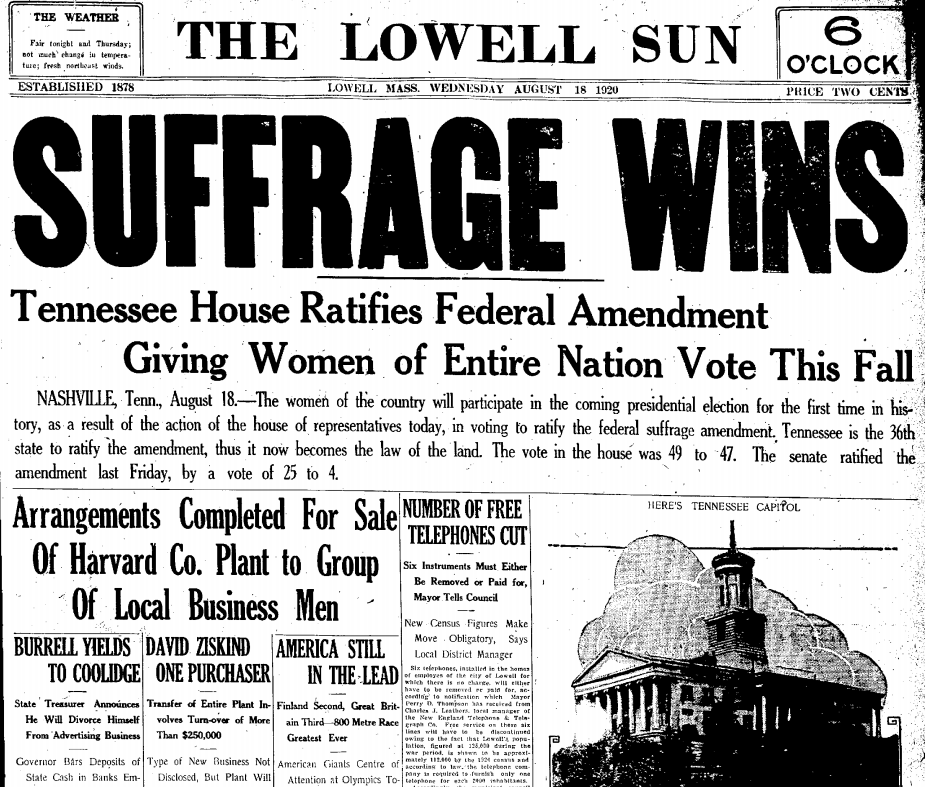
Over the past few days I have been going back to the theme of Women’s rights following Centennial of the ratification of the Nineteenth Amendment. This is important because though the Amendment guaranteed the right of suffrage to women, but the reality remained that Black women were still denied the right to vote in the former Confederate South and many other states.  

So today I am posting a section of the portion of my manuscript “A Great Civil War in an Age of Revolutionary Change” dealing with a most amazing woman, Harriet Tubman. The more I read about her the more I stand I awe. This section was originally a lot less detailed that in is now, and as I go into eliding and revising it for publication since “Mine Eyes Have Seen the Glory!” Racism, Religion, Ideology and Politics in the Civil War and Afterward, and their Importance Today,”  I will spend a lot of time working on this section as I edit and revise the manuscript. That being said I think that you will find it interesting, and still relevant in our society.

Harriet Tubman’s image was to be featured on the $20 bill beginning this year, replacing that of Andrew Jackson, but the Trump administration has put this off until at least 2028. I hope that if Trump loses the election to Joe Biden that this will be changed quickly. Regardless, Tubman’s story should not be forgotten. She was a courageous woman whose character, courage, and commitment could match any person alive today. Maybe after I retire I can write an in depth biography of this remarkable woman and American Patriot.

So until tomorrow, I with you peace, health, safety, and the courage to be like 

Peace

Padre Steve+

The innate prejudices of many military and political leaders about the abilities and limitations of women in military service, often caused them to overlook how women could use that prejudice to their advantage, especially as spies. “African American women were generally dismissed as militarily harmless, a miscalculation that Harriet Tubman…used to immense advantage. Tubman, who had escaped from slavery in Maryland twenty years before the war and who had amassed considerable experience venturing into the south to guide runaways to the North undertook spying expeditions for the Federal troops on the South Carolina Sea Islands.” [1] The incredibly brave woman served throughout the war accompanying Union forces and securing vital information even as she worked to set other slaves free. Tubman’s “spying activities included convincing slaves to trust the Union invaders,” [2] many of whom would join the ranks of the newly raised regiments of U.S. Colored Troops.


Tubman had been fighting her personal civil war for over twenty years before the war began. As an escaped slave she returned to the South time and time again as a “conductor” on the Underground Railroad, smuggling escaped slaves out of the South and to freedom. She “successfully returned nineteen more times, bringing out an estimated 300 to 400 people…. She worked with a determination bordering on ruthlessness: if an escaped slave tarried, she pushed him in; if a baby cried she muffled the sound.as she herself said later…. “I was the conductor on the Underground Railroad for eight years, and I can say what most conductors can’t say – I never ran my train off the track and I never lost one passenger.” [3]

In early 1863, Union commanders in South Carolina decided that Tubman would be valuable as a covert operative to lead reconnaissance missions behind Confederate lines and along contested waterways where Confederate personnel had laid torpedoes, what we now know as sea mines, and she organized a small unit of nine men who used small boats to find the torpedoes and warn the captains of Union vessels operating in those streams and rivers.

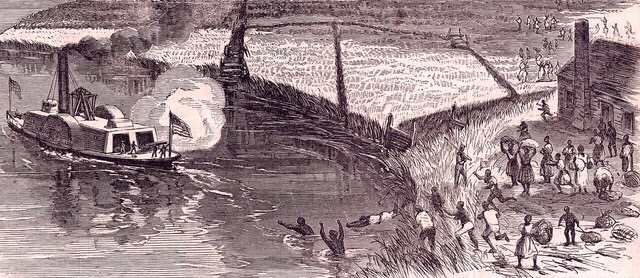
Eventually, Tubman’s actives “evolved into a kind of special forces operation under Colonel James Montgomery. A fervent believer in guerrilla warfare, Montgomery was a veteran of antislavery border fighting in Kansas.” The pair developed some of the most effective operations mounted by irregular and regular forces conducted by the Union in the war. In July 1863, Tubman came up with a plan for a raid, and in it acted as “Montgomery’s second-in-command during a night raid up the Combahee River, near Beaufort, South Carolina. The Union gunboats, carrying some 300 black troops, slipped up the river, eluding torpedoes that Tubman’s men had spotted. Undetected, the raiders swarmed ashore, destroyed a Confederate supply depot, torched homes and warehouses, and rounded up more than 750 rice plantation slaves.” [4]

The Confederate report on the raid unwittingly ended up praising the work of Tubman and the freed slaves of her unit. It noted that the enemy “seems to have been well posted as to the character and capacity of our troops… and seems to have been well guided with persons thoroughly acquainted with the river and country.” Union Brigadier General Rufus Saxton wrote to Secretary of War Stanton praised Tubman’s work, noting, “This is the only military command in American history wherein a woman, black or white, led to raid, and under whose inspiration, it was originated and conducted.” [5]

Tubman continued her work for the duration of the war and after it continued to assist freed slaves and black veterans and continued her work with campaign for women’s suffrage. In 1890 she was awarded a pension for her work as a spy, nurse, and combat leader. The valiant pioneer of abolition, women’s suffrage, and combat in war who was nicknamed “the General” by Frederick Douglass, died in 1913, and was buried with full military honors.

Other women served in various roles caring for the wounded. In the North, “Dorothea Dix organized the Union’s army nurses for four years without pay; Mary Livermore headed the Union’s Sanitary Commission, inspecting army camps and hospitals….Scores of others like Clara Barton, volunteered to be nurses.” [6]All of these women did remarkable service, mostly as volunteers, and many witnessed the carnage of battle close up as the cared for the wounded and the dying which often created ethic concerns for the women nurses:

“Clara Barton described her crisis of conscience when a young man on the verge of death mistook her for his sister May. Unable to bring herself actually to address him as “brother,” she nonetheless kissed his forehead so that, as she explained, “the act had done the falsehood the lips refused to speak.” [7]

The very existence of so many women who served in the ranks during the Civil War, and their “demonstrated competence as combatants, challenge long-held assumptions about gender roles…. From a historical perspective, the women warriors of the Civil War were not just ahead of their time. They were ahead of our time.” [8]

Of the women that served in the ranks during the war, some were discovered, and many of them remained protected by their fellow soldiers. Quite a few of these closeted women soldiers received promotions and even served as NCOs or junior officers. With women now serving in combat or combat support roles in the U.S. Military since Operation Desert Storm in 1991, the stigma and scandal that these cross-dressing women soldiers of the Civil War has faded and as scholars and the public both “continue probing cultural notions of gender and identity, the reemerging evidence that women historically and successfully engaged in combat has met with less intellectual resistance and has taken on new cultural significance.” [9] As the United States military services examine the issues surrounding further moves to integrate the combat arms we also should attempt to more closely examine the service of the brave and often forgotten women who served on both sides of the Civil War.

In addition to these tasked many other women were engaged in the war as “supply organizers, relief workers, pamphleteers all aided the cause, and female journalists covered it. Dorothea Dix and Clara Barton became powerful forces helping soldiers; Anna Carroll provided the propaganda. And the Civil War boasted its own version of Rosie the Riveter, women who did the dangerous work of making munitions at arsenals, many losing their lives in awful accidents.” [10]

Likewise, the war caused many educated women to take much more interest in “political and military issues and led many women to articulate a sharper consciousness of national affairs…. The feminist paper The Mayflower commented that “nearly every letter we receive breathes a spirit of deep feeling on the war question.” The editorial added that among women, “There seems to be little disposition to think, speak, read or write of anything else.” [11] In particular one women, Anna Ella Carroll, the daughter of Thomas King Carroll, a former governor of Maryland, “was interested in political theory and practice and was a profound logical thinker as well as an effective propagandist for the Union.” [12] During the war she was in part responsible for persuading the governor of Maryland to keep the pro-secession legislature from meeting in 1861, defended Lincoln’s suspension of habeas corpus in that state, and is believed to have originated the military strategy in the Tennessee River Campaign, for which she was never given full credit even though there is documentary evidence that many leaders knew of her involvement. A recent biographer concluded that she “was a “tragic victim of reconstruction,” for if a military strategist, she was not given due credit.” [13] In the South it was often the same, the diaries of many educated Southern women show a tremendous interest and discernment of what was happening during the war, and in domestic politics, and frequently expressed their criticism of government and military strategy as the war continued.

                                                             Notes

[1] Ibid. Guelzo Fateful Lightning p.394

[2] Sizer, Lyde Cullen Acting Her Part: Narratives of Union Women Spies in Divided Houses: Gender and the Civil War Oxford University Press, New York and Oxford 1992 p.130

[3] Ibid. Sizer Acting Her Part: Narratives of Union Women Spies  p. 127

[4] Ibid. Central Intelligence Agency, Intelligence in the Civil War location 481 of 991

[5] Ibid. Central Intelligence Agency, Intelligence in the Civil War location 481-482 of 9911

[6] Ibid. Silvey I’ll Pass for Your Comrade p.10

[7] Faust, Drew Gilpin, This Republic of Suffering: Death and the American Civil War Vintage Books, a division of Random House, New York 2008 p.12

[8] Ibid. Blanton and Cook They Fought Like Demons p.208

[9] Ibid. Blanton and Cook They Fought Like Demons p.204

[10] Ibid. Roberts Capital Dames: The Civil War and the Women of Washington 1848-1868 p.3

[11] Attie, Jeanie Warwork and the Crisis of Domesticity in the North in Divided Houses: Gender and the Civil War edited by Catherine Clinton and Nina Silber, Oxford University Press, Oxford and New York 1992 p.253

[12] Ibid. Massey Women in the Civil War p. 168

[13] Ibid. Massey Women in the Civil War p.169

2 Comments

Filed under civil rights, civil war, History, leadership, Military, News and current events, racism, women's rights

Towards Suffrage and Beyond: The Women Soldiers, Spies, and Nurses of the Civil War

Clayton-Francis-L

Friends of Padre Steve’s World,

Since we just celebrated the centennial anniversary of the ratification of the 19th Amendment, today, and for the next few days I am going back to a portion of my draft book “A Great Civil War in an Age of Revolutionary Change” dealing with women’s rights. This one continues yesterday’s article, and deals with some of the facts about women who masqueraded as men in order to serve as soldiers.

Since my first book “Mine Eyes Have Seen the Glory!” Racism, Religion, Ideology and Politics in the Civil War Era and and Afterwards and Why They Matter Today,” I will be working on revisions to this book and that may bring additional information to the material in these four articles. That being said I think that you will find this interesting, and still relevant in our society. 

I have two more articles in this series. I hope you read them too. 

Until tomorrow,

Peace

Padre Steve+

women-civil-war-sarah-edmonds-frank-thompson-631

When war broke out the logical end of what the leaders of the early Women’s Rights movement was should women be allowed to serve in the military. This was not legal or socially acceptable for women to serve in the military in 1861, but this did not stop some women from doing so. In the culture of that time  “women were not expected to defend their country, and when they did nevertheless and were found out, they learned that they were not necessarily a welcome addition to the military. Women who returned home after the Civil War as veterans reaped few of the societal rewards for having rendered such service.” [1]

Despite women being allowed to serve as auxiliary members of the American military beginning in the First War and the Second World War, most were banned from service in the combat or line branches until the 1980s up to the first  women qualifying to serve in Marine and Army infantry units, commanding combat ships and aircraft squadrons, and completing the Army Ranger School and competing for the various service special forces branches. But even today women in the military suffer frequent discrimination, and are often the victims o of verbal, physical and sexual assault, and also the targets of brutal comments by older male veterans who cannot accept women being able to compete with men in the trade of war.

During the American Civil War quite a few women on both sides of the conflict chaffed about not being allowed to fight for their countries, their families and their causes. Despite  official prohibitions that kept women from serving in any capacity but nursing, a good number of women found their way to go to war. While men in the North and South “were expected to enlist, any woman actively participating in the Civil War was an oddity if not a renegade.” [2] In some cases this involved hundreds of women taking male identities in order to fulfill their desires to serve their countries.

The motives of these women varied. In some cases women wanted gain the economic privileges of full citizenship, and for others the hard earned glory reserved to only to men which would gain them the respect of men and society. In our modern parlance those that took male identities would be considered transvestites or possibly transgender, but for them “transvestitism was a private rebellion against public conventions. By taking a male social identity, they secured for themselves male power and independence, as well as full status as citizens of their nation. In essence the Civil War was an opportunity for hundreds of women to escape the confines of their sex.” [3]

During the war hundreds of women went to war, dreaming of being a second Joan of Arc, taking on the identity of men, however, their idealistic vision of wanting to serve the cause of their country, was not viewed favorably by many, men and women alike, as “they were usually viewed by contemporaries as mentally unbalanced or immoral.” [4] Their morality was questioned, their motivation questioned, and above all their character and integrity were questioned, all because they broke long held social, and religious barriers in order to fight for what they believed.

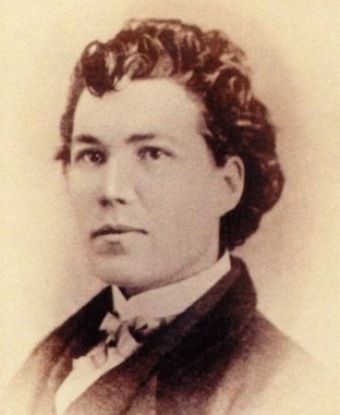
These brave and socially progressive women enlisted under male names and pretended to be men. Unless they were discovered to be women, or unless they confessed to their wartime service either during or after the war, most of their records were lost. In 1861 Private Franklin Thompson “enlisted in Company F of the 2ndMichigan Infantry…unknown to comrades, Thompson actually was Sarah Emma Edmonds.” [5] Edmonds served in the illustrious Iron Brigade until the disaster at Fredericksburg. Well known for her courage as Franklin Thompson, Edmonds participated in some of the bloodiest combats of the war. At the Battle of Antietam she was caring for the wounded when she came upon a soldier who had been wounded in the neck. That soldier informed Edmonds that she was dying and after a surgeon came by and confirmed what the soldier said, the dying soldier told Edmonds:

“I am not what I seem, but I am female. I enlisted from the purest motives, and I have remained undiscovered and unsuspected. I have neither father, mother nor sister. My only brother was killed today. I closed his eyes about an hour before I was wounded….I am Christian, and have maintained the Christian character ever since I entered the army. I have performed the duties of a soldier faithfully, and am willing to die for the cause of truth and freedom….I wish you to bury me with your own hands, that none may know after my death that I am other than my appearance indicates.” [6]

That unknown woman was not alone, at least nine women, eight Union and one Confederate, fought at Antietam and of those five were casualties. Five women, two Federal and three Confederate took part at Gettysburg. All three Confederate women at Gettysburg were either killed or wounded, or captured, including two women who took part in Pickett’s Charge. [7]

Edmonds_inline

                                                   Sarah Edmonds

Sarah Edmonds published a book Nurse and Spy in the Union Army while recovering from malaria in 1863. The book, which was published the following year, sold 175,000 copies, and she donated her earnings from it to care for sick and wounded Union veterans. After the war, Edmonds attended Oberlin College, married, had three of her own children and adopted two more. She “became a member of the Grand Army of the Potomac, the organization for Union veterans of the Civil War. She applied for, and received, a military pension, and upon her death in 1898 was buried with full military honors.” [8] She was the only women admitted to the Grand Army of the Republic.

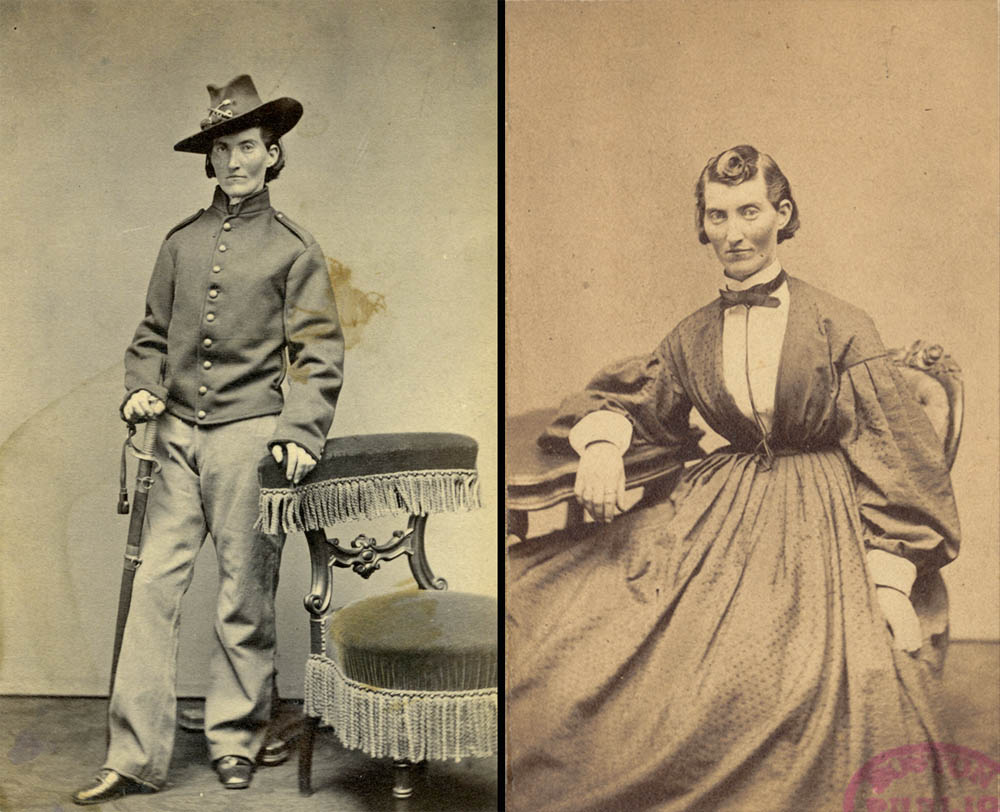
Another of the women to serve was Frances Louisa Clayton. Fighting for the Union as a member of the Minnesota State Militia Cavalry and 2nd Minnesota Battery, serving under the command of Ulysses S. Grant she was wounded at Fort Donelson. Like many other women soldiers, Clayton mastered the art of behaving as a man. She “became “a capital swordsman,” but also commanded attention with her “masculine stride in walking” and “her erect and soldierly carriage.” [9]

Albert-Cashier

However, most women were more discreet during and after the war regarding their true sexuality. Private Albert Cashier hid his sexuality identity for his entire term of service. He enlisted in August 1862 as a member of the 95th Illinois Volunteer Infantry. Cashier was born in Ireland as a woman named Jennie Hodgers. He fought in forty battles and was discharged with the regiment in August 1865. At Vicksburg he was briefly captured by the Confederates while conducting a reconnaissance “but managed to escape by seizing a gun from one of her guards, knocking him down, and outrunning others. Comrades recalled Private Cashier climbing to the top of their fieldworks to taut the enemy into showing themselves.” [10]

After the war “Albert” returned home and lived as a “farmer and handyman and served as a caretaker in his church. He never married.” In 1890 he applied for and received a military pension and in 1911 the now elderly “man” was struck by a car and suffered a broken leg. The doctor treating him discovered that Albert was not a man, but a woman. But the doctor kept his confidentiality and without revealing “Albert’s” secret had the Union veteran admitted to the local Soldier’s and Sailors’ Home at Quincy, Illinois.” [11] A few years later the elderly “man” began to exhibit erratic behavior and was “committed to a public mental hospital and the word was out.” [12] With her story now sensational front page news and “old comrades in arms came to her defense.” [13] Her comrades had never known that “Albert” was not a man during or after the war. the news was a surprise to them they came to her defense. To combat some of the sensationalism in the media Albert’s fellow soldiers testified “to Albert’s bravery in combat and public good works in later life. Albert/Jennie died at Watertown State Hospital in 1915 at age seventy-one. The local post of the Grand Army of the Republic arranged for her burial. Her headstone reads: “Albert D.J. Cashier, Company G, 95th Illinois Infantry.” [14]

There are similar accounts of women who served as soldiers in the Confederate army including Mrs. Amy Clarke who enlisted with her husband and continued to serve until after his death at the Battle of Shiloh. Her gender remained secret until she was wounded and captured by Union forces. As “soon as she had recovered they gave her a dress and sent her back into Confederate lines; but a short time later she was seen in Mississippi making plans to re-enlist.” [15]

Wartime records are sketchy but as a minimum it is believed that “between 250 and 400 women disguised as men found their way into either the Federal or Confederate armies.”  [16] A more recent estimate is that in the Confederate army alone there were some 250 women who served as soldiers during the war. [17]Casualties were high for the women that are known to have served as soldiers, they had a “combined casualty rate of 44 percent” including the fact that fully “eleven percent of women soldiers died in the military.” [18] Some of those women are now well known but many others are lost to history. Most women tried to keep their sexual identities secret, even to the point of their death on the battlefield, and many women who served in the armies returned home to resume relatively normal lives after the war.

Other women would serve as spies for both sides, often rendering valuable assistance to their countries. The women who served as spies often took their lives into their hands; however, they often provided vital information to the Union or Confederate officers that they served. Pauline Cushman “parlayed her acting talents into a series of elaborate ruses that allowed her to pry information out of admiring and complaisant Confederate officers; Belle Boyd used an equal measure of talent in as a northern Virginia coquette to elide the same kind of information out of Federal officers.[19]

0065747

                                                  Elizabeth Van Lew

Even those women who were successful often suffered for their service during and after the war as they learned “that few people completely trusted or respected a spy, not even a “friend.” [20] Many, especially Southern women who spied for the Union were ostracized and persecuted in their communities after the war, and found little support from Northern politicians. Rebecca Wright, a young Quaker schoolteacher in Winchester, Virginia provided information that “enabled him to defeat General Early’s forces” in the Valley of 1864. She lost her job, and her former friends and neighbors boycotted her family’s businesses. Rejected for a pension, Sheridan helped Wright obtain “an appointment in a government office, remaining there for the rest of her days.” [21] Elizabeth Van Lew was a lifelong resident of Richmond and daughter of a wealthy businessman.  She helped Union prisoners escape from Richmond’s notorious Libby prison and when Grant besieged Petersburg, Miss Van Lew “supplied him with a steady stream of information” [22]

To be continued….

                                                       Notes

[1] Ibid. Blanton and Cook They Fought Like Demons p.209

[2] Silvey, Anita I’ll Pass for Your Comrade Clarion Books, New York 2008 p.9

[3] Ibid. Blanton and Cook They Fought Like Demons p.5

[4] Ibid. Massey Women in the Civil War p.79

[5] Ibid. Lowry The Stories the Soldiers Wouldn’t Tell  p.119

[6] Ibid. Silvey I’ll Pass for Your Comrade p.68

[7] Ibid. Blanton and Cook They Fought Like Demons pp. 15-16

[8] Ibid. Silvey I’ll Pass for Your Comrade p.90

[9] Ibid. Blanton and Cook They Fought Like Demons p.58

[10] Ibid. Blanton and Cook They Fought Like Demons pp. 16-17

[11] Ibid. Lowry The Stories the Soldiers Wouldn’t Tell p.121

[12] Ibid. Lowry The Stories the Soldiers Wouldn’t Tell p.121

[13] Ibid. Silvey I’ll Pass for Your Comrade p.90

[14] Ibid. Lowry The Stories the Soldiers Wouldn’t Tell p.121

[15] Ibid. Massey Women in the Civil War p.81

[16] Ibid. Guelzo Fateful Lightning p.394

[17] Ibid. McCurry Confederate Reckoning  p.87

[18] Ibid. Blanton and Cook They Fought Like Demons pp.206-207

[19] ibid. Guelzo Fateful Lightning p.395

[20] Ibid. Massey Women in the Civil War p.87

[21] Ibid. Massey Women in the Civil War pp. 103-104

[22] Ibid. Massey Women in the Civil War p.102

2 Comments

Filed under civil rights, civil war, History, Military, News and current events, Political Commentary, women's rights

The Nineteenth Amendment at a Century: So Much More Left Unaccomplished

Friends of Padre Steve’s World,

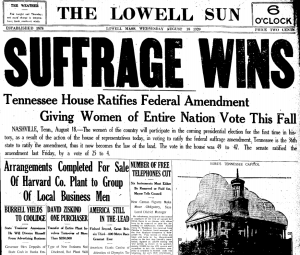
Yesterday was the Centennial Anniversary of the ratification of Nineteenth Amendment to the Constitution which gave women the right to vote. It was a watershed moment brought about through close to eight decades of women fighting for the right to vote and for equality in general.

However, that decision was just a point of a long struggle for equality that  continues today. Despite the gains made since the past century women continue to have few rights than men, and when successful in business, sports, politics, the media, academia, or for that matter almost anything outside the traditional household remain second class citizens in most countries, even the United States, and all too sadly that is due to misogyny and religious prejudices which favor men and no matter how talented, intelligent, and brilliant many women are are consigned to a second place in the workplace, in the church, and almost everywhere else.

Likewise even though the Amendment gave women the right to vote, that right continued to be denied to Black Women in the South and in many other states where Jim Crow and systemic institutional racism ceded the right to vote to white women but prevented Black women the right to vote, just as they had after the repeal of the Civil Rights Act of 1875, and Plessy v. Ferguson which made institutional racism, discrimination, segregation and racially motivated violence the law of the land. 

So, tonight and for the next few nights I think that I am going to repost a series of articles from one of my yet unpublished books which deal with the American Civil War, the Abolition Movement, and the post-War movement for women’s rights.

But I do have to find a certain irony in the President who has made voter suppression and attempting to destroy the confidence in the democratic process, and discredit election results, pardon Suffragette Susan B. Anthony, for the crime of voting, decades before the Nineteenth Amendment was passed, something that she would have never wanted because she held that criminal conviction as a victory, and a mission to give all women the right to vote. The irony is too rich. 

So until tomorrow, 

Peace

Padre Steve+

The abolition movement helped birth the campaign for women’s rights. The Civil War was also revolutionary because it was instrumental in propelling women into positions in American society that they had never before been allowed. Some of this was because many women decided to like those who campaigned for the end of slavery and the rights of African Americans to turn the world upside down. The war allowed the women who served, “in uniform or not, war permitted these women to experiment with a series of role reversals in gender,” [1] and in some cases gender and race. These experiments were the beginning of the struggle for women’s equality and to women serving in the military.

In much of the country and in particular the South women’s rights were the same as granted in English Common Law. Common law held to the more archaic understanding of the Christian Church that women were the property of their husbands, especially in cases of infidelity including during the trial of Dan Sickles for killing Barton Key. But the war “imposed on American society as such social disruption as it did physical destruction. Within that disruption, for one brief and bloody historical moment, an entirely new way of ordering of race and gender within a republican society became possible,” [2]however, in the end it would take another century or more for much of this change to be realized.

Southern culture and law ensured that women had even few rights than the women in the North.  In the North women were making some gains in the workplace and in various professions such as teaching and nursing, and as the industrial revolution modernized the workplace and required more skilled workers, particularly in the textile industries, the availability of work for women who wanted to work outside the home increased. Even uneducated Northern women sought work in the growing number of factories and by 1860 “there were more than 270,000 female operatives, the vast majority being employed in Northern textile, shoe, clothing, printing, and publishing establishments. Over 135,000 worked in New England factories and composed 65 percent of the region’s industrial labor.” [3]  Educated Northern women, while excluded from most professions, found their way into teaching, nursing, non-ordained religious work, and writing. Some found work in Federal government agencies in Washington DC, including “Clara Barton, a successful teacher who had trouble landing a position because she was a women, found work in the Patent Office, where she briefly made the same salary as her male colleagues.” [4]

But in the South women were continued to be held back. This was in large part due to the understanding that the “household was a spatial unit, defined by the property to which the owner not only held legal title over, but over which he exercised exclusive rights.” [5] As such Southern men had nearly unlimited rights and power over what occurred on his property, for “in societies in which landed property comprised the chief means of subsistence…legal title to the land had historically incorporated claims over the persons and labor of those who were dependents on it.” [6] In the South, as opposed to the North comparatively few women entered the Southern labor market, in large part because of the region’s emphasis on agriculture, dependence on slave labor, and a culture that frowned on women working outside the home.  1860 when Northern women were becoming a force to be reckoned with in the labor market, “only 12,000 women worked in factories, 10 percent of the regions wage earners.” [7] The lack of trained and experienced women workers would be a crippling impediment to the Confederate War effort.

For Southern men the stakes of ensuring slavery’s continuation and expansion were high, the culture of the South ante-bellum South was deeply patriarchal and “The possibility that the black man might be empowered like any other was such a threat to the southern social hierarchy that some white southerners were inclined to fear not only for their position as slaveowners but for the entire basis of their claim to patriarchal power. They feared for their power not only over their slaves but over their women as well.[8]

The Gimke Sisters, Abolitionists and Suffragettes 

William Lloyd Garrison and the leaders of the abolitionist movement came into contact with two southern women who had converted to the abolitionist cause; South Carolina cotton heiresses, Sarah and Angelina Grimke. The two women were passionate as well as eloquent and became popular lecturers on the abolitionist speaking circuit. Angelina Grimke was a powerful speaker linked to abolition and women’s rights, she made herself unwelcome in her native Charleston South Carolina “with the publication of An Appeal to the Christian Women of the South. She urged Southern women, many of whom opposed slavery, to speak out, and despite her failure to reach the audience to which she spoke, hers is one of the most significant abolitionist writings.” [9] She proclaimed:

“We cannot push Abolitionism forward with all our might until we take up the stumbling block out of the road…. If we surrender the right to speak in public this year, we must surrender the right to petition next year, and the right to write the year after, and so on. What then can the woman do for the slave, when she herself is under the feet of man and shamed into silence?” [10]

Her sister Sarah was also active in writing, but she focused her attention not just on abolition, but “on the inferior status of both woman and the Negro in The Equality of the Sexes and the Condition of Women.” [11] The Grimke sisters and other women like them brought Garrison and others in the abolitionist movement into contact with the early leaders of the new women’s rights movement. The leaders of the movement, Elizabeth Cady Stanton, Abby Kelley, and Lydia Maria Child were outspoken in their belief that “a campaign to emancipate slaves could not avert its eyes from the need to emancipate American women from social conventions and legal restraints that prevented them, like the slave, from owning property and voting, and kept them altogether subservient to the interests of white males.” [12]

The principals involved in the abolitionist and the women’s movements, those of freedom, emancipation and equality eventually forged a bond between them, and have provided inspiration to others in their quest for political and social equality. For William Lloyd Garrison “the woman question clearly demonstrated how the logic of reform united all good causes and carried them to new ground. If in their endeavors to break the chains of slavery women discovered, as Abby Kelley put it, that “we were manacled ourselves,” the abolitionist principle required a defense of equal rights without regard to race or sex.” [13]

While women and blacks were “being brought together in a dual crusade, often behind the same leaders,” [14] that did not mean that both parties were given equal consideration, even among the supporters of abolition and women’s rights. All to often, women found that their rights were not considered as important by the political leadership fighting for the rights of black men. Few in Congress “responded sympathetically to feminists’ demands. Reconstruction they insisted, was the “Negro’s hour,”  [15] a view shared by Frederick Douglass. Though the economic situation of women began to improve, especially through women being admitted to the Civil Service, much else remained unchanged, women were still second class citizens without the right to vote, with few legal rights, and few opportunities to move up in society apart from her husband.

But change was beginning to occur as women began to have more educational opportunities in the post-war years, and began to find employment opportunities with the expansion of industry. Women’s suffrage was not included in the Fifteenth Amendment, which caused a split between women’s groups and their long-time abolitionist allies who told them “If put on the same level and urged in the same connection, neither will soon be accomplished.” [16]   Even so in some territories women were granted the right to vote in territorial elections, “women were given the vote in Wyoming Territory in 1869. However, Wyoming’s admission as a state twenty years later came only after a heated debate on the women’s suffrage article in the state constitution.” [17]

In the 1800s women in the United States found themselves bound by two major factors, law and culture. English common law and early in the life of the Republic it was determined by John Adams that women should be exclude from political life as they were “unsuited by nature for the businesses of life or the hardy enterprises of war, they had nothing of value to offer the state.” [18] Women had no claim to property, wages, or even their children. Thomas Jefferson had “defined the essence of liberty as independence, which required ownership of productive property. A man dependent on others for a living could never truly be free, nor could a dependent class constitute the basis of republican government. Women, children, and slaves were dependent; that defined them out of the polity of republican freedmen.” [19] This understanding of the rights and citizenship of women persisted as the official law of the nation throughout the ante-bellum era, through and after the Civil War, and up until the passage and ratification of the Nineteenth Amendment.

As such, single women had few rights while married women had even fewer as, married women could not “own property in her own right, make contracts or otherwise conduct business of her own. She was supposed to be modest and submissive. The married woman, in fact, was for all intents and purposes the chattel of her husband.” [20] The reality was stark for women, but especially married women for as one historian noted: “marriage very nearly meant the legal annihilation of a woman…once a woman was married all property and property rights were transferred to her husband, and she was permitted to own nothing in her own name. Married women could not make contracts, could not sue, could not buy or sell, except over their husband’s signatures.” [21] Adult white women were citizens in a constitutional sense, but in the North and South alike their terms “of their citizenship had always been set by the perceived necessities of marriage and its gender asymmetries between man and woman, husband and wife.” [22]

The role of culture and religion was another major constraint on women’s rights during the ante-bellum period and much of this centered on Victorian social and cultural ideals which brought about what can be safely called a “a cult of true womanhood” which “dictated that women always appear demure, submissive, pious, and concerned with the home and family.” [23] In the Victorian ideal, it was the man whose sphere of life was in worldly pursuits, while women were limited to the task of bearing and raising children and maintaining the traditional private domain of hearth and home. This understanding of separate spheres was supported was often supported by the churches, especially those the conservative and evangelical variety.

While this was true in the North it was especially prevalent in the South and promoted by southern evangelical churches. The “explicit goal of southern evangelicalism was to keep the religious role of white women within narrow and carefully policed bounds. Evangelical Southerners clearly designated men as society’s (and women’s) rightful rulers and ultimate authorities. They were, in the 1830 words of Southern writer Virginia Carey, “the anointed lords of creation”; St. Paul’s injunction that wives “submit yourself to your own husbands as to the Lord” provided the text for many a Sunday sermon.” [24]

In matters of sexual behavior there was a pronounced double standard between men and women. If a man was an adulterer it was frowned upon, but not necessarily a condition that would invoke the scorn of the community unless an aggrieved husband took the law into his own hands and killed the adulterer, in which case the murderer could easily be forgiven. However, for the married adulteress, the social damnation was all too real, even from other women, who often believed that there was no excuse for such behavior and that the adulteress “deserved the most stringent fate for her violation of the dictates of virtue.” [25]

A married woman’s position was as close to being a slave as could be, and only the plight of black female slaves was worse, for they were simply chattel. The few free black women mainly stayed unmarried “in order to maintain what few property rights they were entitled to.”  [26] As they also did over blacks, white men ruled over women in all spheres of life. While the eventual emancipation of blacks provided more rights for black men, those did not help many black women as Sojourner Truth, a pioneering African-American abolitionist who spent forty-years as a slave said toward the end of her long life:

“There is a great stir about colored men getting their rights, but not one word about colored women; and if colored men get their rights, and not colored women theirs, you see colored men will be master over the women, and it will be just as bad as it was before. So I am for keeping the thing going while things are still stirring because if we wait till it is still, it will take a great while to get it going again….I suppose I am the only colored woman that goes on to speak for the rights of the colored women. I want to keep the thing stirring, now that the ice is cracked…” [27]

Elizabeth Cady Stanton was among the most vocal of women’s rights advocates. She was the daughter of a leading Federalist lawyer, who served a term in the House of Representatives and on the New York Supreme Court. Her father planted in her the desire to learn, a love for law, and a passion for civil rights which she was able to pursue. Unlike many women of her day, Stanton was able to graduate from the Johnstown Academy and the Troy Female Academy in Troy, New York, before she was married to Henry Brewster Stanton, a journalist, anti-slavery orator and attorney, with who she had seven children.

Stanton believed that a woman’s place in the home was ultimately destructive and “reflected her subordinate position in society and confined her to domestic duties that served to “destroy her confidence in her own powers, lessen her self respect, and to make her willing to lead a dependent and abject life.” [28] Stanton noted how the condition of women of her day was “more fully identified with the slave than man possibly can be… For while the man is born to do whatever he can, for the woman and the negro the is no such privilege.”  [29] It was a key observation and something even today, a state that some politicians, pundits and preachers would like to return women.

Since nearly all of the most “outspoken feminists had been schooled in abolitionist movement” they were “suspect in the South, where society was conservative, patriarchal, and insistence that ladies live in a kind of earthly limbo.”  [30]  Such women posed a threat to the pillars of Southern society. Since the South was now fighting tooth and nail against the abolitionist movement, anything closely connected with that movement, including the women who advocated abolition and women’s rights were shunned and their message rejected and inflammatory and revolutionary. It was not until the crisis caused by the Civil war that Southern women began to seize “the opportunity to lay claim to an increased reciprocity in gender relations.” [31]

But even with the abolition movement there was opposition the women’s rights, the 1839 meeting of the American Anti-Slavery Society witnessed a debate over including women in the membership. Conservative Evangelicals recoiled in disgust, and when the convention voted to allow women into the membership Lewis Tappan “got up a starchy “protest” which condemned the “repugnant” admission of women as an ‘expression of local and sectarian feelings…well suited to the unnecessary reproach and embarrassment to the cause of the enslaved as [it] is at variance with the general usage and sentiments of this and other nations.”[32] In May of 1840 the American Anti-Slavery Society split among religious lines when leading evangelicals led by the Tappan brothers withdrew from it.
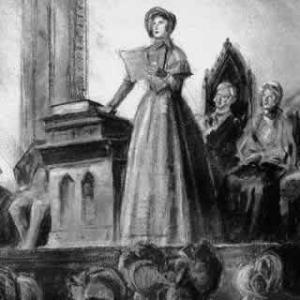
senecafalls-womanspeaking

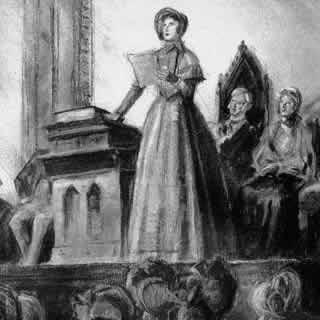
Elizabeth Candy Stanton at the Seneca Conference, 1848

But that neither stopped Garrison from working with women, nor kept Frederick Douglass from embracing them as part of the abolitionist movement. From this rather inauspicious beginning, the women’s rights movement began to infiltrate society, especially in the field of education. In 1848 at Seneca New York there was a convention that launched the modern women’s rights movement. Led by Stanton and Elizabeth Mott the delegates published a “Declaration of Sentiments, modeled on the Declaration of Independence, proclaimed “that all men and women are created equal” and deserved their “inalienable rights” include the right to elective franchise.” [33] The declaration was bold and its denunciation of the place of women in society to be considered revolutionary in character. Part read:

“He has never permitted her to exercise her inalienable right to elective franchise. He has compelled her to submit to laws, in the formation of which she had no voice. He has withheld from her rights which are given to the most ignorant and degraded men – both natives and foreigners… He has made her, if married, in the eye of the law, civilly dead. He has taken from her all right to property, even to the wages that she earns…. After depriving her of all her rights as a married woman, if single, and the owner of property, he has taxed her to support a government which recognizes her only when her property can be made profitable to it. He has monopolized nearly all the profitable employments, and from those she is permitted to follow she receives but a scanty remuneration. He closes against her all the avenues to wealth and distinction which he considers honorable to himself. As a teacher of theology, medicine of the law, she is not known… He has created a false public sentiment by giving the world a different code of morals for men and women, by which moral delinquencies which exclude women from society, are not only tolerated, but deemed of little account in man. He has usurped the prerogative of Jehovah alone, claiming his right to assign for her a sphere of action, when that belongs to her conscience and to her God. He has endeavored, in every way that he could, to destroy her confidence in her own powers, lessen her self-respect, and to make her willing to lead an abject and dependent life.” [34]

The declaration also stated, in words which inflamed many men that: “the history of mankind is a history of repeated injuries and usurpations on the part of man toward woman, having in direct object of an absolute tyranny over her.” [35] In the years following this meeting women took up an even more important place in the abolitionist movement, Abby Kelly Foster returned to head the work and recruited many talented women agents including Sallie Holley, Lucy Stone and Susan B. Anthony who “often made five or six appearances a week”in various abolitionist meetings and in 1850-1851 they were joined by the “black evangelist Sojourner Truth, whom Garrison had met and the Northampton colony in 1843 and for whom he had printed an autobiographical narrative.”[36] These women contributed greatly to the abolitionist cause and would in the years to come be among those who continued to fight not only for the rights of blacks, but the rights of women.

The new women’s rights groups continued to work hand in hand with the abolitionist groups but also began a campaign for the rights of women. In the mid-1850s primarily focused on “obtaining state laws guaranteeing women’s right to control their property and wages, to be legal guardians of their children, and to be paid salaries commensurate with their labors, while a few women advocated for more liberal divorce laws so that they could rid themselves of alcoholic, insane, criminal, or brutal husbands.” [37]These efforts secured some modest gains and by 1861 most states had granted women some type of property rights or had changed their laws to follow the community property principle.

While the movement made modest progress regarding property rights for women in some states, they made little progress in terms of elective franchise and better wages and working conditions. During the ante-bellum period, women who lobbied for such rights were met with open opposition and scorn. The press “frequently denounced and ridiculed the “strong-minded women…” [38] Despite such attitudes women did make some significant advancements, particularly in lay aspects of the church, such as Bible societies, moral reform organizations, as well as the abolition and temperance movements, which had gained prominence during the Second Great Awakening.

During the ante-bellum period women made great progress in education. By 1850 the United States was the only country where “girls went to elementary school and achieved literacy in virtually the same proportion as boys.” [39] Likewise a few women entered higher education, particularly at women’s seminaries, which were for all practical purposes boarding schools that produced teachers and writers, as well as the Oberlin College, which was founded by Christian abolitionists and welcomed students of both genders as well as of any racial minority. During the three decades prior to the war women made some specific gains, but more important “was the development to their talents for organization, cooperation, leadership, and self expression. It was a time of beginnings and not fulfillment, a time when most women realized and accepted the fact that they lived in a man’s world, a time when a few dedicated but belligerent visionaries were frustrated in their attempt to remake the social order “overnight.” [40]

However, the war would help bring about many more opportunities for women. In 1850 a follow on conference to the Seneca conference, the National Women’s Rights Convention denied the right of anyone to dictate what women could do with their lives:

“The right of any portion of the species to decide for another portion, of any individual to decide for another Individual what is not their “proper sphere”; that the proper sphere for all human beings is the largest and highest to which they are able to attain; what this is, can not be ascertained without complete Liberty of choice; women therefore, ought to choose for herself what sphere she will fill, what education she will seek, and what employment she will follow, and will not be bound to accept, in submission, the rights, the education, and the place which man thinks proper to allow her.”  [41]

To be continued…

Notes

[1] Ibid. Guelzo Fateful Lightning  p.395

[2] Ibid. Guelzo Fateful Lightning p.374

[3] Massey, Mary Elizabeth, Women in the Civil War University of Nebraska Press, Lincoln NE 1966 p.5

[4] Roberts, Cokie Capital Dames: The Civil War and the Women of Washington, 1848-1868 Harper Collins Publishers, New York 2015 p.18

[5] McCurry, Stephanie The Politics of Yeoman Households in South Carolina  in  Divided Houses: Gender and the Civil War Oxford University Press, Oxford and New York 1992 p.23

[6] Ibid. McCurry The Politics of Yeoman Households in South Carolina p.23

[7] Ibid. Massey Women in the Civil War p.5

[8] Whites, Leeann The Civil War as a Crisis in Gender in Major Problems in the Civil War and Reconstruction, 3rd Edition Edited by Michael Perlman and Murrell Taylor Wadsworth Centage Learning, Boston 2011 p.16

[9] Ibid. Massy Women in the Civil War p.15

[10] Ibid. Zinn The Other Civil War p.121

[11] Ibid. Massey Women in the Civil War p. 16

[12] Ibid. Guelzo Fateful Lightening pp.49-50

[13] Mayer, Henry All on Fire: William Lloyd Garrison and the Abolition of Slavery  W.W. Norton and Company, New York and London 1998 p.265

[14] Ibid. Massey Women in the Civil War p.16

[15] Ibid. Foner Forever Free p.124

[16] Ibid. Foner Forever Free p.125

[17] Ibid. Massey Women in the Civil War p. 358

[18] Ibid. McCurry Confederate Reckoning p.24

[19] Ibid. McPherson Battle Cry of Freedom p.23

[20] Brant, Nat The Congressman Who Got Away with Murder Syracuse University Press, Syracuse New York 1991 p.67

[21] Ibid. Guelzo Fateful Lightening p.391

[22] Ibid. McCurry Confederate Reckoning p.23

[23] Blanton, DeAnne and Cook, Lauren M. They Fought Like Demons: Women Soldiers in the Civil War Vintage a books, a Division of Random House New York 2002 p.3

[24] Ibid. Levine, Bruce Half Slave and Half Free: The Roots of the Civil War Revised Edition p.114

[25] Ibid. Brant The Congressman Who Got Away with Murder p.141

[26] Ibid. Guelzo Fateful Lightening p.391

[27] Ibid. Zinn The Other Civil War pp.53-54

[28] Ibid. Goldfield America Aflame p.74

[29] Ibid. Guelzo Fateful Lightening p.50

[30] Ibid. Massey Women in the Civil War p. 19

[31] Ibid. Whites The Civil War as a Crisis in Gender p.21

[32] Ibid. Mayer All on Fire p.267

[33] Ibid. McPherson Battle Cry of Freedom p.36

[34] Ibid. Blanton and Cook They Fought Like Demons: Women Soldiers in the Civil Warpp.3-4

[35] Ibid. Guelzo Fateful Lightening p.392

[36] Ibid. Mayer All on Fire p.424

[37] Ibid. Massey Women in the Civil War p.21

[38] Ibid. Massey Women in the Civil War pp.21-22

[39] Ibid. McPherson The Battle Cry of Freedom p.36

[40] Ibid. Massey Women in the Civil War p.23

[41] Ibid. Guelzo Fateful Lightning p.392

Leave a comment

Filed under civil rights, faith, History, News and current events, Political Commentary, racism, Religion, women's rights

I Rejoice, I have a Publisher for “Mine Eyes Have Seen the Glory!” Racism, Religion, Ideology and Politics in the Civil War Era and After and Their Importance Now


Friends of Padre Steve’s World,

There I was attempting to enter my analytical data at the end of a long day when suddenly my iPhone rang with my default ring tone the great Kenny Rodgers and the First Edition “I Just Dropped in to see what Condition my Condition was In” which was also featured in one of my favorite cult classic films, The Big Lebowski. But I digress…


I answered and found it was my literary agent, Roger Williams. He let me know that he resubmitted the book to a publisher who turned it down two years ago. They liked the changes I made to it and want to publish it. I am grateful to Roger who believed in this book and kept pushing it for the past three years. I finally realized that despite all the good history it had in it that I had quite a bit of material I had worked on in those three years that would make it a much better book that would grab the reader’s interest I went back to work, nearly doubling it in size within two and a half months. Of course I had already done much of the research and writing so it was a matter of making the book flow from the introduction to the epilogue, keeping it in the realm of history but reminding the reader that the the sad consequences of America’s Original Sin are still afflicting us to this day. I sent the completed manuscript to Roger a bit over two weeks ago and I told Judy that I was not going to hassle him about the status of the book.

The publisher will be Potomac Books, a subsidiary of University of Nebraska Press. They publish a lot of good books dealing with history, political, military issues, and current events. Judy looked them up as I was thanking friends for their congratulations, and told me that she thought this was an excellent publisher for the book.

I have to thank Professor Doctor Rick Herrera of the U.S. Army Senior Leadership School who was my classmate in the UCLA Army ROTC program from 1981-1983. He is a fine historian, and not just military. He has published a number of books on Early American Military history and recommended Roger as an agent.

Then there is Judy, who has reviewed, edited, and punctuated many of my papers, articles and manuscripts since I was in seminary some 30 years ago. None of this is possible without her. Then there were my college, seminary, and other history professors, among them Delmar McComb and Charles Bloch at San Joaquin Delta College, Dr. Helmut Haeussler at California State University Northridge, and Dr. Doyle Young at Southwestern Baptist Theological Seminary. I also have my many colleagues at the Joint Forces Staff College where I taught ethics and led the Gettysburg Staff Ride. It was there, when writing my syllabus for the class which became a nearly 1,000 page tome, that this book began. I realized that one cannot separate the battles from the men who fought them, especially when it comes to a war like our American Civil War.

What began as a 20 page second chapter of the staff ride text took on a life of its own, when the “chapter” grew to over 100 pages I realized that it needed to be its own text. This is the result.

To my faithful readers here, you have read much of it in earlier and less polished forms. But with every revision, every addition as Roger worked to market the book, it became more focused, more documented, and more powerful so that instead of struggling through two very heavily academic and theoretical chapters, the were led in by an strong preface, and opening chapter, several beefed up chapters, and several new chapters with an epilogue that pulled it all together.

I wish John Lewis or Elijah Cummings were still alive to right a forward to this. I am going to look up some of the still living members of the civil rights movement or other Black Americans who lived through the discrimination and segregation of Jim Crow, to become great American Leaders. Wish me luck, I have some in mind, including one whose story is featured in the book to humbly ask if they will do so.

My goal is to write history and tell the truth the best that I can knowing that future historians may find out more than me, and do better, even if they show my wrong at some points, I don’t think that will happen because this is not a history of current events of which documents remained sealed, or eyewitness accounts turn out to be wrong, or assumptions are made which turn out to be false, though repeated for decades as if they were absolute truth. Such is not always the case, quite often new evidence comes to light and has to be dealt with, not be disregarding it because it doesn’t fit the accepted narrative, but because it is strong enough to challenge the narrative on its own merits. This is why the twin myths of the Nobel South and the Lost Cause have been debunked, because new generations of historians were willing to challenge them.

However, in the case of racist myths like these, which have much in common with Holocaust denial, don’t go away simply because they are factually discredited and destroyed. The remain because at their root they have a nearly religious like flavor, adhering to myths and rejecting facts like any religious cult would do.

That is the reason these debunked myths have not died and people, even otherwise intelligent, decent, and thoughtful people believe them, because they soothe their consciences and allow them to preserve their prejudices, by pretending to be history. Sadly, that school of thought dominated American history from the 1880s to the 1970s. Those who scour the archives, read the letters, study the documents, and examine the lives of the people involved and find the truth are attacked as Revisionists when in fact what they fight is the original historical revisionism promoted by defeated racists and lapped up by the citizens who defeated the Confederacy on the battlefields, in order to strengthen the economy, reduce newly freed Blacks to a condition that was akin to slavery in all but name.

Historian Jill Lapore wrote:

“History is the art of making an argument about the past by telling a story accountable to evidence. In the writing of history, a story without an argument fades into antiquarianism; an argument without a story risks pedantry. Writing history requires empathy, inquiry, and debate. It requires forswearing condescension, cant, and nostalgia. The past isn’t quaint. Much of it, in fact, is bleak.” 

That is why I wrote Mine Eyes Have Seen the Glory! For in every generation there are those who seek to return to a mythological history that never existed. When those people are backed up by the President of the United States over 150 years after their cause was defeated on the battlefield, then the fight for truth must be renewed.

So until tomorrow,

Peace,

Padre Steve+


9 Comments

Filed under books, books and literature, civil rights, civil war, Gettysburg, History, News and current events, racism, Religion, Teaching and education

The President Who Poisons All He Touches: Donald Trump, the First American Dictator


Friends of Padre Steve’s World,

It has been a bit over three and a half years since President Trump took the oath of office as President of the United States. Over that time his actions have been similar to other leaders of history who have gravitated towards authoritarian rule, and his Party has only emboldened him. Former GOP House Majority Leader John Boehner noted on October 26th of last year: “There is no Republican Party, only the Party of Trump.”

Today I want to share the words of British military theorist and historian B.H. Liddell-Hart and some others of note as to what happens when authoritarian, or authoritarian leaders gain control of a government. His Liddell-Hart’s words, from his short, but profound book Why Don’t We Learn from History are worth the considered read for anyone with an open mind who can, despite the proliferation of propaganda can still see clearly. Liddell-Hart wrote:

They soon begin to rid themselves of their chief helpers, “discovering” that those who brought about the new order have suddenly become traitors to it. Now think of his early supporters who he has ditched, thrown under the bus, or fired them from his cabinet.

They suppress criticism on one pretext or another and punish anyone who mentions facts which, however true, are unfavourable to their policy. Whether it be Russia, COVID19, the Post Office, his deals with Kim Jun Un, and what has happened to every member of his staff, the GOP establishment, or member of Congress who has openly criticized him, including senior Justice Department, State Department, National Security Council Staff, the Military, the Judiciary, and on and on and on.

They enlist religion on their side, if possible, or, if its leaders are not compliant, foster a new kind of religion subservient to their ends. Trump would not be in power without his willful collaborators of the Christian Right who for all intents and purposes have become his Cult.

They spend public money lavishly on material works of a striking kind, in compensation for the freedom of spirit and thought of which they have robbed the public. The President has constructed nothing truly lavish, or of any cultural value, but he has built portions of a very expensive and ineffective border wall.

They manipulate the currency to make the economic position of the state appear better than it is in reality. He first did this with his tax overhaul of 2017 which improved the stock markets, and since the malfeasance of the Treasury Department has been to prop up the markets by purchasing stocks and bonds.

They ultimately make war on some other state as a means of diverting attention from internal conditions and allowing discontent to explode outward. This has not happened yet, but he continues to ratchet up tensions with China, North Korea, and Iran, and in the latter case he brokered a peace deal with two of Iran’s most strident enemies, Israel and the United Arab Emirates, effectively binding the United States to any military actions that they might take against Iran. These is also Venezuela which albeit a failed, and repressive dictatorship, which in Trump’s crosshairs for some time. He or any of the players in these geopolitical regions which resemble a full body dry heave could vomit all over the world, and Trump would us it to do what every authoritarian ruler does when he needs attention drawn away from himself.

They use the rallying cry of patriotism as a means of riveting the chains of their personal authority more firmly on the people. Since his announcement of his candidacy Trump has made the distinction that his supporters are Patriots and those who do not are traitors. He has amped this up every year he has been in office, and his supporters are now showing up armed in the streets as he has used the police power of the state to violently attack those who protest his policies and actions.

They expand the superstructure of the state while undermining its foundations by breeding sycophants at the expense of self-respecting collaborators, by appealing to the popular taste for the grandiose and sensational instead of true values, and by fostering a romantic instead of a realistic view, thus ensuring the ultimate collapse, under their successors if not themselves, of what they have created. The President has expanded and not cut the government, especially in the areas of its police powers, and appointed men and women who are dedicated to protecting him and not the Constitution, laws, or people as heads of agencies.

This political confidence trick, itself a familiar string of tricks, has been repeated all down the ages. Yet it rarely fails to take in a fresh generation. Sadly it has taken in yet another generation, but such is no surprise to anyone who seriously studies history.

But Liddell-Hart wasn’t the only one to warn us of such leaders, those who come to power legally and the work every day to destroy the democratic systems that brought them to power. In fact this was a concern of our founders who in the Declaration of Independence noted:  A Prince whose character is thus marked by every act which may define a Tyrant, is unfit to be the ruler of a free people.”

I cannot think of an American President who these were more pertinent to, then  Donald Trump. He is the man who Alexander Hamilton warned us in his words and in the Federalist Papers: “Of those men who have overturned the liberties of republics, the greatest number have begun their career by paying an obsequious court to the people, commencing demagogues and ending tyrants.”

Yale Historian and Holocaust expert Timothy Snyder warned after Trump was elected in 2016:

”The mistake is to assume that rulers who came to power through institutions cannot change or destroy those very institutions—even when that is exactly what they have announced that they will do.”

That is something I have understood since Trump first announced his candidacy in 2015. Two weeks before his election in 2016 I wrote this:

“As I watched and listened to Donald Trump before and after the third and thankfully final debate of the 2016 Presidential election, I was struck with just how viscous, vulgar, and venomous this man is. I cannot remember anyone in American politics at the national level, Republican or Democrat, or for that matter even Whig, who ever managed to immerse himself so deeply into the amoral, unethical, and undemocratic sewer that Trump has bathed himself, the Republican Party and this nation.

Trump’s toxicity is unparalleled in American politics. Everything and everyone who has ever had anything to do with him is poisoned by his touch. Wives, business partners, contractors, employees, political advisors, and supporters have all been stained by the Mustard Gas that Trump emits on a minute to minute basis. Maybe the most stained are the Evangelical Christian church leaders who have not only endorsed and defended Trump, but  who positively described his character as Christian and said nothing about Trump’s words and actions, which if an opponent had uttered, or had been accused, they would have excoriated with a particularly “Christian” self-righteousness.  Their actions have stained the witness of the church for at least the next generation and it is no wonder that young people are fleeing the church. I specifically use the imagery of Mustard Gas, not just because of its toxicity, but because of its persistence. The battlefields of World War One France and Belgium are still contaminated by it, and the toxic residue still injures people today. 

That my friends is the poisonous and corrosive effect of Donald Trump on this country.  He is a toxic and persistent threat to everyone, even his most devout followers. Race baiting, misogynistic, narcissistic, vulgar, and ignorant, Trump spews his vile venom of conspiracy theories wrapped in fiction, and coated in lies, and buttressed with near pornograpic misogyny in every direction. He has given his supporters in the heavily armed Alt-Right, the neo-Nazis, Klansmen, and White Supremacists the boldness to come out of hiding because he has normalized their hate, something that no Western statesman or politician has done since before the verdicts at Nuremberg. 

I have long felt that Trump reminded me of Nazi leaders, but frankly most of them, while every bit as toxic as Trump were both more intelligent and were better able to cover the darkness of their amoral souls with a modicum of respectability, with the exception of one; the publisher of the infamous newspaper Der Sturmer, and Gauleiter of Nuremberg, Julius Streicher. 

Robert Jackson, the Associate Justice of the Supreme Court who served as the Chief American Prosecutor at Nuremberg referred to Streicher in his summation:

“Streicher, the venomous vulgarian, manufactured and distributed obscene racial libels which incited the populace to accept and assist the progressively savage operations of “race purification.” 

Is that not exactly what Trump has done during his seventeen month campaign to stir up race hatred against Mexicans and Arabs, not to mention Asians and Blacks? Of course it is, which is exactly why the leaders of the Alt-Right claim him as their candidate, the man who in their perverted minds has made them respectable again and ready to assume their place in Trump’s new order. Anti-Semitism and racism runs rampant in the words of his closest collaborators such as the Breitbart News chief Steve Bannon, as well as Alt-Right Neo-Nazi and KKK leaders like David Duke, Richard Spencer, Jared Taylor, and Peter Brimalow. 

My friends, what you see in Trump is what you get. Unlike Hitler and Goering, but much like Streicher, Trump has no capability of maintaining any sort of respectability. He has been stoking the fires of violence by claiming that the election is rigged and pumping up his followers for violence if he loses.”  The link to that article for doubters is here: https://padresteve.com/2016/10/21/the-venomous-vulgarian-donald-trump-and-the-alt-right/

Based on what he says on a daily basis, including admitting that he was deliberately sabotaging the ability of the US Postal Service to ensure that the mail in and absentee ballots are not received in time to be counted for the General Election. If he is successful is an action that will ensure no clear result, confusion, and creating a crisis that our electoral system was not designed to handle and cast doubt on our electoral system that will allow him to win and then proclaim himself President for life.

That might seem cynical but Trump has said “Trump 2024, 2028, 2032” and so on. There is no doubt that his supporters would attempt to overturn the 22nd  Amendment to the Constitution which limits Presidents to two terms in office, including some who have encouraged that.

What President Trump and his appointees are doing is in direct contravention of the Declaration, the Constitution, U.S. Code, the intents of our Founders, and anyone that values liberty for all, not the few.

Judge Learned Hand spoke these words to a citizenship ceremony in which a million and a half people were present in New York’s Central Park, two weeks before D-Day and I think they are most applicable now:

“What do we mean when we say that first of all we seek liberty? I often wonder whether we do not rest our hopes too much upon constitutions, upon laws and upon courts. These are false hopes; believe me, these are false hopes. Liberty lies in the hearts of men and women; when it dies there, no constitution, no law, no court can save it; no constitution, no law, no court can even do much to help it… What is this liberty that must lie in the hearts of men and women? It is not the ruthless, the unbridled will; it is not the freedom to do as one likes. That is the denial of liberty and leads straight to its overthrow. A society in which men recognize no check their freedom soon becomes a society where freedom is the possession of only a savage few — as we have learned to our sorrow.

What then is the spirit of liberty? I cannot define it; I can only tell you my own faith. The spirit of liberty is the spirit which is not too sure that it is right; the spirit of liberty is the spirit which seeks to understand the minds of other men and women; the spirit of liberty is the spirit which weighs their interests alongside its own without bias; the spirit of liberty remembers that not even a sparrow falls to earth unheeded; the spirit of liberty is the spirit of Him who, near two thousand years ago, taught mankind that lesson it has never learned, but has never quite forgotten; that there may be a kingdom where the least shall be heard and considered side by side with the greatest.”

This is what is at stake today. We have a Venomous Vulgarian like Julius Streicher as our President. He is a man so open and unrepentant in his racist, anti-immigrant, and anti-American System of Government statements, tweets, and executive orders that it is glaringly obvious to anyone with eyes to see and ears to hear, except to his Cult who have sworn their eternal allegiance to him. I am not one of them. I am bound by my oath to the Constitution and my vows as a Priest to oppose him at every opportunity. I will obey every legal order, but I will not sacrifice my sacred oath to the Constitution and vows as a Priest in the Holy Catholic Church, to him.

I have both witnessed and experienced what happens to those who merely speak out against his policies based on my oath to the Constitution and my sacred vows as a priest. All that matters to Trump is personal loyalty, which he has neither earned or deserved. He is a draft dodger, he is a serial adulterer, a racist, a serial bankruptcy artist who has left thousands of contractors, employees, and students in the lurch. Likewise he is a serial liar the kind of which has never been seen in history. He makes Hitler and his minions, Stalin and his successors until Gorbachev, Castro, Lenin, Mussolini, Franco, Quisling, Petain and Laval, Putin, the Ayatollahs, Saddam Hussein, Pol Pot, Jefferson Davis and the Lost Cause Cult, and all of the North Korean Kim Family look like pillars of honesty and decency. As an American, it shames me to have to admit this. He makes a mockery of the Christian faith yet his strongest supporters are supposed conservative and evangelical Christians, people who now believe more in the QAon lies than the Gospel.

How can I remain silent? I refuse to be one of his perpetrators, I will fight to ensure that I am not a victim, and most of all I cannot and will not be a bystander and turn my back on his crimes, those already committed and those that he is planning. The German Pastor, theologian, and martyr to Hitler, Dietrich Bonhoeffer wrote:

“We must finally stop appealing to theology to justify our reserved silence about what the state is doing — for that is nothing but fear. ‘Open your mouth for the one who is voiceless’ — for who in the church today still remembers that that is the least of the Bible’s demands in times such as these?”

And I stand by the 22 year old German University student and martyr Sophie Scholl who in writing about Hitler might have well been writing about Trump and his Christian followers:
“Every word that comes from Hitler’s mouth is a lie. When he says peace, he means war, and when he blasphemously uses the name of the Almighty, he means the power of evil, the fallen angel, Satan. His mouth is the foul-smelling maw of Hell, and his might is at bottom accursed…. I ask you, you as a Christian wrestling for the preservation of your greatest treasure, whether you hesitate, whether you incline toward intrigue, calculation, or procrastination in the hope that someone else will raise his arm in your defence? Has God not given you the strength, the will to fight? We must attack evil where it is strongest, and it is strongest in the power of Hitler.”

It is quite obvious to me that most American Christians are either completely supportive of Trump, or too afraid to say anything. Some of us do, and I will finish with the words of yet another German martyr to Hitler, Major General Henning Von Tresckow:

cannot understand how people can still call themselves Christians and not be furious adversaries of Hitler’s regime.”

Tresckow also said:

“It is almost certain that we will fail. But how will future history judge the German people, if not even a handful of men had the courage to put an end to that criminal?”

We have to put an end to the Trump regime at the ballot box, and even that may not cause him give up without a physical fight. His former attorney, Michael Cohen has said exactly that. Trump is destroying the hard work of Americans and our allies to build a better would, and in almost every country, Trump is destroying the image of the United States, like Tresckow said in his time:

“We have to show the world that not all of us are like him. Otherwise, this will always be Hitler’s Germany.”

I say to you, whether it is in the spoken word, the written word, the acts of non-violent protests, and at the ballot box we have to put an end to this before he destroys all of us, even his cult of supporters who he would not hesitate to abandon when he no longer needs them, or he knows his reign of terror is at an end, and blames them for his defeat.

If we are too timid or afraid to stand now, this will be forever Trump’s America. Not the America of our Founders or the reformers and resisters who successful fought for the end of slavery, the citizenship of every native born American, the right to vote for first black men, then all women, then the members of our First Nations, then Japanese and other Asians, overturned Jim Crow, fought for civil rights for all, including LGBTQ citizens who were denied the right to marry, property rights, and civil rights long after almost every other American had them.

We have to win this fight legally at the ballot box.

So until tomorrow,

Peace,

Padre Steve+


13 Comments

Filed under anti-semitism, christian life, civil rights, Coronavirus 19 Pandemic, ethics, euthanasia, faith, History, laws and legislation, leadership, Military, ministry, nazi germany, News and current events, Political Commentary, US Presidents

“Say I Slew Them Not” Genocide, Crimes Against Humanity, and the U.S. Response to COVID19

Friends of Padre Steve’s World,

I have to admit that the amount of ignorance in the defense of evil that I see daily is simply mind blowing. It makes me shake my head. But then I cannot be surprised anymore. Over the weekend I saw a poll in which nine percent of Americans said that holding White Supremacist or Neo-Nazi views and ideology was okay.

Now nine percent doesn’t sound like a big number or anything to worry about until you extrapolate that percentage into the numbers of people who hold that view. Based on the population of the United States that nine percent equals about thirty million individuals. Now I’m sure that many of these patriotic Americans are not card carrying Klansmen or Nazis, but the fact that they would turn a blind eye to the evil of both in the name of some incomprehensible moral equivalence as did President Trump after Charlottesville is quite disturbing. Perhaps it is his example that enables them to be so open about their acceptance of evil.

Yesterday on my Facebook page a friend of a friend commented on an article which discussed new research that indicates that the Nazis in their occupation of the Ukraine killed perhaps a half million more Jews than previously believed. That woman made the comment that there were others, and yes that is true. Had the Nazis won the war tens of millions more of the Jews as well as the Slavs who they referred to as Untermenschen or subhumans would have been killed, either directly or through a policy of intentional starvation. But make no bones about it, from the months that Hitler spent in Landsberg prison for his role in the Beer Hall Putsch of 1923 writing Mein Kampf until the end of the war as the Red Army closed in on his bunker in Berlin, the Jews above all were the object of his personal hatred.

Close to six million Jews and millions of others were killed by the Nazis. Millions of Africans were enslaved in the United States and even after emancipation were by law treated as less than full citizens. Under Jim Crow they were discriminated against at every level of government including states that were neither a part of the Confederacy or not even States when the Civil War was fought, they were impressed as forced labor under the Black Codes and thousands were murdered, often in public by people who brought their children to watch Black men die.

But these people were not just numbers. It’s all to easy to blur them into a mass of dehumanized humanity by talking about the millions, when every single one was a human being, yes, I believe created in the image of God. We have to see their faces and we have to recognize their essential humanity as men and women, children, fathers, mothers, brothers, sisters, husbands and wives, whose lives were in the case of the Jews obliterated as if they never existed, and others like African slaves who were simply property.

I explained that in quite a few fewer words and told her that she shouldn’t challenge me on the subject, which of course she did. So I went into more detail and shot her argument down in flames, to the cheers of other commentators on the post. When you have spent much of your academic life studying a subject it really gets old hearing people make excuse for evil by trying to minimize that evil, especially against the targeted people.

It’s like Confederate apologists saying that the institution of slavery which enslaved millions of Africans was actually worse for White people. Yes it is true that many poor whites benefited little from slavery, but they were not bought and sold as chattel, sold away from their wives and children, whipped, and marched across country in chains to new owners, or yes even killed simply because they were not considered human beings but property.

Sadly, as Dr. Timothy Snyder wrote “The history of the Holocaust is not over. Its precedent is eternal, and its lessons have not yet been learned.”

So there are about 30 million Americans who believe that holding Nazi and White Supremacist beliefs is okay. A few years ago I would believed that the number was lower, but after seven months of living in Trump’s America I believe that it might be even higher than the poll indicated. I only say this based on the postings I see on various social media platforms, news comment pages, the proliferation of websites that cater to these beliefs, and the lack of real condemnation of such individuals by the majority of the GOP Senate and House majorities, and the outright defense of them by other GOP representatives at the Federal and State level. These people have not learned the lessons of the Holocaust, nor American slavery.

Again I don’t believe that the majority of these people are real card carrying Nazis or Klansmen. Most would probably be considered great citizens: they work, they raise families, they go to church, and many would claim that they have “a Black or Jewish friend” so obviously they cannot be racists. But that being said they turn a blind eye to the evil of race hatred and White supremacy, and sometimes join in on social media meme wars where they mock the victims. But no matter what, not condemning the purveyors of White Supremacist or Neo-Nazi ideology, or by using the arguments of moral equivalence to minimize those crimes against humanity makes these people as complicit in the past, present, and future crimes of Naziism as if they were.

They may be ordinary people, as seemingly normal as anyone else, but as Hannah Arendt noted about Adolf Eichmann and other Nazis who advanced the destruction of the Jews was that they were so normal. She wrote:

“The trouble with Eichmann was precisely that so many were like him, and that the many were neither perverted nor sadistic, that they were, and still are, terribly and terrifyingly normal. From the viewpoint of our legal institutions and of our moral standards of judgment, this normality was much more terrifying than all the atrocities put together.”

That my friends is as true as the day she wrote it after Eichmann’s trial, as it is today, and why we must constantly educate people in every forum possible that it is all too easy to become either a perpetrator or evil or a bystander. As Snyder wrote:

“It is less appealing, but morally more urgent, to understand the actions of the perpetrators. The moral danger, after all, is never that one might become a victim but that one might be a perpetrator or a bystander. It is tempting to say that a Nazi murderer is beyond the pale of understanding. …Yet to deny a human being his human character is to render ethics impossible. To yield to this temptation, to find other people inhuman, is to take a step toward, not away from, the Nazi position. To find other people incomprehensible is to abandon the search for understanding, and thus to abandon history.”

Since they were human beings the Nazis were not unique to history. In every era of history human beings have committed atrocities, many in the name of some kind of ethnic, religious, or nationalist ideology of supremacy that held other people to be less than human. That may sound harsh, but it is all too true based on history.

Yehuda Bauer wrote: “The horror of the Holocaust is not that it deviated from human norms; the horror is that it didn’t. What happened may happen again, to others not necessarily Jews, perpetrated by others, not necessarily Germans. We are all possible victims, possible perpetrators, possible bystanders.”

In the movie Judgment at Nuremberg the judge played by Spencer Tracy noted something important about the defendants in the trial. His words need to be heard today as well:

Janning, to be sure, is a tragic figure. We believe he loathed the evil he did. But compassion for the present torture of his soul must not beget forgetfulness of the torture and the death of millions by the Government of which he was a part. Janning’s record and his fate illuminate the most shattering truth that has emerged from this trial: If he and all of the other defendants had been degraded perverts, if all of the leaders of the Third Reich had been sadistic monsters and maniacs, then these events would have no more moral significance than an earthquake, or any other natural catastrophe.

But this trial has shown that under a national crisis, ordinary – even able and extraordinary – men can delude themselves into the commission of crimes so vast and heinous that they beggar the imagination. No one who has sat through the trial can ever forget them: men sterilized because of political belief; a mockery made of friendship and faith; the murder of children. How easily it can happen. There are those in our own country too who today speak of the “protection of country” – of ‘survival’. A decision must be made in the life of every nation at the very moment when the grasp of the enemy is at its throat. Then, it seems that the only way to survive is to use the means of the enemy, to rest survival upon what is expedient – to look the other way. Well, the answer to that is ‘survival as what’? A country isn’t a rock. It’s not an extension of one’s self. It’s what it stands for. It’s what it stands for when standing for something is the most difficult! Before the people of the world, let it now be noted that here, in our decision, this is what we stand for: justice, truth, and the value of a single human being.

We have not learned any of those lessons as Americans and it is being seen in the response of the Trump Administration, Republican Senators and Representatives, as well as many GOP state and local, officials to the Coronavirus 19 pandemic. This pandemic has already claimed the lives of over 170,000 Americans, with roughly two and a half million currently infected, with over 50,000 cases a day, a number that with the reopening of many schools is probably going to increase to 70,000 or more in the next few weeks with a death rate that will increase correspondingly a few weeks later. Despite that the lies of the Coronavirus 19 pandemic deniers, led by President Trump continue to deny and lie, as if the dead were not dead. As Justice Robert Jackson said of the defendants at the Major War Crimes Trial at Nuremberg, the blood of these people is on their hands

“They stand before the record of this trial as bloodstained Gloucester stood by the body of his slain King. He begged of the widow, as they beg of you: “Say I slew them not.” And the Queen replied, “Then say they were not slain. But dead they are ….” If you were to say of these men that they are not guilty, it would be as true to say that there has been no war, there are no slain, there has been no crime.” 


That is exactly what Trump and his racist and pandemic denying cult are guilty of, and they will continue to shed to blood of fellow Americans citizens until, and probably after when he leaves office. And every person they kill through their inaction, lack of empathy, and their willingness to share in the crimes of Trump, is very little different from Germans who said nothing as Hitler’s cult slaughtered the Jews and Millions of others in their dreams of a pure Aryan race, and Lebensraum or living space, even if it meant killing millions of innocent victims. American Army Psychologist Gustave Gilbert wrote in his book:

“In my work with the defendants (at the Nuremberg Trails 1945-1949) I was searching for the nature of evil and I now think I have come close to defining it. A lack of empathy. It’s the one characteristic that connects all the defendants, a genuine incapacity to feel with their fellow men. Evil, I think, is the absence of empathy.”

The people of today who support the policies of Trump, the GOP, and their propagandists who are directly responsible through their words, policies, and lack of responsibility are no different than the supporters of Hitler who carried out the Holocaust and regarded their victims very much As such they are no different than Joseph Stalin who said: “The death of one man is tragic, but the death of thousands is statistic.”

It is high time that we learn that again and that we make up our minds to oppose the ideologies that made the Holocaust,  Slavery and our pathetic and often selfish response to the Coronavirus 19 pandemic possible. As Hannah Arendt observed: “The sad truth is that most evil is done by people who never make up their minds to be good or evil.”  Those who defend the actions, take part in them, or remain bystanders and make excuses for themselves on demonstrate the depths of moral depravity they have sunk to, the depths of their narcissism, and their complete lack of empathy for the victims. In other words just what malignant sociopaths they are.

So until tomorrow,

Peace

Padre Steve+

12 Comments

Filed under anti-semitism, authoritarian government, civil rights, Coronavirus 19 Pandemic, crime, crimes against humanity, healthcare, History, holocaust, Immigration and immigrants, laws and legislation, leadership, nazi germany, News and current events, Political Commentary, racism, Religion, state government agencies, White nationalism, women's rights

I Hate to Say I Told You So, But…My Article: “The Rebirth of American Nativism: Trump and the Know Nothings” August 23rd 2015

american-patriot

Friends of Padre Steve’s World,

Well I have to say it, though I hate to say it, but well before Donald Trump was even the nominee of the Republican Party I wrote this article on August 23rd 2015. I am posting it again as it was written on that day. In fact you can verify the veracity of what I write now by simply going to the original post which is found at this link. https://padresteve.com/2015/08/23/the-rebirth-of-american-nativism-trump-and-the-know-nothings/

This was just over two months after Trump announced his candidacy for the GOP Presidential nomination. Though I didn’t really pay that much attention to him before he was nominated, as I have a certain distance for celebrities with no real talent, I rapidly deduced that he was bringing out the very worst demons of the American experience. He was consumed with racism, White Nationalism, and an anti-immigrant bias that perplexed me. But within days of his announcement as he made speech after speech, interview after interview, and tweet after tweet the vast bulk of the White Nationalist, Neo-Nazi, Ku Klux Klan, and anti-immigrant had aligned themselves behind him.

So in those two months I began to ask myself, why this, we us, and why now? My hermeneutic of suspicion. So I began to actually explore his past, his actions, associations, and those who were now supporting him and was convinced that not only was he a narcissistic sociopath, but a man who is at his core is a White Supremacist, anti-immigrant, and racist beyond anyone that I could ever imagine since George Wallace running for President.

So I called him a racist on Facebook and experienced a blowback that’s I never expected from people who at one time to at least unbiased and non-racist. You cannot imagine what of some of the things that my so called friends called me to defend Trump. It was stunning. I couldn’t believe that many of them would sacrifice a long term friendship for their total allegiance to Donald Trump, which many hold even now.

But because I had been studying and writing about the American Slavery, the very anti-immigrant campaigns of Americans between the 1830s and 1860s, the Know Nothing Movement, I began to realize what I was witnessing and experiencing. This wasn’t new at all, but what was going on had everything to do with burying and disparaging and repudiating any accomplishment of the United States first Black President, Barack Obama, and every non-white immigrant in the United States.

However, last night and today the President, his closest political, religious, and media advisors launched and all out racist assault on Kamala Harris within hours of her being named Joe Biden’s running mate. They fall back on racist and anti-immigrant tropes because they cannot pigeonhole her or Biden as extreme leftists, or anything else. It shows their fear and desperation.  

I am going to leave it with that for tonight. But ask yourselves, how many people were speaking with such candor about the President and his supporters in August of 2015. So here is the original post, which is linked above just in case you doubt my word.

Until tomorrow,

Peace,

Padre Steve+

In the past few months we have witnessed a big debate in the Republican Party regarding immigration. This is not a new phenomenon, over the past few decades the debate has come and gone, but it has returned with a vengeance as Donald Trump, the billionaire developer and current GOP frontrunner has made immigration, or rather a virulent anti-immigration platform the centerpiece of his campaign. This has other Republican candidates scrambling to find a position close enough to Trump’s without completely throwing away the vote of immigrants who they will need to win in many states; if they are to have any hope of winning back the presidency in 2016.

But Trump’s position has resonated with parts of the Republican base, and by appealing to their anger and frustration he has built a solid core of support whether he becomes the GOP nominee or runs as a third-party candidate. If one takes the time to read Trump’s speeches and the reactions to them by his supporters it becomes apparent that Trump has tapped into that vast reservoir of nativism that has always been a part of the American body-politic.

knownothing-convent-main

As I said, such attitudes and movements are nothing new. Anti-immigrant movements in the United States go back to our earliest days, ever since the first Irish Catholics showed up in the northeast in the late 1790s and early 1800s. Met with scorn and treated as criminals the Irish Catholics had to work hard to gain any kind of acceptance in Protestant America. But immigrants continued to come, seeking the freedom promised in the Declaration of Independence.

know-nothing_flag

Many White American Protestants viewed Irish, German and other European immigrants to the Unites States in the 1830s, 1840s, and 1850s as interlopers who were attempting to take over the country. The immigrants were regarded as poor, uneducated, uncouth, and immoral, and in the case of Catholic immigrants as representatives and foot soldiers of a hostile government, the Vatican, headed by the Pope and the bishops. Those who opposed immigration formed a movement that was aimed at forbidding immigrants from being granted full rights, especially the rights of citizenship and voting. The fear was pervasive. Many Northern Whites were afraid that immigrants would take their jobs, since like slaves in the South, the new immigrants were a source of cheap labor.

Northern Protestant church leaders and ministers were some of the most vocal anti-immigrant voices and their words were echoed by politicians and in the press. The movement grew and used government action, the courts and violence to oppress the Irish and Germans who were the most frequent targets of their hate. The movement eventually became known as the “Know Nothing” movement.

Know Nothing leaders were not content to simply discuss their agenda in the forum of ideas and political discourse, they often used mob-violence and intimidation to keep Catholics away from the ballot box. Mobs of nativist Know Nothings sometimes numbering in the hundreds or even the thousands attacked immigrants in what they called “Paddy hunts,” Paddy being a slur for the Irish. To combat immigrants who might want to exercise their right to vote, the Know Nothings deployed gangs like the New York’s Bowery Boys and Baltimore’s Plug Uglies. They also deployed their own paramilitary organization to intimidate immigrants on Election Day. This group, known as the Wide Awakes was especially prone to use violence and physical intimidation in pursuit of their goals. The Nativist paramilitaries also provided security for anti-immigrant preachers from angry immigrants who might try to disrupt their “prayer” meetings.

Know Nothing’s and other Nativist organizations, organized mass meetings throughout the country which were attended by thousands of men. The meetings were often led by prominent Protestant ministers who were rich in their use of preaching and prayer to rile up their audiences. The meetings often ended with physical attacks and other violence against German or Irish immigrants and sometimes with the burning of the local Catholic Church. They also provided security for preachers from angry immigrants who might try to disrupt nativist prayer meetings.

The violence was widespread and reached its peak in the mid-1850s.

Bloody Monday.jpg.opt836x314o0,0s836x314

Black Monday in Louisville 

003.jpg.opt562x853o0,0s562x853

Monday, August 6, 1855 was Election Day in Louisville, Kentucky. To prevent German and Irish Catholics from voting, Know Nothing mobs took to the street and launched a violent attack on immigrants as well as their churches and businesses. Known now as “Black Monday” the Nativists burned Armbruster’s Brewery, they rolled cannons to the doors of the St. Martin of Tours Church, the Cathedral of the Assumption and Saint Patrick’s Church, which they then were searched for arms. The private dwellings and the businesses of immigrants were looted. A neighborhood known as “Quinn’s Row” was burned with the inhabitants barricaded inside. At least 22 persons were killed in the violence and many more were injured. In Baltimore the 1856, 1857, and 1858 elections were all marred by violence perpetrated by Nativist mobs. In Maine, Know Nothing followers tarred and feathered a Catholic priest and burned down a Catholic church.

natives

The Know Nothings did not merely seek to disenfranchise immigrants through violence alone, they were more sophisticated than that. They knew that to be successful they had to change the law. Then, as now, a new immigrant had to live in the United States for five years before becoming eligible to become a naturalized of the United States. The Know nothings felt that this was too short of time and their party platform in the 1856 election had this as one of the party planks:

A change in the laws of naturalization, making a continued residence of twenty-one years, of all not heretofore provided for, an indispensable requisite for citizenship hereafter, and excluding all paupers, and persons convicted of crime, from landing upon our shores; but no interference with the vested rights of foreigners.

The rational of the Know Nothings for the 21 year wait was that if a baby born in the United States had to wait until it was 21 years old he could vote, that immigrants were being permitted to “jump the line” and vote sooner than native-born Americans. But really what the Know Nothings wanted to was to destroy the ability of immigrant communities to use the ballot box. In many localities and some states Know Nothing majorities took power. The Massachusetts legislature, which was dominated by Know Nothings, passed a law barring immigrants from voting for two additional years after they became United States citizens.

know-nothing-letter

The 1856 platform Know Nothing Party was synopsized by a Know Nothing supporter:

(1) Repeal of all Naturalization Laws.

(2) None but Americans for office.

(3) A pure American Common School system.

(4) War to the hilt, on political Romanism.

(5) Opposition to the formation of Military Companies, composed of Foreigners.

(6) The advocacy of a sound, healthy and safe Nationality.

(7) Hostility to all Papal influences, when brought to bear against the Republic.

(8) American Constitutions & American sentiments.

(9) More stringent & effective Emigration Laws.

(10) The amplest protection to Protestant Interests.

(11) The doctrines of the revered Washington.

(12) The sending back of all foreign paupers.

(13) Formation of societies to protect American interests.

(14) Eternal enmity to all those who attempt to carry out the principles of a foreign Church or State.

(15) Our Country, our whole Country, and nothing but our Country.

(16) Finally,-American Laws, and American Legislation, and Death to all foreign influences, whether in high places or low

In addition to their violent acts, the use of the courts and political intimidation the Know Nothings waged a culture war against immigrants. Latin mottoes on courthouses were replaced by English translations. Actions were taken to remove immigrants who had become naturalized citizens from public offices and civil service jobs as well as to use the government to persecute Catholic churches. In Philadelphia, all naturalized citizens on the police force were fired, including non-Catholics who has supported Catholic politicians, and in Boston, a special board was set up to investigate the sex lives of nuns and other supposed crimes of the Catholic church.

In the political upheaval of the 1850s Nativists tried to find homes in the different political parties. Some Know Nothings who were abolitionists became part of the new Republican Party, and Abraham Lincoln condemned them in harsh terms. He wrote his friend Joshua Speed about the hypocrisy that they displayed by supposedly being against the oppression of blacks while willing to oppress immigrants:

“I am not a Know-Nothing. That is certain. How could I be? How can any one who abhors the oppression of negroes, be in favor or degrading classes of white people? Our progress in degeneracy appears to me to be pretty rapid. As a nation, we began by declaring that “all men are created equal.” We now practically read it “all men are created equal, except negroes” When the Know-Nothings get control, it will read “all men are created equal, except negroes, and foreigners, and Catholics.” When it comes to this I should prefer emigrating to some country where they make no pretence of loving liberty — to Russia, for instance, where despotism can be taken pure, and without the base alloy of hypocracy [sic].”

1880_Anti-Chinese_Riot_in_Denver_anagoria

As an organized movement, the Know Nothings died out by the early 1860s, migrating to different parties and causes. In the North many became part of the pro-slavery Copperhead movement, which opposed Lincoln on emancipation and the Thirteenth Amendment. In the post-war South the anti-Catholic parts of the Nativist movement found a home in the Ku Klux Klan and other white terrorist organizations which also used racist and nativist propaganda to perpetuate violence, and disenfranchise emancipated blacks in the decades following the end of the Civil War and the end of Reconstruction. The Nativist and anti-immigrant sentiments have periodically found a home in different parts of the country and the electorate. Violence was used against Chinese, Japanese and Filipino immigrants on the West Coast, against Mexicans in the Southwest, Italians, Slavs, Eastern Europeans and Jews in the Northeast.

9587864_orig

Sadly it seems that it is being turned against others today. I find it strange that there are a host of people, mostly on the political right that are doing their best in their local communities, state legislatures and even Congress to roll back civil liberties for various groups of people. There is a certain amount of xenophobia in regard to immigrants of all types, especially those with darker skin white Americans, but some of the worst is reserved for Arabs and other Middle-Easterners, even Arab Christians who are presumed as all Middle Easterners are to be Moslem terrorists, even those who have been here decades and hold respectable places in their communities.

But immigrants are not alone, there seems to be in some states a systematized attempt to disenfranchise the one group of people that has almost always born the brunt of legal and illegal discrimination, African Americans.

Likewise there have been numerous attempts to roll back the rights of women, especially working women; the use of the legislature by religious conservatives to place limits on the reproductive rights of women, holding them to the standard of a religion that they do not practice. Despite the Supreme Court’s ruling for Marriage Equality in Obergfell v. Hodges there still are numerous attempts to curb any civil rights, including the right to marriage or civil unions of the LGBT community.

As I said, this is nothing new, that hatred and intolerance of some toward anyone who is different than them, who they deem to be a threat is easily exploited by politicians, pundits and preachers, none of whom care for anything but their prosperity, ideology, religion, or cause. While I would not call them a new incarnation of the Know Nothings, I have to notice the similarities in their message and the way that they push their agenda. As for those among them who claim the mantle of Christ and call themselves Christians I am troubled, because I know that when religion is entwined with political movements that are based in repressing or oppressing others that it does not end well. As Brian Cox who played Herman Goering in the television miniseries Nuremberg told the American Army psychologist Captain Gustave Gilbert played by Matt Craven “The segregation laws in your country and the anti-Semitic laws in mine, are they not just a difference of degree?

That difference of degree does matter, and there have been and still could be times when the frustration and anger of people, especially religious people can be whipped into a frenzy of violence and government sanctioned oppression by unscrupulous politicians, preachers and pundits. History is replete with examples of how it can happen. When I think of this I am reminded of the close of Spencer Tracy’s remarks in the movie Judgment at Nuremberg:

But this trial has shown that under a national crisis, ordinary – even able and extraordinary – men can delude themselves into the commission of crimes so vast and heinous that they beggar the imagination. No one who has sat through the trial can ever forget them: men sterilized because of political belief; a mockery made of friendship and faith; the murder of children. How easily it can happen. There are those in our own country too who today speak of the “protection of country” – of ‘survival’. A decision must be made in the life of every nation at the very moment when the grasp of the enemy is at its throat. Then, it seems that the only way to survive is to use the means of the enemy, to rest survival upon what is expedient – to look the other way. Well, the answer to that is ‘survival as what’? A country isn’t a rock. It’s not an extension of one’s self. It’s what it stands for. It’s what it stands for when standing for something is the most difficult! Before the people of the world, let it now be noted that here, in our decision, this is what we stand for: justice, truth, and the value of a single human being.” 

20 Comments

Filed under authoritarian government, civil rights, culture, History, Immigration and immigrants, laws and legislation, LGBT issues, News and current events, Political Commentary, racism, Religion, US Presidents

“Bloody Savo” Is the U.S. Navy Ready for a Beat Down Today?

USS_Quincy_CA-39_savo

                         USS Quincy under Attack off Savo Island 

[Note: Updated 15 August 2020 in regard to the erroneous account of Rear Admiral Samuel Elliot Morrison regarding Australian Scout Planes which was repeated in every American history of the battle until it was refuted by the U.S. Navy’s Historical Branch in 2014.] 


Friends of Padre Steve’s World,

Tonight I am going back to my World War II vault and reposting an older article about the Battle Of Savo Island off Guadalcanal. It was the most lopsided defeat in modern American Naval history. It happened a long time ago and in an age where the United States Navy has not lost a ship in combat, other to mines since August 6th 1945.

Since the latter part of the Cold War when the Soviets Red Navy under Admiral Sergey Gorshkov began to become true threat. In fact it became a threat to our plans to defend Western Europe through its submarine force, its growing surface force, and its integration with Soviet Naval Aviation Tu-16 Badger and Tu-22 Backfire bombers armed with conventional or nuclear air to ship cruise missiles, or Tu-16s equipped for EW, ASW, or Reconnaissance missions. One possible scenario was played out in Tom Clancy’s Cold War thriller, “Red Storm Rising.” In a successful attack by Badgers and Backfires the USS Nimitz was heavily damaged and knocked out of action by two missile hits, the French Carrier Foch was sunk by multiple hits, USS Saipan LHA-2 with over 2500 Marines and Sailors embarked was blown up and sank with only 200 survivors, in addition the USS Ticonderoga CG-47 heavily damaged and put out of action. The Soviets used deception and a saturation attack by anti-ship missiles that overwhelmed our defenses. I was an Army officer serving in Germany when the book was published and it was frightening, because even though the United States and our NATO allies prevailed, it was a great cost, and had it occurred my unit would have been likely chewed to pieces in the Battle for Germany. 

However, since the end of the Cold War we got lazy, with the fall of the Soviet Union we reduced the size of our fleet by massive numbers and then got involved in a series of small wars which wore out ships, and aircraft faster than programmed, and resulted in the early decommissioning of 30 ships, and reduction of 30,000 sailors to fund the war in Iraq. These wars caused additional funding shortages, which were made much worse by the Republican shutdown of Congress which resulted in great sequester of spending that impacted every government agency.

This included a military that was still at war and a massive backlog of maintenance, and replacement of ships. This was compounded by the costly Zumwalt Class “destroyers” which became so that only three of twelve were built, and now the Navy is trying to figure out a mission for them. Likewise, the Littoral Combat Ship or LCS program was promoted as an inexpensive heavily armed and versatile “street fighter.” Unfortunately it came in massively over budget, under armed, incapable of operating with or protecting Carrier Strike Groups, or Expeditionary Strike Groups, and plagued by numerous and often embarrassing maintenance failures. Like the Zumwalt’s the Navy is trying to figure out what to due with them. The USS Gerald Ford Class carriers, the designed replacements for the Nimitz Class are so expensive and plagued with ongoing issues of their new and innovative systems are so bad that the Navy is openly questioning if enough can be built to replace the Nimitz Class Ships. The Ford, though commissioned in 2018, has not deployed and probably will not deploy until 2022.

It seems that we forgotten to remember that should a war break out with a near-peer competitor, like the Chinese Communists or the Russians in waterers where they can gain local superiority, or even regional powers such as Iran which could use asymmetric means of large numbers of small missile equipped ships and attack boats, costal submarines, and land based anti-ship missiles in “swarm attacks” to overwhelm technologically superior American ships in confined waters. We have come close to losing major ships, the cruiser USS Princeton and Helicopter Carrier USS Tripoli, to very primitive moored mines during the First Gulf War, the USS Ruben James to a mine during the tanker wars, and the USS Stark which was hit by Iraqi Exocet anti-ship missiles in 1987. Likewise we have come close to losing the Guided Missile destroyers USS Cole (Terrorist attack), USS John S. McCain and USS Fitzgerald (avoidable collisions with merchant ships), and finally, and perhaps the most disturbing, the fire aboard the USS Bonhomme Richard last month that was so catastrophic that it is quite likely the ship will ever be repaired to her former mission requirements, and her replacement costs will be more than we can afford.

I won’t go into the destruction of the relationships that the Trump administration has caused with the nation’s whose navies we depend on to help us sustain overseas operations in Europe and the Pacific, nor the dearth of shipbuilding, repair, and dry-docking facilities in the United States needed to produce and repair warships in peace, and even more importantly in war. 

We have been lucky. We won’t be as lucky in a real live shootout today. Ships will be lost, damaged, and sailors will die. Compounding the problem for the United States is that years of focus on Iraq and Afghanistan, failed experiments with reducing crew size (smart-ship), reductions in numbers of ships and sailors to satisfy the budgets needs to the unnecessary invasion of Iraq, and the stress put on remaining ships and aircraft have worn us down. Readiness rates remain down, and we no longer have the shipbuilding and repair facilities to replace losses and repair damaged ships, especially in a war with China. There currently are no answers to this. 

That is why instead of commenting on today’s news I write about the worst defeat suffered by the U.S. Navy in the modern era, which I label from World War II to the present, and hope, maybe beyond hope that it will not happen again, but my guess is that those chances are 50/50, but that there is only a ten percent chance of that.

After Savo Island the U.S. Navy continued  to lose carriers, cruisers, and destroyers at an alarming rate, but the resources of the nation had been fully mobilized to replace the losses tenfold, and repair the damaged ships and return them to action. That could not happen today.

Sadly, I think that my introduction to this article may be longer than the article itself. But such are the dangers we face today. 

Until tomorrow,

Peace,

Padre Steve+ 

On August 8th 1942 the U.S. Task Force supporting the invasion of Guadalcanal was tired. The crews of the ships had been in continuous combat operations conducting naval gunfire support missions, fending off numerous Japanese air attacks and guarding against submarine attacks for two days. The force commanded by Admiral Richmond K. Turner was still unloading materials, equipment and supplies needed by the men of the 1st Marine Division who they had put ashore on the morning of the seventh.

On the afternoon of the eighth Turner was informed by Admiral Frank “Jack” Fletcher that he was pulling his carrier task force out of action. Fletcher alleged that he did not have enough fighter aircraft (79 remaining of an original 98) and as low on fuel. The carriers had only been in action 36 hours and Fletcher’s reasons for withdraw were flimsy. Fletcher pulled out and left Turner and his subordinate commanders the responsibility of remaining in the area without air support with the transports still unloaded, and full of badly needed supplies and equipment.

Gunichi_Mikawa

                                          Admiral Gunichi Mikawa

As the American drama played out, the Japanese moved forces into position to strike the Americans. Admiral Gunichi Mikawa commander of the 8th Fleet and Outer South Seas Force based at Rabaul New Britain quickly assembled a force of 6 heavy cruisers, the 14,000 ton Atago Class Chokai, and the four smaller ships of the Kako Class, the Aoba, Kako, Kinugasa and Furutaka, the light cruisers Yubariand Tenryu and the destroyer Yunagi. Mikawa raised his flag aboard Chokai and the force sped down “the slot” which ran the length of the of the Solomon’s chain mid day on the seventh.

The Americans had warning of their coming. The first sighting was by B-17s before the Japanese forces had reached Rabaul. The second was the elderly U.S. Navy submarine S-38 at 2000 on the 7th when they were 550 miles away not far from Rabaul. This report was discounted because it would not be unusual to find a number of fleet units steaming near a major naval base and fleet headquarters. The last which should have alerted the allies was a sighting by a Royal Australian Air Force patrol aircraft on the morning of the 8th. The crew made numerous attempts to report this, but the common story, which first began with Samuel Elliott Morrison’s account of the battle in his 15 volume History of U.S. Navy Operations in World War Two falsely said that the Australian flight crew made no effort to report the information and flew back to their base, and had tea. American Naval historians writing about the battle have reported this as fact ever since, including me in previous iterations of this article, which I corrected in this article today (8/15/2020). The crew attempted to report it, and their report was even intercepted and reported by the Japanese. Not knowing if their report had been received they made an early return to base and made their report in person to the intelligence officer. This was first reported in 2013, and in 2014, the Chief of the U.S. Navy History Department collaborated the account sole survivor of that aircrew. Hopefully future historians of the battle will do the same. That being said no information was passed to Admiral Turner at Guadalcanal.

The fact is that the allied forces had warning and chose to minimize the threat. Their actions in the following hours displayed an extreme amount of complacency and and failures to take a more active role in preventing any possible Japanese. The American and Australian cruisers all had floatplanes which could have deployed despite a lack of experience in night operations, as the Japanese did so well.


USS_Astoria_(CA-34)_off_Guadalcanal_1942

USS Astoria on August 8th off Guadalcanal and USS Chicago (below)

CA-29_Chicago

Turner deployed his support ships to cover the three entrances into what soon would be known as Iron Bottom Sound. He placed the Anti Aircraft Cruiser USS San Juan and Australian Light Cruiser HMAS Hobart to the east with two destroyers under the command of Rear Admiral Norman Scott. To protect the south west entrance into the sound south of Savo Island Turner placed the Heavy Cruisers USS Chicago, HMAS Australia and HMAS Canberra and two destroyers under the command of Rear Admiral R.A.C. Crutchley RN who in theory commanded the screening force. To the north of Savo he deployed the Heavy Cruisers USS Vincennes, USS Astoria and USS Quincy and two destroyers under the tactical direction of Captain Frederick Riefkohl aboard Vincennes. To the west of Savo he placed two destroyers to act as picket ships. Unfortunately these ships radar sets were insufficient and would fail to pick up the approaching enemy.

800px-SavoIslandMap

                                                   Allied Dispositions

During the early evening Turner recalled Crutchley to his flagship for consultations of what to do regarding Fletcher’s retreat. Crutchley came over in his flagship the Australia denuding the southern force of its commander as well as one of its three heavy cruisers. He left the commanding officer of Chicago Captain Howard D. Bode in tactical command but Bode did not have his ship take the lead position in the patrol assuming Crutchley would return bymidnight.

USS_Vincennes_(CA-44)_in_the_Solomons_1942

USS Vincennes (above) and USS Quincy (below)

ca__39_uss_quincy___1942.08.03___1a

HMAS Canberra Sydney Harbour

                                                    HMAS Canberra 

Mikawa launched float planes to scout the locations of the American ships and to provide illumination once the battle began. Some of these aircraft were spotted but no alert measures were taken as many assumed the Japanese to be friendly aircraft. Many commanding officers were asleep or resting away from the bridge of their ships, lookouts were tired and not expecting the Japanese and Condition Two was set in order to provide some of the tired crews a chance to rest.

800px-SavoIslandYubariSearchlight

Light Cruiser Yubari illuminating American cruisers at Savo Island

Admiral Mikawa now new the Allied disposition and ordered his ships to battle stations at 0045. At 004 he sighted and passed astern of USS Blue the southern picket which also failed to detect the Japanese force. Mikawa assumed that the destroyer might have reported his presence, briefly turned north but turned back to his original course when a lookout allegedly spotted a destroyer to his northeast. He gave the order to attack at 0132 and promptly spotted the American destroyer USS Jarvis which had been heavily damaged and without radio communications was making her way toAustralia for repair and passed her after some ships fired torpedoes and raced toward the southern force at 26 knots. With the southern force just a few miles away Mikawa ordered his ships to commence firing at 0136 and at 0138 torpedoes had been launched.

Mikawa’s lookouts spotted the northern group at 0144 and changed course. The maneuver was badly executed and left the Japanese in two columns as they swiftly closed on the Americans. Mikawa’s flagship Chokai launched torpedoes at 0148 and Astoria the cruiser closest to the Japanese set general quarters at 0145 and at 0150 the Japanese illuminated her with searchlights and opened fire. Astoria under the direction of her gunnery officer returned fire at 0152 ½ just before her Captain came to the bridge unaware of the situation. He ordered a cease fire until he could ascertain who he was firing at assuming the Japanese to be friendly ships. He delayed 2 minutes and ordered fires commenced at 0154 but the delay was fatal. Astoria had opened fire on the Chokai which then had time to get the range on the American cruiser and hit her with an 8” salvo which caused fires which provided the other Japanese ships an aiming point.

SavoJapaneseWarArt

Japanese artist depiction of attack on US Navy Cruisers at Savo Island

Astoria was left burning and heavily damaged barely maintaining headway but attempted to fight on scoring a hit on Chokai’s forward turret even as the Japanese opened up on the next cruiser in line the USS Quincy. Quincy caught between the two Japanese columns. Aoba illuminated her with her searchlight and Japanese forces opened fire. The gunnery officer order Quincy to return fire getting two salvos off before her skipper Captain Samuel Moore came to the bridge, briefly ordered a cease fire assuming that he was firing on Americans and turned on his running lights. Quincy was ripped by salvo after salvo which killed Captain Moore and nearly everyone in the pilothouse just as a torpedo ripped into her engineering spaces turning them into a sealed death trap forcing the engineer to shut down the engines. Burning like a Roman candle Quincy was doomed she was ordered abandoned and capsized and sank at 0235. However Quincy did not die in vain, at 0205 two of her 8” shells hit Chokai causing enough damage the Admiral’s chart room that Mikawa would order a withdraw at 0220 which spared the now defenseless American transports.

633px-SavoIslandMap2A

Vincennes, the lead ship and flagship was next in the line of death. Captain Reifkohl order General Quarters sounded not long after the Japanese illuminated the southern group. At 0150 Vincennes was lit up by the searchlights of three Japanese ships which opened fire on her. Vincennes returned fire at 0153 hitting Kinugasa before she was hit starting fires on her scout planes mounted on their catapults. The Japanese mauled Vincennes, three possibly four torpedoes ripped into her as shells put ever gun out of action. At 0215 she was left burning and sinking by the Japanese who soon withdrew from the action. Ordered abandoned she sank at 0250.

Savo_Island canberra

         HMAS Canberra being evacuated by the Patterson and Blue

Canberra struggled against the odds but was abandoned and was sent to the bottom by an American torpedo at 0800. Astoria also struggled for life but the damage was too great and she was abandoned sinking at 1215. Mikawa withdrew up the sound but on his return the Heavy Cruiser Kako 70 miles from home was sunk by torpedoes from the American submarine S-44 sinking in 5 minutes.

hqdefault (1)

The Americans and Australians lost 4 Heavy Cruisers sunk and one heavily damaged. Two destroyers were also damaged. Casualties were heavy; Quincy lost 389 men killed, Vincennes, 342, Astoria, 235, Canberra, 85, Ralph Talbot, 14, Patterson, 10, and Chicago, 2.

It was an unmitigated disaster, an allied force destroyed in less than 30 minutes time. Boards of inquiry were held and Captain Bode hearing that he shouldered much blame killed himself in 1943.

Admiral Turner gave an honest assessment of the defeat:

“The Navy was still obsessed with a strong feeling of technical and mental superiority over the enemy. In spite of ample evidence as to enemy capabilities, most of our officers and men despised the enemy and felt themselves sure victors in all encounters under any circumstances. The net result of all this was a fatal lethargy of mind which induced a confidence without readiness, and a routine acceptance of outworn peacetime standards of conduct. I believe that this psychological factor, as a cause of our defeat, was even more important than the element of surprise”

USSQuincy7

     Wrecks of the USS Quincy, Astoria, Vincennes, and HMAS Canberra

It was a rude awakening to a Navy which had believed that technical advances would give it victory and which  in the words of Admiral Ernest King  was not yet “sufficiently battle minded.” It was the first of many equally bloody battles in the waters around Guadalcanal which in the coming campaign became known as Ironbottom Sound. 

16 Comments

Filed under Foreign Policy, History, imperial japan, leadership, Military, national security, Navy Ships, News and current events, US Navy, World War II at Sea, world war two in the pacific

Nagasaki at 75 Years: “In Being the First to use It, We had Adopted an Ethical Standard common to the Barbarians of the Dark Ages.”

7A_Nagasaki_Bomb_Cloud

Friends of Padre Steve’s World,

Viktor Frankl Wrote: “Since Auschwitz we know what man is capable of. And since Hiroshima we know what is at stake.” 

August 9th was the anniversary of the second and hopefully last nuclear weapon used in war, the bomb called the Fat Man which was dropped on the Japanese city of Nagasaki by a B-29 bomber nicknamed Bockscar.  Three days before the city of Hiroshima had been destroyed by the first atomic bomb used in combat, nicknamed Little Boy. In Hiroshima an estimated 66,000 people died and 69,000 injured. In Nagasaki, 39,000 dead and 25,000 injured. Postwar estimates of casualties from the attack on Hiroshima range from 66,000 to 80,000 fatalities and 69,000 to 151,000 injured. Official Japanese figures issued in the late 1990s state the total number of people killed in the Nagasaki attack exceeded 100,000. Kurt Vonnegut who survived the allied terror bombing of Dresden as a POW in 1945 wrote:

“The most racist, nastiest act by America, after human slavery, was the bombing of Nagasaki. Not of Hiroshima, which might have had some military significance. But Nagasaki was purely blowing away yellow men, women, and children. I’m glad I’m not a scientist because I’d feel so guilty now.”

Both the cities were military targets, but the bombs were dropped in locations away from most military targets, or war production plants, they were dropped to kill the largest number of people possible. When we tried the Nazis at Nuremberg the targeted killing of civilians by their armed forces and the SS was labeled a Crime Against Humanity, yet we did, not just in the atomic bombings of Hiroshima and Nagasaki, but also in numerous other Japanese cities where hundreds of B-29s using thousands small incendiary bombs destroyed Japanese cities and incinerated hundreds of thousands of Japanese civilians. But while these raids were designed to destroy or industrial targets, which were often intermixed in civilian neighborhoods, they were also targeted to kill Japanese civilian workers in massive fire storms, or render them homeless and further decrease Japanese war production.

They did have a strategic purpose but  any sense of proportionality had been lost. The Japanese in 1945 had no means of attacking the United States with any chance of winning the war, all they could do was to kill as many Americans, British, Australians, and Russians as possible before they were destroyed. Japan’s Defense was based on a national suicide pact driven by its leaders. However, many reasonable American military Commanders including Admiral William Leahy, General Dwight Eisenhower, Admiral Chester Nimitz, General Hap Arnold, and Dr. Leó Szilárd

The decision to drop these weapons, forever changed the consequences of waging total war. It was a decision that still haunts humanity and which policy makers and military strategists wrestle with in an age where at nine nations have deployable nuclear weapons and a number of other nations are developing or trying to obtain them. John Hersey, the first American reporter with free access to visit Hiroshima and write about Hiroshima would later write words that the leaders of nations possessing nuclear weapons and their military chiefs must truly ponder before deciding to go to war, especially if they plan to wage a total war:

“The crux of the matter is whether total war in its present form is justifiable, even when it serves a just purpose. Does it not have material and spiritual evil as its consequences which far exceed whatever good might result? When will our moralists give us an answer to this question?“

It is also the subject that is wrestled with by students of major military staff colleges and universities. I know, I taught the ethics elective at the Joint Forces Staff College. In each of our classes at least one brave officer did a presentation detailing the ethical issues involved the decision and the implications today. For those not familiar with the military the truth is that most officers are quite circumspect and much more grown up about the subject than the average citizen, politician, especially President Trump, his current National Security Advisor, Secretary of State, and National Intelligence Advisor. But then there are probably some in the military who would be like Colonel Paul Tibbets who flew the B-29 bomber Enola Gay which dropped said these words in an interview in 1989:

“I made up my mind then that the morality of dropping that bomb was not my business. I was instructed to perform a military mission to drop the bomb. That was the thing that I was going to do the best of my ability. Morality, there is no such thing in warfare. I don’t care whether you are dropping atom bombs, or 100-pound bombs, or shooting a rifle. You have got to leave the moral issue out of it.”

Tibbets, like Truman justified his position based on his view of the bestiality of the crimes committed by the Japanese during the war. It was quite a common point of view. Both views are troubling considering the power of the weapons being used. They almost sound the like excuses of German military officers and political officials on trial at Nuremberg between 1945 and 1948.

It was a decision made by President Truman one reason was purely pragmatic. For Truman, the “The buck stops here” was more than a motto, it was a way of life. He took responsibility for his action, but there is a certain banality in the way he wrote about them in his memoirs.

The atomic bomb was a wonder weapon that promised to end the war with a minimum of American casualties. Truman noted in 1952:

“I gave careful thought to what my advisors had counseled. I wanted to weigh all the possibilities and implications… General Marshall said in Potsdam that if the bomb worked we would save a quarter of a million American lives and probably save millions of Japanese… I did not like the weapon… but I had no qualms if in the long run millions of lives could be saved.”

But Truman’s decision was also based on the factor of revenge and viewing the Japanese as animals.  There was a certain element of racism in his view of Asians which was little different than the Nazis views of they referred to as sub-human. This racial prejudice was common in the mid-twentieth century, and the Japanese attack on Pearl Harbor only increased the blood lust, not that the Japanese also didn’t consider Europeans or Americans as equal to them, because they too, were a Master Race. This resulted in the war in the Pacific being much more brutal and inhuman than the one the Americans and British fought against the Nazis.

In response to a telegram from the Reverend Samuel McCrea Cavert, the General Secretary of the Federal Council of The Churches of Christ in America, the predecessor of the National Council of Churches. Reverend Cavert was a Presbyterian minister. Cavert’s telegram stated:

“Many Christians deeply disturbed over use of atomic bombs against Japanese cities because of their necessarily indiscriminate destructive efforts and because their use sets extremely dangerous precedent for future of mankind. Bishop Oxnam, President of the Council, and John Foster Dules, Chairman of its Commission on a just and durable peace are preparing statement for probable release tomorrow urging that atomic bombs be regarded as trust for humanity and that Japanese nation be given genuine opportunity and time to verify facts about new bomb and to accept surrender terms. Respectfully urge that ample opportunity be given Japan to reconsider ultimatum before any further devastation by atomic bomb is visited upon her people.”

Truman’s response to the telegram revealed the darker side of his decision to use the bomb.

My dear Mr. Cavert:

I appreciated very much your telegram of August ninth.

Nobody is more disturbed over the use of Atomic bombs than I am but I was greatly disturbed over the unwarranted attack by the Japanese on Pearl Harbor and their murder of our prisoners of war. The only language they seem to understand is the one we have been using to bombard them.

When you have to deal with a beast you have to treat him as a beast. It is most regrettable but nevertheless true.

The President’s senior military advisors were certainly of a different point of view about the use of the weapons. Admiral William Leahy who served as Chief of Staff to the Commander in Chief and was the senior Naval Officer in service disagreed and told Stimson of his misgivings about using the atomic bomb at this particular point in the war. In his memoirs which were released in 1949 he wrote:

“It is my opinion that the use of this barbarous weapon at Hiroshima and Nagasaki was of no material assistance in our war against Japan. The Japanese were already defeated and ready to surrender because of the effective sea blockade and the successful bombing with conventional weapons… My own feeling was that in being the first to use it, we had adopted an ethical standard common to the barbarians of the Dark Ages. I was not taught to make wars in that fashion, and that wars cannot be won by destroying women and children.”

General Dwight D. Eisenhower disagreed with the use of the atomic bomb and recorded his interaction with Stimson:

“In 1945 Secretary of War Stimson, visiting my headquarters in Germany, informed me that our government was preparing to drop an atomic bomb on Japan. I was one of those who felt that there were a number of cogent reasons to question the wisdom of such an act. During his recitation of the relevant facts, I had been conscious of a feeling of depression and so I voiced to him my grave misgivings, first on the basis of my belief that Japan was already defeated and that dropping the bomb was completely unnecessary, and secondly because I thought that our country should avoid shocking world opinion by the use of a weapon whose employment was, I thought, no longer mandatory as a measure to save American lives.” He also wrote later words similar to Leahy:

“I was against it on two counts. First, the Japanese were ready to surrender, and it wasn’t necessary to hit them with that awful thing. Second, I hated to see our country be the first to use such a weapon.”

Stimson did not agree with the Eisenhower, he would later recall words that echoed those of Truman in 1952, not his words to Revered Cavert immediately after the event.

“My chief purpose was to end the war in victory with the least possible cost in the lives of the men in the armies which I had helped to raise. In the light of the alternatives which, on a fair estimate, were open to us I believe that no man, in our position and subject to our responsibilities, holding in his hands a weapon of such possibilities for accomplishing this purpose and saving those lives, could have failed to use it and afterwards looked his countrymen in the face.”

Admiral William Leahy wrote in his memoirs:

“Once it had been tested, President Truman faced the decision as to whether to use it. He did not like the idea, but he was persuaded that it would shorten the war against Japan and save American lives. It is my opinion that the use of this barbarous weapon at Hiroshima and Nagasaki was of no material assistance in our war against Japan. The Japanese were already defeated and ready to surrender because of the effective sea blockade and the successful bombing with conventional weapons… My own feeling was that in being the first to use it, we had adopted an ethical standard common to the barbarians of the Dark Ages. I was not taught to make wars in that fashion, and that wars cannot be won by destroying women and children.”

General Hap Arnold, the Commander of the Army Air Forces noted: “It always appeared to us that, atomic bomb or no atomic bomb, the Japanese were already on the verge of collapse.” 

Those who questioned the decision would be vindicated by the U.S. Strategic Bombing Survey study published in 1946. That study laid out the facts in stark terms:

“Certainly prior to 31 December 1945, and in all probability prior to 1 November 1945, Japan would have surrendered even if the atomic bombs had not been dropped, even if Russia had not entered the war, and even if no invasion had been planned or contemplated.” 

Later, Dr. J. Samuel Walker, the Chief Historian of the Nuclear Regulatory Commission wrote:

“Careful scholarly treatment of the records and manuscripts opened over the past few years has greatly enhanced our understanding of why Truman administration used atomic weapons against Japan. Experts continue to disagree on some issues, but critical questions have been answered. The consensus among scholars is the that the bomb was not needed to avoid an invasion of Japan. It is clear that alternatives to the bomb existed and that Truman and his advisers knew it.” 

Thus the moral question remains and perhaps is best answered by the words of Dr. Leó Szilárd who first proposed building atomic weapons. In 1960 he noted to U.S. News and World Reports:

Suppose Germany had developed two bombs before we had any bombs. And suppose Germany had dropped one bomb, say, on Rochester and the other on Buffalo, and then having run out of bombs she would have lost the war. Can anyone doubt that we would then have defined the dropping of atomic bombs on cities as a war crime, and that we would have sentenced the Germans who were guilty of this crime to death at Nuremberg and hanged them? 

But, again, don’t misunderstand me. The only conclusion we can draw is that governments acting in a crisis are guided by questions of expediency, and moral considerations are given very little weight, and that America is no different from any other nation in this respect.

I think now, three quarters of a century later  we need to ponder that question before it can happen again. India and Pakistan are moving closer to nuclear war, Russia, China, North Korea, and yes even the United States are modernizing weapons and delivery systems. Admiral Leahy, General Eisenhower, and Dr. Szilard turned out to be right. As did General Omar Bradley who said:

“Ours is a world of nuclear giants and ethical infants. We know more about war than we know about peace, more about killing than we know about living. If we continue to develop our technology without wisdom or prudence, our servant may prove to be our executioner.”

Eisenhower, Leahy, Bradley, and Szilard were correct. The weapons have grown more deadly, the delivery systems, more accurate with greater range, speed, and maneuverability, and even their miniaturization, make their use more likely than not. If they are used it will be the beginning of the end.

Albert Einstein’s words which he penned after the bombing should serve as a warning to Americans for all time:

“America is a democracy and has no Hitler, but I am afraid for her future; there are hard times ahead for the American people, troubles will be coming from within and without. America cannot smile away their Negro problem nor Hiroshima and Nagasaki. There are cosmic laws.”

Until Tomorrow,

Peace

Padre Steve+

2 Comments

Filed under crimes against humanity, ethics, Foreign Policy, History, imperial japan, leadership, Military, national security, News and current events, nuclear weapons, Political Commentary, us army, US Army Air Corps, US Navy, US Presidents, war crimes, world war two in the pacific

The Film that Shocked the World: Nazi Concentration Camps From Nuremberg

Friends of Padre Steve’s World,

Friends of Padre Steve’s World,


Instead of writing much tonight I am posting a video compiled by American and British personnel as they liberated Nazi Concentration Camps in Germany. The images even though shot in black and white are still nearly 75 years after it was shown in the Nuremberg Palace of Justice on 29 November 1945, just a week into the trial the Allied Prosecutors led by Associate U.S. Supreme Court Justice, Robert H. Jackson introduced it into evidence.

The UPI report of the day’s testimony and the film described the scene:

NUREMBERG, Nov. 29, 1945 (UP) – A tense audience at the war crimes trial watched for 52 horror-packed minutes today a 6,000-foot American Army film baring conditions at Nazi concentration camps. The prosecution charged that the camps were an instrument of policy of German leaders, including the 20 men on trial in the courtroom, in their drive for power.

In an almost deathlike silence the defendants, silhouetted in the dark courtroom by fluorescent lamps so that their guards could watch them, stared fascinated, bowed their heads low or mopped their faces as the show proceeded.

One, Hjalmar Schacht, kept his back turned throughout. Another, Polish Overlord Hans Frank, one of the most infamous mass murderers in world history, got sick.

American Sidney S. Alderman had closed the case on the German seizure of Austria, denouncing Reichsmarshal Hermann Goering, Austrian traitor Arthur Seyss-Inquart, Baron Franz von Papen and former Foreign Minister Baron Constantin von Neurath as the arch-plotters – “sly bullies wearing sanctimonious masks to cover their duplicity.”

High spots included a telephone talk in which Goering dictated to Seyss-Inquart a request which Seyss-Inquart was to make that German troops be sent into Austria; a telephone talk in which Adolf Hitler said he would “never, never forget” Benito Mussolini for co-operating and a 41-minute call by Goering to former Foreign Minister Joachim von Ribbentrop, then Ambassador in London, describing how “the birds are twittering here” in Berchtesgaden the day after the German invasion.

Court recessed at 3:15 so the movie screen could be made ready. At 3:35 the lights suddenly went out. At the same instant lights set around the prisoners’ dock rail flashed on to light the defendants. Reinforcements of American M.P.’s filed silently into the room to join the white-helmeted guards around the dock.

American Prosecutor Thomas Dodd rose.

“We will now show what concentration camps mean,” he said. “… the camps were not an end in themselves but an integral part of the Nazi system of government. We intend to prove that each defendant knew of the camps and that the camps were instruments by which the defendants retained power. They used the camps to prepare aggressive war.”

At 3:50 the film started grinding. The 6,000 feet shown were selected from 80,000 feet.

First came Leipzig – shots of bodies, burned to a crisp, of men and women who had tried to flee barracks the Nazis set afire and were mowed down by machine-gun fire.

Goering leaned forward in his seat, staring. Rudolf Hess snapped upright, betraying intelligent interest for the first time since the trial started, and whispered to Goering on his right and Ribbentrop on his left.

The camera eye moved slowly over the heaps of burned bodies. War correspondents had seen them before they were piled up – fingers dug into the earth in agony.

Col. Gen. Alfred Jodi put on dark glasses. Field Marshal Wilhelm Keitel bent stiffly forward.

The film flashed to Hamadar, which the Germans called the shudder house.

Papen lowered his head and covered his face with a handkerchief.

The film went on to Northausen, which the American 3rd Armored and 104th Infantry divisions liberated. It showed 2,500 bodies stacked beside a bombed building.

Schacht, his owl-like glasses reflecting the light in the prisoners’ dock, remained rigidly facing the audience, turned away from the screen.

German civilians, carrying bodies to mass graves under the guns of American troops, passed on the screen.

Grand-Adm. Karl Doenitz leaned heavily over the side of the dock as if he had taken all he could. Keitel took off his glasses, mopped his sweating face and lowered his head.

Next came Buchenwald, one of the worst of all. The film showed German civilians marching past a display of lamp shades, picture frames, plaques and bookmarks made of the skin of murdered men. The wife of the S.S. camp commandant had selected the victims.

Hess still watched, intensified. Julius Streicher stared with a deadpan face. Ribbentrop still had his eyes to the floor.

Then came Mauthausen, notorious Dachau, one of the earliest, greatest and most dreadful, and Belsen, where bodies were piled so high British bulldozers had to push them int o mass graves.

The film ended and the lights went on. For long moments the entire audience sat as if transfixed. Goering did not move his eyes from the screen until court adjourned one minute later. Schacht stood up and his lawyer said that he had nothing to do with the camps – in fact, would tell the court that he spent seven months at Dachau himself.

The film is real, and there was much more like it; in fact the Soviets would show a film from the death camps they liberated just two months later. But for now I will leave you with the film that shocked the world, and forever turned the tide against the Nazi Major War Criminals.

Please don’t believe that such events could happen in any country in the World, including Trump’s America. Please watch all of it, even if it sickens you as it should. Please don’t believe anything Trump says regarding race, ethnicity, religion, political opponents, the free press, and his deliberate falsification or anything that might embarrass him, because in each case he is telling his alternate version of the truth which acquits him and blames his victims.
As of today he has been responsible for decisions that have claimed the lives of over 160,000 American and infected over Five million Americans with the Coronavirus 19 virus and a pandemic that has made a nation with just 4.25% of the Worlds population, which supposedly had the best in medical, scientific and research programs to stop pandemics to the worst for a nation supposedly so well educated, prepared, and ready for a pandemic.

But instead of a President dedicated to telling the truth, backing the facts of science and medicine, we have a man who only speaks for himself and those who will not turn on him. 162,000 dead, and over Five Million infected Americans testify against him

Yet, unlike the President I will tell the truth because I am bound by my oath to the Constitution, and my vows as a priest.

With that I leave you for tonight. I do need get some sleep.

I report, you decide.

Peace,

Padre Steve+

1 Comment

Filed under civil rights, Coronavirus, crimes against humanity, culture, ethics, euthanasia, faith, film, germany, History, holocaust, laws and legislation, leadership, LGBT issues, natural disasters, nazi germany, News and current events, Political Commentary, war crimes, war crimes trials