Tag Archives: president donald trump

The Disadvantage Of Belonging to so called Inferior Races: Race and Slavery in Ante-Bellum America

negroes_and_negro_-slavery

Friends of Padre Steve’s World

I am tired after working in the house most of the weekend and providing some help to a friend who has fallen on hard times. The good thing is that I am finally really responding well to my aquatic physical therapy and the gel injections in my knees. The damage to both is still there, but my pain levels in both knees have gone from a continuous 7-10 on the pain scale to a livable 2-5. I get my final  set of injections tomorrow morning after aquatic PT. If my recovery progresses as it has I should be, able to do much more than I am now, which is a hell of a lot more than a month ago when I was walking with the aid of a cane or crutches.

So today, and for the next couple of days  I’m posting sections my book “Mine Eyes Have Seen the Glory” Race, Religion, Ideology and Politics in the Civil War Era”  dealing with American Slavery in the ante-bellum period. I will do so again the next two days as I continue to catch up on things needed in the house that I couldn’t do for 10 months. Thankfully, my friend who was helping he with laying down our floors last summer after our upstairs flood is helping me to wrap that up and give me advice that will help us sell our house so we can get a ranch house without all the steps that we have to navigate now. Honestly, when you purchase a house with lots of steps in your mid-40s you don’t think about the ravages of time and what happens to your knees. This past year Judy has had both of her knees replaced, I have had a failed meniscus surgery on my left knee and failed injection treatments on my right knee. I am finally getting better. She is on the road to recovery but still suffering a lot of pain.

These next articles deal with the subject of what happens when laws are made that further restrict the liberty of already despised, or enslaved people. In this case the subject is the Compromise of 1850 and its associated laws such as the Fugitive Slave Act of 1850.

This is an uncomfortable period of history for Americans with either a sense of conscience, or those who believe the racist myths surrounding the “Noble South” and “The Lost Cause.”  I hope that you find them interesting, especially in light of current events in the United States as many of the same attitudes and justifications are being used in order to justify discrimination and even violence against immigrants and citizens of darker skin colors. President Trump’s Tweets today about non-white female Congress members shows that the sentiment that justified the enslavement American Blacks and slaves is still alive and well.  As Mark Twain noted, “history does not repeat itself but it does rhyme.” 

Peace,

Padre Steve+

                                               The Background 

The ante-bellum South was an agrarian society that depended on the free labor provided by slaves. In a socio-political sense the South was an oligarchy that offered no freedom to slaves, openly discriminated against free blacks and provided little hope of social or economic advancement for poor and middle class whites.  However, despite this, even poor whites supported it.  Many Southern Yeoman farmers were willing to tolerate their second class status because they: “feared the fall from independent producer to dependent proletarian, a status he equated with enslavement” [1] more than remaining subservient to planters and plantation owners. In fact, for them slavery was the one institution that kept them above the despised black.

In 1861, Dr. J.H. Van Evrie, promoted the scientific racist of ichthyologist Louis Agassiz in a pamphlet entitled “Negroes and Negro Slavery;” The First an Inferior Race – The Latter, Its Normal Condition” expressed how most Southerners felt about African Americans be they slave or free, and Jefferson Davis hoped that Van Evrie’s arguments would persuade people to adopt the view that racial equality was a fallacy which could not be tolerated, Van Evrie wrote:

“He is not a black white man, or merely a man with a black skin, but a DIFFERENT AND INFERIOR SPECIES OF MAN; – that this difference is radical and total… that so called slavery is neither a “wrong” nor an “evil, but a natural relation based upon the “higher law,” in harmony with the order, progress, and general well-being of the superior one, and absolutely in keeping with the existence of the inferior race.”  [2]

While all Northern states had abolished slavery, or were in the process of gradual abolition in the after independence and the Civil War and had moved to an economic concept of free labor, the South had tied its economy and society to the institution of slavery. The contrast was well said by the members of an Alabama agricultural society, which noted in 1846:

“Our condition is quite different from that of the non-slaveholding section of the United States. With them their only property consists of lands, cattle and planting implements. Their laborers are merely hirelings, while with us our laborers are our property.” [3]

Van Evrie was not the only person making such distinction between the races. Dr. Samuel Cartwright wove the pseudo-science of the day into the narrative of the Bible, noting:

“I have thus hastily and imperfectly noticed some of the more striking anatomical and physiological peculiarities of the Negro race. The question may be asked, Does he belong to the same race as the white man? Is he a son of Adam? Does his particular physical confirmation stand in opposition to the Bible, or does it prove its truth?… Anatomy and physiology have been interrogated, and the response is, that the Ethiopian, or Canaanite, is unfitted for the duties of a free man….” [4]

He also noted:

“The Declaration of Independence, which was drawn up at a time when negroes were scarcely regarded as human beings, “That all men are by nature free and equal,” was only intended to apply to white men…” [5]

Northerners on the other hand, even in states where the last vestiges of slavery held on, nearly universally ascribed to the understanding that there was a dignity to labor and that free labor was essential if people were to have a better life. It undergirded their understanding of human dignity and that “labor was the source of all value.” [6]

That understanding of the intrinsic value of free labor continued to gain ground in the North in the decades preceding the Civil War and found much of its support in the Calvinist theology that predominated in most Protestant Northern denominations. Labor was intrinsic to one’s calling as a Christian and a human being, slave labor, at least in the eyes of many Northerners undercut that idea. Success in one’s calling glorified God and provided earthly evidence that a person was among the elect. For many Northern Christians, “the pursuit of wealth thus became a way of serving God on earth, and labor, which had been imposed on fallen man as a curse, was transmuted into a religious value, a Christian calling.” [7]  Such ideas found their way into Republican political thought even when not directly related to religion.  William Evarts said in 1856 “Labor gentlemen, we of the free States acknowledge to be the source of all of our wealth, of all our progress, of all our dignity and value.” [8] Abraham Lincoln noted that “the free labor system…opens the way for all, and energy and progress, and improvement in condition for all,” [9] and Lincoln also noted something inherent in the economic theory of Adam Smith that Labor is prior to, and independent of capital…in fact, capital is the fruit of labor.” [10]

However, the South by the 1830s had completely wedded itself to slavery and southern advocates of slavery deplored the free-labor movement as wage slavery and extolled the virtue of slavery. James H. Hammond condemned the free-labor movement in his King Cotton speech to the Senate in 1858:

“In all social systems there must be a class to do the menial duties, to perform the drudgery of life…. It constitutes the very mudsill of society….Such a class you must have, or you would not have that other that leads to progress, civilization and refinement….Your whole hireling class of manual laborers and ‘operatives,’ as you call them, are essentially slaves. The difference between us is, that our slaves are hired for life and well compensated…yours are hired by the day, not cared for, and scantily compensated.” [11]

Even so, the fact that the slave barons “were forced at every election to solicit the votes of “ignorant, slovenly, white trash in the country” with “frequent treats that disgrace our elections,” [12] rankled and humiliated many members of the Southern aristocracy. It was a marriage of two disparate parties linked by their membership in a superior race, something that only the continued existence of slavery ensured.

Lincoln extolled the virtues of free-labor, noting his own experiences after his election: “I am not ashamed to confess that twenty five years ago I was a hired laborer, mauling rails, at work on a flat boat – just what might happen to any poor man’s son.”  [13] Other Northerners lauded free-labor as the basis of upward mobility, and the New York Times noted that “Our paupers to-day, thanks to free labor, are our yeomen and merchants of tomorrow.” [14]

slave-coffle2

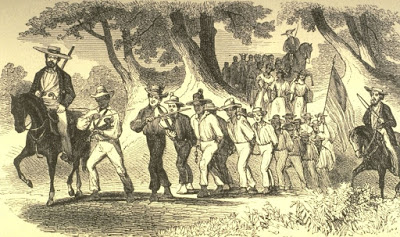
                                                       Slave Coffle

But whites in the South held labor in contempt due to the system of slavery, and the divergent views of each side were noted by Thomas Ewing who noted that labor “is held honorable by all on one side of the line because it is the vocation of freedmen – degrading in the eyes of some on the other side because it is the task of slaves.” [15] Of course with labor being the task of African slaves for southerners, the issue was entwined with race, and “Even if slavery was wrong, its wrongs were cancelled out for nonslaveholders by the more monstrous specter of racial equity.”  [16]

Georgia Governor Joseph E. Brown emphasized the threat to whites in that blacks would be their social equals and competitors should slavery end. The racial component assured poor southern whites that they were superior to blacks and an Alabama lawyer wrote “The privilege of belonging to the superior race and being free was a bond that tied all Southern whites together… and it seemed from a Southern stand-point, to have for its purpose the leveling of all distinctions between the white man and the slave hard by.” [17] But poor white workers who remained in the South “repeatedly complained about having to compete with slaves as well as poorly paid free blacks” [18] leading many to seek a new livelihood in either Free States or the new territories.

For Southern politicians and slaveholders, the expansion of slavery was essential to its continued maintenance in the states where it was already legal. “Because of the need to maintain a balance in the Senate, check unruly slaves, and cultivate fertile soils, many planters and small plantation owners- particularly those living in the southern districts of the cotton states- asserted that their survival depended on new territory.” [19] In those decades “a huge involuntary migration took place. Between 800,000 and 1 million slaves were moved westward….” [20]

The need for slaves caused prices to soar, largely due to the ban on the import of slaves from Africa. This made the interregional trade much more important and linked the upper and lower south as well as the new slave-holding territories into “a regionwide slave market that tied together all of the various slaveowning interests into a common economic concern.” [21] In some older states like Virginia where fewer slaves were required, the exportation of slaves became a major industry:

“male slaves were marched in coffles of forty or fifty, handcuffed to each other in pairs, with a long chain through the handcuffs passing down the column to keep it together, closely guarded by mounted slave traders followed by an equal number of female slaves and their children. Most of them were taken to Wheeling, Virginia, the “busiest slave port” in the United States, and from there they were transported by steamboat to New Orleans, Natchez, and Memphis.”[22]

To be continued…

Notes

[1] Ibid. McPherson Drawn With Sword p.50

[2] Van Evrie, J.H. “Negroes and Negro Slavery;” The First an Inferior Race – The Latter, Its Normal Condition 1861 in The Confederate and Neo-Confederate ReaderThe Great Truth about the Lost Cause, Loewen, James W. And Sebesta, Edward H. Editors, University Press of Mississippi, Jackson, 2010 p.75

[3] Ibid. Levine Half Slave and Half Free p.19

[4] Cartwright, Samuel A. Diseases and Peculiarities of the negro Race, 1851 in Loewen, James W and Sebesta, Edward H. The Confederate and Neo-Confederate reader: The Great Truth about the Lost Cause University of Mississippi Press, Jackson 2010 p.66

[5] Ibid. Cartwright Diseases and Peculiarities of the negro Race, 1851 p.70

[6] Foner, Eric Free Soil, Free Labor, Free Men: The Ideology of the Republican Party Before the Civil War Oxford University Press, Oxford and New York 1970 and 1995 p.7

[7] Ibid. Foner Free Soil, Free Labor, Free Men pp.12-13

[8] Ibid. Foner Free Soil, Free Labor, Free Men p.12

[9] Ibid. McPherson The Battle Cry of Freedom: The Civil War Era p.28

[10] Ibid. Foner Free Soil, Free Labor, Free Men p.12

[11] Ibid. McPherson The Battle Cry of Freedom p.196

[12] Ibid. Guelzo Fateful Lightening p.38

[13] Ibid. McPherson The Battle Cry of Freedom p.28

[14] Ibid. Foner Free Soil, Free Labor, Free Men p.16

[15] Ibid. Foner Free Soil, Free Labor, Free Men p.16

[16] Ibid. Guelzo Fateful Lightening p.38

[17] Ibid. Guelzo Fateful Lightening p.39

[18] Ibid. Levine Half Slave and Half Free p.44

[19] Ibid. Egnal  Clash of Extremes pp.125-126

[20] Korda, Michael. Clouds of Glory: The Life and Legend of Robert E. Lee Harper Collins Publishers, New York 2014 p.203

[21] Deyle, Steven The Domestic Slave Trade in Major Problems in the Civil War and Reconstruction Documents and Essays Third Edition edited by Michael Perman and Amy Murrell Taylor Wadsworth Cengage Learning Boston MA 2011 p.53

[22] Ibid. Korda Clouds of Glory: The Life and Legend of Robert E. Lee  p.203

Leave a comment

Filed under civil rights, civil war, ethics, History, laws and legislation, News and current events, Political Commentary, racism

Eliminating Political Opposition and Laws Enabling Crimes Against Humanity: Germany July 14th 1933

Friends of Padre Steve’s World,

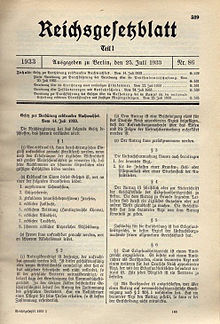
On July 14th 1933 two laws were passed by the Nazi led government, less than five and a half months after Hitler’s legal accession to power, and four and a half months after he, under the Weimar Constitution’s Article 48 seized power following the Reichstag Fire. 

One law, under the policy of Gleichschaltung (coordination) all political parties other than the Nazi Party were prohibited. The Parties of the Right and Center voluntarily dissolved themselves, the Communists had already been made illegal and their surviving leaders went underground. The Social Democrats resisted until the end, but were banned.

The second law, was much easier to enforce without official political parties to oppose it was much more drastic. It did not only deny people their political rights, it determined that some people were life unworthy of life and people who could not be allowed to reproduce and would be sterilized in order to purify the the Aryan race. That law was called Gesetz zur Verhütung erbkranken Nachwuchses or the Law for the Prevention of Genetically Diseased Offspring. 

It read:

The Reich government has passed the following law, which is hereby promulgated:

§ 1.  Anyone suffering from a hereditary disease can be sterilized by a surgical operation if, according to the experience of medical science, there is a high probability that his offspring will suffer from serious physical or mental defects of a hereditary nature.
Anyone suffering from any of the following diseases is considered hereditarily diseased under this law:

1. Congenital mental deficiency

2. Schizophrenia

3. Manic-depression

4. Hereditary epilepsy

5. Hereditary St. Vitus’ Dance (Huntington’s Chorea)

6. Hereditary blindness

7. Hereditary deafness

8. Serious hereditary physical deformity.

Furthermore, anyone suffering from chronic alcoholism can be sterilized.

§ 2.  Applications for sterilization can be made by the individual to be sterilized. If this person is legally incompetent, has been certified on account of mental deficiency, or is not yet 18, a legal representative has the right to make an application on this person’s behalf but needs the consent of the court of guardians to do so. In other cases of limited competency, the application needs to be approved by the legal representative. [ . . . ]

§ 3.  Sterilization can also be requested by the following: 1. the state physician. 2. In the case of inmates of hospitals, nursing homes, and penal institutions, by the head thereof.

§ 4.  The application is to be made to the office of the Eugenics Court; it can either be made in writing or dictated to the court. The facts upon which the application is based should be supported by a medical certificate or confirmed in some other way. The office must inform the state physician of the application.

§ 5.   Responsibility for the decision rests with the Eugenics Court that has jurisdiction over the district in which the person to be sterilized officially resides.

§ 6.  The Eugenics Court is to be attached to a district court [Amtsgericht]. It consists of a district court judge acting as chairman, a state physician, and another physician certified by the German Reich and particularly well trained in eugenics…

§12. Once the Court has decided on sterilization, the operation must be carried out even against the will of the person to be sterilized, unless that person applied for it himself. The state physician has to attend to the necessary measures with the police authorities. Where other measures are insufficient, direct force may be used.

This law comes into effect on January 1, 1934.
Berlin, July 14, 1933.


The Reich Chancellor
Adolf Hitler

The Reich Minister of the Interior
Frick

The Reich Minister of Justice
Dr. Gürtner

During the first year of the law over 64,000 people were forcibly sterilized. During the course of the Reich’s existence over 400,000 people were forcibly sterilized. Fewer than 1% of those who appealed the decision for sterilization gained a reprieve. The law was the first in a series of laws and policy decisions that would lead to the Holocaust. 

Many of the Eugenics laws in the Third Reich modeled themselves on Eugenics laws in many American States, as well as the studies of well know American, and English Eugenicists Of the time, men who approved of the German laws when they were published.

In our own country there are those who want to deny care and insurance for care for people whose conditions are considered a drain on the economy, and while there is a strong political lobby opposed to abortion, most of those allegedly pro-life people and politicians seem to care about the health and quality of life once it emerges from the womb. The law Hitler signed forbade the abortion of Aryan fetuses, but allowed for the abortions of fetuses who might be less than perfect or require expensive medical care to maintain.

With the systematic devaluation of life in this country based on the economic value of people, and the very obvious belief that the lives of racial and certain religious minorities as not having the same value as Americans of European descent. While some would like to believe that a problem isolated to the radical right wing backers of President Trump, there are places where well off white liberals and progressives attempt to insulate themselves from racial and religious minorities.

Irregardless of the seeming contempt for well off white liberals and progressives For the lives and circumstances of minorities so long as they are not their neighbors, the greater threat to life is the political and economic ideology of so called conservatives that devalues life to its economic and racial benefit; the same kind of people who support President Trump’s racial, economic, and medical policies. The same people who espouse explicitly racist views, and whose leader calls his opponents, be they political, educational, or those who dare to criticize him in the media as “enemies of the state.”  The only thing keeping the President and his followers total control is the fact that our constitutional institutions are barely holding and there has been no crisis such as the Reichstag Fire a terrorist event, a Major War to suspend the Constitution and to enable the Executive Branch to take total control of the country, possibly ban political opposition, and freedom of speech and association.

That is what I worry about. Once the basic freedoms under the Constitution are abrogated, once citizens are determined to be enemies of the state then it is possible for that same executive branch to pass laws laws by decree that suspend the liberties, or take the lives of those deem life unworthy of life.

So until tomorrow,

Peace

Padre Steve+


1 Comment

Filed under economics and financial policy, ethics, healthcare, History, holocaust, laws and legislation, nazi germany, News and current events, Political Commentary

To Kill a Mockingbird at 59: Sometimes the Bible in the Hand Of One Man is Worse than a Whiskey Bottle in the Hand Of Another

mock

Friends of Padre Steve’s World,

Tomorrow marks the 59th the anniversary of the release of Harper Lee’s classic novel To Kill a Mockingbird. I have read the book, and seen the film many times. Sadly, it is all too relevant in our time. Race hatred and a belief in the absolutes of aberrant forms of Christianity which bless White Racism are rampant in the United States and Europe, many of these groups are overtly Fascist and Authoritarian.

That alone is to make the novel and the film worth reading and watching, especially if you haven’t read the book or seen the film.

Sadly, such people would “kill the Mockingbird” to ensure that they keep their privileged position in society. The Mockingbirds are those that they have condemned to social inferiority and discrimination and eternal punishment, especially gays and the LGBT community, but others as well.

This is especially the case of the preachers, pundits and politicians that crowd the airwaves and internet with their pronouncements against Gays, immigrants, Arabs, poor blacks, political liberals, progressive Christians, and for that matter anyone who simply wants the same rights enjoyed by these Christians.

In the book there is a line spoken by Miss Maudie Atkinson, a neighbor of Atticus Finch and his children. She says to Atticus’s daughter Scout:

“Sometimes the Bible in the hand of one man is worse than a whisky bottle in the hand of another… There are just some kind of men who – who’re so busy worrying about the next world they’ve never learned to live in this one, and you can look down the street and see the results.”

As I survey the world of Christian conservatives I become surer of this every day. I’ve often wrote about my own fears in regard to dealing with such people as well as the troubling trends that I see. Last week I wrote five articles on the trends that I see in the church, trends toward greed, political power, social isolation and the active campaign of some to deny basic civil rights to people that they hate on purely religious grounds.

The language of some like Matt Staver of Liberty Counsel, Tony Perkins of the American Family Association and a host of others describe actions of governments and courts to ensure equal treatment of all people under the law as threats to Christians, affronts to them and of course to God. Their words are chilling. Matt Staver commented a few years back that if the Supreme Court upheld marriage equity for gays that it would be like the Dred Scott decision. Of course that is one of the most Orwellian statements I have ever heard, for the Dred Scott decision rolled back the few rights that blacks had anywhere in the country and crushed the rights of people in non-slave states.

Again, as a reminder to readers, especially those new to the site, I spent a large amount of my adult Christian life in that conservative Evangelical cocoon. I worked for a prominent television evangelist for several years, a man who has become an extreme spokesman for the religious political right. I know what goes on in such ministries, I know what goes on in such churches. I know the intolerance and the cold hearted political nature of the beast. I know and have gone to church with Randall Terry, the former head Operation Rescue who once said: “Let a wave of intolerance wash over you. I want you to let a wave of hatred wash over you. Yes, hate is good…” I have walked in those shoes, I have been whipped up by those preachers. I fully understand them, and because I do I am in a unique position to critique their words and actions, especially as the supposedly moral majority snuggle up with one of the most amoral men ever to become President, solely to protect and crease their political power. They have surrendered their claim to being a party of morality, and embraced evil for the sake of their power. Without empathy, they judge and condemn others not like them. They are incapable of understanding anything that conflicts with their visions of White Power, racial superiority, and an interpretation of Christianity which needs state support in order to survive.

As Atticus Finch told his children:

“You never really understand a person until you consider things from his point of view… Until you climb inside of his skin and walk around in it.”

They cannot, thus I total reject the message of such people now, not out of ignorance, but because I have walked in their shoes. At times I supported their causes, not to any extreme, but all too often my crime was simply said nothing when I knew that what they preached, taught and lived was not at all Christian, but from the pits of Hell.

As far as them being entitled to hold whatever opinion they want, even if I disagree, yes that is their right. But as Atticus said:

“People are certainly entitled to think that I’m wrong, and they are entitled to full respect for their opinions. But before I can live with other folks I’ve got to live with myself. The only thing that doesn’t abide by majority rule is a person’s conscience.”

My conscience will not allow me to be silent when I see men like Staver, Perkins, Franklin Graham, Robert Jeffress, Pat Robertson, and so many others preach hatred towards those who are different than them. Their reach and power has only increased with their support of President Trump.

In the movie and the book the Mockingbirds were Tom Robinson, the black man falsely accused of rape and assault and Boo Radley, a shy recluse feared by his neighbors, a man who stories were made up about; stories that turned a simple man into a monster in the eyes of people who did not know him. Today they are others who fit the Mockingbird role, people who just want to get along and live in peace, but who endure discrimination and damnation from those who call themselves Conservative Christians.

Jem Finch, the son of Atticus asks his sister a question in the book and the film:

“If there’s just one kind of folks, why can’t they get along with each other? If they’re all alike, why do they go out of their way to despise each other?”

I ask the same question on a daily basis.

So until tomorrow I wish you a good night.

Peace

Padre Steve+

4 Comments

Filed under books, christian life, civil rights, ethics, faith, film, History, LGBT issues, movies, News and current events, Political Commentary

Reflecting on the Best Of American Sports Teams

Friends of Padre Steve’s World,

The United States Women’s National Team, was simply the best and I continue to be in love with them.

They were derided before the tournament, mostly by male commentators. Their one of a kind outspoken veteran star player and co-Captain was viciously attacked in public statements by the President Of the United States, and they were criticized by others for their dominance and love of the game and love of team. I have never seen any winning team in any sport so derided for their unity, their dominance, and their ability to win against some of the best teams in the world, including Sweden, France, and England. In the final they defeated the Netherlands team which had played brilliantly the entire tournament, never trailing in a game until Megan Rapinoe scored on a penalty kick in the 61st minute of the championship game.

Their victory today was more than a victory for their team it was a victory for the proposition in the Declaration Of Independence that all people are created equal. In addition to winning they forced the hand of FIFA to increase the financial aspects of the game to women, doubling and then quadrupling the amount of money dedicated to the women’s tournament.

Beyond that, these women, and the members of the team over the past quarter of a century have blazed a trail of excellence that is hard to match. Forget about the men’s Olympic Basketball “Dream Teams”, made up of the best players in the NBA, no one cared when they ran up scores, dominated, and celebrated their wins. Forget the United States men’s Baseball team who cannot win or come close to winning an international tournament because the MLB owners won’t let their best players compete, or the U.S. Men’s Soccer team which has never gotten past the semifinals in the World Cup despite more funding and higher salaries than those of the USNWT.

The U.S. Women speak for more than sports. They speak for the equality of the Declaration, and the rights of women (and men) everywhere who are discriminated against because of gender, race, or religion. By the way when I speak of gender I don’t just talk male and female, but also of my LGBTQ friends, brothers and sisters.

This was a special team. They had a lot of detractors, including former teammates, but they showed their metal and won, in a convincing manner. They scored the most goals ever by a women’s treat in World Cup history and only allowed three goals against them in seven games. They defeated three of the highest rated teams in the world just to get to the final. They dealt with age and injuries, and still showed a joy for the game, love of team, and yes, patriotism, even the kind of which is unpopular and makes authoritarians uncomfortable and angry.

In that, Megan Rapinoe, the object of so much of President Trump’s disdain, won both the tournament’s Golden Boot for the most goals and assists, as well as the Golden Ball as best player of the tournament. As a patriot who believes and hopes for the best that our country has to offer, I hope that she and the team refuse any invitation to Trump’s White House. They fought for too much to surrender those victories to a man who would use them for a photo op and then continue to speak badly of them.

Congratulations to the American Women who won the Women’s World Cup and so much more, this year, as well as in 1995, 1999, and 2015. They all deserve our respect, appreciation, and admiration; but especially this team, for they are the face of ALL United States Soccer. They are the people who have inspired American women and men to compete at the highest levels of soccer worldwide.

So until tomorrow,

Peace,

Padre Steve+

Leave a comment

Filed under civil rights, leadership, LGBT issues, Loose thoughts and musings, News and current events, soccer, sports and life

The Bloodiest Battle on American Soil: The Human Cost at Gettysburg

gburg dead2

Friends of Padre Steve’s World

This week I have been posting about Gettysburg, Independence Day, and a commentary on the toxic nationalism of President Trump’s hijacking of Independence Day. We have been visiting with friends and I have been catching up on my reading. I completed Ian Kershaw’s “To Hell and Back: Europe 1914-1949; I’m about halfway through Geoff Megargee’s “Inside Hitler’s High Command”; and I am about two thirds of the way through with Danielle Allen’s “Our Declaration: A Reading Of the Declaration of Independence In Defense of Equality.” They are all worth the read in an age where much of our citizenry lacks a basic understanding of the principles of the Declaration and worships at the altar of brute military and economic force, thinking that somehow those are the guarantors of freedom and liberty. They are not. Kershaw’s book shows the cost of toxic nationalism and ideologies that destroyed Europe in two World Wars, Megargee’s shows the cost of militarism and militaries  that become compliant with authoritarian leaders. 

So tonight I repost a final article from my Gettysburg text. It deals with the human cost of that battle. 

I am a career military officer who suffers from PTSD, TBI and other afflictions after serving in Iraq’s Al Anbar Province in 2007-2008.  I have seen firsthand the terrible effects of war. I am also a historian and I  have served as Assistant Professor at a major military staff college which helps educate senior military officers from this country and other countries. In that capacity I taught ethics as well as led the Gettysburg Staff ride, or study of the Battle of Gettysburg. When teaching I always attempted to deal with the human cost of war.

Gettysburg was the most costly battle ever fought on the American continent. Around 50,000 men were killed or wounded there in three days of battle. William Tecumseh Sherman noted that “war is hell.” I agree, there is nothing romantic about it. The effects of war last generations and though we have been at war for the last seventeen and a half years, war itself is an abstract concept to most Americans. It is fought by professionals and only experienced by most Americans on the news, movies or most the banal manner, video games; thus the cost in human terms is not fully appreciated, and nor can it be, we are far too insulated from it. Over the past forty plus years our politicians have insulated the public from war, and in doing so they have ensured that we remain in perpetual war which benefits no one. That is a big reason why I write so much about it, not to glorify or romanticize it, but to try in some war to help make it real  to my readers. This is a another draft chapter from my Gettysburg text. 

Peace

Padre Steve+

Walt Whitman Wrote:

“Ashes of soldiers South or North, As I muse retrospective murmuring a chant in thought, The war resumes, again to my sense your shapes, And again the advance of the armies. Noiseless as mists and vapors, From their graves in the trenches ascending, From cemeteries all through Virginia and Tennessee, From every point of the compass out of the countless graves, In wafted clouds, in myriads large, or squads of twos or threes or single ones they come, And silently gather round me…”

Too often we look at distant battles and campaigns in terms of strategy, operations, tactics, leadership and the weaponry employed. Likewise we might become more analytical and look at the impact of the battle or campaign in the context of the war it was fought, or in the manner in which the tactics or weapons used revolutionized warfare. Sometimes in our more reflective moments we might look at individual bravery or sacrifice, often missing in our analysis is the cost in flesh and blood.

Admittedly the subject is somewhat macabre. But with the reality being that very few people in the United States, Canada or Western Europe have experienced the terrible brutality of war it is something that we should carefully consider any time the nation commits itself to war. By we, I mean all citizens, including the many soldiers, sailors and airmen who never see the personally see people they kill, or walk among the devastation caused by the highly advanced, precision weapons that they employ from a great distance, sometimes thousands of miles. In some parts of our military we have men and women who have the mission of targeting and killing enemies and then walking home to their families, but in the Civil War killing in combat “remained essentially intimate; soldiers were able to see each other’s faces and to know whom they had killed.” [1]

While the words of William Tecumseh Sherman that “War is Hell” are as true as when he spoke them; the tragic fact is that for most people war is an abstract concept, antiseptic and unreal; except for the occasional beheading of a hostage by Islamic militants or the videos shot by the perpetrators of crimes against humanity on the internet. Thus the cost of war and its attendant cost in lives, treasure and to the environment are not real to most people in the West.

We use words to describe the business of war which dehumanize the enemy, and we describe their deaths in words more palatable to us. Dave Grossman, the army infantry officer who has spent his post military life writing about the psychology of war and killing wrote:

“Even the language of men at war is the full denial of the enormity of what they have done. Most solders do not “kill,” instead the enemy was knocked over, wasted, greased, taken out, and mopped up. The enemy is hosed, zapped, probed, and fired on. The enemy’s humanity is denied, and he becomes a strange beast called a Jap, Reb, Yank, dink, slant, or slope. Even the weapons of war receive benign names- Puff the Magic Dragon, Walleye, TOW, Fat Boy, Thin Man- and the killing weapon of the individual soldier becomes a piece or a hog, and a bullet becomes a round.” [2]

We can now add the terms Haji and Raghead to Grossman’s list of dehumanizing terms for our opponents from our most recent wars in Iraq and Afghanistan.

The words of Guy Sager in his classic work The Forgotten Soldier about World War Two on the Eastern front is lost on many that study war:

“Too many people learn about war with no inconvenience to themselves. They read about Verdun or Stalingrad without comprehension, sitting in a comfortable armchair, with their feet beside the fire, preparing to go about their business the next day, as usual…One should read about war standing up, late at night, when one is tired, as I am writing about it now, at dawn, while my asthma attack wears off. And even now, in my sleepless exhaustion, how gentle and easy peace seems!” [3]

In an age where so few have served in the military and even few have seen combat in some way shape or form many who study war are comfortable experts who learn about war with no inconvenience to themselves. When I hear men and women, the pundits, politicians and preachers, that Trinity of Evil who constantly exhort governments and peoples to go to war for causes, places or conflicts that they have little understanding of from the comfort of their living rooms or television studios I grow weary. I fully comprehend the words of Otto Von Bismarck who said: “Anyone who has ever looked into the glazed eyes of a soldier dying on the battlefield will think hard before starting a war.” [4]

As a historian who also is a military chaplain who has seen war I struggle with what Sager said. Thus when I read military history, study and write about particular battles or engagements, or conduct staff rides as like the Gettysburg trip that we are embarking on, the human cost is always present in my mind. The fact that I still suffer the effects of PTSD including night terrors and chronic insomnia keeps what I do in good focus, and prevents me from being a comfortable expert.

Thus, it is my view, to conduct a staff ride, to walk the battlefield; especially in somewhat uncomfortable weather is a good thing. It connects us more in at least a small way to the men that fought there, died there, or brought home wounds that changed them forever.

To walk a battlefield where tens of thousands of men were killed and wounded is for me a visit to hallowed ground. I have felt that at Waterloo, Verdun, Arnhem, Normandy, the Bulge, the West Wall, the Shuri Line on Okinawa, Antietam, Chancellorsville, Stone’s River, and of course the battlefield which I have visited more than any in my life, Gettysburg. There are times when I walk these fields that I am overcome with emotion. This I think is a good thing, for as an American who has family ties to the Civil War, Gettysburg in particular is hallowed ground.

In doing this I try to be dispassionate in how I teach and while dealing with big issues that my students will face as Joint Staff Officers. Some of them will become Flag or General Officers, with the responsibility of advising our nation’s leaders as well planning and conducting the military operations on which the lives of thousands or maybe hundreds of thousands of people depend. Thus I do feel a certain responsibility to teach not only the strategy and other important military aspects of this campaign, but also the cost in human lives and ethical considerations. I take this work seriously because it forces us to remember what war is about and its nature, which Clausewitz wrote is “a paradoxical trinity-composed of primordial violence, hatred and enmity…” [5]which William Tecumseh Sherman so rightly understood without the euphemisms that we so frequently use to describe it: “War is cruelty, and you cannot refine it….”

As the sun set on the evening of July 3rd 1863 the battered Army of Northern Virginia and the battered but victorious Army of the Potomac tended their wounds, buried their dead and prepared for what might happen next. On that afternoon it was as if “the doors of Hell had shut” and the next day, the Glorious 4th of July “The heavens opened, and a thunderstorm of biblical proprotions drenched the battlefield, soaking dead, wounded and able-bodied men equally.” [6]

Following the disastrous attack aimed at the Union center, Lee and his surviving commanders prepared for an expected Union counter attack. However, George Meade, the commander of the Army of the Potomac who had correctly anticipated Lee’s assault decided not to gamble on a counter attack, though it was tempting. He knew too well the tenacity and skill of the Confederate commanders and soldiers on the defense and did not want to risk a setback that might give Lee another chance, thus “the two sides stared at each other, each waiting for the other to resume the fighting, neither did.” [7]

As the Confederate army retreated and Meade’s army pursued another army remained at Gettysburg, “an army of the wounded, some 20,350 in number, a third of them Confederate….” Just 106 surgeons were spared from the Army of the Potomac and “the comparatively few overburdened surgeons and attendants now on duty still labored every day to the point of exhaustion.” [8] These overworked men were aided by local volunteers as well as members of the U.S. Sanitary Commission, the Christian Commission and the Sisters of Charity. These men and women “brought organization to the hospitals, relief to the medical staffs and the local volunteers, and immense comfort to the wounded, whether blue or butternut.” [9]

The dead and wounded littered the battlefield and the sights and smells were ghastly:

“Wherever men gazed, they saw dead bodies. A New Yorker thought they “lay as thick as the stones that is on father’s farm.” A stench smothered the field, moving John Geary to tell his wife, “My very clothes smell of death.” A Regular Army veteran exclaimed, “I have seen many a big battle, most of the big ones of the war, and I never saw the like.” [10] A resident of Gettysburg walked up to Little Round top and wrote of what she observed from the peak of that rocky hill:

“surrounded by the wrecks of battle, we gazed upon the valley of death beneath. The view there spread out before us was terrible to contemplate! It was an awful spectacle! Dead soldiers, bloated horses, shattered cannon and caissons, thousands of small arms. In fact everything belonging to army equipments was there in one confused and indescribable mass.” [11]

At Joseph Sherfy’s farm, scene of some of the heaviest fighting on the second day, his barn “which had been used as a field hospital, was left a burnt ruin, with “crisped and blackened limbs, heads and other portions of bodies” clearly visible.” [12] When the rains came, the wounded suffered terribly. Many of the field aid stations were set up next to the creeks that crisscrossed the battlefield, and those streams quickly flooded as torrents of rain water caused them to overflow their banks. “A New Jersey soldier watched in horror as the flood waters washed over and carried away badly wounded men unable to move to safety….” [13]

Oliver Howard took his escort to do a reconnaissance of the town on July 4th, one of the cavalry troopers described the scene:

“The battle field was the Awfulest sight I ever saw…The woods in front of our men the trees were riddled with Cannon ball and bullets evry limb shot off 20 feet high. Some say the Rebel dead lay six deep in the grave yard where we lay. Nearly every grave stone was shattered by shots and everything was torn to pieces. I went through the town on the 4th of July with the General. The streets were covered with dead. Evry frame house were riddled with balls the brick ones dented thick where shot had hit.” [14]

Field hospitals were often little more than butcher shops where arms and legs were amputated by overworked surgeons and attendants while those with abdominal wounds that could not be easily repaired were made as comfortable as possible. Triage was simple. If a casualty was thought to have a reasonable chance at survival he was treated, if not they were set aside in little groups and allowed to die as peacefully as possible. Churches were requisition for use of the surgeons. A volunteer nurse noted: “Every pew was full; some sitting, some lying, some leaning on others. They cut off the legs and arms and threw them out the windows. Every morning the dead were laid on the platform in a sheet or blanket and carried away.” [15]

Chaplains were usually found with the doctors, caring for the physical as well as the spiritual needs of the wounded. Protestant chaplains might ensure that their soldiers “knew Jesus” and Catholics administered the Last Rites, often working together across denominational lines to care for their soldiers.

A Union chaplain described the ministry in the field hospitals and aid stations:

“Some of the surgeons were posted well up toward the front to give first aid. More of them were in the large field hospitals of division in more secure places at the rear. The chaplain might be at either place or at both by turns. Some made a point of watching for any wounded man who might be straggling back, who perhaps could be helped up into the saddle and ride back to the hospital. When the demand for help became urgent the chaplains were nurses. As the rows of wounded men grew longer, chaplains went from man to man to see what could be done to relieve their pain, perhaps to take a message or letter. All day into the night this work would continue. A drink of water, a loosened bandage on a swollen limb, a question answered, a surgeon summoned, a whispered word of comfort marked their course. Each night at sundown the men who died during the day were buried, with a short prayer, side by side in a common grave, each in his uniform with canvas wrapped around his face and a strip of paper giving his name and regiment in a bottle buttoned under his blouse.” [16]

The war would challenge the theology of the clergy who served as chaplains on both sides, as “individuals found themselves in a new and different moral universe, one in which unimaginable destruction had become a daily experience. Where could God belong in such a world? How could a benevolent deity countenance such cruelty and suffering? Doubt threatened to overpower faith….” [17] That sense of bewilderment is not lacking today among those of faith who return from war.

Some men, clergy and laity alike would attempt to find a theological meaning to the suffering. Many would do so in the theology of John Calvin which emphasized the Providence and foreknowledge of God. That theological frame of reference, of the results of battles and the death or wounding of men in war and the attendant suffering was found in the will, or providence of God was quite common among men of both sides who grew up during the Second Great Awakening, as it is today; and for some it was carried to fatalistic extremes. However, others like Colonel William Oates of the 15th Alabama, who considered himself a believing Christian, wrote that he believed God:

“endowed men with the power of acting for themselves and with responsibility for their acts. When we went to war it was a matter of business, of difference of opinion among men about their temporal affairs. God had nothing to do with it. He never diverted a bullet from one man, or caused it to hit another, nor directed who should fall or who should escape, nor how the battle should terminate. If I believed in such intervention of Providence I would be a fatalist….”[18]

The carnage around the battlefield was horrifying to most observers. Corporal Horatio Chapman of the 20th Connecticut Volunteers wrote about the sight on Cemetery Ridge on the night of July 3rd following the repulse of Pickett’s Charge:

But in front of our breastworks, where the confederates were massed in large numbers, the sight was truly awful and appalling. The shells from our batteries had told with fearful and terrible effect upon them and the dead in some places were piled upon each other, and the groans and moans of the wounded were truly saddening to hear. Some were just alive and gasping, but unconscious. Others were mortally wounded and were conscious of the fact that they could not live long; and there were others wounded, how bad they could not tell, whether mortal or otherwise, and so it was they would linger on some longer and some for a shorter time-without the sight or consolation of wife, mother, sister or friend. I saw a letter sticking out of the breast pocket of one of the confederate dead, a young man apparently about twenty-four. Curiosity prompted me to read it. It was from his young wife away down in the state of Louisiana. She was hoping and longing that this cruel war would end and he could come home, and she says, “Our little boy gets into my lap and says, `Now, Mama, I will give you a kiss for Papa.’ But oh how I wish you could come home and kiss me for yourself.” But this is only one in a thousand. But such is war and we are getting used to it and can look on scenes of war, carnage and suffering with but very little feeling and without a shudder.” [19]

Colonel William Oates of the 15th Alabama whose brave troopers assaulted Little Round Top on July 2nd wrote:

“My dead and wounded were nearly as great in number as those still on duty. They literally covered the ground. The blood stood in puddles in some places on the rocks; the ground was soaked with the blood of as brave men as ever fell on the red field of battle.” [20]

Another Confederate soldier described the scene west of the town on July 4th:

“The sights and smells that assailed us were simply indescribable-corpses swollen to twice their size, asunder with the pressure of gases and vapors…The odors were nauseating, and so deadly that in a short time we all sickened and were lying with our mouths close to the ground, most of us vomiting profusely.” [21]

The burial of the dead was too much for the soldier’s alone to accomplish. “Civilians joined the burial of the dead out of both sympathy and necessity. Fifty Confederates lay on George Rose’s fields; seventy-nine North Carolinians had fallen on a perfect line on John Forney’s farm.” [22]

Those tending the wounded recalled how many of the wounded selflessly asked medical personnel to tend others more badly wounded than themselves; a volunteer nurse wrote her sister: “More Christian fortitude was never witnessed than they exhibit, always say-‘Help my neighbor first, he is worse.’” [23] The Confederate wounded were the lowest priority for the badly overwhelmed Union surgeons and Lee had not done much to help, leaving just a few surgeons and attendants to care for the Confederates left on the battlefield. The Confederate wounded housed in the classrooms of Pennsylvania College were left in dire straits:

“All the rooms, halls and hallways were occupied with the poor deluded sons of the South,” and “the moans prayers, and shrieks of the wounded and dying were everywhere.” Between 500 and 700 wounded Confederates were jammed in with “five of our surgeons” and “no nurses, no medicines no kinds of food proper for men in our condition….” [24]

Across the battlefield the wounded were being treated in a variety of makeshift aid stations and field hospitals:

“Sergeant Major David E. Johnson of the Seventh Virginia was taken to the Myers house after the bombardment, suffering from a shrapnel wound to his left side and arm. “The shed in which I was placed,” he recalled, “was filled with the wounded and dying….I spoke to no one, and no one to me, never closed my eyes to sleep; the surgeons close by being engaged in removing the limbs of those nearby to be amputated….I heard nothing but the cries of the wounded and the groans of the dying, the agonies of General Kemper, who lay nearby, frequently being heard.” [25]

The suffering was not confined to the hospitals; John Imboden commanding the cavalry brigade protecting the Confederate wounded being transported home and supply trains described the horror of that movement:

“Scarcely one in a hundred had received adequate surgical aid, owning to the demands on the hard working surgeons from still far worse cases tat had to be left behind. Many of the wounded in the wagons had been without food for thirty-six hours. Their torn and bloody clothing, matted and hardened, was rasping the tender, inflamed, and still oozing wounds….From nearly every wagon as the teams trotted on, urged by whip and shout came such cries and shrieks as these:

“My God! Why can’t I die?” “My God! Will no one have mercy and kill me?” “Stop! Oh! For God’s sake stop for just one minute; take me out and leave me to die on the roadside.” “I am dying! I am dying! My poor wife, my dear children, what will become of you?” [26]

Eventually, by July 22nd with most of the wounded evacuated a proper general hospital was set up east of the town and the remaining wounded taken there. That hospital, named Camp Letterman grew into “a hundred –acre village of cots and tents, with its own morgue and cemetery, and served more than 3,000 wounded before it was finally closed in November.” [27]

As for the families of the dead, many never found out the details of their loved one’s deaths, which caused their losses to be “in some sense unreal and thus “unrealized,” as the bereaved described them, recognizing the inhibition of mourning that such uncertainty imposed.” [28] Much was because of how overwhelmed the field hospital staffs were, and how inadequate their records of treatment and the dispositions of bodies were sketchy at best. “Reports from field hospitals were riddled with errors and omissions, often lacked dates, and were frequently illegible, “written with the faintest lead pencil.” [29]

Among the killed and wounded were the great and the small. John Reynolds who died on day one, Winfield Scott Hancock, the valiant commander of the Union II Corps was severely wounded during Pickett’s Charge. Dan Sickles, the commander of Third Corps who had nearly brought disaster on the Federal lines by advancing to the Peach Orchard on July 2nd had his leg amputated after being grazed by a cannon ball at the Trostle Farm. Sickles, who survived the wound and the war, would visit the leg, which had carefully ordered his surgeons to preserve. The leg is now displayed at the National Museum of Health and Medicine in Washington D.C.

The Army of the Potomac lost a large number of brigade and regimental commanders including Strong Vincent, the young and gallant brigade commander who helped save Little Round Top; George Willard who brought redemption to his Harper’s Ferry brigade on Cemetery Ridge stopping Barksdale’s charge on July 2nd; Colonel Augustus Van Horne Ellis who before being killed at Devil’s Den told his staff “the men must see us today;” and the young Elon Farnsworth, who had been promoted from Captain to Brigadier General just days before his death in a senseless ordered by his division commander Judson “Kill Cavalry” Kilpatrick, against Hood and McLaws dug in divisions as the battle ended.

The Confederates suffered grievous losses. Divisional commanders like Dorsey Pender and Johnston Pettigrew were mortally wounded, John Bell Hood was severely wounded, Isaac Trimble, wounded and captured while Harry Heth was wounded. Casualties were even higher for commanders and the brigade and regiment level, the list included excellent commanders such as Paul Semmes and William Barksdale, while Wade Hampton, Stuart’s best brigade commander was seriously wounded and would be out of action for months. The toll of brigade and regimental commanders who were killed or wounded was fearful. “At the regimental level approximately 150 colonels, lieutenant colonels and majors had been killed, wounded or captured. Of that number nineteen colonels had been slain, the most in any single battle in which the army had been engaged. Captains now led regiments.”[30]

In Picket’s division alone all three brigade commanders, Kemper, Armistead and Garnett were killed or wounded while twenty-six of forty Field Grade officers were casualties. Forty-six percent (78 of 171) of the regiments of the Army of Northern Virginia suffered casualties at the command level. The Confederate casualties, especially among the best leaders were irreplaceable and Lee’s Army never recovered from the loss of seasoned leaders who were already in short supply.

For some like Private Wesley Culp of the 2nd Virginia it was a final trip home. Culp had grown up in Gettysburg and had taken a job in Virginia prior to the war. In 1861 he enlisted to serve among his friends and neighbors. He was killed on the morning of July 3rd on Culp’s Hill on the very property owned by his uncle where he grew up and had learned to hunt.

One witness, Frank Haskell looked in at a field hospital in the Union II Corps area and wrote:

“The Surgeons with coats off and sleeves rolled up…are about their work,… “and their faces and clothes are spattered with blood; and though they look weary and tired, their work goes systematically and steadily on- how much and how long they have worked, the piles of legs, arms, feet, hands, fingers…partially tell.” [31]

All told between 46,000 and 51,000 Americans were killed or wounded during the three days of Gettysburg. Busey and Martin’s Regimental Strengths and Losses at Gettysburg list the following casualty figures, other accounts list higher numbers, some as many as 53,000. One also has to remember that many of the missing soldiers were killed in action, but their bodies were simply never found.

                           Killed               wounded         missing         total

Union                    3,155                14,531             5,369           23,055

Confederate         4,708                12,693             5,830            23,231

Total                     7,863               27,224            11,199          46,286

To provide a reference point we need to remember that in 8 years of war in Iraq the United States suffered fewer casualties than during the three days of Gettysburg. It was the bloodiest single battle in American history, and it was a battle between brothers not against foreign enemies. To put it another perspective, even at the lowest estimates “the “army of Northern Virginia suffered something comparable to two sinkings of the Titanic, the 2001 attacks on the World Trade Center and the Pentagon, ten repetitions of the Great Blizzard of 1888, and two Pearl Harbors.” [32]Robert E Lee testified to Congress following the war “the war… was an unnecessary condition of affairs, and might have been avoided if forbearance and wisdom had been practiced on both sides.” [33]  Lee’s “Old Warhorse” James Longstreet asked “Why do men fight who were born to be brothers?” [34]

The carnage and death witnessed by survivors of Gettysburg and the other battles of the war changed Civil War soldiers as much as war has before or after. James Garfield, who served as a general in the Union army and went on to become President of the United States noted: “at the sight of these dead men whom other men killed, something went out of him, the habit of a lifetime, that never came back again: the sense of the sacredness of life and the impossibility of destroying it.” [35]

Others, like veterans of today had trouble adjusting to life after the war. “Civil War veterans had trouble finding employment and were accused of being drug addicts. Our word “hobo” supposedly comes from homeless Civil War veterans- called “hoe boys” – who roamed the lanes of rural America with hoes on their shoulders, looking for work.” [36] Following the war, during the turmoil of Reconstruction and the massive social change brought about by the industrialization of society and rise of “industrial feudalism” numerous veterans organizations were founded, for those that belonged to them they were “one of the principle refuges for old soldiers who had fought for a very different world than the one they found around them.” The Grand Army of the Republic was the most prominent of these organizations. “In more than 7,000 GAR posts across the United States, former soldiers could immerse themselves in a bath of sentimental memory; there, they established a ritualized camp geography, rekindled devotion to emancipation and preached the glories of manly independence.” [37]

At the end of the war, Joshua Chamberlain, the hero of Little Round Top who was well acquainted with the carnage of war suffered immensely. His wounds never healed fully, and he struggled to climb out of “an emotional abyss” in the years after the war. Part was caused by his wounds which included wounds to his sexual organs, shattering his sexuality and caused his marriage to deteriorate. He wrote his wife about the “widening gulf between them, one created at least in part by his physical limitations: “There is not much left in me to love. I feel that all too well.” [38]

Gouverneur Warren, who had helped save the Union at Little Round Top wrote to his wife while on Engineering duty after the war: He wrote in 1866 “Indeed the past year…was one of great despondency for me…I somehow don’t wonder that persons often remark how seldom I laugh, but it is really seldom that I do.” He wrote again in 1867 “I wish I did not dream that much. They make me sometimes dread to go to sleep. Scenes from the war, are so constantly recalled, with bitter feelings I wish to never experience again. Lies, vanity, treachery, and carnage.” [39]

The killing at Gettysburg and so many other battles “produced transformations that were not readily reversible; the living into the dead, most obviously, but the survivors into different men as well, men required to deny, to numb basic human feelings at costs they may have paid for decades after the war ended, as we know twentieth and twenty-first-century soldiers from Vietnam to Iraq continue to do; men who like James Garfield, were never quite the same again after seeing fields of slaughtered bodies destroyed by me just like themselves.” [40]

Joshua Chamberlain asked the most difficult questions when viewing the devastation around Petersburg in the final days of the war:

“…men made in the image of God, marred by the hand of man, and must we say in the name of God? And where is the reckoning for such things? And who is answerable? One might almost shrink from the sound of his own voice, which had launched into the palpitating air words of order–do we call it?–fraught with such ruin. Was it God’s command that we heard, or His forgiveness that we must forever implore?” [41]

Notes

Chamberlain’s questions should always be in our minds as we send young men and women to war. 

Notes

[1] Faust, Drew Gilpin, This Republic of Suffering: Death and the American Civil War Vintage Books, a division of Random House, New York 2008 p.41

[2] Grossman, Dave On Killing: The Psychological Costs of Learning to Kill in War and Society. Back Bay Books, Little, Brown and Company New York 1995, 1996 p.92

[3] Sager, Guy The Forgotten Soldier originally published as Le Soldat Oublie Editions Robert Laffont 1967, Translation Harper and Row Inc 1971, Brasey’s Washington D.C 2000 p.223

[4] Bismarck, Otto von Speech, August 1867

[5] Clausewitz, Carl von. On War Indexed edition, edited and translated by Michael Howard and Peter Paret, Princeton University Press, Princeton NJ 1976 p.89

[6] Wittenberg, Eric J, Petruzzi, David and Nugent, Michael F. One Continuous Fight: The Retreat from Gettysburg and the Pursuit of Lee’s Army of Northern Virginia July 4-14 1863 Savas Beatie LLC New York NY and El Dorado Hills CA 2008,2001 p.27

[7] Ibid. Wittenberg One Continuous Fight p.28

[8] Sears, Stephen W Gettysburg Houghton Mifflin Co. Boston and New York 2003 p.508

[9] Ibid. Sears Gettysburg p.510

[10] Wert, Jeffry D. The Sword of Lincoln: The Army of the Potomac Simon and Schuster, New York and London 2005 p.303

[11] Schultz, Duane The Most Glorious Fourth: Vicksburg and Gettysburg July 4th 1863. W.W. Norton and Company New York and London, 2002 p.357

[12] Faust This Republic of Suffering p.81

[13] Ibid. Wittenberg One Continuous Fight p.30

[14] Ibid. Wittenberg One Continuous Fight pp.32-33

[15] Ibid. Sears Gettysburg. p.508

[16] Brinsfield, John W. et. al. Editor, Faith in the Fight: Civil War Chaplains Stackpole Books, Mechanicsburg PA 2003 pp.121-122

[17] Ibid. Faust. This Republic of Suffering p.267

[18] Oates, Willam C. and Haskell, Frank AGettysburg: The Confederate and Union Views of the Most Decisive Battle of the War in One Volume Bantam Books edition, New York 1992, originally published in 1905 p.138

[19] Chapman, Horatio Civil War Diary of a Forty-niner pp.22-24 Retrieved from http://www.dbappdev.com/vpp/ct20/hdc/HDC630703.htm 8 April 2014

[20] Oates, William C. Southern Historical Papers, April 6th, 1878 retrieved from http://www.brotherswar.com/Civil_War_Quotes_4h.htm 18 July 2014

[21] _________ What Happened to Gettysburg’s Confederate Dead? The Blog of Gettysburg National Military Park, retrieved from http://npsgnmp.wordpress.com/2012/07/26/what-happened-to-gettysburgs-confederate-dead/ 18 July 2014

[22] Ibid. Faust. This Republic of Suffering p.81

[23] Catton, Bruce The Army of the Potomac: Glory Road Doubleday and Company, Garden City New York, 1952 p.333

[24] Guelzo, Allen C. Gettysburg: The Last Invasion Vintage Books a Division of Random House, New York 2013 p.469

[25] Brown, Kent Masterson Retreat from Gettysburg: Lee, Logistics and the Gettysburg Campaign University of North Carolina Press, Chapel Hill and London, 2005 p.56

[26] Imboden, John D. The Confederate Retreat from Gettysburg in Battles and Leaders of the Civil War Volume III, The Tide Shifts. Edited by Robert Underwood Johnson and Clarence Clough Buel Castle, Secaucus NJ p.424

[27] Ibid. Guelzo Gettysburg: The Last Invasion pp.469-470

[28] Ibid. Faust. This Republic of Suffering p.267

[29] Ibid. Faust. This Republic of Suffering p.113

[30] Wert, Jeffry D. A Glorious Army: Robert E. Lee’s Triumph 1862-1863 Simon and Schuster, New York and London 2011 Ibid. Guelzo Gettysburg: The Last Invasion p.444

[31] Sears, Stephen W. Gettysburg Mariner Books, Houghton Mifflin Company Boston, New York 2004 p.466

[32]

[33] Flood, Charles Bracelen, Lee: The Last Years Houghton Books, New York 1981 p.124

[34] Longstreet, James in New York Times, July 24, 1885, retrieved from the Longstreet Society http://www.longstreetsociety.org/Longstreet_Quotes.html18 July 2014

[35] Ibid. Faust. This Republic of Suffering p.55

[36] Shay, Jonathan Odysseus in America: Combat Trauma and the Trials of Homecoming Scribner, New York and London 2002 p.155

[37] Guelzo Allen C. Fateful Lightening: A New History of the Civil War Era and Reconstruction Oxford University Press, Oxford and New York 2012 p.523

[38] Longacre, Edward Joshua Chamberlain: The Soldier and the ManCombined Publishing Conshohocken PA 1999 p.259

[39] Jordan, David M. Happiness is Not My Companion: The Life of G.K. Warren Indiana University Press, Bloomington Indiana 2001 pp.248-249

[40] Ibid. Faust. This Republic of Suffering p.60

[41] Chamberlain, Joshua Lawrence, The Passing of the Armies: An Account of the Final Campaign of the Army of the Potomac, Based on the Personal Reminisces of the Fifth Corps G.P Putnam’s Son’s 1915, Bantam Books, New York 1993 Amazon Kindle Edition p.41

Leave a comment

Filed under civil war, ethics, Gettysburg, History, leadership, Military, News and current events, Political Commentary, us army

A Most Relevant and Uncomfortable Message: Frederick Douglass’s Independence Day Oration Of 1852

Friends of Padre Steve’s World,

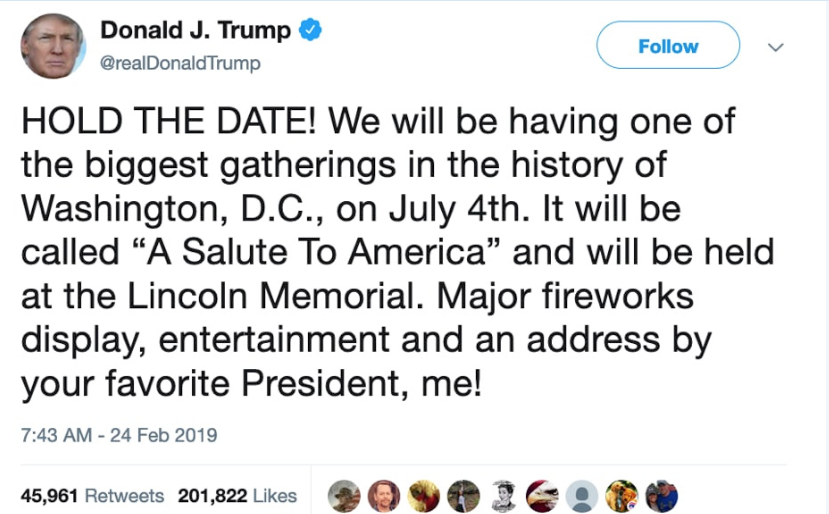
Yesterday President Trump delivered a speech at the Lincoln Memorial in his “Salute to America.” For Trump the speech was as non-partisan. Although he talked about the “spirit of America” and detailed many military, scientific, and economic accomplishments, appealed to American Exceptionalism, and threw in a couple of comments about Martin Luther King Jr., Civil rights, and Women’s Suffrage, it was pretty much a salute to American military and economic might.  There was not a mention of the ideals of the Declaration of Independence, nor the preamble of the Constitution, the Gettysburg Address, or the Four Freedoms. 

The United States, as our founders, and men like Abraham Lincoln, Frederick Douglass, Martin Luther King Jr., and so many others, often persecuted and denied the rights of other Americans  understood, is a nation founded on ideals, which we frequently fall short of, even today. 

I have lived my life in the shadow of the military, my dad was career Navy, and I have spent almost 38 years in the Army and Navy. I remember when it wasn’t popular to be in the military. I remember being accosted by someone in my first year at UCLA who got in my face and shouted “ROTC Nazis off campus!” back in 1981. I love tanks, but I don’t think that they belong on the National Mall. The military overtones of the President’s remarks and his failure to address the foundational principles and ideals of the country, while violating them with nearly every tweet, statement and policy he proclaims that bother me. I don’t want to see the military to become the showcase of an authoritarian as it was in the Soviet Union, the Third Reich, and as it is in Communist China, North Korea, Venezuela, and a host of other despotic regimes. 

These are the words of Frederick Douglass spoken on July 5th 1852 to a gathering of abolitionists in Rochester New York. He spoke them over 10 years before Abraham Lincoln issued the Emancipation Proclamation. The words are haunting even today because they point to the yet unfulfilled promise of the Declaration:

“We hold these truths to be self-evident, that all men are created equal, that they are endowed by their Creator with certain unalienable Rights, that among these are Life, Liberty and the pursuit of Happiness…”

If you read it you see the praise that he uses to describe the founders and their ideals, that they themselves did not meet, but then he draws attention to the current state of affairs that existed in 1852 shortly after the passage of the Compromise of 1850 and the draconian Fugitive Slave Act of 1850, which condemned escaped slaves and Free blacks in the North, in Free States to being arrested and taken back into slavery solely based on the words of a Slave owner. 

In our day this address is just as relevant as it was on the day that Frederick Douglass gave it. 

Peace,

Padre Steve+

Frederick Douglass 4th of July Oration: Source: Frederick Douglass: Selected Speeches and Writings, ed. Philip S. Foner (Chicago: Lawrence Hill, 1999), 188-206.

Mr. President, Friends and Fellow Citizens:

He who could address this audience without a quailing sensation, has stronger nerves than I have. I do not remember ever to have appeared as a speaker before any assembly more shrinkingly, nor with greater distrust of my ability, than I do this day. A feeling has crept over me, quite unfavorable to the exercise of my limited powers of speech. The task before me is one which requires much previous thought and study for its proper performance. I know that apologies of this sort are generally considered flat and unmeaning. I trust, however, that mine will not be so considered. Should I seem at ease, my appearance would much misrepresent me. The little experience I have had in addressing public meetings, in country schoolhouses, avails me nothing on the present occasion.

The papers and placards say, that I am to deliver a 4th [of] July oration. This certainly sounds large, and out of the common way, for it is true that I have often had the privilege to speak in this beautiful Hall, and to address many who now honor me with their presence. But neither their familiar faces, nor the perfect gage I think I have of Corinthian Hall, seems to free me from embarrassment.

The fact is, ladies and gentlemen, the distance between this platform and the slave plantation, from which I escaped, is considerable — and the difficulties to be overcome in getting from the latter to the former, are by no means slight. That I am here to-day is, to me, a matter of astonishment as well as of gratitude. You will not, therefore, be surprised, if in what I have to say I evince no elaborate preparation, nor grace my speech with any high sounding exordium. With little experience and with less learning, I have been able to throw my thoughts hastily and imperfectly together; and trusting to your patient and generous indulgence, I will proceed to lay them before you.

This, for the purpose of this celebration, is the 4th of July. It is the birthday of your National Independence, and of your political freedom. This, to you, is what the Passover was to the emancipated people of God. It carries your minds back to the day, and to the act of your great deliverance; and to the signs, and to the wonders, associated with that act, and that day. This celebration also marks the beginning of another year of your national life; and reminds you that the Republic of America is now 76 years old. I am glad, fellow-citizens, that your nation is so young. Seventy-six years, though a good old age for a man, is but a mere speck in the life of a nation. Three score years and ten is the allotted time for individual men; but nations number their years by thousands. According to this fact, you are, even now, only in the beginning of your national career, still lingering in the period of childhood. I repeat, I am glad this is so. There is hope in the thought, and hope is much needed, under the dark clouds which lower above the horizon. The eye of the reformer is met with angry flashes, portending disastrous times; but his heart may well beat lighter at the thought that America is young, and that she is still in the impressible stage of her existence. May he not hope that high lessons of wisdom, of justice and of truth, will yet give direction to her destiny? Were the nation older, the patriot’s heart might be sadder, and the reformer’s brow heavier. Its future might be shrouded in gloom, and the hope of its prophets go out in sorrow. There is consolation in the thought that America is young. Great streams are not easily turned from channels, worn deep in the course of ages. They may sometimes rise in quiet and stately majesty, and inundate the land, refreshing and fertilizing the earth with their mysterious properties. They may also rise in wrath and fury, and bear away, on their angry waves, the accumulated wealth of years of toil and hardship. They, however, gradually flow back to the same old channel, and flow on as serenely as ever. But, while the river may not be turned aside, it may dry up, and leave nothing behind but the withered branch, and the unsightly rock, to howl in the abyss-sweeping wind, the sad tale of departed glory. As with rivers so with nations.

Fellow-citizens, I shall not presume to dwell at length on the associations that cluster about this day. The simple story of it is that, 76 years ago, the people of this country were British subjects. The style and title of your “sovereign people” (in which you now glory) was not then born. You were under the British Crown. Your fathers esteemed the English Government as the home government; and England as the fatherland. This home government, you know, although a considerable distance from your home, did, in the exercise of its parental prerogatives, impose upon its colonial children, such restraints, burdens and limitations, as, in its mature judgment, it deemed wise, right and proper.

But, your fathers, who had not adopted the fashionable idea of this day, of the infallibility of government, and the absolute character of its acts, presumed to differ from the home government in respect to the wisdom and the justice of some of those burdens and restraints. They went so far in their excitement as to pronounce the measures of government unjust, unreasonable, and oppressive, and altogether such as ought not to be quietly submitted to. I scarcely need say, fellow-citizens, that my opinion of those measures fully accords with that of your fathers. Such a declaration of agreement on my part would not be worth much to anybody. It would, certainly, prove nothing, as to what part I might have taken, had I lived during the great controversy of 1776. To say now that America was right, and England wrong, is exceedingly easy. Everybody can say it; the dastard, not less than the noble brave, can flippantly discant on the tyranny of England towards the American Colonies. It is fashionable to do so; but there was a time when to pronounce against England, and in favor of the cause of the colonies, tried men’s souls. They who did so were accounted in their day, plotters of mischief, agitators and rebels, dangerous men. To side with the right, against the wrong, with the weak against the strong, and with the oppressed against the oppressor! here lies the merit, and the one which, of all others, seems unfashionable in our day. The cause of liberty may be stabbed by the men who glory in the deeds of your fathers. But, to proceed.

Feeling themselves harshly and unjustly treated by the home government, your fathers, like men of honesty, and men of spirit, earnestly sought redress. They petitioned and remonstrated; they did so in a decorous, respectful, and loyal manner. Their conduct was wholly unexceptionable. This, however, did not answer the purpose. They saw themselves treated with sovereign indifference, coldness and scorn. Yet they persevered. They were not the men to look back.

As the sheet anchor takes a firmer hold, when the ship is tossed by the storm, so did the cause of your fathers grow stronger, as it breasted the chilling blasts of kingly displeasure. The greatest and best of British statesmen admitted its justice, and the loftiest eloquence of the British Senate came to its support. But, with that blindness which seems to be the unvarying characteristic of tyrants, since Pharaoh and his hosts were drowned in the Red Sea, the British Government persisted in the exactions complained of.

The madness of this course, we believe, is admitted now, even by England; but we fear the lesson is wholly lost on our present ruler.

Oppression makes a wise man mad. Your fathers were wise men, and if they did not go mad, they became restive under this treatment. They felt themselves the victims of grievous wrongs, wholly incurable in their colonial capacity. With brave men there is always a remedy for oppression. Just here, the idea of a total separation of the colonies from the crown was born! It was a startling idea, much more so, than we, at this distance of time, regard it. The timid and the prudent (as has been intimated) of that day, were, of course, shocked and alarmed by it.

Such people lived then, had lived before, and will, probably, ever have a place on this planet; and their course, in respect to any great change, (no matter how great the good to be attained, or the wrong to be redressed by it), may be calculated with as much precision as can be the course of the stars. They hate all changes, but silver, gold and copper change! Of this sort of change they are always strongly in favor.

These people were called Tories in the days of your fathers; and the appellation, probably, conveyed the same idea that is meant by a more modern, though a somewhat less euphonious term, which we often find in our papers, applied to some of our old politicians.

Their opposition to the then dangerous thought was earnest and powerful; but, amid all their terror and affrighted vociferations against it, the alarming and revolutionary idea moved on, and the country with it.

On the 2d of July, 1776, the old Continental Congress, to the dismay of the lovers of ease, and the worshipers of property, clothed that dreadful idea with all the authority of national sanction. They did so in the form of a resolution; and as we seldom hit upon resolutions, drawn up in our day whose transparency is at all equal to this, it may refresh your minds and help my story if I read it. “Resolved, That these united colonies are, and of right, ought to be free and Independent States; that they are absolved from all allegiance to the British Crown; and that all political connection between them and the State of Great Britain is, and ought to be, dissolved.”

Citizens, your fathers made good that resolution. They succeeded; and to-day you reap the fruits of their success. The freedom gained is yours; and you, therefore, may properly celebrate this anniversary. The 4th of July is the first great fact in your nation’s history — the very ring-bolt in the chain of your yet undeveloped destiny.

Pride and patriotism, not less than gratitude, prompt you to celebrate and to hold it in perpetual remembrance. I have said that the Declaration of Independence is the ring-bolt to the chain of your nation’s destiny; so, indeed, I regard it. The principles contained in that instrument are saving principles. Stand by those principles, be true to them on all occasions, in all places, against all foes, and at whatever cost.

From the round top of your ship of state, dark and threatening clouds may be seen. Heavy billows, like mountains in the distance, disclose to the leeward huge forms of flinty rocks! That bolt drawn, that chain broken, and all is lost. Cling to this day — cling to it, and to its principles, with the grasp of a storm-tossed mariner to a spar at midnight.

The coming into being of a nation, in any circumstances, is an interesting event. But, besides general considerations, there were peculiar circumstances which make the advent of this republic an event of special attractiveness.

The whole scene, as I look back to it, was simple, dignified and sublime.

The population of the country, at the time, stood at the insignificant number of three millions. The country was poor in the munitions of war. The population was weak and scattered, and the country a wilderness unsubdued. There were then no means of concert and combination, such as exist now. Neither steam nor lightning had then been reduced to order and discipline. From the Potomac to the Delaware was a journey of many days. Under these, and innumerable other disadvantages, your fathers declared for liberty and independence and triumphed.

Fellow Citizens, I am not wanting in respect for the fathers of this republic. The signers of the Declaration of Independence were brave men. They were great men too — great enough to give fame to a great age. It does not often happen to a nation to raise, at one time, such a number of truly great men. The point from which I am compelled to view them is not, certainly, the most favorable; and yet I cannot contemplate their great deeds with less than admiration. They were statesmen, patriots and heroes, and for the good they did, and the principles they contended for, I will unite with you to honor their memory.

They loved their country better than their own private interests; and, though this is not the highest form of human excellence, all will concede that it is a rare virtue, and that when it is exhibited, it ought to command respect. He who will, intelligently, lay down his life for his country, is a man whom it is not in human nature to despise. Your fathers staked their lives, their fortunes, and their sacred honor, on the cause of their country. In their admiration of liberty, they lost sight of all other interests.

They were peace men; but they preferred revolution to peaceful submission to bondage. They were quiet men; but they did not shrink from agitating against oppression. They showed forbearance; but that they knew its limits. They believed in order; but not in the order of tyranny. With them, nothing was “settled” that was not right. With them, justice, liberty and humanity were “final;” not slavery and oppression. You may well cherish the memory of such men. They were great in their day and generation. Their solid manhood stands out the more as we contrast it with these degenerate times.

How circumspect, exact and proportionate were all their movements! How unlike the politicians of an hour! Their statesmanship looked beyond the passing moment, and stretched away in strength into the distant future. They seized upon eternal principles, and set a glorious example in their defense. Mark them!

Fully appreciating the hardship to be encountered, firmly believing in the right of their cause, honorably inviting the scrutiny of an on-looking world, reverently appealing to heaven to attest their sincerity, soundly comprehending the solemn responsibility they were about to assume, wisely measuring the terrible odds against them, your fathers, the fathers of this republic, did, most deliberately, under the inspiration of a glorious patriotism, and with a sublime faith in the great principles of justice and freedom, lay deep the corner-stone of the national superstructure, which has risen and still rises in grandeur around you.

Of this fundamental work, this day is the anniversary. Our eyes are met with demonstrations of joyous enthusiasm. Banners and pennants wave exultingly on the breeze. The din of business, too, is hushed. Even Mammon seems to have quitted his grasp on this day. The ear-piercing fife and the stirring drum unite their accents with the ascending peal of a thousand church bells. Prayers are made, hymns are sung, and sermons are preached in honor of this day; while the quick martial tramp of a great and multitudinous nation, echoed back by all the hills, valleys and mountains of a vast continent, bespeak the occasion one of thrilling and universal interest — a nation’s jubilee.

Friends and citizens, I need not enter further into the causes which led to this anniversary. Many of you understand them better than I do. You could instruct me in regard to them. That is a branch of knowledge in which you feel, perhaps, a much deeper interest than your speaker. The causes which led to the separation of the colonies from the British crown have never lacked for a tongue. They have all been taught in your common schools, narrated at your firesides, unfolded from your pulpits, and thundered from your legislative halls, and are as familiar to you as household words. They form the staple of your national poetry and eloquence.

I remember, also, that, as a people, Americans are remarkably familiar with all facts which make in their own favor. This is esteemed by some as a national trait — perhaps a national weakness. It is a fact, that whatever makes for the wealth or for the reputation of Americans, and can be had cheap! will be found by Americans. I shall not be charged with slandering Americans, if I say I think the American side of any question may be safely left in American hands.

I leave, therefore, the great deeds of your fathers to other gentlemen whose claim to have been regularly descended will be less likely to be disputed than mine!

My business, if I have any here to-day, is with the present. The accepted time with God and his cause is the ever-living now.

Trust no future, however pleasant,
Let the dead past bury its dead;
Act, act in the living present,
Heart within, and God overhead.

We have to do with the past only as we can make it useful to the present and to the future. To all inspiring motives, to noble deeds which can be gained from the past, we are welcome. But now is the time, the important time. Your fathers have lived, died, and have done their work, and have done much of it well. You live and must die, and you must do your work. You have no right to enjoy a child’s share in the labor of your fathers, unless your children are to be blest by your labors. You have no right to wear out and waste the hard-earned fame of your fathers to cover your indolence. Sydney Smith tells us that men seldom eulogize the wisdom and virtues of their fathers, but to excuse some folly or wickedness of their own. This truth is not a doubtful one. There are illustrations of it near and remote, ancient and modern. It was fashionable, hundreds of years ago, for the children of Jacob to boast, we have “Abraham to our father,” when they had long lost Abraham’s faith and spirit. That people contented themselves under the shadow of Abraham’s great name, while they repudiated the deeds which made his name great. Need I remind you that a similar thing is being done all over this country to-day? Need I tell you that the Jews are not the only people who built the tombs of the prophets, and garnished the sepulchres of the righteous? Washington could not die till he had broken the chains of his slaves. Yet his monument is built up by the price of human blood, and the traders in the bodies and souls of men shout — “We have Washington to our father.” — Alas! that it should be so; yet so it is.

The evil that men do, lives after them, The good is oft-interred with their bones.

Fellow-citizens, pardon me, allow me to ask, why am I called upon to speak here to-day? What have I, or those I represent, to do with your national independence? Are the great principles of political freedom and of natural justice, embodied in that Declaration of Independence, extended to us? and am I, therefore, called upon to bring our humble offering to the national altar, and to confess the benefits and express devout gratitude for the blessings resulting from your independence to us?

Would to God, both for your sakes and ours, that an affirmative answer could be truthfully returned to these questions! Then would my task be light, and my burden easy and delightful. For who is there so cold, that a nation’s sympathy could not warm him? Who so obdurate and dead to the claims of gratitude, that would not thankfully acknowledge such priceless benefits? Who so stolid and selfish, that would not give his voice to swell the hallelujahs of a nation’s jubilee, when the chains of servitude had been torn from his limbs? I am not that man. In a case like that, the dumb might eloquently speak, and the “lame man leap as an hart.”

But, such is not the state of the case. I say it with a sad sense of the disparity between us. I am not included within the pale of this glorious anniversary! Your high independence only reveals the immeasurable distance between us. The blessings in which you, this day, rejoice, are not enjoyed in common. — The rich inheritance of justice, liberty, prosperity and independence, bequeathed by your fathers, is shared by you, not by me. The sunlight that brought life and healing to you, has brought stripes and death to me. This Fourth [of] July is yours, not mineYou may rejoice, I must mourn. To drag a man in fetters into the grand illuminated temple of liberty, and call upon him to join you in joyous anthems, were inhuman mockery and sacrilegious irony. Do you mean, citizens, to mock me, by asking me to speak to-day? If so, there is a parallel to your conduct. And let me warn you that it is dangerous to copy the example of a nation whose crimes, lowering up to heaven, were thrown down by the breath of the Almighty, burying that nation in irrecoverable ruin! I can to-day take up the plaintive lament of a peeled and woe-smitten people!

“By the rivers of Babylon, there we sat down. Yea! we wept when we remembered Zion. We hanged our harps upon the willows in the midst thereof. For there, they that carried us away captive, required of us a song; and they who wasted us required of us mirth, saying, Sing us one of the songs of Zion. How can we sing the Lord’s song in a strange land? If I forget thee, O Jerusalem, let my right hand forget her cunning. If I do not remember thee, let my tongue cleave to the roof of my mouth.”

Fellow-citizens; above your national, tumultuous joy, I hear the mournful wail of millions! whose chains, heavy and grievous yesterday, are, to-day, rendered more intolerable by the jubilee shouts that reach them. If I do forget, if I do not faithfully remember those bleeding children of sorrow this day, “may my right hand forget her cunning, and may my tongue cleave to the roof of my mouth!” To forget them, to pass lightly over their wrongs, and to chime in with the popular theme, would be treason most scandalous and shocking, and would make me a reproach before God and the world. My subject, then fellow-citizens, is AMERICAN SLAVERY. I shall see, this day, and its popular characteristics, from the slave’s point of view. Standing, there, identified with the American bondman, making his wrongs mine, I do not hesitate to declare, with all my soul, that the character and conduct of this nation never looked blacker to me than on this 4th of July! Whether we turn to the declarations of the past, or to the professions of the present, the conduct of the nation seems equally hideous and revolting. America is false to the past, false to the present, and solemnly binds herself to be false to the future. Standing with God and the crushed and bleeding slave on this occasion, I will, in the name of humanity which is outraged, in the name of liberty which is fettered, in the name of the constitution and the Bible, which are disregarded and trampled upon, dare to call in question and to denounce, with all the emphasis I can command, everything that serves to perpetuate slavery — the great sin and shame of America! “I will not equivocate; I will not excuse;” I will use the severest language I can command; and yet not one word shall escape me that any man, whose judgment is not blinded by prejudice, or who is not at heart a slaveholder, shall not confess to be right and just.

But I fancy I hear some one of my audience say, it is just in this circumstance that you and your brother abolitionists fail to make a favorable impression on the public mind. Would you argue more, and denounce less, would you persuade more, and rebuke less, your cause would be much more likely to succeed. But, I submit, where all is plain there is nothing to be argued. What point in the anti-slavery creed would you have me argue? On what branch of the subject do the people of this country need light? Must I undertake to prove that the slave is a man? That point is conceded already. Nobody doubts it. The slaveholders themselves acknowledge it in the enactment of laws for their government. They acknowledge it when they punish disobedience on the part of the slave. There are seventy-two crimes in the State of Virginia, which, if committed by a black man, (no matter how ignorant he be), subject him to the punishment of death; while only two of the same crimes will subject a white man to the like punishment. What is this but the acknowledgement that the slave is a moral, intellectual and responsible being? The manhood of the slave is conceded. It is admitted in the fact that Southern statute books are covered with enactments forbidding, under severe fines and penalties, the teaching of the slave to read or to write. When you can point to any such laws, in reference to the beasts of the field, then I may consent to argue the manhood of the slave. When the dogs in your streets, when the fowls of the air, when the cattle on your hills, when the fish of the sea, and the reptiles that crawl, shall be unable to distinguish the slave from a brute, then will I argue with you that the slave is a man!

For the present, it is enough to affirm the equal manhood of the Negro race. Is it not astonishing that, while we are ploughing, planting and reaping, using all kinds of mechanical tools, erecting houses, constructing bridges, building ships, working in metals of brass, iron, copper, silver and gold; that, while we are reading, writing and cyphering, acting as clerks, merchants and secretaries, having among us lawyers, doctors, ministers, poets, authors, editors, orators and teachers; that, while we are engaged in all manner of enterprises common to other men, digging gold in California, capturing the whale in the Pacific, feeding sheep and cattle on the hill-side, living, moving, acting, thinking, planning, living in families as husbands, wives and children, and, above all, confessing and worshipping the Christian’s God, and looking hopefully for life and immortality beyond the grave, we are called upon to prove that we are men!

Would you have me argue that man is entitled to liberty? that he is the rightful owner of his own body? You have already declared it. Must I argue the wrongfulness of slavery? Is that a question for Republicans? Is it to be settled by the rules of logic and argumentation, as a matter beset with great difficulty, involving a doubtful application of the principle of justice, hard to be understood? How should I look to-day, in the presence of Americans, dividing, and subdividing a discourse, to show that men have a natural right to freedom? speaking of it relatively, and positively, negatively, and affirmatively. To do so, would be to make myself ridiculous, and to offer an insult to your understanding. — There is not a man beneath the canopy of heaven, that does not know that slavery is wrong for him.

What, am I to argue that it is wrong to make men brutes, to rob them of their liberty, to work them without wages, to keep them ignorant of their relations to their fellow men, to beat them with sticks, to flay their flesh with the lash, to load their limbs with irons, to hunt them with dogs, to sell them at auction, to sunder their families, to knock out their teeth, to burn their flesh, to starve them into obedience and submission to their masters? Must I argue that a system thus marked with blood, and stained with pollution, is wrong? No! I will not. I have better employments for my time and strength than such arguments would imply.

What, then, remains to be argued? Is it that slavery is not divine; that God did not establish it; that our doctors of divinity are mistaken? There is blasphemy in the thought. That which is inhuman, cannot be divine! Who can reason on such a proposition? They that can, may; I cannot. The time for such argument is passed.

At a time like this, scorching irony, not convincing argument, is needed. O! had I the ability, and could I reach the nation’s ear, I would, to-day, pour out a fiery stream of biting ridicule, blasting reproach, withering sarcasm, and stern rebuke. For it is not light that is needed, but fire; it is not the gentle shower, but thunder. We need the storm, the whirlwind, and the earthquake. The feeling of the nation must be quickened; the conscience of the nation must be roused; the propriety of the nation must be startled; the hypocrisy of the nation must be exposed; and its crimes against God and man must be proclaimed and denounced.

What, to the American slave, is your 4th of July? I answer: a day that reveals to him, more than all other days in the year, the gross injustice and cruelty to which he is the constant victim. To him, your celebration is a sham; your boasted liberty, an unholy license; your national greatness, swelling vanity; your sounds of rejoicing are empty and heartless; your denunciations of tyrants, brass fronted impudence; your shouts of liberty and equality, hollow mockery; your prayers and hymns, your sermons and thanksgivings, with all your religious parade, and solemnity, are, to him, mere bombast, fraud, deception, impiety, and hypocrisy — a thin veil to cover up crimes which would disgrace a nation of savages. There is not a nation on the earth guilty of practices, more shocking and bloody, than are the people of these United States, at this very hour.

Go where you may, search where you will, roam through all the monarchies and despotisms of the old world, travel through South America, search out every abuse, and when you have found the last, lay your facts by the side of the everyday practices of this nation, and you will say with me, that, for revolting barbarity and shameless hypocrisy, America reigns without a rival.

Take the American slave-trade, which, we are told by the papers, is especially prosperous just now. Ex-Senator Benton tells us that the price of men was never higher than now. He mentions the fact to show that slavery is in no danger. This trade is one of the peculiarities of American institutions. It is carried on in all the large towns and cities in one-half of this confederacy; and millions are pocketed every year, by dealers in this horrid traffic. In several states, this trade is a chief source of wealth. It is called (in contradistinction to the foreign slave-trade) “the internal slave trade.” It is, probably, called so, too, in order to divert from it the horror with which the foreign slave-trade is contemplated. That trade has long since been denounced by this government, as piracy. It has been denounced with burning words, from the high places of the nation, as an execrable traffic. To arrest it, to put an end to it, this nation keeps a squadron, at immense cost, on the coast of Africa. Everywhere, in this country, it is safe to speak of this foreign slave-trade, as a most inhuman traffic, opposed alike to the laws of God and of man. The duty to extirpate and destroy it, is admitted even by our DOCTORS OF DIVINITY. In order to put an end to it, some of these last have consented that their colored brethren (nominally free) should leave this country, and establish themselves on the western coast of Africa! It is, however, a notable fact that, while so much execration is poured out by Americans upon those engaged in the foreign slave-trade, the men engaged in the slave-trade between the states pass without condemnation, and their business is deemed honorable.

Behold the practical operation of this internal slave-trade, the American slave-trade, sustained by American politics and America religion. Here you will see men and women reared like swine for the market. You know what is a swine-drover? I will show you a man-drover. They inhabit all our Southern States. They perambulate the country, and crowd the highways of the nation, with droves of human stock. You will see one of these human flesh-jobbers, armed with pistol, whip and bowie-knife, driving a company of a hundred men, women, and children, from the Potomac to the slave market at New Orleans. These wretched people are to be sold singly, or in lots, to suit purchasers. They are food for the cotton-field, and the deadly sugar-mill. Mark the sad procession, as it moves wearily along, and the inhuman wretch who drives them. Hear his savage yells and his blood-chilling oaths, as he hurries on his affrighted captives! There, see the old man, with locks thinned and gray. Cast one glance, if you please, upon that young mother, whose shoulders are bare to the scorching sun, her briny tears falling on the brow of the babe in her arms. See, too, that girl of thirteen, weeping, yes! weeping, as she thinks of the mother from whom she has been torn! The drove moves tardily. Heat and sorrow have nearly consumed their strength; suddenly you hear a quick snap, like the discharge of a rifle; the fetters clank, and the chain rattles simultaneously; your ears are saluted with a scream, that seems to have torn its way to the center of your soul! The crack you heard, was the sound of the slave-whip; the scream you heard, was from the woman you saw with the babe. Her speed had faltered under the weight of her child and her chains! that gash on her shoulder tells her to move on. Follow the drove to New Orleans. Attend the auction; see men examined like horses; see the forms of women rudely and brutally exposed to the shocking gaze of American slave-buyers. See this drove sold and separated forever; and never forget the deep, sad sobs that arose from that scattered multitude. Tell me citizens, WHERE, under the sun, you can witness a spectacle more fiendish and shocking. Yet this is but a glance at the American slave-trade, as it exists, at this moment, in the ruling part of the United States.

I was born amid such sights and scenes. To me the American slave-trade is a terrible reality. When a child, my soul was often pierced with a sense of its horrors. I lived on Philpot Street, Fell’s Point, Baltimore, and have watched from the wharves, the slave ships in the Basin, anchored from the shore, with their cargoes of human flesh, waiting for favorable winds to waft them down the Chesapeake. There was, at that time, a grand slave mart kept at the head of Pratt Street, by Austin Woldfolk. His agents were sent into every town and county in Maryland, announcing their arrival, through the papers, and on flaming “hand-bills,” headed CASH FOR NEGROES. These men were generally well dressed men, and very captivating in their manners. Ever ready to drink, to treat, and to gamble. The fate of many a slave has depended upon the turn of a single card; and many a child has been snatched from the arms of its mother by bargains arranged in a state of brutal drunkenness.

The flesh-mongers gather up their victims by dozens, and drive them, chained, to the general depot at Baltimore. When a sufficient number have been collected here, a ship is chartered, for the purpose of conveying the forlorn crew to Mobile, or to New Orleans. From the slave prison to the ship, they are usually driven in the darkness of night; for since the antislavery agitation, a certain caution is observed.

In the deep still darkness of midnight, I have been often aroused by the dead heavy footsteps, and the piteous cries of the chained gangs that passed our door. The anguish of my boyish heart was intense; and I was often consoled, when speaking to my mistress in the morning, to hear her say that the custom was very wicked; that she hated to hear the rattle of the chains, and the heart-rending cries. I was glad to find one who sympathized with me in my horror.

Fellow-citizens, this murderous traffic is, to-day, in active operation in this boasted republic. In the solitude of my spirit, I see clouds of dust raised on the highways of the South; I see the bleeding footsteps; I hear the doleful wail of fettered humanity, on the way to the slave-markets, where the victims are to be sold like horsessheep, and swine, knocked off to the highest bidder. There I see the tenderest ties ruthlessly broken, to gratify the lust, caprice and rapacity of the buyers and sellers of men. My soul sickens at the sight.

Is this the land your Fathers loved,
The freedom which they toiled to win?
Is this the earth whereon they moved?
Are these the graves they slumber in?

But a still more inhuman, disgraceful, and scandalous state of things remains to be presented. By an act of the American Congress, not yet two years old, slavery has been nationalized in its most horrible and revolting form. By that act, Mason and Dixon’s line has been obliterated; New York has become as Virginia; and the power to hold, hunt, and sell men, women, and children as slaves remains no longer a mere state institution, but is now an institution of the whole United States. The power is co-extensive with the Star-Spangled Banner and American Christianity. Where these go, may also go the merciless slave-hunter. Where these are, man is not sacred. He is a bird for the sportsman’s gun. By that most foul and fiendish of all human decrees, the liberty and person of every man are put in peril. Your broad republican domain is hunting ground for men. Not for thieves and robbers, enemies of society, merely, but for men guilty of no crime. Your lawmakers have commanded all good citizens to engage in this hellish sport. Your President, your Secretary of State, our lordsnobles, and ecclesiastics, enforce, as a duty you owe to your free and glorious country, and to your God, that you do this accursed thing. Not fewer than forty Americans have, within the past two years, been hunted down and, without a moment’s warning, hurried away in chains, and consigned to slavery and excruciating torture. Some of these have had wives and children, dependent on them for bread; but of this, no account was made. The right of the hunter to his prey stands superior to the right of marriage, and to all rights in this republic, the rights of God included! For black men there are neither law, justice, humanity, not religion. The Fugitive Slave Law makes mercy to them a crime; and bribes the judge who tries them. An American judge gets ten dollars for every victim he consigns to slavery, and five, when he fails to do so. The oath of any two villains is sufficient, under this hell-black enactment, to send the most pious and exemplary black man into the remorseless jaws of slavery! His own testimony is nothing. He can bring no witnesses for himself. The minister of American justice is bound by the law to hear but one side; and that side, is the side of the oppressor. Let this damning fact be perpetually told. Let it be thundered around the world, that, in tyrant-killing, king-hating, people-loving, democratic, Christian America, the seats of justice are filled with judges, who hold their offices under an open and palpable bribe, and are bound, in deciding in the case of a man’s liberty, hear only his accusers!

In glaring violation of justice, in shameless disregard of the forms of administering law, in cunning arrangement to entrap the defenseless, and in diabolical intent, this Fugitive Slave Law stands alone in the annals of tyrannical legislation. I doubt if there be another nation on the globe, having the brass and the baseness to put such a law on the statute-book. If any man in this assembly thinks differently from me in this matter, and feels able to disprove my statements, I will gladly confront him at any suitable time and place he may select.

I take this law to be one of the grossest infringements of Christian Liberty, and, if the churches and ministers of our country were not stupidly blind, or most wickedly indifferent, they, too, would so regard it.

At the very moment that they are thanking God for the enjoyment of civil and religious liberty, and for the right to worship God according to the dictates of their own consciences, they are utterly silent in respect to a law which robs religion of its chief significance, and makes it utterly worthless to a world lying in wickedness. Did this law concern the “mint, anise, and cumin” — abridge the right to sing psalms, to partake of the sacrament, or to engage in any of the ceremonies of religion, it would be smitten by the thunder of a thousand pulpits. A general shout would go up from the church, demanding repeal, repeal, instant repeal! — And it would go hard with that politician who presumed to solicit the votes of the people without inscribing this motto on his banner. Further, if this demand were not complied with, another Scotland would be added to the history of religious liberty, and the stern old Covenanters would be thrown into the shade. A John Knox would be seen at every church door, and heard from every pulpit, and Fillmore would have no more quarter than was shown by Knox, to the beautiful, but treacherous queen Mary of Scotland. The fact that the church of our country, (with fractional exceptions), does not esteem “the Fugitive Slave Law” as a declaration of war against religious liberty, implies that that church regards religion simply as a form of worship, an empty ceremony, and not a vital principle, requiring active benevolence, justice, love and good will towards man. It esteems sacrifice above mercy; psalm-singing above right doing; solemn meetings above practical righteousness. A worship that can be conducted by persons who refuse to give shelter to the houseless, to give bread to the hungry, clothing to the naked, and who enjoin obedience to a law forbidding these acts of mercy, is a curse, not a blessing to mankind. The Bible addresses all such persons as “scribes, Pharisees, hypocrites, who pay tithe of mintanise, and cumin, and have omitted the weightier matters of the law, judgment, mercy and faith.”

But the church of this country is not only indifferent to the wrongs of the slave, it actually takes sides with the oppressors. It has made itself the bulwark of American slavery, and the shield of American slave-hunters. Many of its most eloquent Divines. who stand as the very lights of the church, have shamelessly given the sanction of religion and the Bible to the whole slave system. They have taught that man may, properly, be a slave; that the relation of master and slave is ordained of God; that to send back an escaped bondman to his master is clearly the duty of all the followers of the Lord Jesus Christ; and this horrible blasphemy is palmed off upon the world for Christianity.

For my part, I would say, welcome infidelity! welcome atheism! welcome anything! in preference to the gospel, as preached by those Divines! They convert the very name of religion into an engine of tyranny, and barbarous cruelty, and serve to confirm more infidels, in this age, than all the infidel writings of Thomas Paine, Voltaire, and Bolingbroke, put together, have done! These ministers make religion a cold and flinty-hearted thing, having neither principles of right action, nor bowels of compassion. They strip the love of God of its beauty, and leave the throng of religion a huge, horrible, repulsive form. It is a religion for oppressors, tyrants, man-stealers, and thugs. It is not that “pure and undefiled religion” which is from above, and which is “first pure, then peaceable, easy to be entreated, full of mercy and good fruits, without partiality, and without hypocrisy.” But a religion which favors the rich against the poor; which exalts the proud above the humble; which divides mankind into two classes, tyrants and slaves; which says to the man in chains, stay there; and to the oppressor, oppress on; it is a religion which may be professed and enjoyed by all the robbers and enslavers of mankind; it makes God a respecter of persons, denies his fatherhood of the race, and tramples in the dust the great truth of the brotherhood of man. All this we affirm to be true of the popular church, and the popular worship of our land and nation — a religion, a church, and a worship which, on the authority of inspired wisdom, we pronounce to be an abomination in the sight of God. In the language of Isaiah, the American church might be well addressed, “Bring no more vain ablations; incense is an abomination unto me: the new moons and Sabbaths, the calling of assemblies, I cannot away with; it is iniquity even the solemn meeting. Your new moons and your appointed feasts my soul hateth. They are a trouble to me; I am weary to bear them; and when ye spread forth your hands I will hide mine eyes from you. Yea! when ye make many prayers, I will not hear. YOUR HANDS ARE FULL OF BLOOD; cease to do evil, learn to do well; seek judgment; relieve the oppressed; judge for the fatherless; plead for the widow.”

The American church is guilty, when viewed in connection with what it is doing to uphold slavery; but it is superlatively guilty when viewed in connection with its ability to abolish slavery. The sin of which it is guilty is one of omission as well as of commission. Albert Barnes but uttered what the common sense of every man at all observant of the actual state of the case will receive as truth, when he declared that “There is no power out of the church that could sustain slavery an hour, if it were not sustained in it.”

Let the religious press, the pulpit, the Sunday school, the conference meeting, the great ecclesiastical, missionary, Bible and tract associations of the land array their immense powers against slavery and slave-holding; and the whole system of crime and blood would be scattered to the winds; and that they do not do this involves them in the most awful responsibility of which the mind can conceive.

In prosecuting the anti-slavery enterprise, we have been asked to spare the church, to spare the ministry; but how, we ask, could such a thing be done? We are met on the threshold of our efforts for the redemption of the slave, by the church and ministry of the country, in battle arrayed against us; and we are compelled to fight or flee. From what quarter, I beg to know, has proceeded a fire so deadly upon our ranks, during the last two years, as from the Northern pulpit? As the champions of oppressors, the chosen men of American theology have appeared — men, honored for their so-called piety, and their real learning. The Lords of Buffalo, the Springs of New York, the Lathrops of Auburn, the Coxes and Spencers of Brooklyn, the Gannets and Sharps of Boston, the Deweys of Washington, and other great religious lights of the land have, in utter denial of the authority of Him by whom they professed to be called to the ministry, deliberately taught us, against the example or the Hebrews and against the remonstrance of the Apostles, they teach that we ought to obey man’s law before the law of God.

My spirit wearies of such blasphemy; and how such men can be supported, as the “standing types and representatives of Jesus Christ,” is a mystery which I leave others to penetrate. In speaking of the American church, however, let it be distinctly understood that I mean the great mass of the religious organizations of our land. There are exceptions, and I thank God that there are. Noble men may be found, scattered all over these Northern States, of whom Henry Ward Beecher of Brooklyn, Samuel J. May of Syracuse, and my esteemed friend (Rev. R. R. Raymond) on the platform, are shining examples; and let me say further, that upon these men lies the duty to inspire our ranks with high religious faith and zeal, and to cheer us on in the great mission of the slave’s redemption from his chains.

One is struck with the difference between the attitude of the American church towards the anti-slavery movement, and that occupied by the churches in England towards a similar movement in that country. There, the church, true to its mission of ameliorating, elevating, and improving the condition of mankind, came forward promptly, bound up the wounds of the West Indian slave, and restored him to his liberty. There, the question of emancipation was a high religious question. It was demanded, in the name of humanity, and according to the law of the living God. The Sharps, the Clarksons, the Wilberforces, the Buxtons, and Burchells and the Knibbs, were alike famous for their piety, and for their philanthropy. The anti-slavery movement there was not an anti-church movement, for the reason that the church took its full share in prosecuting that movement: and the anti-slavery movement in this country will cease to be an anti-church movement, when the church of this country shall assume a favorable, instead of a hostile position towards that movement. Americans! your republican politics, not less than your republican religion, are flagrantly inconsistent. You boast of your love of liberty, your superior civilization, and your pure Christianity, while the whole political power of the nation (as embodied in the two great political parties), is solemnly pledged to support and perpetuate the enslavement of three millions of your countrymen. You hurl your anathemas at the crowned headed tyrants of Russia and Austria, and pride yourselves on your Democratic institutions, while you yourselves consent to be the mere tools and body-guards of the tyrants of Virginia and Carolina. You invite to your shores fugitives of oppression from abroad, honor them with banquets, greet them with ovations, cheer them, toast them, salute them, protect them, and pour out your money to them like water; but the fugitives from your own land you advertise, hunt, arrest, shoot and kill. You glory in your refinement and your universal education yet you maintain a system as barbarous and dreadful as ever stained the character of a nation — a system begun in avarice, supported in pride, and perpetuated in cruelty. You shed tears over fallen Hungary, and make the sad story of her wrongs the theme of your poets, statesmen and orators, till your gallant sons are ready to fly to arms to vindicate her cause against her oppressors; but, in regard to the ten thousand wrongs of the American slave, you would enforce the strictest silence, and would hail him as an enemy of the nation who dares to make those wrongs the subject of public discourse! You are all on fire at the mention of liberty for France or for Ireland; but are as cold as an iceberg at the thought of liberty for the enslaved of America. You discourse eloquently on the dignity of labor; yet, you sustain a system which, in its very essence, casts a stigma upon labor. You can bare your bosom to the storm of British artillery to throw off a threepenny tax on tea; and yet wring the last hard-earned farthing from the grasp of the black laborers of your country. You profess to believe “that, of one blood, God made all nations of men to dwell on the face of all the earth,” and hath commanded all men, everywhere to love one another; yet you notoriously hate, (and glory in your hatred), all men whose skins are not colored like your own. You declare, before the world, and are understood by the world to declare, that you “hold these truths to be self evident, that all men are created equal; and are endowed by their Creator with certain inalienable rights; and that, among these are, life, liberty, and the pursuit of happiness;” and yet, you hold securely, in a bondage which, according to your own Thomas Jefferson, “is worse than ages of that which your fathers rose in rebellion to oppose,” a seventh part of the inhabitants of your country.

Fellow-citizens! I will not enlarge further on your national inconsistencies. The existence of slavery in this country brands your republicanism as a sham, your humanity as a base pretence, and your Christianity as a lie. It destroys your moral power abroad; it corrupts your politicians at home. It saps the foundation of religion; it makes your name a hissing, and a bye-word to a mocking earth. It is the antagonistic force in your government, the only thing that seriously disturbs and endangers your Union. It fetters your progress; it is the enemy of improvement, the deadly foe of education; it fosters pride; it breeds insolence; it promotes vice; it shelters crime; it is a curse to the earth that supports it; and yet, you cling to it, as if it were the sheet anchor of all your hopes. Oh! be warned! be warned! a horrible reptile is coiled up in your nation’s bosom; the venomous creature is nursing at the tender breast of your youthful republic; for the love of God, tear away, and fling from you the hideous monster, and let the weight of twenty millions crush and destroy it forever!

But it is answered in reply to all this, that precisely what I have now denounced is, in fact, guaranteed and sanctioned by the Constitution of the United States; that the right to hold and to hunt slaves is a part of that Constitution framed by the illustrious Fathers of this Republic.

Then, I dare to affirm, notwithstanding all I have said before, your fathers stooped, basely stooped

To palter with us in a double sense:
And keep the word of promise to the ear,
But break it to the heart.

And instead of being the honest men I have before declared them to be, they were the veriest imposters that ever practiced on mankind. This is the inevitable conclusion, and from it there is no escape. But I differ from those who charge this baseness on the framers of the Constitution of the United States. It is a slander upon their memory, at least, so I believe. There is not time now to argue the constitutional question at length — nor have I the ability to discuss it as it ought to be discussed. The subject has been handled with masterly power by Lysander Spooner, Esq., by William Goodell, by Samuel E. Sewall, Esq., and last, though not least, by Gerritt Smith, Esq. These gentlemen have, as I think, fully and clearly vindicated the Constitution from any design to support slavery for an hour.

Fellow-citizens! there is no matter in respect to which, the people of the North have allowed themselves to be so ruinously imposed upon, as that of the pro-slavery character of the Constitution. In that instrument I hold there is neither warrant, license, nor sanction of the hateful thing; but, interpreted as it ought to be interpreted, the Constitution is a GLORIOUS LIBERTY DOCUMENT. Read its preamble, consider its purposes. Is slavery among them? Is it at the gateway? or is it in the temple? It is neither. While I do not intend to argue this question on the present occasion, let me ask, if it be not somewhat singular that, if the Constitution were intended to be, by its framers and adopters, a slave-holding instrument, why neither slavery, slaveholding, nor slave can anywhere be found in it. What would be thought of an instrument, drawn up, legally drawn up, for the purpose of entitling the city of Rochester to a track of land, in which no mention of land was made? Now, there are certain rules of interpretation, for the proper understanding of all legal instruments. These rules are well established. They are plain, common-sense rules, such as you and I, and all of us, can understand and apply, without having passed years in the study of law. I scout the idea that the question of the constitutionality or unconstitutionality of slavery is not a question for the people. I hold that every American citizen has a right to form an opinion of the constitution, and to propagate that opinion, and to use all honorable means to make his opinion the prevailing one. Without this right, the liberty of an American citizen would be as insecure as that of a Frenchman. Ex-Vice-President Dallas tells us that the Constitution is an object to which no American mind can be too attentive, and no American heart too devoted. He further says, the Constitution, in its words, is plain and intelligible, and is meant for the home-bred, unsophisticated understandings of our fellow-citizens. Senator Berrien tell us that the Constitution is the fundamental law, that which controls all others. The charter of our liberties, which every citizen has a personal interest in understanding thoroughly. The testimony of Senator Breese, Lewis Cass, and many others that might be named, who are everywhere esteemed as sound lawyers, so regard the constitution. I take it, therefore, that it is not presumption in a private citizen to form an opinion of that instrument.

Now, take the Constitution according to its plain reading, and I defy the presentation of a single pro-slavery clause in it. On the other hand it will be found to contain principles and purposes, entirely hostile to the existence of slavery.

I have detained my audience entirely too long already. At some future period I will gladly avail myself of an opportunity to give this subject a full and fair discussion.

Allow me to say, in conclusion, notwithstanding the dark picture I have this day presented of the state of the nation, I do not despair of this country. There are forces in operation, which must inevitably work the downfall of slavery. “The arm of the Lord is not shortened,” and the doom of slavery is certain. I, therefore, leave off where I began, with hope. While drawing encouragement from the Declaration of Independence, the great principles it contains, and the genius of American Institutions, my spirit is also cheered by the obvious tendencies of the age. Nations do not now stand in the same relation to each other that they did ages ago. No nation can now shut itself up from the surrounding world, and trot round in the same old path of its fathers without interference. The time was when such could be done. Long established customs of hurtful character could formerly fence themselves in, and do their evil work with social impunity. Knowledge was then confined and enjoyed by the privileged few, and the multitude walked on in mental darkness. But a change has now come over the affairs of mankind. Walled cities and empires have become unfashionable. The arm of commerce has borne away the gates of the strong city. Intelligence is penetrating the darkest corners of the globe. It makes its pathway over and under the sea, as well as on the earth. Wind, steam, and lightning are its chartered agents. Oceans no longer divide, but link nations together. From Boston to London is now a holiday excursion. Space is comparatively annihilated. Thoughts expressed on one side of the Atlantic, are distinctly heard on the other. The far off and almost fabulous Pacific rolls in grandeur at our feet. The Celestial Empire, the mystery of ages, is being solved. The fiat of the Almighty, “Let there be Light,” has not yet spent its force. No abuse, no outrage whether in taste, sport or avarice, can now hide itself from the all-pervading light. The iron shoe, and crippled foot of China must be seen, in contrast with nature. Africa must rise and put on her yet unwoven garment. “Ethiopia shall stretch out her hand unto God.” In the fervent aspirations of William Lloyd Garrison, I say, and let every heart join in saying it:

God speed the year of jubilee
The wide world o’er
When from their galling chains set free,
Th’ oppress’d shall vilely bend the knee,

And wear the yoke of tyranny
Like brutes no more.
That year will come, and freedom’s reign,
To man his plundered fights again
Restore.

God speed the day when human blood
Shall cease to flow!
In every clime be understood,
The claims of human brotherhood,
And each return for evil, good,
Not blow for blow;
That day will come all feuds to end.
And change into a faithful friend
Each foe.

God speed the hour, the glorious hour,
When none on earth
Shall exercise a lordly power,
Nor in a tyrant’s presence cower;
But all to manhood’s stature tower,
By equal birth!
That hour will come, to each, to all,
And from his prison-house, the thrall
Go forth.

Until that year, day, hour, arrive,
With head, and heart, and hand I’ll strive,
To break the rod, and rend the gyve,
The spoiler of his prey deprive —
So witness Heaven!
And never from my chosen post,
Whate’er the peril or the cost,
Be driven.

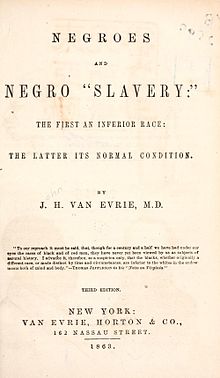
2 Comments

Filed under civil rights, History, laws and legislation, leadership, News and current events, Political Commentary

“It Used to Be We Stood For Ideals” Independence Day 2019, the Trump Show


Friends of Padre Steve’s World,

Abraham Lincoln spoke these words in Springfield, Illinois on June 26th 1857, nearly 162 years ago:

“They [the signers of the Declaration of Independence] did not mean to assert the obvious untruth that all were then actually enjoying that equality, nor yet that they were about to confer it immediately upon them. In fact, they had no power to confer such a boon. They meant simply to declare the right; so that the enforcement of it might follow as fast as circumstances should permit.”

They are part of a continuum in the development of his philosophy of liberty and how he understood the words of the Declaration of Independence, and how he believed that the authors 0f that document understood the words that set the United States apart from all other nations. The words “We hold these truths to be self evident, that all men are created equal” were revolutionary for their time and the Jefferson understood them in that manner.

Though at the time they words of the Declaration only applied to white men, the words and writings of many of the founders were uncomfortable with the actual condition of black slaves as well as Native Americans. The had enough integrity to understand that what they wrote was a proposition that had universal implications which were not yet realized and would take time to happen. Those who mocked the document, the proposition, the founders, and the new nation understood that as well. It was a watershed moment for all of Europe was still under the control of Kings and despots. Thomas Jefferson understood how these words threatened despotic rule around the world and in 1821 he wrote to John Adams:

“The flames kindled on the 4th of July 1776, have spread over too much of the globe to be extinguished by the feeble engines of despotism; on the contrary, they will consume these engines and all who work them.”

But this was something that the people of the United States would have to wrestle with for decades before the most glaring aspect of inequality, that of slavery was overthrown. Frederick Douglass understood the importance of the Declaration even as white Americans on both sides of the Mason-Dixon line crafted compromises that left blacks in slavery and gave unfettered access for slave owners to go to Free States to recover their human property. In 1852 he wrote:

“I have said that the Declaration of Independence is the ring-bolt to the chain of your nation’s destiny; so, indeed, I regard it. The principles contained in that instrument are saving principles. Stand by those principles, be true to them on all occasions, in all places, against all foes, and at whatever cost.”

It is that ring bolt and it must be understood in its universal application and people in the United States and in countries which have embraces some portions of the concept and fight for it, otherwise it could be lost. Harry Truman noted this danger in 1952 when he said:

“We find it hard to believe that liberty could ever be lost in this country. But it can be lost, and it will be, if the time ever comes when these documents are regarded not as the supreme expression of our profound belief, but merely as curiosities in glass cases.”

Today the rights, protections, civil liberties, and opportunity to advance themselves of Americans are being rolled back in a manner that a few decades ago most of us would have found unimaginable. They are under threat many ways, too many to mention today and they must be continually fought for or we will lose them.

On this Independence Day we are witnessing an American President commandeering the holiday for his own aggrandizement and making it a display of military power versus the understanding that our independence was founded on the proposition on a proposition, an ideal yet to be fulfilled that “We Hold these truths to be self evident, that all men are created equal, that they are endowed by their Creator with certain unalienable Rights, that among these are Life, Liberty and the pursuit of Happiness.”

The symbolism of what the President is doing, shrouding the Lincoln Memorial so the statue of Lincoln is not visible from the Capital Mall, spending millions of dollars on military displays and flyovers, and making it a celebration of him is what men who are bent on establishing authoritarian rule have done for millennia. The best seats are reserved for his family, friends, diners, and V.I.P.s something that mocks the words of the ideals of the Declaration of Independence.

General Martin Dempsey, the former Chair Of the Joint Chiefs of Staff noted:  “It used to be we stood for ideals,… Our national pride wasn’t based on the power of our military or how dominant we are over others.” Retired Marine General Anthony Zinni said: Put troops out there so we can thank them – leave the tanks for Red Square.” 

The President is turning the celebration of our Independence on its head. But that is not surprising because for him this is not about patriotism but his own power and the use of nationalistic images of American power as an expensive substitute for the ideals that he does not believe in. Instead of being a display of patriotism this is going to turn in to a display of toxic nationalism.

Historian Timothy Snyder warned us when he wrote:

The president is a nationalist, which is not at all the same thing as a patriot. A nationalist encourages us to be our worst, and then tells us that we are the best. A nationalist, “although endlessly brooding on power, victory, defeat, revenge,” wrote Orwell, tends to be “uninterested in what happens in the real world.” Nationalism is relativist, since the only truth is the resentment we feel when we contemplate others. As the novelist Danilo Kiš put it, nationalism “has no universal values, aesthetic or ethical.” A patriot, by contrast, wants the nation to live up to its ideals, which means asking us to be our best selves. A patriot must be concerned with the real world, which is the only place where his country can be loved and sustained. A patriot has universal values, standards by which he judges his nation, always wishing it well—and wishing that it would do better.”

But the issue is greater than the President. Many Americans have either forgotten or are willfully ignorant of what it is to be a patriot. Many Americans are becoming less knowledgeable about our own history while embracing authoritarian concepts completely antithetical to the ideals of the Declaration, and the understanding embodied in the preamble to the Constitution:

We the People of the United States, in Order to form a more perfect Union, establish Justice, insure domestic Tranquility, provide for the common defense, promote the general Welfare, and secure the Blessings of Liberty to ourselves and our Posterity, do ordain and establish this Constitution for the United States of America.

George Will rightly understands that the situation at the present time is tenuous.

The equilibrium of James Madison’s constitutional architecture is currently in disarray, with congressional anemia enabling presidential imperiousness, the architecture was designed to “secure” — the crucial verb in the Declaration’s second paragraph — the natural rights the Declaration affirms.”

Judge Learned Hand, probably the most brilliant American jurist never to sit on the Supreme Court wrote something very pertinent to our day:

“Liberty lies in the hearts of men and women; when it dies there, no constitution, no law, no court can even do much to help it. The spirit of Liberty is the spirit which is not too sure that it is right; the spirit of Liberty is the spirit which seeks to understand the minds of other men and women; the spirit of Liberty is that which weighs their interests alongside its own without bias.”

I am afraid that the spirit of liberty is dying in America, it certainly has in the Republican Party and I am not too sure if the Democratic Party is that far behind.

As Independence Day passes I will continue to write about this subject even as I write about other subjects including civil rights, the Holocaust, Gettysburg, and other historical and political subjects.

Peace

Padre Steve+

Leave a comment

Filed under civil rights, History, leadership, Military, News and current events, Political Commentary

Shame at Panmunjom

Like no President Ever: Donald Trump and Kim Jung Un

Friends of Padre Steve’s World,

Like most of you I was greeted this morning by the images of President Trump crossing a few feet in North Korea to meet with North Korean Dictator Kim Jun Un for a photo op and promise that Lil’ Kim would resume negotiations on his nuclear program, the exact same thing he promised last year but hasn’t done.

The sad fact of the matter that the only reason that Trump got this far with Kim was that he has stopped condemning North Korean Human Rights abuses, Slave Labor Camps, political murders, and his support of Iranian missile and nuclear programs. These are things that every President since the North Korean attack on South Korea in 1950 have opposed. But if your overwhelming desire is not the security of the United States and its allies, but your personal aggrandizement means more than the country whose Constitution you swore to uphold and defend then it makes perfect sense. Sacrifice your allies, your country, and the founding principles of the country to make lovey-dovey with a brutal dictator for your ego, and nothing else matters.

During his visit across the border his new Press Secretary was physically assaulted by North Korean Secret Police while attempting to get American reporters to the scene of the event. Don’t expect that he will offer her any words or comfort or support. She was behaving as an official who expected freedom of the press to be observed when it came to visits of the President to foreign countries. I don’t expect her to have a long tour as Press Secretary.

I have served under six Presidents of both parties. Had I not listened to my parents this would be my seventh, but I enlisted at the time that I was also eligible to enter the advanced program of Army ROTC. However, it was the Iranian hostage crisis and the failure of the attempt to rescue to hostages that led me to throw my hat into the ring and volunteer to serve. Now I serve under a President who is threatening to go to war with Iran, while supporting Iran’s primary ally in its quest for ICBMs and nuclear weapons. To me this makes no sense. North Korea is an existential threat to South Korea, and to the security of North East Asia. Should it continue its ICBM development, which I have no doubt that it is, it will become a major threat to the Continental United States.

But for President Trump this doesn’t seem to matter. He hasn’t met or heard of a dictator or authoritarian despot that he doesn’t support. Putin, Kim, Erdogan of Turkey, Orban Of Hungary, and the Central American dictators whose policies are creating the crisis on our souther border.

The fact is that President Trump is willfully ignorant of American History, and political norms, as well as the history Of the Twentieth Century in General. He doesn’t seem to understand that his words and auctions have meaning, and that being President is not just about pleasing his Cult-like supports, but to support and defend the Constitution against all enemies foreign and domestic. For me that is inexcusable, and for him to step across the North Korean Border without confronting the North Korean record on Human Rights, its illegal development of nuclear weapons and delivery systems, and the murder of American student Otto Warmbier is inexcusable, regardless of his political party. If President Obama had acted similarly I would have a similar opinion to render. For me this isn’t about politics or party, but American ideals.

President Trump is a man without principle and he is using his office for personal and political gain, as well as retribution against anyone he has wronged or that oppose his policies. Trump is an existential threat to the American political, economic, and social system that have given us a political and diplomatic stability, and prosperity unknown in history, not that things like that matter to Trump and his Cult.

Honestly, I wish I could have believed that President Trump would have stood for American values and not just policies that could only benefit his bottom line, but that is indeed the case, and that strikes me in the heart as a betrayal of the American tradition and the principles of the Declaration of Independence. I hate that, and that matters have come to this. To see an American President defending and protecting some of the worst violators of human rights, political freedoms, and democracy is disheartening to me.

For that I cannot remain silent. I think of the words of Major General Henning Von Tresckow:

“We have to show the world that not all of us are like him. Otherwise, this will always be Hitler’s Germany.”

In my paraphrase: We have to show the world world that we are not like him. Otherwise this will always be Trump’s America.

Sadly, I believe that we have crossed the Rubicon to dictatorship, Trump will find a way to remain in power no matter what the election, the Congress, or the courts say. We will all end up being damned for it.

Until tomorrow,

Peace,

Padre Steve+

2 Comments

Filed under ethics, Foreign Policy, History, national security, News and current events, Political Commentary

Speak Softly and Carry a Big Stick: Words Of Wisdom too often Ignored

Friends of Padre Steve’s World,

I am a frequent critic of President Trump, but last Friday when I awoke to the news that he had called off military strikes on Iran at the last minute, I was pleased. His closest cabinet level advisors, including John Bolton, one of the principle authors of the invasion of Iraq were pushing him to launch. There is controversy as to when the President learned the potential casualties of the initial strike, but I am less concerned about that than that he did the right thing, and at the same time began to quiet his language toward the Islamic Republic.

Whether this is enough to take us off the path the war is yet unseen. Iran’s Supreme Leader Ayatollah Ali Khamenei, does not seem to be deterred or encouraged by anything Trump does. Much of this is due to the fact that the previous actions of the President and his administration have backed Iran and the United States into a corner that it will take overwhelming political and moral courage to avoid war. The pressure on both men is pushing them towards war, and Trump has the additional pressure of the Saudis and Israelis to do their dirty work regarding Iran for them, much as Israel and many of the same advisors did to President Bush during the run up to the attack on Iraq in 2003. For the moment, President Trump has resisted pulling the trigger that very probably would unleashed a devastating regional war with world wide ramifications. I hope that he continues to do so but he is not the only actor in this play, too many other actors, including Khamenei, the leaders of Iran’s Revolutionary Guard, the Saudi Leadership, Benjamin Netanyahu of Israel, the Gulf States, the Russians, Chinese, North Koreans, as well as various Sunni and Shia surrogates all have a hand in this Hexenkessel of potential war and death.

I have too many friends and shipmates currently stationed in the Gulf to want war there. Likewise, I am still on active duty and my nephew is graduating from Marine Corps Boot Camp this week are still on active duty. A war would be very personal for me and my family. I hope that the President is graced with the moral fortitude, something he has not demonstrated much during his life in order to both preserve peace and American/Western interests in the region. The world cannot endure a war of the kind that will certainly escalate in ways that will engulf the region and possibly the world.

President Trump’s bluster combined with his inaction and accommodation with leaders such as Putin and Kim Jong Un, his unfulfilled rhetoric of regime change in Venezuela, and his continued attacks on American allies do not help his situation right now. He suffers a distinct lack of credibility both domestically and internationally, mostly because of his words, tweets, and outright lies. That does not mean that I want him to fail. In fact I hope that he exceeds my expectations of him. The stakes are too great for him to screw this up.

That does not mean that I will excuse his domestic policies or resist when I see him overreaching his Constitutional authority, or attempt to silence his political, media, or social opponents. But, as Commander in Chief in this volatile and dangerous situation I pray that he doesn’t fuck it up. Of course, the President acts on instinct more than logic, and the adulation of his Cult-like followers over reason. Everything he does is a gamble, I hope that since he is a gambler he knows to know when to hold them and know when to fold them. If he doesn’t tens of thousands, maybe millions of lives may be lost and a true world war begun. An attack an Iran could bring Russian action against American NATO allies in Europe, North Korean actions, or Chinese actions in the South China Sea. That doesn’t include Hezbollah attacks on Israel, or Iranian sleeper agent attacks in the United States.

I pray that the President has the sense to find a way to make a real deal with Iran. For me this is not partisan politics, it is about the country, our institutions, and our future as a nation. A war with Iran will destroy all of those institutions, we will become an autocracy, and Trump might be a tool of others far worse than him.

It is something to think about. Whether I am right or wrong, true patriotism can be complicated and extend to agreements and disagreements on policies and actions.

Theodore Roosevelt wrote:

Patriotism means to stand by the country. It does not mean to stand by the president or any other public official, save exactly to the degree in which he himself stands by the country. It is patriotic to support him insofar as he efficiently serves the country. It is unpatriotic not to oppose him to the exact extent that by inefficiency or otherwise he fails in his duty to stand by the country. In either event, it is unpatriotic not to tell the truth, whether about the president or anyone else.

Regardless I choose to tell the truth. War with Iran would would be disastrous. Our nation is neither prepared for it or unified, likewise the state of readiness of the U.S. military is abyssal, despite all of the defense budget increases. Most of those are not increasing the readiness of deplorable units or the base structures that support them. The are benefiting defense contractors and their shareholders. Marine Corps General and two time awardee Of the Medal Of Honor wrote in his book War is a Racket:

War is a racket. It is the only one international in scope. It is the only one in which the profits are reckoned in dollars and the losses in lives.

The President would be wise to heed Theodore Roosevelt’s warning, in word, deed, and tweet. Speak Softly and carry a big stick.

So until tomorrow,

Peace,

Padre Steve+

4 Comments

Filed under Foreign Policy, History, iraq,afghanistan, middle east, Military, national security, News and current events, Political Commentary

Southern Justice at 55 Years: Why Must it be Denied and Forgotten?

normanrockwellsouthernjustice-2

Friends of Padre Steve’s World,

Fifty-Five years ago three young men working to register blacks to vote as part of the Freedom Summer in Mississippi were brutally murdered by members of the Ku Klux Klan. As a historian I am troubled as I see an increase in racially motivated hate crimes and displays of nooses left as threats at historically black institutions or places dedicated to remembering the Civil Rights movement. When I see the lack of empathy and the lack of concern shown for these crimes by white people, especially Evangelical Christians I wonder if we are sinking back into the abyss of Jim Crow.

I have dealt with Holocaust deniers many times and also plenty of people who find nothing wrong with American slavery, Jim Crow, and racism. I find it troubling that despite the forensic, and historical evidence that people can either deny, minimize, or rationalize such behavior.

The fact that the Southern Baptist Convention, the nation’s largest Protestant denomination had to struggle with the issue of civil rights and the race hatred of the Alt-Right last week showed me that the toxin has not been purged from the Convention, or for that matter much of America. The fact that a man who is active in White Supremacist movements murdered two men and wounded a third as they defended Muslim women on a Portland Oregon commuter train was disturbing, as was the murder of a newly commissioned African American Army Lieutenant by a White Supremacist on the campus of the University of Maryland. Likewise there has been a spate of nooses being placed on college campuses, historically Black institutions, Civil Rights sites, and at the offices or residences of people who support civil rights, including professors.

southern justice 4

These troubling incidents have again reminded me of the events of June 21st 1964 when three men, Andrew Goodman, Mickey Scherner, and James Chaney were murdered by Ku Klux Klansmen. Twenty year old Andrew Goodman was from New York City. He was a progressive activist and Anthropology student at Queens College. Twenty-four year old Mickey Schwerner was a graduate student at Columbia University’s School of Social Work. Both Goodman and Schwerner were Jewish and had come South to work with others for Civil Rights in Mississippi. The third man, James Cheney, was a twenty-one year old Black Mississippian. Chaney was from Meridian Mississippi and was a volunteer with CORE, the Congress of Racial Equity. All three men were there to assist community leaders with voter registration and education in conjunction with local churches.

On June 21st 1964 the three men were in Philadelphia Mississippi where they were investigating the burning of Mount Zion Methodist Church. The church had been working with CORE’s voter registration and education programs. In the wake of the church being burned, many black citizens and church members were beaten by whites, rumored to be aided by members of the local Sheriff’s office. They specifically accused Sheriff’s Deputy Cecil Price of abuse.

When Goodman, Schwerner, and Chaney were marked men from the moment they arrived. As they left the town the three were arrested for an alleged traffic violation. They were briefly jailed and released that evening, but were not allowed to make any phone calls. On the way back to Meridian, two carloads of Klan members forced their car off the road and then abducted them and murdered them. The bodies were not discovered for 44 days. Their disappearance brought national attention and a major investigation to the town. Eventually seven men, including Deputy Price were convicted of the murders. The murders and the investigation became the subject of the movie Mississippi Burning.

MississippiBurningPressRelease

Iconic American artist Norman Rockwell who was well known for his portraits of American life as well as his support for the Civil Rights movement, painted “Southern Justice” which is sometimes known as “Murder in Mississippi” in 1965. This was not long after passage of the Voting Rights Act of 1964, which over the past decade has been under attack in many southern states and a key provision on racial gerrymandering was gutted by the Supreme Court in 2012.

Fifty-three years ago the murders of these three young men brought national attention to the pervasive racism and discrimination in the country. Before this event most murders, lynchings, as well as the burnings of homes businesses were left uncovered by the media, the victims forgotten and the perpetrators unpunished.

I do hope and pray that we never go back to those days, but there are a number of troubling issues for us in the United States today. The first is that there have been quite a few laws passed to limit voting rights in various states. Some of these have been successfully challenged in the courts and eventually one may make its way to the Supreme Court. Then there is the rapidly growing number of racially motivated hate crimes against Blacks and other minorities as well as the threat of nooses being placed in trees around historic sites and museums dedicated to minorities or civil rights. The Southern Poverty Law Commission monitors the activities of hate groups across the political, religious, and racial spectrum and has noted a sharp increase in attacks over the past two years, coinciding with the election of Donald Trump as President. Heavily armed and militant racist and anti-Semitic groups proudly march hand in hand with Trump supporters, allegedly to protect them from “leftists.”

I wonder if we will see a return to the commonplace violence and silence that characterized the nation’s treatment of minorities before the Civil Rights movement. You think that we have moved the chains so far and that it cannot happen again when before our very eyes it rises like an undead specter to claim new victims. Eternal vigilance is the guardian of freedom; we cannot allow the thousands who died before, and those who have died since these three young men to be forgotten. Too much is at stake.

In memory of Andrew Goodman, James Chaney and Mickey Schwerner and others of the Freedom Summer and the Civil Rights movement who died or suffered to peacefully bring about change to our society, I leave you until tomorrow.

Peace,

Padre Steve+

5 Comments

Filed under civil rights, crime, culture, History, News and current events, Political Commentary