Category Archives: Military

D-Day, Midway and a Nation at War: Thoughts on History as the Greatest Generation Passes Away

d-day-orderDwight Eisenhower speaking with men of the 101st Airborne Division before they jumped into Normandy

“At the end of the twentieth century the contributions of this generation would be in bold print in any review of this turbulent and earth-altering time. It may be historically premature to judge the greatness of a whole generation, but indisputably, there are common traits that cannot be denied. It is a generation that, by and large, made no demands of homage from those who followed and prospered economically, politically, and culturally because of its sacrifices. It is a generation of towering achievement and modest demeanor, a legacy of their formative years when they were participants in and witness to sacrifices of the highest order. They know how many of the best of their generation didn’t make it to their early twenties, how many brilliant scientists, teachers, spiritual and business leaders, politicians and artists were lost in the ravages of the greatest war the world has seen.” Tom Brokaw, The Greatest Generation

I was born in 1960 and thankfully for whatever reason I developed a love of history and heritage. I began reading history books as early as second and third grade. The American Heritage Publishing Company had a Junior Library series that I could not get enough of awhile another publisher (it may have also been American Heritage) had a series of biographies which drew me into the lives of many famous people. From 3rd grade on I spent every spare moment at school in the library, even frequently cutting geometry class in 10th grade to explore the history reference books that I could not check out and take home.

tumblr_lahyzakLSB1qbjz0go1_500Marine Colonel Francis I. Fenton, kneeling prays at the foot of his son’s grave on Okinawa 1945

I think that anyone that knew me then could probably associate me with a big stack of books that I lugged to and from class and back and forth from home to school. The ironic thing is that as I pack for work or to come home every day at the Staff College my back pack from my tour in Iraq is filled with the books that I am reading or using for research. Maybe it is not ironic, maybe it is the fact that some things never change. For me the quest for knowledge and historical, philosophical, or scientific truth is something that I cannot get enough of, nor be content to think that I know everything on any given subject.

This little introduction takes me into today’s subject. For those that don’t know we are coming up on the anniversaries of two of the most amazing historical events of the past 100 years next week. They are the battles of Midway, June 4th through June 6th 1942 and the the invasion of France, or D-Day, June 6th 1944.

ts8The pilots of Torpedo 8, only one survived Midway

I have always been amazed by the men who faced the Japanese at Midway, a battle that by any reasonable means should have resulted in a Japanese victory as well as them men that stormed the beaches at Normandy just two years later. When I first started reading about these battles many of the veterans were still alive, many not much older than I am today. However today not many are left, and the few that remain generally served as junior officers or enlisted personnel, none in high command.

Both battles are remarkable because an American or Allied loss could have changed the course of history. Had the United States Navy been defeated at Midway it could have brought about a Japanese victory, or more likely made the ultimate American victory much more costly and drawn out. Had the Allies been repulsed at Normandy it could have split the allied coalition or given the Germans the chance to renew their fight against the Soviet Union and possibly change history.

Thus when I look at these two events, battles that for most are now ancient history I am in awe of the men who fought them. They are not academic exercises for me, but as someone who has served at sea and on land in war I feel a certain camaraderie with these men.

I remember reading Cornelius Ryan’s classic book “The Longest Day” and seeing the movie of the same name in grade school, and reading Walter Lord’s classic on Midway “Incredible Victory” when I was in 7th grade. Both are excellent books which have stood the test of time and though I have read and done much more research and writing on both battles I still keep a copy of each book and probably re-read each every few years and consult them for any new projects. Likewise have been fortunate enough to meet some of the men who served in both of these battles, and even in my time as an Army chaplain be with them in their declining years. Men like Frank Smoker and Henry Boyd, both Normandy vets who have since passed away mean much to me.

442ndRCTThe 442nd Regimental Combat Team

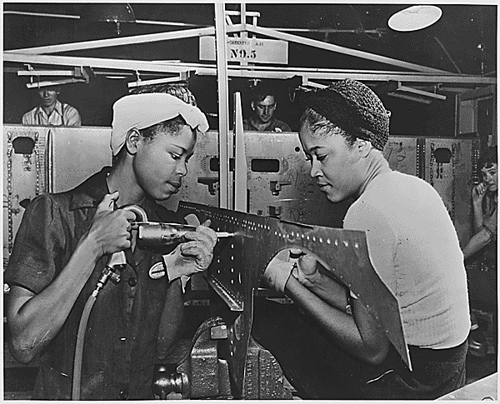
Today when I see a World War Two veteran, no matter where I encounter them, I make sure that I thank them for their service. They are part of an amazing generation of Americans who bequeathed those of us who live today so much, both during the war and after the war. Many millions served in the military, while many more served in war industries. All contributed to war bond drives, victory gardens and yes even increased taxes and decreased civil liberties to win the war.

The fact that Japanese Americans served in the most highly decorated Army units of the war despite their families being incarcerated in American versions of concentration camps is a testimony to sacrifice.
1329663819

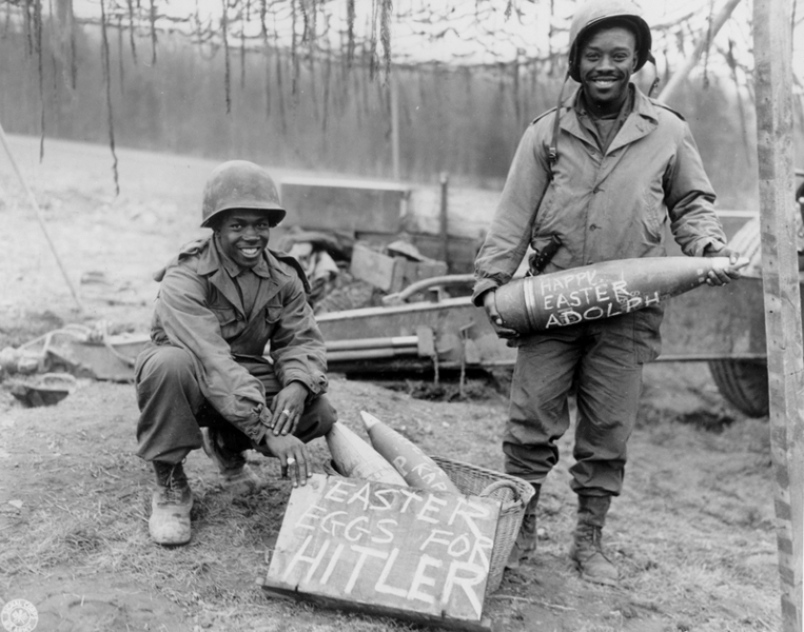
Likewise the efforts of African Americans who went to war despite being second class citizens and discriminated against under the Jim Crow Laws, which even Nazis like Hermann Goering recognized were only different from the the Nazi anti-Semitic laws and persecution in manner of degree.

That was an amazing an unique generation of Citizen Soldiers. With few exceptions they were not the professional career soldiers, sailors, marines and airmen who serve today. Most would not have considered themselves “warriors.” They were there to do a job, win a war and go home. It was part of who they were as Americans.

tumblr_mkp1mvf4gC1qbjz0go1_500

How many today would do any of those things? Today we have well under one percent of the population who have served in the wars of the past 13 years, fewer who have served in combat or in a combat zone. Likewise the population in general and in particular the bankers, businesses, lobbyists and defense contractors are not asked to sacrifice anything, instead when the country was attacked the President and others decried the fact that war might prevent people from doing business, shopping or living a normal life. For God’s sake, were at war and that attitude would have been incomprehensible to those of the Greatest Generation who for the most part either went to war, or supported the war effort with their work and other contributions. For them patriotism was not a bumper sticker.

Rachel Maddow said it well in her book Drift The Unmooring of American Military Power:

“When civilians are not asked to pay any price, it’s easy to be at war – not just to intervene in a foreign land in the first place, but to keep on fighting there. The justifications for staying at war don’t have to be particularly rational or cogently argued when so few Americans are making the sacrifice that it takes to stay.”

scan002411-483x600Jimmy Stewart and his Bomber Crew

Because of the sacrifice of people of the Greatest Generation I am grateful for them. I believe that we can learn so much from them. Even A-List Hollywood stars and professional sport heroes left their careers to serve their country. Clarke Gable, Audie Murphy, Glenn Miller, Jimmy Stewart, Bob Feller, Ted Williams and Joe DiMaggio just to name a few sacrificed major portions of their careers to serve. With the exception of Pat Tillman who died in a friendly fire incident in Afghanistan which was covered up by the Army and Bush administration, how many of the 1%, the A-List or professional athletes can you name that have left sacrificed their fortunes to serve in the front lines? I can’t name any others, but in the Second World War even the 1% had skin in the game so to speak, the Kennedy’s, Roosevelt’s and the Bush’s to name just a few.
2339073617_3b27cdf95c

I think that is why I am in awe of those of the Greatest Generation and why as the anniversaries of Midway and D-Day approach I am extra thoughtful, quite reflective and very thankful for those who through their sacrifice made so much of what we have today possible. What bothers me today is how few, especially of those who either advocate for war, lobby for it or profit from it no matter what their political, economic or religious persuasion is, offers to serve or pay for the cost of war.

Today those costs are borne by a tiny minority of Americans, military professionals of the all-volunteer military, both active duty and reserve who have endured deployment after deployment as the bulk of the nation stood by, mostly cheering them on. Of course as one who had his father serve in Vietnam and entered the military not long after had to endure the jeers of Americans, cheers are nice. They are much better than being called a “Nazi” for wearing your uniform to class. However, sometimes I think that many that cheer us on are able to due so because vicarious patriotism is easy. Vicarious patriotism anything, someone else serves, and someone else dies while they “support the troops” without actually doing anything.

crops_0201

Now please don’t get me wrong. There are a lot of good people who have never served in the military and who do care. Men and women who take action to support the troops, both those serving and the veterans, including those disabled in some way by war. For them I am grateful, they donate time, money and personal effort to care, and I do not care if the are conservatives or liberals, Republicans, Democrats or Independents, religious or atheist. They are Americans who are doing something. Likewise I do not disparage those who take the time to learn the issues that the nation faces and the domestic policies that impact the country and in a healthy body politic it doesn’t mean that we have to completely agree with each other to be patriots. Such an understanding would have been unthinkable to our founders much less most of the Greatest Generation. Veterans issues are important but national security also involves so much more, everything from the infrastructure that the Greatest Generation had the vision and wherewithal to build to the environment.

I have been to Normandy as well as other World War II battlefields in Europe and the Pacific. I can only agree with Tom Brokaw who wrote: “there on the beaches of Normandy I began to reflect on the wonders of these ordinary people whose lives were laced with the markings of greatness.”

So, when you read anything I write or re-publish during the next couple of weeks, be it about D-Day, Midway or even Gettysburg, please read what I write though those lenses. It is not that I am bitter. I have chosen my life in the military, but I wonder why so few of us bear the burden. It is a question that every citizen must ask themselves and their political representatives.

Rabbi Roland Gittlesohn, a Navy Chaplain serving with the Marines gave a eulogy at the dedication of a cemetery on Iwo Jima that puts it all in perspective.

“Here lie men who loved America because their ancestors generations ago helped in her founding, and other men who loved her with equal passion because they themselves or their own fathers escaped from oppression to her blessed shores.

Here lie officers and men, Negroes and whites, rich men and poor . . .together. Here are Protestants, Catholics and Jews together. Here no man prefers another because of his faith or despises him because of his color. Here there are no quotas of how many men of each group are admitted or allowed. Among these men there is no discrimination. No prejudices. No hatred. Theirs is the highest and purest democracy.

Whosoever of us lifts his hand in hate against a brother, or who thinks himself superior to those who happen to be in the minority, makes of this ceremony and the bloody sacrifice it commemorates, an empty, hollow mockery. To this, then, as our solemn duty, sacred duty do we the living now dedicate ourselves: to the right of Protestants, Catholics and Jews, of white men and Negroes alike, to enjoy the democracy for which all of them have here paid the price. .

We here solemnly swear that this shall not be in vain. Out of this and from the suffering and sorrow of those who mourn this will come, we promise, the birth of a new freedom for the sons of men everywhere.”

Since the last members of the Greatest Generation are passing away at an ever increasing rate and few will remain among us; I will ask you to ask yourself the question posed by the World War II veteran and hero John F Kennedy: “Ask not what your country can do for you; ask what you can do for your country.”

Peace

Padre Steve+
2 Comments

Filed under History, Military, national security, Political Commentary

The Thin Gray Line: The USS Yorktown, USS Enterprise and USS Hornet, the Carriers that Held the Japanese at Bay in 1942

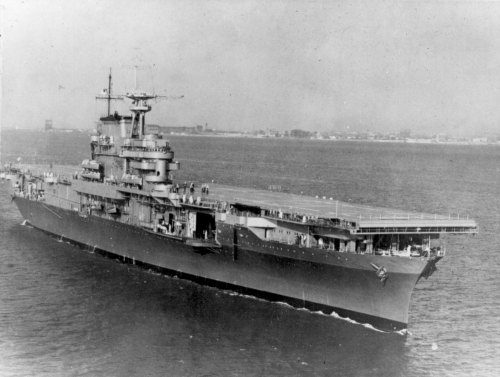
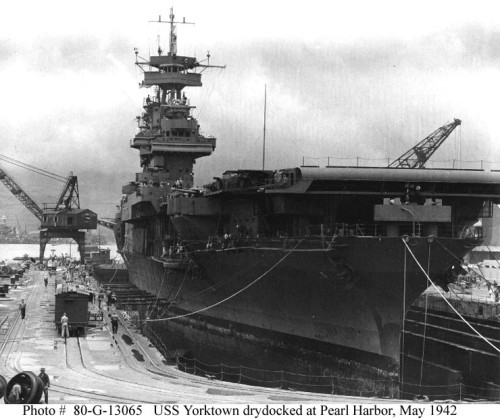
yorktown-drydock1USS Yorktown CV-5

Seldom in the annals of war is recorded that three ships changed the course of a war and altered history.  Winston Churchill once said about Fighter Command of the Royal Air Force during the Battle of Britain: “Never in the field of human conflict was so much owed by so many to so few” however I would place the epic war waged by the three carriers of the Yorktown class against the Combined Fleet and First Carrier Strike Group, the Kido Butai of the Imperial Japanese Navy between December 1941 and November 1942 alongside the epic fight of the Royal Air Force against Hitler’s Luftwaffe.

The Carriers of the Yorktown Class hold a spot in United States Naval History nearly unequaled by any other class of ships, especially a class that numbered only three ships.  Designed and built in the mid 1930s they were the final class of pre-war carriers commissioned by the navy.  The ships were built incorporating the lessons learned with Langley, Lexington, Saratoga and Ranger and had features that would become standard in the design of US Aircraft Carriers. As such they were the template for future classes of ships beginning with the Essex Class until the advent of the super carriers of the Forrestal Class.

hornet-as-completed1USS Hornet CV-8

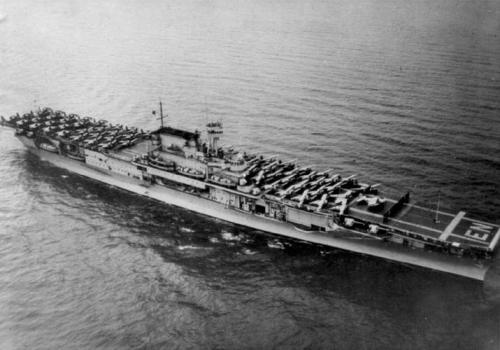
The ships heritage was evident in their names. Yorktown, the lead ship of the class named after the victory of Washington and Rochambeau over Cornwallis at Yorktown, Enterprise named after the sloop of war commanded by Stephen Decatur in the war against the Barbary Pirates, and Hornet after another famous Brig of War commanded by James Lawrence which defeated the British ship Peacock in the War of 1812.

They displaced 19.800 tons with a 25,000 full load displacement. Capable of 32.5 knots they were the Navy’s first truly successful class of carriers built from the keel up.  The ships could embark over aircraft and could steam long distances without refueling.  Protection was good for their era and the ships proved to be extraordinarily tough when tested in actual combat. In speed and air group capacity the only carriers of their era to equal them were the Japanese Hiryu and Soryu and the larger Shokaku and Zuikaku. British carriers of the period were about the same size but were slower and carried a smaller and far less capable air group though their protection which included armored flight decks was superior to both the American and Japanese ships.

enterprise-pre-war-with-ac-on-deck1USS Enterprise CV-6

Next week we will remember the epic battle of Midway, where these three gallant ships inflicted a devastating defeat on the Japanese First Carrier Strike Group. I believe that it is appropriate to go into that week remembering those ships and the brave sailors and aviators who made their triumph at Midway possible. the The links below are to articles about these three gallant ships.

They Held the Line: The USS Yorktown CV-5, USS Enterprise CV-6 and USS Hornet CV-8, Part One

They Held the Line: The USS Yorktown CV-5, USS Enterprise CV-6 and USS Hornet CV-8, Part Two the Hornet

They Held the Line: The USS Yorktown CV-5, USS Enterprise CV-6 and USS Hornet CV-8, Part Two the Hornet

Peace,

Padre Steve+

2 Comments

Filed under History, Military, Navy Ships, world war two in the pacific

Gettysburg Day One: John Reynolds’ Finest Hour

z_maritato_ironbrigadeforward1

While A.P. Hill and Harry Heth ignored warnings and launched their troops towards Gettysburg, Buford believing an engagement was in the offing sought out good ground to give battle and hold back the enemy until the army could arrive. This he found on the ridges west of Gettysburg. The choice of ground is always important and in this battle was paramount to the success of the Army of the Potomac. Buford alerted Major General John Reynolds and the cavalry corps commander Alfred Pleasanton to the location of the approaching Confederates on the night of June 30th. However, Buford’s warning, and that of the intelligence bureau came too late for Reynolds or Meade to take action on them that evening, nor give Meade “to dictate the choice of giving or accepting battle.” [1]

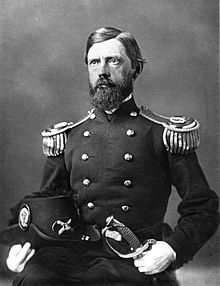
The Army of the Potomac had the good fortune of having Reynolds in this key position on the morning of July 1st 1863. John Reynolds was one of the finest commanders on either side during the Civil War. He graduated from West Point in 1841 and served in the artillery. He fought during the war with Mexico serving in Braxton Bragg’s battery winning fame and two brevet promotions for bravery, [2] to Captain at Monterrey and Major at Buena Vista. Following the war he remained in the army. He served in field and coastal batteries and like John Buford had “participated in the Utah Expedition.” [3] In 1860 he was appointed as Commandant of the Corps of Cadets at West Point and served there until June of 1861 when he was appointed as Lieutenant Colonel of the 14th U.S. Infantry regiment. [4]

220px-GenJFRenyolds

However, he was soon promoted to Brigadier General and he commanded a brigade of Pennsylvania volunteers during the Peninsula Campaign. He was captured on June 28th as McClellan began his withdraw from the gates of Richmond but was released in a prisoner exchange on August 15th 1862. [5] He returned to command a division at Second Bull Run where his division held firm as much of the army retreated, but missed the battle of Antietam as he was called to “the fruitless and frustrating task of trying to organize Pennsylvania’s militia” [6] by Governor Curtain. He commanded I Corps at Fredericksburg and again at Chancellorsville and was reportedly offered command of the Army of the Potomac by Lincoln, something that he recounted to his artillery chief Colonel Wainwright that he “refused it because he would have been under the same constraints as Burnside and Hooker.” [7]

The Army of the Potomac’s senior leadership had been the source of much political consternation during 1862 and 1863 for Abraham Lincoln. It was split among Lincoln’s supporters and detractors, Radical Republican abolitionists and moderate Democrats some of its leaders including McClellan, Hooker and Sickles had their own aspirations for the presidency. However, Reynolds was of a different character than some of his fellow commanders. He was a moderate Pennsylvania Democrat and no supporter of Lincoln, once comparing him to a “baboon.” But he “was also a serious unbending professional, who unlike McClellan, actually lived by the principle of “obedience to the powers that be.” [8] “Universally respected” in the army “for his high character and sterling generalship” [9] it was noted that unlike others Reynolds had a policy of holding back “stoutly aloof from all personal or partisan quarrels, and keeping guardedly free from any of the heart-burnings and jealousies that did so much to cripple the usefulness and endanger the reputation of many gallant officers.” [10]

On the night of June 30th Reynolds was awash in reports, some of them conflicting and without Meade’s course of action for the next day “concluded that Lee’s army was close by and in force.” [11] He spent the night at his headquarters “studying the military situation with Howard and keeping in touch with army headquarters.” [12] Howard noted Reynolds anxiety and “Howard received the impression that Reynolds was depressed.” [13] After Howard’s departure Reynolds took the opportunity to get a few hours of fitful sleet before arising again at 4 a.m. on July 1st.

When morning came, Reynolds was awakened by his aide Major William Riddle with Meade’s order to “advance the First and Eleventh Corps to Gettysburg.” [14] Reynolds studied the order and though he expected no battle that morning, expecting “only moving up to be in supporting distance to Buford” [15] took the reasonable precautions that Confederate commanders had not done.

Though Reynolds was not expecting a fight he organized his march in a manner that ensured if one did happen that he was fully prepared. They were precautionary measures that any prudent commander knowing that strong enemy forces were nearby would take. Reynolds certainly took to heart the words of Napoleon who said “A General should say to himself many times a day: If the hostile army were to make its appearance in front, on my right, or on my left, what should I do?” [16] It was a question that A.P. Hill and Harry Heth seemed not to consider on that warm and muggy July morning, where Heth was committing Lee’s army to battle on his own authority, Reynolds was about to do the same, but unlike Heth, he “had at least been delegated the authority for making such a decision.” [17]

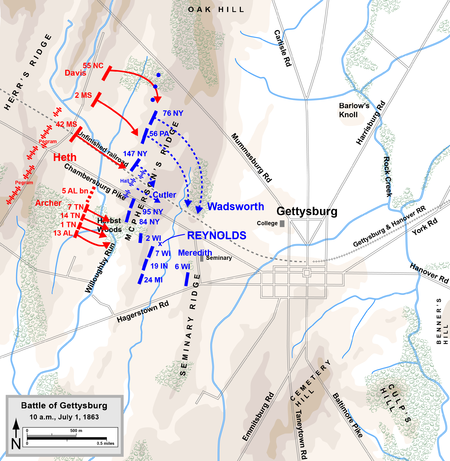
Reynolds “wanted all the fighting troops to be up front, so he instructed Howard not to intermingle his supply wagons with his infantry. Similar instructions had been given to Abner Doubleday; to ensure that the First Corps wagons would wait until the Eleventh Corps foot soldiers had passed.” [18] Likewise, instead operating in the normal fashion of rotating units on the march, Reynolds opted to save time. Since the First Division under the command of James Wadsworth was further advanced than other I Corps divisions, Reynolds instructed it to move first. In doing so he countermanded the order of the acting corps commander Doubleday telling Wadsworth that Doubleday’s order “was a mistake and that I should move on directly.” [19] He went forward with Wadsworth’s division and ordered Doubleday to “assemble the artillery and the remainder of the corps, and join him as soon as possible.” [20] He ordered Howard’s XI Corps to follow and Sickles’ III Corps to come up through Emmitsburg. [21] Reynolds’ intention according to Doubleday was “to fight the enemy as soon as I could meet him.” [22]

Reynolds rode forward with some of his staff into the town as the infantry of I Corps and XI Corps moved advanced. In the town they were met by “a fleeing, badly frightened civilian, who gasped out the news that the cavalry was in a fight.” [23] When he came to the Lutheran Seminary he came across Buford. It was a defining moment of the Civil War, a moment that shaped the battle to come. It has been recounted many times and immortalized on screen in the movie Gettysburg, a time “when the entire battle would come down to a matter of minutes getting one place to another.” [24]

450px-Gettysburg_Day1_1000

When Buford saw Reynolds infantry advancing he remarked “now we can hold this place.” [25] Reynolds greeted Buford, who was in the cupola of the seminary calling out “What’s the matter John?” to which Buford replied “The devil’s to pay” before coming down to discuss the matter with Reynolds. [26] Buford explained the situation noting that “I have come upon some regiments of infantry…they are in the woods…and I am unable to dislodge them.” [27]

Reynolds needed no other convincing. He asked Buford if he could hold and quickly sent off a number of messages. One officer wrote: “The Genl ordered Genl Buford to hold the enemy in check as long as possible, to keep them from getting into town and at the same time sent orders to Genl Sickles…& Genl Howard to come as fast as possible.” [28] He also sent a message to Meade stating: “The enemy are advancing in strong force. I [Reynolds] fear they will get to the heights beyond the own before I can. I will fight them inch by inch, and if driven into the town, I will barricade the streets and hold them back as long as possible.” [29] He directed Major Weld to take it to Meade with all haste “with the greatest speed I could, no matter if I killed my horse.” [30]

After dictating his instructions Reynolds then did what no senior Confederate commander did, he rode back and took personal charge of the movements of his troops to hurry them forward. Unlike Heth, he had taken note of the ground and recognized from Buford’s reports that “the Confederates were marching only on that single road and thus would not be able to push their forces to the front any faster than Reynolds could reach the battlefield with his First Corps divisions.” [31]

Reynolds, recognizing that time was of the essence if his forces were to hold the ground west of the town selected a shortcut around the town for I Corps. Those forces were directed across the fields near the Condori farm toward the back side of Seminary Ridge, with Reynolds’ staff helping to remove fences to speed the advance. [32] It was not an easy advance as the troops had to move across the farm fields at an oblique and have to “double-quick for a mile and a quarter in the thick humidity just to reach the seminary.” [33]

As troops arrived Reynolds directed them into position. He directed the artillery of Captain James Hall’s 2nd Maine Battery to McPherson’s Ridge instructing Hall “I desire you to damage their artillery to the greatest possible extent, and to keep their fire from our infantry until they are deployed….” [34] The leading infantry of I Corps was James Wadsworth’s understrength division containing just two brigades, its losses from Chancellorsville not being made good and as the result of the loss of regiments discharged because their enlistments had expired.

However these units were “good ones,” composed of hardened combat veterans. Brigadier General Zylander Cutler led his brigade of New Yorkers and Pennsylvanians up first followed by the six foot seven inch tall Quaker, Brigadier General Solomon Meredith’s “Iron Brigade” of westerners following in their distinctive black hats. Reynolds directed Cutler’s brigade north of the Cashtown Pike and “called the Iron Brigade into action on the south side” [35] Reynolds directed Wadsworth to take change on the north side of the road while he looked after the left. [36] It is also believed by some writers that he directed Oliver Howard to prepare Cemetery Hill as a fallback position [37] however; there is more evidence that points to Howard selecting the site himself. [38]

Cutler’s brigade moved north and engaged Davis’ men near the railroad cut, with Davis’ troops initially having the upper hand, inflicting massive casualties Cutler’s regiments. But in a fierce engagement Cutler’s men pushed the unsupported Confederates back into the Railroad Cut where they slaughtered many of those unfortunate soldiers, taking over 200 prisoners and a battle flag. [39]

The Iron Brigade, brought forward by Doubleday hit Archer’s brigade in the front at Herbst Woods on McPherson’s Ridge. As the unit went into action Doubleday “urged the men…to hold it all hazards.” He recalled that the troops, “full of enthusiasm and the memory of their past achievements they said to me proudly, “If we can’t hold it, where will you find men who can?” The effect was dramatic as the Iron Brigade overwhelmed that unit, whose soldiers now realized they were facing “the first team.” Members of the Iron Brigade recalling the voices of Confederate soldiers exclaiming “Here are those damned black-hat fellers again…’Taint no militia-that’s the Army of the Potomac.” [40] As they attempted to withdraw they piled up at a fence near Willoughby Run and were hit in the flank by “a Michigan regiment that had worked its way around through the woods to the south.” [41]

Coddington writes “It was a bad moment for the Army of Northern Virginia, and Archer gained the unenviable distinction of being the first of its general officers to be captured after Lee took command.” [42] As the 2nd Wisconsin advanced into the woods Reynolds urged them forward: “Forward men, for God’s sake and drive those fellows out of those woods….” [43] As he looked around toward the seminary to see the progress of reinforcements Reynolds was struck in the back of the neck by a bullet and fell dead with Doubleday taking command of the First Corps to the west of the town.

death_of_reynolds_gettysburg

Reynolds was dead, but the series of command decisions reached by Reynolds under the pressure of a meeting engagement “where neither side held an immediate advantage” [44] were critical to the army. Though shaken by his loss the Union troops fought on at McPherson and Seminary Ridge until the assault of Ewell on their left and the arrival of Pender’s fresh division forced them from their positions.

The contrast between Reynolds and his opponents was marked. Hill was ten miles away from the action, Heth too far to the rear of his troops to direct their advance when they ran into trouble. However, Reynolds “hurried to the front, where he was able to inspirit the defense and throw troops into the decisive zone.” [45] At every point John Reynolds showed himself superior to his opponents as he directed the battle and reacted to circumstances. He paid with his life but his sacrifice was not in vain. Harry Hunt noted: “…by his promptitude and gallantry he had determined the decisive field of the war, and he opened brilliantly a battle which required three days of hard fighting to close with a victory.” [46]

 Notes

[1] Sears, Stephen W. Gettysburg. Houghton Mifflin Co. Boston and New York 2003 p. 159

[2] Pfanz Harry W. Gettysburg: The First Day University of North Carolina Press, Chapel Hill and London 2001pp.47-48

[3] Ibid. Pfanz Gettysburg: The First Day p.48

[4] Ibid. Pfanz Gettysburg: The First Day p.48

[5] Foote, Shelby, The Civil War, A Narrative. Volume One Fort Sumter to Perryville Random House, New York 1958 p.493

[6] Ibid. Pfanz Gettysburg: The First Day p.48

[7] Ibid. Sears, Gettysburg. p. 40-42


[8] Guelzo, Allen C. Gettysburg: The Last Invasion Vintage Books a Division of Random House, New York 2013 pp.29-30

[9] Ibid. Sears, Gettysburg. p. 34

[10] Ibid. Guelzo, Gettysburg: The Last Invasion p.30

[11] Ibid. Pfanz Gettysburg: The First Day p.48

[12] Coddington, Edwin B. The Gettysburg Campaign: A Study in Command, A Touchstone Book, Simon and Schuster New York, 1968 p.261

[13] Ibid. Pfanz Gettysburg: The First Day p.48

[14] Ibid. Coddington The Gettysburg Campaign: A Study in Command, p.261

[15] Ibid. Sears, Gettysburg. p. 158

[16] Napoleon Bonaparte, Military Maxims of Napoleon in Roots of Strategy: The Five Greatest Military Classics of All Time edited by Phillips, Thomas R Stackpole Books Mechanicsburg PA 1985 p.410

[17] Ibid. Sears, Gettysburg. p. 165

[18] Tredeau, Noah Andre. Gettysburg: A Testing of Courage, Harper Collins Publishers, New York 2002 p.159

[19] Ibid. Tredeau, Gettysburg: A Testing of Courage p.156

[20] Ibid. Guelzo, Gettysburg: The Last Invasion p.142

[21] Ibid. Sears, Gettysburg. p. 158

[22] Ibid. Tredeau, Gettysburg: A Testing of Courage p.156

[23] Ibid. Sears, Gettysburg. p. 165

[24] Ibid. Guelzo, Gettysburg: The Last Invasion p.142

[25] Ibid. Guelzo, Gettysburg: The Last Invasion p.142

[26] Ibid. Sears, Gettysburg. p. 172

[27] Ibid. Guelzo, Gettysburg: The Last Invasion p.143

[28] Ibid. Tredeau, Gettysburg: A Testing of Courage p.172-173

[29] Schultz, Duane The Most Glorious Fourth: Vicksburg and Gettysburg July 4th 1863. W.W. Norton and Company New York and London, 2002 p.202

[30] Ibid. Tredeau, Gettysburg: A Testing of Courage p.173

[31] Ibid. Sears, Gettysburg. p. 166

[32] Ibid. Pfanz Gettysburg: The First Day p.75

[33] Ibid. Guelzo, Gettysburg: The Last Invasion p.145

[34] Gottfried, Bradley The Artillery of Gettysburg Cumberland House Publishing, Nashville TN 2008 pp.28-29

[35] Catton, Bruce The Army of the Potomac: Glory Road Doubleday and Company, Garden City New York, 1952 p.271

[36] Ibid. Pfanz Gettysburg: The First Day pp.75-76

[37] Ibid. Pfanz Gettysburg: The First Day p.76

[38] Green, A. Wilson. From Chancellorsville to Gettysburg: O. O. Howard and Eleventh Corps Leadership in The First Day at Gettysburg edited by Gallagher, Gary W. Kent State University Press, Kent Ohio 1992 p. 70

[39] Ibid. Guelzo, Gettysburg: The Last Invasion p.153

[40] Ibid. Catton The Army of the Potomac: Glory Road p.273

[41] Foote, Shelby, The Civil War, A Narrative. Volume Two Fredericksburg to Meridian Random House, New York 1963 pp.470-471

[42] Ibid. Coddington The Gettysburg Campaign: A Study in Command, p.271

[43] Ibid. Coddington The Gettysburg Campaign: A Study in Command, p.271

[44] Ibid. Sears, Gettysburg. p. 168

[45] Krick, Robert K. Three Confederate Disasters on Oak Ridge: Failures of Brigade Leadership on the First Day of Gettysburg in The First Day at Gettysburg edited by Gallagher, Gary W. Kent State University Press, Kent Ohio 1992 p.113

[46] Hunt, Henry. The First Day at Gettysburg in Battles and Leaders of the Civil War Volume III, The Tide Shifts. Edited by Robert Underwood Johnson and Clarence Clough Buel Castle, Secaucus NJ

1 Comment

Filed under civil war, History, leadership, Military

Memorial Day 2014: Remembering the Memorial Day Order of 1868

memorial-day-traditions_1399868491

Oliver Wendell Holmes ended his Decoration Day 1884 speech:

But grief is not the end of all…Our dead brothers still live for us, and bid us think of life, not death, — of life to which in their youth they lent the passion and glory of the spring. As I listen, the great chorus of life and joy begins again, and amid the awful orchestra of seen and unseen powers and destinies of good and evil our trumpets sound once more a note of daring, hope, and will.

Frederick Douglass noted the same year in his Decoration Day Speech:

“Dark and sad will be the hour to this nation when it forgets to pay grateful homage to its greatest benefactors. The offering we bring to-day is due alike to the patriot soldiers dead and their noble comrades who still live; for, whether living or dead, whether in time or eternity, the loyal soldiers who imperiled all for country and freedom are one and inseparable.” From Frederick Douglass’ Memorial Day Speech 1884

The words of both men are something that we should not forget as we remember and honor all who have given the “last full measure of devotion to duty.”

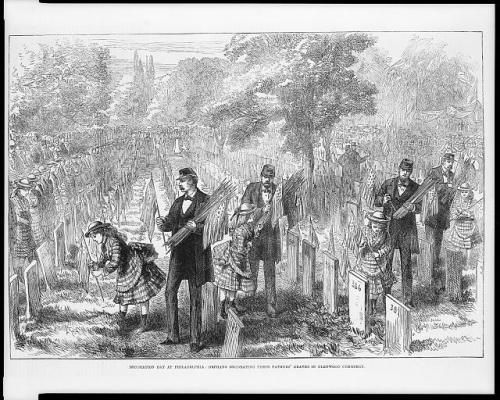
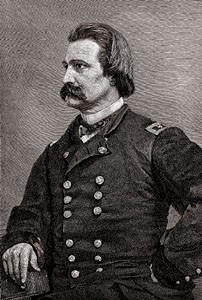
It was after the great bloodletting known as the American Civil War that Memorial Day, originally known as Decoration Day was established. The first observance was made by the recently freed slaves of Charleston South Carolina who honored the memory of the Union Soldiers who had died at the Washington Racecourse Prison Camp on May 1st 1865.  Other celebrations began around the country in May and June of 1866. By 1868 the Commander of the Grand Army of the Republic Union Veterans association General John Logan issued an order directing that the 30th of May 1868 be designated to the memory of the Union Soldiers, Sailors and Marines who had given their lives in the defense of the Union.

decoration-day1

Since its establishment the holiday has grown to encompass the honored dead of all American wars.  However its roots were in the Civil War, a war that claimed the lives of between 600,000 and 700,000 American military personnel on both sides of the conflict. It is hard to imagine that on one, September 17th 1862 that over 23,000 Union and Confederate Soldiers were killed, wounded or missing. At Gettysburg more men were killed and wounded than in the entirety of the Iraq and Afghanistan wars. Two percent of the population was killed in the war. To put that in perspective that casualty rate would involve the deaths of more than 6 million soldiers, well over twice as many men and women as currently serve on active duty and in the reserve components. Abraham Lincoln noted in his Gettysburg Address the importance of not forgetting those men:

“It is rather for us to be here dedicated to the great task remaining before us — that from these honored dead we take increased devotion to that cause for which they gave the last full measure of devotion — that we here highly resolve that these dead shall not have died in vain — that this nation, under God, shall have a new birth of freedom — and that government of the people, by the people, for the people, shall not perish from the earth.”


DSCN8774

General Logan’s order is remarkable in its frankness and the understanding of the war in the immediate context of its conclusion.  In 1868 the day would be observed at 183 cemeteries in 27 States and the following year over 300 cemeteries. Michigan was the first state to make the day a holiday and by 1890 all states in the North had made it so. In the South there were similar observances but the meaning attributed to the events and the sacrifices of the Soldiers of both sides was interpreted differently. In the North it was about preserving the Union and in the South the interpretation of the Lost Cause.  Yet in both regions and all states, the surviving Soldiers, family members and communities honored their dead.

This Memorial Day we will honor all that have fallen but in our mind are the few that fight our current wars, wars that unlike that terrible Civil War, the majority of the population does not experience.

The order of the Grand Army of the Republic establishing Memorial Day is posted below.

Peace

Padre Steve+

logan_engraving

HEADQUARTERS GRAND ARMY OF THE REPUBLIC, General Orders No.11, WASHINGTON, D.C., May 5, 1868

I. The 30th day of May, 1868, is designated for the purpose of strewing with flowers or otherwise decorating the graves of comrades who died in defense of their country during the late rebellion, and whose bodies now lie in almost every city, village, and hamlet church-yard in the land. In this observance no form of ceremony is prescribed, but posts and comrades will in their own way arrange such fitting services and testimonials of respect as circumstances may permit.

We are organized, comrades, as our regulations tell us, for the purpose among other things, “of preserving and strengthening those kind and fraternal feelings which have bound together the soldiers, sailors, and marines who united to suppress the late rebellion.” What can aid more to assure this result than cherishing tenderly the memory of our heroic dead, who made their breasts a barricade between our country and its foes? Their soldier lives were the reveille of freedom to a race in chains, and their deaths the tattoo of rebellious tyranny in arms. We should guard their graves with sacred vigilance. All that the consecrated wealth and taste of the nation can add to their adornment and security is but a fitting tribute to the memory of her slain defenders. Let no wanton foot tread rudely on such hallowed grounds. Let pleasant paths invite the coming and going of reverent visitors and fond mourners. Let no vandalism of avarice or neglect, no ravages of time testify to the present or to the coming generations that we have forgotten as a people the cost of a free and undivided republic.

If our eyes grow dull, other hands slack, and other hearts cold in the solemn trust, ours shall keep it well as long as the light and warmth of life remain to us.

Let us, then, at the time appointed gather around their sacred remains and garland the passionless mounds above them with the choicest flowers of spring-time; let us raise above them the dear old flag they saved from dishonor; let us in this solemn presence renew our pledges to aid and assist those whom they have left among us a sacred charge upon a nation’s gratitude, the soldier’s and sailor’s widow and orphan.

II. It is the purpose of the Commander-in-Chief to inaugurate this observance with the hope that it will be kept up from year to year, while a survivor of the war remains to honor the memory of his departed comrades. He earnestly desires the public press to lend its friendly aid in bringing to the notice of comrades in all parts of the country in time for simultaneous compliance therewith.

III. Department commanders will use efforts to make this order effective.

By order of

JOHN A. LOGAN,
Commander-in-Chief

N.P. CHIPMAN,
Adjutant General

Official:
WM. T. COLLINS, A.A.G.

Leave a comment

Filed under civil war, History, Military, shipmates and veterans

Remembering the “Mighty Hood” and the Battle of the Denmark Strait

hms-hood-sinking11Artist rendition of the Loss of the HMS Hood

Seventy-three years ago today the “Mighty Hood” was sunk by the German Battleship Bismarck. It is an anniversary that I always mark. I first read about this battle in C.S Forrester’s little book Hunting the Bismarck which was used as the screenplay for the 1960 film Sink the Bismarck. This essay is in honor of the gallant HMS Hood and her crew.  It is fitting although the HMS Hood and her killer, the German battleship Bismarck were American. Both were great ships manned by gallant crews and the loss of both ships was tragic, especially from the aspect of the great loss of human life. May we never forget the sacrifice of these men and all others who have gone down to the sea in great ships.

hood-malta1HMS Hood at Malta

There are some warships and naval engagements which assume legendary proportions.  The Battle of the Denmark Strait on 24 May 1941 between the two largest battleships in commission at the time, the pride of the British Royal Navy the HMS Hood and the German behemoth Bismarck is legendary as are those two mighty ships.  The battle came at a critical time as the Britain stood alone against the seemingly invincible German Blitzkrieg.

hood-at-san-francisco1Hood in San Francisco on 1920s goodwill tour

Britain had been driven from Western Europe and was being bombed regularly by Herman Goering’s Luftwaffe while a British expeditionary force that had been sent to Greece had been defeated and the Germans were assaulting Crete with airborne forces.  In the Western Desert the Afrika Korps under Field Marshall Erwin Rommel had driven off a British counter-offensive on the Libyan-Egyptian frontier and were laying siege to Tobruk and in the Atlantic German U-Boats sank 66 Allied Merchant Ships of over 375,000 tons and the Royal Navy would lose 25 warships not including the Hood.

hms_hood_march_17_19241

The Hood was the pride of the Royal Navy and was world famous due to her inter-war international presence and goodwill visits.  Displacing 47,430 tons full load she was armed with eight 15” guns in four twin turrets.  Designed as a battle cruiser she was less heavily armored than contemporary battleships and had very weak vertical protection from plunging shellfire.  This was a fault which was known but never rectified between the wars and when the war came the Royal Navy could ill-afford to take her out of service for the necessary improvements to her protection system.  She was fast with a designed speed of 31 knots which been reduced to 28 knots by 1939 as a result of modifications which increased her displacement.   This was further reduced by the wear and tear on her propulsion plant to 26.5 knots by 1940.

Hood was designed before the battle of Jutland (May 1916) where the weaknesses in the armor protection of British Battlecruisers was exposed as three, the HMS Invincible, HMS Queen Mary and HMS Indefatigable were destroyed by plunging fire which exploded their magazines.  Though her design was modified during construction she still was vulnerable to plunging fire. She was scheduled for a major refit which would have included significant improvement in armor protection in 1941 but the war prevented the Hood from receiving anything more than improvements to her anti-aircraft batteries.

Combat1lgHood (nearly hidden by falling shells) in action at Mers-El-Kebir

During the war Hood was engaged in patrol and search operations against German raiders in the North Atlantic and in June 1940 joined Force “H” in the Mediterranean.  As Flagship of Force “H” she took part in the sinking of French Fleet Units including the Battleship Bretagne at Mers-El-Kebir on 3 July 1940 following the French surrender to the Germans and remained in operation searching for the German Pocket Battleship Admiral Scheer and Heavy Cruiser Admiral Hipper until she was withdrawn for a brief refit in January 1941. Following another brief refit in mid-March, Hood was underway from mid-March searching for the German raiders Scharnhorst and Gneisenau and a false report of Bismarck breaking out into the Atlantic in April 1941. She returned to Scapa Flow on 6 May 1941.

bismarck1Bismarck

When the British discovered that Bismarck had entered the Atlantic, Hood as the flagship of Vice Admiral Lancelot Holland was dispatched with the newly commissioned battleship HMS Prince of Wales to join the Heavy Cruisers HMS Suffolk and HMS Norfolk at the entrance to the Denmark Strait.  When the cruisers discovered Bismarck along with her consort the Heavy Cruiser Prinz Eugen the two British battleships steamed into naval history.

flagshippg213

Bismarck was slightly larger than Hood and mounted the same main armament but that was about all the two ships had in common. If the battle was a battle between heavyweight prize fighters Hood was the valiant but crippled champion and Bismarck the young and overpowering challenger.  Bismarck was slightly faster than the limping Hood and was one of the most well protected ships ever built.  Her gunnery officers and the men that manned those deadly 15” guns were like previous generations of German sailors’ gunnery experts working some of the finest naval guns ever made.

Schlachtschiff Bismarck, SeegefechtBismarck firing on Hood

gallbismdenmarkstrait11

The German ships shadowed at a distance by the Norfolk and Suffolk German task force under the command of Admiral Gunther Lütjens emerged from the strait and was sighted by the British at 0537.  Knowing his ship’s weakness in regard to plunging fire Admiral Holland desired to steer a direct course at the German ships in order to close the range quickly. Events dictated otherwise and the British were forced to close the range much more slowly and exposing Hood and Prince of Wales to German plunging fire for a longer period of time.  Holland turned to close faster with the result that his gunnery was degraded by wind and spray coming over the bows of his ships and the inability to fire his after turrets.

hood0231Hood from Prince of Wales moments before being hit and sunk

At 0553 Holland ordered his ships to open fire without the benefit of Suffolk and Norfolk being in position to engage the Prinz Eugen.  The Hood initially concentrated her fire on Prinz Eugen assuming her to be the Bismarck while Prince of Wales engaged Bismarck.  Prince of Wales drew first blood striking Bismarck three times. One which damaged her seaplane catapult, a second which did minor damage to machinery spaces and a third which passed through the bow near the waterline which severed fuel lines from her forward fuel tanks.

prinzeugen-21Prinz Eugen

Both German ships opened fire at 0555 concentrating on the Hood.  Prinz Eugen immediately hit Hood with at least one 8” shell which set a large fire among the ready to use 4”ammunition stored in lockers near the mainmast. The hit started a large fire which Hood’s damage control teams raced to contain.  At 0600 Holland ordered his ships to turn to port in order to bring his rear turrets into the fight. As the squadron executed the turn Hood was straddled by a salvo from Bismarck and observers on Prince of Wales observed an explosion between “X” turret and the mainmast which consumed the Hood causing her bow to jut sharply out of the water before sinking beneath the waves in under 3 minutes time. Witnesses on both sides of the engagement were stunned by the sudden and violent end of the Hood and the Germans rapidly shifted fire to the Prince of Wales knocking her out of the action.  Against the advice of Bismarck’s Captain Ernst Lindemann, Lütjens did not follow up his advantage to sink the crippled British ship.

hood_explosion_sketch1Hood blows up. Drawing by the Captain of HMS Prince of Wales J.C. Leach

Only three crewmen Petty Officer Ted Briggs, Seaman Bob Tilburn and Midshipman Bill Dundas survived the sinking of Hood out of a total of 1415 souls embarked. They were rescued 4 hours later nearly dead of hypothermia staying awake by sinking “Roll out the Barrel” by the destroyer HMS Electra.

hood_blowup1

Briggs who died in 2008 recounted the sinking:

“Then she started listing to starboard. She righted herself, and started going over to port. When she had gone over by about 40 degrees we realised she was not coming back…” Briggs was sucked under the water “I had heard it was nice to drown. I stopped trying to swim upwards. The water was a peaceful cradle – I was ready to meet my God. My blissful acceptance of death ended in a sudden surge beneath me, which shot me to the surface like a decanted cork in a champagne bottle. I turned, and 50 yards away I could see the bows of the Hood vertical in the sea. It was the most frightening aspect of my ordeal, and a vision which was to recur terrifyingly in nightmares for the next 40 years.” (The Daily Telegraph 5 October 2008)

briggs1Ted Briggs

tilburn4111Bob Tilburn

The Admiralty reported the loss of the Hood later in the day saying Hoodreceived an unlucky hit in a magazine and blew up.”  The official report of the sinking released later in the year said:

That the sinking of Hood was due to a hit from Bismarck’s 15-inch shell in or adjacent to Hood’s 4-inch or 15-inch magazines, causing them all to explode and wreck the after part of the ship. The probability is that the 4-inch magazines exploded first.”

The commission’s findings have been challenged by a number of naval historians and there are several theories of how the magazines might have exploded but all point to a massive magazine explosion but probably not due to a plunging round but from another hit which detonated the unprotected 4” magazines or a hit from Bismarck below Hood’s waterline which stuck a magazine.  Hood’s wreckage was located in 2001 lying across two debris fields and the examination revealed that the after magazines had exploded.  The site is designated as a War Grave by Britain and protected site under the Protection of Military Remains Act of 1986.

bismarck-sinking1Bismarck sinking

Bismarck and her crew did not long survive her victory being crippled by a lucky aerial torpedo hit from a Fairley Swordfish bomber flying from the HMS Ark Royal on 26 May and being scuttled by her crew after absorbing massive damage from the HMS King George V, HMS Rodney and several cruisers including HMS Dorsetshire the plucky and persistent Norfolk and several destroyers. When she went down she took with her all but 115 souls of her crew of over 2200 which included the Fleet Staff of Admiral Lütjens.

hms-prince-of-wales1HMS Prince of Wales

Prince of Wales would take Winston Churchill to Argentia Bay Newfoundland to meet with Franklin Roosevelt from 9-12 August 1941 where the Atlantic Charter was drafted. She reported to the Far East where she was sunk along with the Battlecruiser HMS Repulse on 9 December 1941 by a force of land based Japanese aircraft.  The Prinz Eugen was the only heavy ship of the German Navy to survive the war and was taken by the US Navy at the end of the war. She was expended as a target during the Able and Baker nuclear tests at Bikini Atoll.  Too radioactive to be repaired she was towed to Kwajalein Atoll where she capsized and sank on 22 December 1946. Her wreck is still visible.

The loss of the Hood traumatized the people of Britain and the Royal Navy; she had been the symbol of British Naval power for over 20 years and people around the world were likewise stunned at her demise. The sinking of the Hood and the loss of her crew was a tragedy which all sailors assigned to large and prestigious ships and the nations that they sail for need to keep in mind.

No matter how mighty any ship may be, every ship has an Achilles heel and no ship is unsinkable.  Of the over 3600 officers and crew of the Hood and the Bismarck only 118 survived.

dundasw1

I will remember the Hood, her gallant crew especially my very distant relative Midshipman Bill Dundas who I never met.  He left the Royal Navy about 1960 and was killed in a car wreck in 1965.  According to the Hood Association website he was troubled by the sinking for the rest of his life.  One can understand.

Peace

Padre Steve+

4 Comments

Filed under History, Military, Navy Ships, world war two in europe

Gettysburg Day One: Inexperience and Hubris Meets Calculating Experience; Harry Heth Blunders into Battle against John Buford

burford june 30th

Despite the warnings of Johnston Pettigrew, Major General Harry Heth with the approval and blessing of his corps commander Lieutenant General A.P. Hill arose on the morning of July 1st 1863 and formed his division for its march to Gettysburg. But it was an inauspicious start to a very bad day for Heth and his division. Somehow orders had not gotten to his units to begin the advance at 5 a.m. and “there was haste to the early morning’s preparations that caught some off guard” even regimental commanders. [1]

During the night Of June 30th 1863 the actions of A.P. Hill show a commander who confused and uncertain. The confidence that he and Heth showed in rejecting Pettigrew and Young’s reports of Federal troops in Gettysburg left “most, if not all the commanding officers in Hill’s corps…unprepared for what happened.” [2] Lieutenant Lewis Young wrote “I doubt if any of the commanders of brigades, except General Pettigrew, believed that we were marching to battle, a weakness on their part which rendered them unprepared for what was about to happen.” [3]

Hill sent a message to Ewell of Second Corps telling that officer that “I intended to advance the next morning and discover what was in my front” [4] and sent word of Pettigrew’s discovery of Union cavalry to Lee’s headquarters, but his warning apparently gave Lee little cause for concern. Porter Alexander noted that on the night of June 30th that he visited Lee’s headquarters and found conversation to be “unusually careless & jolly. Certainly there was no premonition that the next morning was to open a great battle of the campaign.” [5] Hill also sent a courier to Anderson instructing him to bring up his division on Jul 1st and instructed Heth that “Pender’s division also would be ordered through Cashtown as a reserve to be available if Heth ran into serious trouble.” [6]

Since a reconnaissance is normally conducted by small elements, the fact that Hill committed his two divisions present to such a mission demonstrated his confusion of both the nature of what he might face and to the intentions of Robert E. Lee. One has to remember that Lee, like his corps commanders was operating blind, in part due to Stuart’s absence but also due to the poor employment of the cavalry that should have been available to them. Hill and Heth had no idea what they faced at Gettysburg and disregarded the warnings of his own people. Thus it is hard to believe that Hill did not expect the possibility of action. Likewise it is distinctly possible that Heth, despite his orders “may have had more on his mind than shoes and information when he made his advance towards Gettysburg.” [7]

Several critics have made this point, among them Major John Mosby the Confederate cavalry leader and guerrilla fighter who wrote: “Hill and Heth in their reports, to save themselves from censure, call the first day’s action a reconnaissance; this is all an afterthought….They wanted to conceal their responsibility for the defeat.” [8] A more contemporary writer, Jennings Wise noted that Hill’s orders “were specific not to bring on an action, but his thirst for battle was unquenchable, and…he rushed on, and…took the control of the situation out of the hands of his commander-in-chief.” [9] Heth in later years made an unsubstantiated claim that “A courier came from Gen. Lee, with a dispatch ordering me to get those shoes even if I encountered some resistance.” [10] That appears unlikely as Mosby noted that no one ordered Hill to advance and Lee “would never have sanctioned it.” [11] Neither Lee or any of his staff collaborate Heth’s claim and the judicious Porter Alexander who had been in Lee’s headquarters the night of June 30th wrote that “Hill’s movement to Gettysburg was made on his own accord, and with knowledge that he would find the enemy’s cavalry in possession.” [12]

The advance to contact was marred by Heth’s inexperience compounded by the illness of A.P. Hill who on the morning of July 1st had “awakened feeling very ill, too sick to mount his horse…although no diagnosis was made, he was probably suffering from overstrained nerves.” [13] Hill’s absence left Heth, an inexperienced division commander “without any sage counsel” [14] and Heth began to commit a series of costly errors. Heth understood from Hill that his mission was a job that normally would be assigned to cavalry: “to ascertain what force was at Gettysburg, and if he found infantry opposed to him, to report the fact immediately, without forcing an engagement.” [15]

Heth advanced without the caution of a commander who had been told that enemy forces were likely opposing him. Even though he disbelieved the reports some amount of judicious caution should have been indicated. Instead, for reasons unknown Heth had his men advance as if they were conducting a routine movement. He led his advance with his assigned artillery battalion commanded by Major William Pegram. He followed with Archer’s veteran but depleted brigade and Davis’s inexperienced brigade. To compound Davis’s situation that commander led his movement with his new and untested regiments the 42nd Mississippi and 55th North Carolina leaving his veteran regiments the 2nd and 11th Mississippi in the rear guarding army stores. [16] It was a curious order of march for it left Johnston’s Pettigrew’s brigade behind both Archer and Davis’s brigades despite the fact that it was closer to Gettysburg than any other brigade and had recent eyes on contact with the enemy and knew the ground and what was ahead of them. Pettigrew’s brigade was followed by Colonel John Brockenbrough’s Virginia brigade. It is hard to know why Heth did this but one can speculate that it might have been because of Pettigrew’s insistence of the type of Federal forces in their front the previous day which caused Heth to do this.

buford and staff

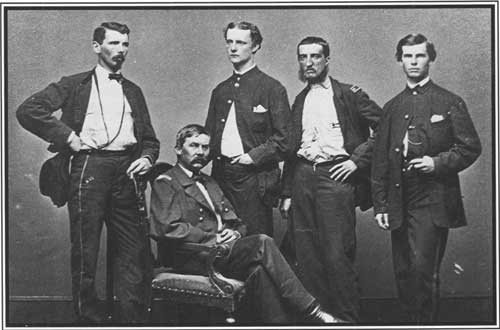
Buford and His Staff

As Heth’s troops advanced to Marsh Creek they encountered the cavalry videttes or pickets of the 8th Illinois Cavalry posted on the high ground just east of the creek. [17] The discovery of these forces was unanticipated by the Confederates leading the column. One of Pegram’s gunners recalled: “We moved forward leisurely smoking and chatting as we rode along, not dreaming of the proximity of the enemy.” [18] Most assumed that the movement “was simply one more part of the army’s concentration of forces” and Brockenbrough told the commander of the 55th Virginia that “we might meet some of Ewell’s command or Stuarts.” [19] Pettigrew had attempted to warn Archer prior to the march of the topography of the area and “a certain road which the Yankees might use to hit his flank, and the dangers of McPherson’s Ridge. Archer listened, believed not, marched on unprepared…” [20] Heth, who should have better anticipated the situation based on Pettigrew’s reports of the previous day demonstrated why one author called him “an intellectual lightweight.” [21] Heth told an officer from the Army of the Potomac after the war “I did not know any of your people were north of the Potomac.” [22]

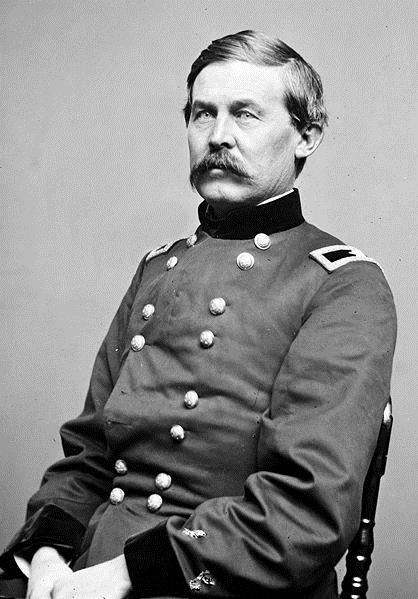
If Heth was inexperienced and knew little of the Federal forces arrayed before him and what forces were moving towards Gettysburg, his opponent, Brigadier General John Buford was his opposite in nearly every respect. Buford was born in Kentucky and came from a long line of family who had fought in both the Revolutionary War and War of 1812. He was an 1848 graduate of West Point who was commissioned in the Dragoons but too late to serve in Mexico. Instead he served on the Great Plains against the Sioux and on peacekeeping duty in the bitterly divided State if Kansas. Later he served in the Utah War in 1858. His family held Southern sympathies; his father was a Democrat who had opposed Abraham Lincoln.

buford

At the beginning of the war, the governor of Kentucky offered Buford a commission in that states’ militia. At the time Kentucky was still an “undeclared border slave state” and Buford loyal to his oath refused and wrote later “I sent him word that I was a Captain in the United States Army and I intend to remain one.” [23] However his southern ties kept him from field command until the politically well connected by ill-fated, Major General John Pope “could unreservedly vouch for his loyalty wrangled for him command of a brigade of cavalry.” [24] After Pope’s defeat at Second Bull Run in August 1862 Buford returned to staff duties until January 1863 when he was again given a brigade.

Buford was passed over by Hooker for command of the new cavalry corps in favor of Alfred Pleasanton who was eleven days his senior when Hooker reorganized the army before Chancellorsville. In later years Hooker agreed that Buford “would have been a better man for the position of chief” [25] for the Cavalry Corps, but in retrospect Buford’s passover for corps command was good fortune for the Army of the Potomac on June 30th and July 1st 1863. Despite being passed over, Buford a consummate professional, fought well at Brandy Station for which he was recommended for promotion and command of his division. [26]

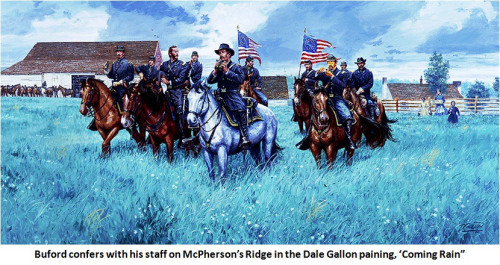
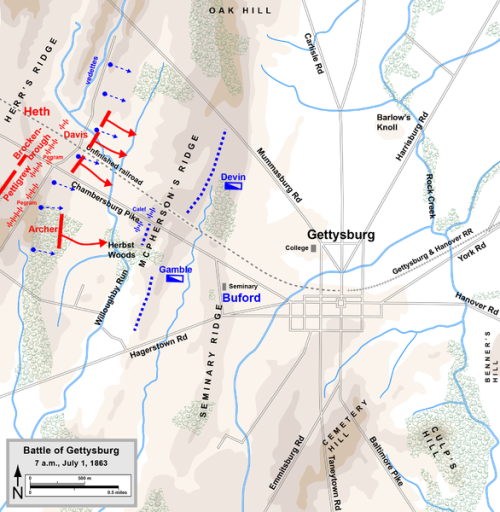
On the night of June 30th Buford prepared for battle. Unlike Hill and Heth he understood exactly what he was facing. He met with “reliable men” most likely from the Bureau of Military Intelligence operated by David McConaughy as to the composition of Lee’s forces. [27] Buford knew his business; he took the time to reconnoiter the ridges west of Gettysburg and posted videttes as far was as Marsh Creek. He deployed one brigade under Colonel Thomas Devin to the north and west of the town, Colonel William Gamble’s brigade was deployed to the west, its main line being on McPherson’s ridge. Buford planned “a defense in depth, fighting his men dismounted, using the series of ridgelines west of Gettysburg to hamper and delay the Rebel infantry he was certain would come “booming along” the Chambersburg Pike in the morning.” [28]

Noting that the ground was favorable to defense and giving battle Buford sent messages to Reynolds as to the situation. He warned Reynolds that “A.P. Hill’s corps is massed just back of Cashtown, about 9 miles from this place.” He also noted the location of Confederate pickets only four miles west of Gettysburg.” [29] Devin’s troops also identified elements of Ewell’s corps north of the town. Buford had accurately informed his superiors of what was before him, information that they needed for the day of battle.

gburg delaying action

According to his signals officer, Buford spent the night “anxious, more so than I ever saw him” [30] He discussed the situation with Devin who did not believe that the Confederates would move on Gettysburg in the morning. Devin thought if there were any threats that “he could handle anything that could come up in the next 24 hours.” [31] Buford rejected Devin’s argument and told him “No you won’t…. They will attack you in the morning and they will come booming – skirmishers three deep. You will have to fight like the devil to hold your own.” [32]

Reynolds, seeing the importance of the position elected to fight. He “ordered Buford to hold onto it to the last” believing that if Buford could “buy enough time, he might get his infantry into line “before the enemy should seize the point.” [33]

As Archer and Davis’s troops advanced in the early hours of July 1st their march was uneventful until they reached Marsh Creek. There they encountered the men of the 8th Illinois, one of whom, Lieutenant Marcellus Jones, took a carbine from one of his sergeants saying “Hold on George, give me the honor of opening this ball” and at about 7:30 a.m. Jones fired the first shot of the battle of Gettysburg. [34]

Heth had wanted to advance in column as long as possible “but the Yankee cavalry’s stiff resistance had ended that hope.” [35] Heth rode forward and ordered Archer and Davis’s troops to advance skirmishers with the support of Pegram’s artillery. This slowed the Confederate advance considerably. Heth wrote in his after action report that “it became evident that there were infantry, cavalry and artillery in and around the town.” [36] But instead of “feeling out the enemy” as directed by Hill, Heth “ordered Archer and Davis “to move forward and occupy the town.” [37] A chaplain in Brockenbrough’s brigade reported that one of Heth’s aide’s came up and reported “General Heth is ordered to move on Gettysburg, and fight or not as he wishes.” The chaplain heard one of the officers near him say “We must fight them; no division general will turn back with such orders.” [38]

The fight that Harry Heth and A.P. Hill had been directed not to precipitate was now on. Heth’s inexperience more than matched by the cunning and brilliant Buford, whose troopers now fought a masterful delaying action which enabled Reynolds to come up.
Notes

[1] Tredeau, Noah Andre. Gettysburg: A Testing of Courage, Harper Collins Publishers, New York 2002 p.153

[2] Coddinton, Edwin B. The Gettysburg Campaign, A Study in Command A Touchstone Book, Simon and Shuster New York 1968 p.264

[3] Pfanz Harry W. Gettysburg: The First Day University of North Carolina Press, Chapel Hill and London 2001 p.51

[4] Gallagher, Gary. Confederate Corps Leadership on the First Day at Gettysburg: A.P. Hill and Richard S. Ewell in a Difficult Debut in The First Day at Gettysburg edited by Gallagher, Gary W. Kent State University Press, Kent Ohio 1992 p.44

[5] Ibid. Coddington The Gettysburg Campaign, A Study in Command p.264

[6] Dowdy, Clifford. Lee and His Men at Gettysburg: The Death of a Nation Skyhorse Publishing, New York 1986, originally published as Death of a Nation Knopf, New York 1958 pp. 92

[7] Ibid. Coddington The Gettysburg Campaign, A Study in Command p.274

[8] Ibid. Gallagher Confederate Corps Leadership on the First Day at Gettysburg p.32

[9] Ibid. Gallagher Confederate Corps Leadership on the First Day at Gettysburg p.32

[10] Ibid. Tredeau Gettysburg: A Testing of Courage, p.153

[11] Ibid. Gallagher Confederate Corps Leadership on the First Day at Gettysburg p.32

[12] Alexander, Edward Porter Military Memoirs of a Confederate: A Critical Narrative 1907 republished 2013 by Pickle Partners Publishing, Amazon Kindle Edition location 7342 of 12968

[13] Dowdy.Lee and His Men at Gettysburg: The Death of a Nation pp.91-92

[14] Ibid. Tredeau Gettysburg: A Testing of Courage, p.153

[15] Guelzo, Allen C. Gettysburg: The Last Invasion Vintage Books a Division of Random House, New York 2013 p.131

[16] Ibid. Tredeau Gettysburg: A Testing of Courage, p.156

[17] Pfanz. Gettysburg: The First Day p.53

[18] Sears, Stephen W. Gettysburg. Houghton Mifflin Co. Boston and New York 2003 p. 162

[19] Ibid. Guelzo. Gettysburg: The Last Invasion p.134

[20] Ibid. Coddington The Gettysburg Campaign, A Study in Command p.264

[21] Ibid. Guelzo. Gettysburg: The Last Invasion p.134

[22] Ibid. Sears Gettysburg p. 162

[23] Ibid. Guelzo. Gettysburg: The Last Invasion p.121

[24] Ibid. Guelzo. Gettysburg: The Last Invasion p.121

[25] Ibid. Coddington The Gettysburg Campaign, A Study in Command p.44

[26] Ibid. Coddington The Gettysburg Campaign, A Study in Command p.64

[27] Ibid. Tredeau Gettysburg: A Testing of Courage, p.141

[28] Ibid. Sears Gettysburg p. 157

[29] Ibid. Guelzo. Gettysburg: The Last Invasion p.122

[30] Ibid. Sears Gettysburg p. 157

[31] Catton, Bruce The Army of the Potomac: Glory Road Doubleday and Company, Garden City New York, 1952 p.266

[32] Ibid. Guelzo. Gettysburg: The Last Invasion p.123

[33] Ibid. Guelzo. Gettysburg: The Last Invasion pp.122-123

[34] Pfanz. Gettysburg: The First Day p.53

[35] Ibid. Sears Gettysburg p. 163

[36] Luvaas, Jay and Nelson Harold W editors. The U.S. Army War College Guide to the Battle of Gettysburg South Mountain Press, Carlisle PA 1986 p.7

[37] Ibid. Sears Gettysburg p. 165

[38] Ibid. Tredeau Gettysburg: A Testing of Courage, p.163

Leave a comment

Filed under civil war, History, leadership, Military

“A Spirit of Unbelief”: A.P. Hill, Harry Heth and the Prelude to the Battle of Gettysburg

Hill.28135413_stdLieutenant General A.P. Hill

Note: One of the most important things to understand about the Battle of Gettysburg or for that matter any battle or campaign is leadership as well as organizational structure and climate of command. The study of A.P. Hill’s Third Corps is important to understanding how the battle unfolds and what happens at Gettysburg particularly on July 1st. In our understanding “Successful mission command demands that subordinate leaders at all echelons exercise disciplined initiative, acting aggressively and independently to accomplish the mission. Essential to mission command is the thorough knowledge and understanding of the commander’s intent at every level of command.”

While the leaders at Gettysburg on both sides would be unaware of our present definition they certainly would have been acquainted with the maxims of Napoleon, who many studied under Dennis Hart Mahan at the West Point. Napoleon noted: “What are the conditions that make for the superiority of an army? Its internal organization, military habits in officers and men, the confidence of each in themselves; that is to say, bravery, patience, and all that is contained in the idea of moral means.”

Likewise in a maxim that has direct application to the Confederate campaign in Pennsylvania Napoleon noted “To operate upon lines remote from each other and without communications between them, is a fault which ordinarily occasions a second. The detached column has orders only for the first day. Its operations for the second day depend on what has happened to the main body. Thus according to circumstances, the column wastes its time in waiting for orders or it acts at random….” [1]

I have spent more time in this chapter developing the issues of organization, leadership, climate of command and relationships between leaders because of their importance to the campaign. From these students should be able to draw lessons that would be applicable to leadership, organization and campaigning at the operational level of war.

As the Army of Northern Virginia began to concentrate near Cashtown after the reports that the Army of the Potomac was in Maryland it was Lieutenant General A.P. Hill’s Third Corps that was nearest to Gettysburg. Major General Harry Heth’s division led the corps and arrived on June 29th followed by Major General Dorsey Pender’s division on the 30th. Hill ordered his last division under the command of Major General Richard Anderson to remain behind and join the corps on July 1st. [2]

On the 30th Harry Heth sent Johnston Pettigrew’s Brigade to Gettysburg to “search the town for army supplies (shoes especially), and to return the same day.” [3] It was the first in a series of miscalculations that brought Lee’s army into a general engagement that he wished to avoid.

The Confederate Third Corps commanded by Lieutenant General Ambrose Powell (A.P.) Hill had been formed as part of the reorganization of the army following Stonewall Jackson’s death after the Battle of Chancellorsville. Hill had a stellar reputation as a division commander; his “Light Division” had distinguished itself on numerous occasions, especially at Antietam where its timely arrival after a hard forced march from Harper’s Ferry helped save Lee’s army late in the battle. At Chancellorsville Hill briefly succeeded Jackson until he too was wounded.

But that being said Hill was no stranger to controversy, beginning with a clash with James Longstreet during the Seven Days battles in which time Longstreet placed Hill under arrest and Hill challenged Longstreet to a duel. Lee quickly reassigned Hill to Jackson’s command as Jackson was operating in a semi-independent assignment. [4] Hill was in an intractable controversy with Stonewall Jackson for nearly a year until Jackson succumbed to his wounds. Jackson at one point during the invasion of Maryland prior to Antietam had Hill placed under arrest for the number of stragglers that he observed in Hill’s hard marching division as well as other errors that Jackson believed Hill had made. The dispute continued and the animosity deepened between the two men and in January 1863 Hill asked Lee for a trial by courts-martial on charges preferred against him by Jackson. Lee refused this and wrote to Hill: “Upon examining the charges in question, I am of the opinion that the interests of the service do not require that they be tried, and therefore, returned them to General Jackson with an indorsement to that effect….” [5] Just before Chancellorsville Jackson wrote to Lee “I respectfully request that Genl. Hill be relieved of duty in my Corps.” This time Lee simply ignored the request and though the two generals remained at loggerheads they also remained at their commands at Chancellorsville. [6]

Hill was recommended for promotion to Lieutenant General and command of the new Third Corps by Lee on May 24th and was promoted over the heads of Harvey Hill and Lafayette McLaws. The move displeased Longstreet who considered McLaws “better qualified for the job” and but who felt that the command should have gone to Harvey Hill whose “record was as good as that of Stonewall Jackson…but, not being a Virginian, he was not so well advertised.” [7]

Hill was slightly built and high strung. “Intense about everything” Hill was “one of the army’s intense disbelievers in slavery.” [8] Hill was an 1847 graduate of West Point and briefly served in Mexico but saw no combat. He spent some time in the Seminole wars and in garrison duty along the East Coast, spending 1855-1860 in the Coastal Survey and resigned his commission before Virginia’s secession. At the outbreak of the war he “received his commission as colonel, and soon trained one of Johnston’s best regiments in the Valley.” [9] He commanded a brigade under Longstreet on the Peninsula and was promoted to Major General and command of a division in May 1862. He was plagued by health problems which had even delayed his graduation from West Point, health issues that would arise on the first day at Gettysburg.

Hill’s Third Corps was emblematic of the “makeshift nature of the reorganization of the whole army.” [10] It was composed of three divisions; the most experienced being that of the recently promoted and hard fighting Major General Dorsey Pender. Pender’s division, was built around four excellent brigades from Hill’s old “Light Division” one of which Pender had commanded before his promotion. Hill strongly recommended Pender’s promotion which was accepted by Lee. Pender found the command to be a heavy burden. He was “an intelligent, reflective man, deeply religious and guided by a strong sense of duty….” [11]

Hill’s second experienced division was that of Major General Richard Anderson, transferred from Longstreet’s First Corps, something else which failed to endear Hill to Longstreet. [12] The unassuming Anderson had distinguished himself as a brigade and division commander in Longstreet’s corps, but in “an army of prima donnas, he was a self-effacing man, neither seeking praise for himself nor winning support by bestowing it on others.” [13] At Chancellorsville he fought admirably and Lee wrote that Anderson was “distinguished for the promptness, courage and skill with which he and his division executed every order.” [14] With four seasoned brigades under excellent commanders it was a good addition to the corps, although the transition from Longstreet’s stolid and cautious style of command to Hill’s impetuous style introduced “another incalculable of the reshuffled army.” [15]

heth

Major General Harry Heth

Major General Harry Heth’s division was the final infantry division assigned to the corps. This division was recently formed from two brigades of Hill’s old Light Division and “the two new brigades that Jefferson Davis had forced on an already disrupted army organization.” [16] The organization of this division as well as its leadership would be problematic in the days to come, especially on June 30th and July 1st 1863.

Heth like Pender was also newly promoted to his grade and the action at Gettysburg would be his first test in division command. Heth was a native Virginian, well connected politically who through his social charm had “many friends and bound new acquaintances to him” readily. [17] Heth was a West Point graduate who had an undistinguished academic career graduating last in the class of 1847. His career in the ante-bellum army was typical of many officers, he served “credibly in an 1855 fight with Sioux Indians” but his real claim to fame was in authoring the army’s marksmanship manual which was published in 1858. [18]

Heth’s career with the Confederate army serving in western Virginia was undistinguished but he was a protégé of Robert E. Lee who recommended him as a brigade commander to Jackson before Chancellorsville. Tradition states that of all his generals that Heth was the only one “whom Lee called by his first name.” [19] A.P. Hill when writing Lee about the choice of a successor for the Light Division noted that Heth was “a most excellent officer and gallant soldier” but in the coming campaign “my division under him, will not be half as effective as under Pender.” [20] Douglas Southall Freeman noted that Heth was “doomed to be one of those good soldiers…who consistently have bad luck.” [21]

Heth’s division was composed of two depleted brigades from the Light Division which had taken heavy casualties at Chancellorsville. The brigade commanded by James Archer from Alabama and Mississippi was “well led and had a fine combat reputation.” But the second brigade was more problematic. A Virginia brigade it had once been considered one of the best in the army had deteriorated in quality following the wounding of its first commander Brigadier General Charles Field. Heth took command of it at Chancellorsville and both he and the brigade performed well, but when Heth was promoted the lack of qualified officers left it under the command of its senior colonel, John Brockenbrough. [22] His third brigade came from Mississippi and North Carolina and was commanded by Brigadier General Joe Davis whose uncle was President Jefferson Davis. Davis had served on his uncle’s staff for months and had no combat experience. [23] One author noted that Davis’s promotion to Brigadier General “as unadulterated an instance of nepotism as the record of the Confederacy offers.” [24] His subordinate commanders were no better, one William Magruder was so bad that J.E.B. Stuart suggested that “he have his commission revoked” and only one of the nine field grade officers in his brigade had military training, and that from the Naval Academy. [25]

pettigrew

Brigadier General Johnston Pettigrew

Heth’s largest brigade was new to the army. Commanded by the North Carolina academic Johnston Pettigrew it had no combat experience though Pettigrew was considered a strong leader, badly wounded at Seven Pines and thinking his wound mortal “he refused to permit his men to leave the ranks to carry him to the rear” [26] and was captured but later paroled and returned to the army later in the year.

Hill was under the impression that Meade’s army was still miles away, having just come from meeting Lee who assured him that “the enemy are still at Middleburg,” (Maryland) “and have not yet struck their tents.” [27] With that assurance Heth decided to use June 30th to send Pettigrew’s brigade on the foraging expedition to Gettysburg. An officer present noted that Heth instructed Pettigrew “to go to Gettysburg with three of his regiments present…and a number of wagons for the purpose of collecting commissary and quartermaster stores for the use of the army.” [28]

However Heth did instruct Pettigrew in no uncertain terms not to “precipitate a fight” should he encounter “organized troops” of the Army of the Potomac. [29] Heth was specific in his report that “It was told to Pettigrew that he might find in the town in possession of a home guard,…but if, contrary to expectations, he should find any organized troops capable of making resistance., or any part of the Army of the Potomac, he should not attack it.” [30]

That in mind one has to ask the question as to why Heth would employ “so many men on a long, tiring march, especially as without a cavalry escort he took the risk of sending them into a trap” when his “objects hardly justified” using such a large force. [31] Likewise it has to be asked why the next day in light of Lee’s standing orders not to provoke an engagement that Hill would send two divisions, two thirds of his corps on a reconnaissance mission. Some have said that Hill would have had to move to Gettysburg on July 1st anyway due to forage needs of the army, [32] but this is not indicated in any of Hill or Heth’s reports.

As his troops neared Gettysburg Pettigrew observed the Federal cavalry of Buford’s 1st Cavalry Division as they neared the town. He received another report “indicating that drumming could be heard in the distance – which might mean infantry nearby, since generally cavalry generally used only bugles.” [33] He then prudently and in accordance with his orders not to precipitate a fight “elected to withdraw rather than risk battle with a foe of unknown size and composition.” [34] His troops began their retrograde at 11 a.m. leaving Buford’s cavalry to occupy the town at ridges. On Confederate wrote “in coming in contact with the enemy, had quite a little brush, but being under orders not to bring a general engagement fell back, followed by the enemy.” [35]

Upon returning Pettigrew told Hill and Heth that “he was sure that the force occupying Gettysburg was a part of the Army of the Potomac” but Hill and Heth discounted Pettigrew’s report. [36] “Heth did not think highly of such wariness” and “Hill agreed with Heth” [37] Hill believed that nothing was in Gettysburg “except possibly a cavalry vidette.” [38] Hill was not persuaded by Pettigrew or Pettigrew’s aide Lieutenant Louis Young who had previously served under Hill and Pender who reported that the “troops that he saw were veterans rather than Home Guards.” [39] Hill reiterated that he did not believe “that any portion of the Army of the Potomac was up” but then according to Young Hill “expressed the hope that it was, as this was the place he wanted it to be.” [40] The West Point Graduates Hill and Heth may have manifested an often typical “distain for citizen soldiers…a professional questioning a talented amateur’s observations” [41] If so it was a distain that would cost the Confederacy dearly in the days to come.

Pettigrew was “aghast at Hill’s nonchalant attitude” [42] and Young was dismayed and later recalled that “a spirit of unbelief” seemed to cloud their thinking. [43] In later years he wrote “blindness in part seems to have come over our commanders, who slow to believe in the presence of an organized army of the enemy, thought that there must be a mistake in the report taken back by General Pettigrew.” [44]

Heth then asked Hill since neither believed Pettigrew’s report “whether Hill would have any objection to taking his division to Gettysburg again to get those shoes. Hill replied “none in the world.” [45] Douglas Southall Freeman wrote “On those four words fate hung” [46] and then, in “that incautious spirit, Hill launched Harry Heth’s division down the Chambersburg Pike and into battle at Gettysburg.” [47]

Notes

[1] Napoleon Bonaparte, Military Maxims of Napoleon in Roots of Strategy: The Five Greatest Military Classics of All Time edited by Phillips, Thomas R Stackpole Books Mechanicsburg PA 1985 p.410

[2] Coddinton, Edwin B. The Gettysburg Campaign, A Study in Command A Touchstone Book, Simon and Shuster New York 1968 p.194

[3] Ibid. Coddinton, The Gettysburg Campaign, A Study in Command p. 263

[4] Dowdy, Clifford. Lee and His Men at Gettysburg: The Death of a Nation Skyhorse Publishing, New York 1986, originally published as Death of a NationKnopf, New York 1958 p.81

[5] Freeman, Douglas Southall, Lee’s Lieutenant’s a Study in Command, One volume abridgement by Stephen W Sears, Scribner, New York 1998 p.460

[6] Sears, Stephen W. Chancellorsville A Mariner Book, Houghton and Mifflin Company, Boston and New York 1996 p.51

[7] Foote, Shelby, The Civil War, A Narrative. Volume Two Fredericksburg to Meridian Random House, New York 1963 p.453

[8] Ibid. Dowdy, Lee and His Men at Gettysburg: The Death of a Nation p.79

[9] Ibid. Freeman Lee’s Lieutenant’s a Study in Command p.109

[10] Ibid. Dowdy, Lee and His Men at Gettysburg: The Death of a Nation p.88

[11] Ibid. Dowdy, Lee and His Men at Gettysburg: The Death of a Nation p.85

[12] Ibid. Dowdy, Lee and His Men at Gettysburg: The Death of a Nation p.86

[13] Ibid. Dowdy, Lee and His Men at Gettysburg: The Death of a Nation p.86

[14] Ibid. Freeman Lee’s Lieutenant’s a Study in Command p.512

[15] Ibid. Dowdy, Lee and His Men at Gettysburg: The Death of a Nation p.86

[16] Ibid. Dowdy, Lee and His Men at Gettysburg: The Death of a Nation p.87

[17] Ibid. Freeman Lee’s Lieutenant’s a Study in Command p.527

[18] Krick, Robert K. Three Confederate Disasters on Oak Ridge: Failures of Brigade Leadership on the First Day of Gettysburg in The First Day at Gettysburg edited by Gallagher, Gary W. Kent State University Press, Kent Ohio 1992 p.96

[19] Ibid. Krick. Three Confederate Disasters on Oak Ridge p.96

[20] Ibid. Freeman Lee’s Lieutenant’s a Study in Command p.527

[21] Ibid. Freeman Lee’s Lieutenant’s a Study in Command p.46

[22] Ibid. Dowdy, Lee and His Men at Gettysburg: The Death of a Nation p.87

[23] Ibid. Freeman Lee’s Lieutenant’s a Study in Command p.533

[24] Ibid. Krick. Three Confederate Disasters on Oak Ridge p.99

[25] Ibid. Krick. Three Confederate Disasters on Oak Ridge p.101

[26] Ibid. Freeman Lee’s Lieutenant’s a Study in Command p.136

[27] Guelzo, Allen C. Gettysburg: The Last Invasion Vintage Books a Division of Random House, New York 2013 p.131

[28] Tredeau, Noah Andre. Gettysburg: A Testing of Courage, Harper Collins Publishers, New York 2002 p.128

[29] Sears, Stephen W. Gettysburg. Houghton Mifflin Co. Boston and New York 2003 p.136

[30] Ibid. Tredeau Gettysburg: A Testing of Courage, p.129

[31] Ibid. Coddinton,. The Gettysburg Campaign, A Study in Command p. 263

[32] Ibid. Guelzo. Gettysburg: The Last Invasion p.131 This argument does have merit based on the considerations Guelzo lists but neither Hill, Heth or Lee make any mention of that need in their post battle reports.

[33] Ibid. Tredeau Gettysburg: A Testing of Courage, p.130

[34] Gallagher, Gary. Confederate Corps Leadership on the First Day at Gettysburg: A.P. Hill and Richard S. Ewell in a Difficult Debut in The First Day at Gettysburg edited by Gallagher, Gary W. Kent State University Press, Kent Ohio 1992 p.42

[35] Ibid. Tredeau Gettysburg: A Testing of Courage, p.135

[36] Ibid. Coddinton, The Gettysburg Campaign, A Study in Command pp. 263-264

[37] Foote, Shelby, The Civil War, A Narrative. Volume Two Fredericksburg to Meridian Random House, New York 1963 p.465

[38] Pfanz Harry W. Gettysburg: The First Day University of North Carolina Press, Chapel Hill and London 2001 p.27

[39] Ibid. Gallagher, Gary. Confederate Corps Leadership on the First Day at Gettysburg p.42

[40] Ibid. Pfanz. Gettysburg: The First Day p.27

[41] Ibid. Gallagher, Gary. Confederate Corps Leadership on the First Day at Gettysburg p.42

[42] Ibid. Guelzo. Gettysburg: The Last Invasion p.131

[43] Ibid. Coddinton, The Gettysburg Campaign, A Study in Command p. 264

[44] Ibid Pfanz Gettysburg: The First Day p.27

[45] Ibid. Coddinton, The Gettysburg Campaign, A Study in Command p. 264

[46] Ibid. Freeman Lee’s Lieutenant’s a Study in Command p. 563

[47] Ibid. Krick. Three Confederate Disasters on Oak Ridge p.94

1 Comment

Filed under civil war, History, leadership, Military

Gettysburg Day One: A Breakdown in Leadership, Disaster at Oak Ridge

rodes

Major General Robert Rodes

Major General Robert Rodes was new to commanding a division. The big, blond and charismatic Rodes was one of the most popular leaders in the Army of Northern Virginia. Rodes had a great ability to inspire his subordinates, in part due to his physical appearance which was “as if he had stepped from the pages of Beowulf[1] but also due to his “bluff personality featuring “blunt speech” and a tincture of “blarney.” [2]

Rodes graduated at the age of 19 from the Virginia Military Institute and remained at the school as an assistant professor for three years. He left VMI when Thomas “Stonewall” Jackson received the full professorship he desired and became a successful civil engineer working with railroads in Alabama. He had just been appointed a full professor at VMI as the war was declared. [3]

With the coming of war Rodes abandoned his academic endeavors and was appointed Colonel of the 5th Alabama regiment of infantry. Early in the war Rodes distinguished himself as the commander of that regiment and later as a brigade commander. He took acting command of Major General D. H. Hill’s former division at Chancellorsville and handled that unit well. Following Chancellorsville Rodes was recommend for promotion to Major General and permanent command the division by Stonewall Jackson, in one of his last acts before his untimely death from pneumonia as that remarkable commander recovered from wounds sustained at Chancellorsville. With his appointment Rodes was the first non-West Point graduate to command a division in the Army of Northern Virginia.

Rodes’ division was the largest in the Army of Northern Virginia. Composed of five brigades and numbering around 8000 men it was a powerful force. All of its brigades save one had seen action before, but that large brigade of 2200 men was well trained and commanded by West Point graduate Junius Daniel [4] and was expected to perform well despite its inexperience.

battle-of-gettysburg-oak-ridge-july-1

The despite Gettysburg campaign was to be Rodes first command as a Major General and his brigade commanders were an uneven lot. Following the heavy losses in senior officers at Chancellorsville experienced and competent officers were becoming harder to come by. As a result some brigades were commanded by officers either not experienced or competent in their new commands.

Rodes was fortunate to have Brigadier Generals Stephen Ramsuer and George Doles in command of two of his brigades. Both had led their units well at Chancellorsville under Rodes direction, and would fight well in Gettysburg and subsequent actions. [5] Brigadier General Junius Daniel, though experienced was new to the Army of Northern Virginia and his brigade untested.

iverson

Brigadier General Alfred Iverson

This left two brigades under questionable leadership. One brigade from North Carolina was commanded by Brigadier General Alfred Iverson. Iverson who was considered a “reliable secession enthusiast” was appointed to command the North Carolina troops whose political steadiness and loyalty was questioned by Richmond. [6] Because of this Iverson became “embroiled in bitter turmoil with his North Carolinians.” [7] Iverson both in the Mexican War, the 1850s and in his service to the Confederacy owed his position to political appointments and patronage. Though he was from Georgia he helped raise the 20th North Carolina regiment of infantry and became its first Colonel. However he was constantly at war with his officers and his regiment never bonded with him. As a regimental commander he did see a fair amount of action but his leadership was always a question mark. After he took command of the brigade Iverson “sent an aide to the camp of his former regiment to arrest all twenty-six of its officers.” [8] Those officers responded in kind and “retained a powerful bevy of counsel including…Colonel William Bynum who would later become a member of the Supreme Court.” [9] Iverson then refused promotions to any officer who had opposed him. One of the aggrieved officers of the 20th North Carolina “wrote an outraged letter home insisting that resistance to Iverson was every reasonable man’s duty and asserting that he would oppose him again “with great pleasure” if the occasion offered.” [10] In his previous action at Chancellorsville Iverson “had not distinguished himself.” [11] After Chancellorsville he had “been stigmatized for his conspicuous absence at the height of the fighting.” [12]

o'neal

Colonel Edward A. O’Neal

The last brigade to mention is the brigade which Rodes had commanded prior to taking command of the division at Chancellorsville. Due to the lack of qualified officers it was commanded by its senior regimental commander Colonel Edward A. O’Neal. O’Neal was another political animal, who unlike Iverson had no prior military training and nothing he had done before the war “had prepared him for command at any level.” [13] As an Alabama lawyer O’Neal was however well connected politically which gained him rapid rank and seniority over other officers, this eventually led to his command of the 26th Alabama which was a part of Rodes brigade. Rodes had reservations about O’Neal’s ability to command the brigade and recommended two other officers, John Gordon and John T. Morgan who instead were assigned to other brigades and both of whom became General Officers, [14] Gordon finish the war as a Lieutenant General and commander of Second Corps. Richmond forwarded a commission to Lee for O’Neal to be promoted to Brigadier General but Lee, obviously with reservations about O’Neal’s capabilities blocked the promotion. [15]

On June 30th Rodes’ division marched about twenty miles and bivouacked at Heidlersburg where he met with his corps commander Ewell, fellow division commander Jubal Early and Isaac Trimble who was accompanying Second Corps where they puzzled over Lee’s orders as to the movement of Second Corps the following day, which indicated that Ewell should march to Gettysburg or Cashtown “as circumstances may dictate.” [16] Neither Rodes nor Early gave favorable opinions of the order and Ewell asked the rhetorical question “Why can’t a commanding General have someone on his staff who can write an intelligible order?” [17]

Ewell who assumed that Cashtown was the desired junction of the army ordered his to march from on the morning of July 1st 1863 toward Cashtown to join with Hill’s corps. His choice of routes was good as it gave him the opportunity to turn south towards Gettysburg “as circumstances” dictated.[18] Rodes division was at Middletown (modern Bilgerville) when Ewell was informed that Hill’s troops were in action against Federal cavalry outside of Gettysburg. Ewell then ordered his divisions south to support Hill’s corps in its attack even though he was not clear on what the strength or composition of the Federal forces. [19]

Like Heth to his west Rodes was also operating somewhat independently and like Heth when confronted with the opportunity for battle ignored the instruction “to avoid a general engagement, if practicable.” [20] The operation was Rodes’ first as a Major General and he like the other commanders in Second Corps was operating independently “as Ewell preferred.” [21] About four miles north of the town Rodes wrote that “to my surprise, the presence of the enemy there in force was announced by the sound of a sharp cannonade, and instant preparations for battle were made.” [22]

The arrival of Rodes’ division as well as Early’s division was decisive in turning the tide of the battle toward the Confederates that afternoon. The Union I Corps and Buford’s cavalry division had fought Heth’s poorly coordinated and led attacks to a standstill, but when Rodes arrived he found “a golden opportunity spread before him.” [23] From his position at Oak Ridge he saw the opportunity to take the Federal troops opposing Hill in the flank though his position did not “provide him as comprehensive view as he thought. [24] He also saw the divisions of Howard’s XI Corps advancing out of Gettysburg and moving north.

Rodes brought up Carter’s artillery battalion and ordered it to fire on the Union positions. This and the reports from Devin’s brigade of Buford’s cavalry division deployed north of the town alerted the commanders of I Corps who turned to meet the new threat from their north.

dilger

Captain Hubert Dilger

Carter’s artillery, deployed in the open immediately drew the fire of Captain Hubert Dilger’s Battery I First Ohio Artillery from Howard’s XI Corps. Dilger commanded one of the best artillery units in the army, a German immigrant and artilleryman serving in the Grand Duke of Baden’s Horse Artillery at the beginning of the war arrived in the United States at the invitation of a distant uncle, to “practice the war-making he had only previously rehearsed.” [25] Dilger was “blunt and a bit arrogant…loved by his men but not by his superiors.” At Chancellorsville he and his battery had helped save the Federal right “when it used a leapfrogging technique to keep the victorious Confederate infantry at bay.” [26] The effect of Dilger’s fire was blasted carter’s artillery blowing up several caissons and guns causing casualties among the men. [27]

dilgersbatteryDilger’s Battery goes into action

Thinking he had an adequate grasp of the situation Rodes did not order a reconnaissance before launching his attack, nor did the brigades assigned to it put out skirmishers, a normal precaution when advancing to the attack. [28] Rodes deployed his troops over the rough ground of the ridge as quickly as he could and dashed off a note to Jubal Early stating “I con burst through the enemy in an hour.” [29] He was to be badly mistaken.

Rodes deployed Doles’ excellent brigade to guard his left against the advancing XI Corps units a task which it conducted admirably until the arrival of Jubal Early’s division and after which it too joined the attack on XI Corps. Initially this opened a gap between Doles and the rest of the division but this could not be exploited by the Federals.

His division initially deployed on a one brigade front. As they neared the Federal positions Rodes developed a relatively simple plan to “attack on a two brigade front, sending in O’Neal’s and Iverson’s men simultaneously, then following up with Daniel’s brigade in echelon on the right.” [30] It was a sound plan, but in execution it was “bungled right at the start.” [31] Direction was faulty, units were mingled and a gap developed between O’Neal and Iverson. [32]

O’Neal’s brigade had stalled almost immediately when fired upon by Union troops who had been hidden by a wall which had obscured them from Rodes’ view. Striking the O’Neal’s advancing troops at the oblique the Union troops wreaked havoc on the unsuspecting Confederates. These men were solid veterans from Baxter’s brigade of Robinson’s division as well as Dilger’s artillery which delivered effective canister fire at O’Neal’s brigade” [33] which “killed or wounded about half of the advancing men with a series of point blank volleys pumped directly into their flank.” [34] To further complicate matters O’Neal had chosen to remain back with his reserve regiment rather than “going forward to direct the advancing regiments.” [35] Rodes noted in his after action report that O’Neal’s three attacking regiments “moved with alacrity (but not in accordance with my orders as to direction)” and when he ordered the 5th Alabama up to support “I found Colonel O’Neal, instead of personally superintending the movements of his brigade, had chosen to remain with his reserve regiment. The result was that the whole brigade was repulsed quickly and with loss….” [36]

As Rodes bad luck would have it Iverson on O’Neal’s right did not advance simultaneously or on the same axis, but in waited to see O’Neal’s advance. Like O’Neal, Iverson did not advance with or direct his advancing troops. [37] As a result the brigade drifted right and its exposed left was subject to attack from Baxter’s, Paul’s and Hook’s brigades of Robinson’s division. Like O’Neal’s brigade it too blundered into the path of well concealed veterans who like they did with O’Neal’s Alabamians and slaughtered them. The Federals advanced into the broken ranks of the North Carolina regiments they captured many. Official Confederate reports list only 308 missing but that number differs from the Union reports, Robinson reporting 1000 prisoners and three flags and Baxter’s nearly 400 alone. [38]

88thPAchargeThe 88th Pennsylvania Charges Iverson’s Brigade

Iverson was badly shaken by the slaughter and “went to pieces and became unfit for further command,” [39] being just close enough to observe it. He panicked and notified Rodes that one of his regiments had surrendered in masse though he later retracted that in his official report where he noted “when I found afterward that 500 of my men were left lying dead and wounded on a line as straight as a dress parade, I exonerated …the survivors.” [40] His brigade had lost over two-thirds of its strength in those few minutes, one regiment the 23rd North Carolina lost 89 percent of those it took into battle, and at the end of the day would “count but 34 men in its ranks.” [41] Iverson’s conduct during the battle was highly criticized by fellow officers after it. Accused of cowardice, drunkenness and hiding during the action he was relieved of his command upon the army’s return to Virginia “for misconduct at Gettysburg” [42] and sent back to Georgia. Some complained after the war that Iverson was helped by politicians once he returned to Richmond and instead of facing trial “got off scot free & and had brigade of reserves given to him in Georgia.” [43]

With the center of his attacking forces crushed the brigades of Junius Daniels and Stephen Ramseur entered the fray to the right of Iverson’s smashed brigade. These capable officers achieved a link up with the battered brigades of Harry Heth at the Railroad cut after Daniel’s brigade had fought a fierce battle with Culter’s and Stone’s brigades in the area [44] and allowed the Confederates a unified front with which they pressed east. To the east Doles’ brigade advanced with Jubal Early’s division smashed the outnumbered and badly spread out divisions of Oliver Howard’s XI Corps. The timely arrival of that division coupled with the skillful work of Daniel and Ramseur saved Rodes from even more misfortune on that first day of battle, but Rodes’ plan “to burst through the enemy” with his division had evaporated. [45] Rodes’ division lost 3000 of its 8000 men present killed, wounded or captured in those few short hours on July 1st 1863.

The battle at Oak Ridge was a series of tactical debacles within a day of what appeared to be a “Confederate strategic bonanza.” [46] Despite the mistakes Rodes never lost his own self-control. He recovered from each mistake and continued to lead his division. He “kept his men on the ridge driving forward until with Hill, and on the flats left joined Early’s right to form a continuous line into Gettysburg.” [47] It was a hard lesson for the young Major General, but one that he learned from. He would be killed at killed at the Third Battle of Winchester on September 19th 1864.
Notes:

[1] Freeman, Douglas Southall, Lee’s Lieutenant’s a Study in Command, One volume abridgement by Stephen W Sears, Scribner, New York 1998 p.39

[2] Krick, Robert K. Three Confederate Disasters on Oak Ridge: Failures of Brigade Leadership on the First Day of Gettysburg in The First Day at Gettysburg edited by Gallagher, Gary W. Kent State University Press, Kent Ohio 1992 p.115

[3] Dowdy, Clifford. Lee and His Men at Gettysburg: The Death of a Nation Skyhorse Publishing, New York 1986, originally published as Death of a Nation Knopf, New York 1958 p.123

[4] Sears, Stephen W. Gettysburg. Houghton Mifflin Co. Boston and New York 2003 p.53

[5] Ibid. Krick Three Confederate Disasters on Oak Ridge p.117

[6] Guelzo, Allen C. Gettysburg: The Last Invasion Vintage Books, a Division of Random House, New York 2013 p.25

[7] Ibid. Sears Gettysburg p.53

[8] Ibid. Krick Three Confederate Disasters on Oak Ridge p.129

[9] Ibid. Krick Three Confederate Disasters on Oak Ridge p.131

[10] Ibid. Krick Three Confederate Disasters on Oak Ridge p.130-131

[11] Ibid Freeman, Lee’s Lieutenant’s a Study in Command p.564

[12] Tredeau, Noah Andre. Gettysburg: A Testing of Courage, Harper Collins Publishers, New York 2002 p.145

[13] Ibid. Krick Three Confederate Disasters on Oak Ridge p.120

[14] Ibid. Krick Three Confederate Disasters on Oak Ridge p.123

[15] Pfanz Harry W. Gettysburg: The First Day University of North Carolina Press, Chapel Hill and London 2001 p.162Also see Krick pp.123-124 Following Gettysburg Lee continued to block O’Neal’s promotion and that officer went to extraordinary lengths to obtain a General’s commission using every political ally he had in Alabama and in Richmond. Finally Lee settled the matter before the Wilderness campaign writing that he made “more particular inquiries into his capacity to command the brigade and I cannot recommend him to the command.” Krick pp.123-124

[16] Ibid Pfanz Gettysburg: The First Day p.148

[17] Ibid Pfanz Gettysburg: The First Day p.149

[18] Ibid. Sears Gettysburg p.160

[19] Ibid Tredeau, Gettysburg: A Testing of Courage p.169-170

[20] Ibid Freeman, Lee’s Lieutenant’s a Study in Command p.564

[21] Foote, Shelby, The Civil War, A Narrative. Volume Two Fredericksburg to Meridian Random House, New York 1963 p.472

[22] Luvaas, Jay and Nelson Harold W editors. The U.S. Army War College Guide to the Battle of Gettysburg South Mountain Press, Carlisle PA 1986 p.35

[23] Ibid. Foote, Shelby, The Civil War, A Narrative. Volume Two p.472

[24] Ibid. Guelzo Gettysburg: The Last Invasion p.170

[25] Ibid Tredeau, Gettysburg: A Testing of Courage p.208

[26] Gottfried, Bradley The Artillery of Gettysburg Cumberland House Publishing, Nashville TN 2008 pp.59-60 Dilger was awarded the Medal of Honor for his actions at Chancellorsville in 1893, part of the citation stating that Dilger: “fought his guns until the enemy were upon him, then with one gun hauled in the road by hand he formed the rear guard and kept the enemy at bay by the rapidity of his fire and was the last man in the retreat.”

[27] Ibid Tredeau, Gettysburg: A Testing of Courage p.210

[28] Ibid. Guelzo Gettysburg: The Last Invasion p.170

[29] Ibid. Guelzo Gettysburg: The Last Invasion p.170

[30] Ibid. Sears Gettysburg p.197

[31] Ibid. Sears Gettysburg p.197

[32] Ibid Freeman, Lee’s Lieutenant’s a Study in Command p.565

[33] Ibid. Sears Gettysburg p.198

[34] Ibid. Foote, Shelby, The Civil War, A Narrative. Volume Two p.473

[35] Ibid Freeman, Lee’s Lieutenant’s a Study in Command p.565

[36] Ibid Luvaas The U.S. Army War College Guide to the Battle of Gettysburg p.36

[37] Ibid. Krick Three Confederate Disasters on Oak Ridge p.132

[38] Ibid Pfanz Gettysburg: The First Day p.175

[39] Coddington, Edwin B. The Gettysburg Campaign: A Study in Command, A Touchstone Book, Simon and Schuster New York, 1968 p.290

[40] Ibid Luvaas The U.S. Army War College Guide to the Battle of Gettysburg p.37

[41] Ibid. Sears Gettysburg p.201

[42] Ibid. Guelzo Gettysburg: The Last Invasion p.173

[43] Ibid. Krick Three Confederate Disasters on Oak Ridge p.136

[44] Ibid. Coddington, The Gettysburg Campaign: A Study in Command, p.292

[45] Ibid. Guelzo Gettysburg: The Last Invasion p.173

[46] Ibid. Krick Three Confederate Disasters on Oak Ridge p.138

[47] Ibid. Dowdy Lee and His Men at Gettysburg: The Death of a Nation p.138

2 Comments

Filed under civil war, History, Military

Who Profits by War?

butler-medals1

In an age where Defense contractors overcharge and under produce, where lobbyists for them ensure that congressional leaders and other elected officials and appointees cater to the needs of these corporations it is important to know who profits from war. It is certainly not the military personnel, nor is it the taxpayer.

The sad fact is that the people that profit from unending war are those who really couldn’t care less about the economy, except as it benefits them nor care about the taxpayers or those that they send into battle in wars that do little or nothing to enhance the security this nation, or for that matter the security of those we are supposedly fight for.

Major General Smedley Butler who was awarded the Congressional Medal of Honor twice, and earned the ire of the Hoover Administration for criticizing Mussolini wrote a book called War is a Racket. I recommend everyone read it because it is timeless. Dwight Eisenhower kind of echoed it when he talked about the military-industrial complex.

Here is the second chapter of that hard hitting book. By the way take the time to Google the names of these corporations in this chapter and see how many are still profiting from war.

Peace

Padre Steve+

Who Makes The Profits?

The World War, rather our brief participation in it, has cost the United States some $52,000,000,000. Figure it out. That means $400 to every American man, woman, and child. And we haven’t paid the debt yet. We are paying it, our children will pay it, and our children’s children probably still will be paying the cost of that war.

The normal profits of a business concern in the United States are six, eight, ten, and sometimes twelve percent. But war-time profits — ah! that is another matter — twenty, sixty, one hundred, three hundred, and even eighteen hundred per cent — the sky is the limit. All that traffic will bear. Uncle Sam has the money. Let’s get it.

Of course, it isn’t put that crudely in war time. It is dressed into speeches about patriotism, love of country, and “we must all put our shoulders to the wheel,” but the profits jump and leap and skyrocket — and are safely pocketed. Let’s just take a few examples.

Take our friends the du Ponts, the powder people — didn’t one of them testify before a Senate committee recently that their powder won the war? Or saved the world for democracy? Or something? How did they do in the war? They were a patriotic corporation. Well, the average earnings of the du Ponts for the period 1910 to 1914 were $6,000,000 a year. It wasn’t much, but the du Ponts managed to get along on it. Now let’s look at their average yearly profit during the war years, 1914 to 1918. Fifty-eight million dollars a year profit we find! Nearly ten times that of normal times, and the profits of normal times were pretty good. An increase in profits of more than 950 per cent.

Take one of our little steel companies that patriotically shunted aside the making of rails and girders and bridges to manufacture war materials. Well, their 1910-1914 yearly earnings averaged $6,000,000. Then came the war. And, like loyal citizens, Bethlehem Steel promptly turned to munitions making. Did their profits jump — or did they let Uncle Sam in for a bargain? Well, their 1914-1918 average was $49,000,000 a year!

Or, let’s take United States Steel. The normal earnings during the five-year period prior to the war were $105,000,000 a year. Not bad. Then along came the war and up went the profits. The average yearly profit for the period 1914-1918 was $240,000,000. Not bad.

There you have some of the steel and powder earnings. Let’s look at something else. A little copper, perhaps. That always does well in war times.

Anaconda Copper for instance. Average yearly earnings during the pre-war years 1910-1914 of $10,000,000. During the war years 1914-1918 profits leaped to $34,000,000 per year. (One should read their history of strip mining massive pollution, ARCO bought them in the 1970s but was stuck with massive environmental problems, such that the company is only on the books to show the losses)

Or Utah Copper. Average of $5,000,000 per year during the 1910-1914 period. Jumped to an average of $21,000,000 yearly profits for the war period.

Let’s group these five, with three smaller companies. The total yearly average profits of the pre-war period 1910-1914 were $137,480,000. Then along came the war. The average yearly profits for this group skyrocketed to $408,300,000. A little increase in profits of approximately 200 per cent.

Does war pay? It paid them. But they aren’t the only ones. There are still others. Let’s take leather. For the three-year period before the war the total profits of Central Leather Company were $3,500,000. That was approximately $1,167,000 a year. Well, in 1916 Central Leather returned a profit of $15,000,000, a small increase of 1,100 per cent. That’s all.

The General Chemical Company (now part of Honeywell) averaged a profit for the three years before the war of a little over $800,000 a year. Came the war, and the profits jumped to $12,000,000. a leap of 1,400 per cent.

International Nickel Company — and you can’t have a war without nickel — showed an increase in profits from a mere average of $4,000,000 a year to $73,000,000 yearly. Not bad? An increase of more than 1,700 per cent.

American Sugar Refining Company (largest Sugar refining company in the world, name brand Domino Sugar) averaged $2,000,000 a year for the three years before the war. In 1916 a profit of $6,000,000 was recorded.

Listen to Senate Document No. 259. The Sixty-Fifth Congress, reporting on corporate earnings and government revenues. Considering the profits of 122 meat packers, 153 cotton manufacturers, 299 garment makers, 49 steel plants, and 340 coal producers during the war. Profits under 25 per cent were exceptional. For instance the coal companies made between 100 per cent and 7,856 per cent on their capital stock during the war. The Chicago packers doubled and tripled their earnings.

And let us not forget the bankers who financed the great war. If anyone had the cream of the profits it was the bankers. Being partnerships rather than incorporated organizations, they do not have to report to stockholders. And their profits were as secret as they were immense. How the bankers made their millions and their billions I do not know, because those little secrets never become public — even before a Senate investigatory body.

But here’s how some of the other patriotic industrialists and speculators chiseled their way into war profits.

Take the shoe people. They like war. It brings business with abnormal profits. They made huge profits on sales abroad to our allies. Perhaps, like the munitions manufacturers and armament makers, they also sold to the enemy. For a dollar is a dollar whether it comes from Germany or from France. But they did well by Uncle Sam too. For instance, they sold Uncle Sam 35,000,000 pairs of hobnailed service shoes. There were 4,000,000 soldiers. Eight pairs, and more, to a soldier. My regiment during the war had only one pair to a soldier. Some of these shoes probably are still in existence. They were good shoes. But when the war was over Uncle Sam has a matter of 25,000,000 pairs left over. Bought — and paid for. Profits recorded and pocketed.

There was still lots of leather left. So the leather people sold your Uncle Sam hundreds of thousands of McClellan saddles for the cavalry. But there wasn’t any American cavalry overseas! Somebody had to get rid of this leather, however. Somebody had to make a profit in it — so we had a lot of McClellan saddles. And we probably have those yet.

Also somebody had a lot of mosquito netting. They sold your Uncle Sam 20,000,000 mosquito nets for the use of the soldiers overseas. I suppose the boys were expected to put it over them as they tried to sleep in muddy trenches — one hand scratching cooties on their backs and the other making passes at scurrying rats. Well, not one of these mosquito nets ever got to France!

Anyhow, these thoughtful manufacturers wanted to make sure that no soldier would be without his mosquito net, so 40,000,000 additional yards of mosquito netting were sold to Uncle Sam.

There were pretty good profits in mosquito netting in those days, even if there were no mosquitoes in France. I suppose, if the war had lasted just a little longer, the enterprising mosquito netting manufacturers would have sold your Uncle Sam a couple of consignments of mosquitoes to plant in France so that more mosquito netting would be in order.

Airplane and engine manufacturers felt they, too, should get their just profits out of this war. Why not? Everybody else was getting theirs. So $1,000,000,000 — count them if you live long enough — was spent by Uncle Sam in building airplane engines that never left the ground! Not one plane, or motor, out of the billion dollars worth ordered, ever got into a battle in France. Just the same the manufacturers made their little profit of 30, 100, or perhaps 300 per cent.

Undershirts for soldiers cost 14¢ [cents] to make and uncle Sam paid 30¢ to 40¢ each for them — a nice little profit for the undershirt manufacturer. And the stocking manufacturer and the uniform manufacturers and the cap manufacturers and the steel helmet manufacturers — all got theirs.

Why, when the war was over some 4,000,000 sets of equipment — knapsacks and the things that go to fill them — crammed warehouses on this side. Now they are being scrapped because the regulations have changed the contents. But the manufacturers collected their wartime profits on them — and they will do it all over again the next time.

There were lots of brilliant ideas for profit making during the war.

One very versatile patriot sold Uncle Sam twelve dozen 48-inch wrenches. Oh, they were very nice wrenches. The only trouble was that there was only one nut ever made that was large enough for these wrenches. That is the one that holds the turbines at Niagara Falls. Well, after Uncle Sam had bought them and the manufacturer had pocketed the profit, the wrenches were put on freight cars and shunted all around the United States in an effort to find a use for them. When the Armistice was signed it was indeed a sad blow to the wrench manufacturer. He was just about to make some nuts to fit the wrenches. Then he planned to sell these, too, to your Uncle Sam.

Still another had the brilliant idea that colonels shouldn’t ride in automobiles, nor should they even ride on horseback. One has probably seen a picture of Andy Jackson riding in a buckboard. Well, some 6,000 buckboards were sold to Uncle Sam for the use of colonels! Not one of them was used. But the buckboard manufacturer got his war profit.

The shipbuilders felt they should come in on some of it, too. They built a lot of ships that made a lot of profit. More than $3,000,000,000 worth. Some of the ships were all right. But $635,000,000 worth of them were made of wood and wouldn’t float! The seams opened up — and they sank. We paid for them, though. And somebody pocketed the profits.

It has been estimated by statisticians and economists and researchers that the war cost your Uncle Sam $52,000,000,000. Of this sum, $39,000,000,000 was expended in the actual war itself. This expenditure yielded $16,000,000,000 in profits. That is how the 21,000 billionaires and millionaires got that way. This $16,000,000,000 profits is not to be sneezed at. It is quite a tidy sum. And it went to a very few.

The Senate (Nye) committee probe of the munitions industry and its wartime profits, despite its sensational disclosures, hardly has scratched the surface.

Even so, it has had some effect. The State Department has been studying “for some time” methods of keeping out of war. The War Department suddenly decides it has a wonderful plan to spring. The Administration names a committee — with the War and Navy Departments ably represented under the chairmanship of a Wall Street speculator — to limit profits in war time. To what extent isn’t suggested. Hmmm. Possibly the profits of 300 and 600 and 1,600 per cent of those who turned blood into gold in the World War would be limited to some smaller figure.

Apparently, however, the plan does not call for any limitation of losses — that is, the losses of those who fight the war. As far as I have been able to ascertain there is nothing in the scheme to limit a soldier to the loss of but one eye, or one arm, or to limit his wounds to one or two or three. Or to limit the loss of life.

There is nothing in this scheme, apparently, that says not more than 12 per cent of a regiment shall be wounded in battle, or that not more than 7 per cent in a division shall be killed.

Of course, the committee cannot be bothered with such trifling matters.

3 Comments

Filed under History, Military, Political Commentary

Counting the Cost: Reflections on Armed Forces Day 2014

Event-Armed-Forces-Day-poster-2014

“What is the cost of war? what is the bill?…“This bill renders a horrible accounting. Newly placed gravestones. Mangled bodies. Shattered minds. Broken hearts and homes. Economic instability. Depression and all of its attendant miseries. Back -breaking taxation for generations and generations. For a great many years as a soldier I had a suspicion that war was a racket; not only until I retired to civilian life did I fully realize it….” Major General Smedley Butler USMC

Today is Armed Forces Day and unfortunately most of the country will not notice unless they are attending a Baseball game where it is being observed or some special event on a base, national cemetery, monument or VFW hall.

There are also a fair number of local celebrations to honor members of the Armed Forces across the country but for the most part they are small and not well publicized. As a career officer and son of a Vietnam veteran Navy Chief I appreciate those events and the people that put them together. Being a veteran of Operation Iraqi Freedom and Operation Enduring Freedom, especially those that have taken the time to honor Iraq and Afghanistan veterans.

At any given time less than 1% of Americans are serving in all components of the military. For over 10 years we have been at war in Afghanistan and Iraq as well as other locations that we don’t like to talk about too much. However this has not been the effort of a nation at war, it is the war of a tiny percentage of the population.

As a nation we are disconnected from the military and the wars that the military fights. The fact is that most Americans do not have a personal or vested interest in these wars, they have been insulated by political leaders of both parties from them. There is no draft, and no taxes were raised to fund the wars and the military is now worn out.

We have been at war for nearly 14 years and truthfully there is no end in sight. In that time every single Soldier, Sailor, Marine and Airman volunteered for duty or reenlisted during this time period. Motives may have varied from individual to individual, but unlike the World Wars, Korea and Vietnam every single one volunteered to serve in time of war. I think that this makes the current generation of veterans quite unique, we are no longer a military composed of citizen soldiers we are now, even our reserve components a Warrior caste, set apart from the society that we serve.

There is a tragic disconnection between the military and civilian society in the United States. This is the result of deliberate public policy since the end of the Vietnam War supported by both political parties. For almost 40 years we have relied on an all volunteer force. It is that relatively small and socially isolated military which is sent to fight wars while the bulk of the population is uninvolved and corporations, lobbyists and think tanks get rich.

Andrew Bacevich wrote in his new book Breach of Trust: How Americans failed their Soldiers and their Country:

“Rather than offering an antidote to problems, the military system centered on the all-volunteer force bred and exacerbated them. It underwrote recklessness in the formulation of policy and thereby resulted in needless, costly, and ill-managed wars. At home, the perpetuation of this system violated simple standards of fairness and undermined authentic democratic practice. The way a nation wages war—the role allotted to the people in defending the country and the purposes for which it fights—testifies to the actual character of its political system. Designed to serve as an instrument of global interventionism (or imperial policing), America’s professional army has proven to be astonishingly durable, if also astonishingly expensive. Yet when dispatched to Iraq and Afghanistan, it has proven incapable of winning. With victory beyond reach, the ostensible imperatives of U.S. security have consigned the nation’s warrior elite to something akin to perpetual war.”

Bacevich, a retired Army Colonel and Vietnam veteran who lost a son in Iraq is dead on, as is Rachel Maddow who wrote in her outstanding book Drift: The Unmooring of American Military Power:

“The reason the founders chafed at the idea of an American standing army and vested the power of war making in the cumbersome legislature was not to disadvantage us against future enemies, but to disincline us toward war as a general matter… With citizen-soldiers, with the certainty of a vigorous political debate over the use of a military subject to politicians’ control, the idea was for us to feel it- uncomfortably- every second we were at war. But after a generation or two of shedding the deliberate political encumbrances to war that they left us… war making has become almost an autonomous function of the American state. It never stops.” 

The lobbyists, pundits, politicians and preachers that promote war don’t care about the troops. This is because no matter who is in office or who controls congress these people and corporations will promote policies that keep them employed and their businesses enriched. Marine Major General and Medal of Honor winner Smedley Butler was quite right when he said:

“War is a racket. It always has been. It is possibly the oldest, easily the most, surely the most vicious. It is the only one international in scope. It is the only one in which the profits are reckoned in dollars and the losses in lives. A racket is best described, I believe, as something that is not what it seems to the majority of the people. Only a small ‘inside’ group knows what it is about. It is conducted for the benefit of the very few, at the expense of the very many. Out of war a few people make huge fortunes.”

I think that the reason that our current wars have gone on so long is the that misguided policies have brought about a chronic disconnection in our society between those that serve in the military. But how can there not be when in the weeks after 9-11 people like President Bush and others either directly or in a manner of speaking told people to “go shopping” * as we went to war in Afghanistan? When I returned from Iraq I returned to a nation that was not at war whose leaders used the war to buttress their respective political bases.

The results are terrible. Suicide rates are continuing to rise among veterans who have returned to find that neither the VA nor the civilian mental health care sector is prepared to care for them.

I think that Armed Forces Day should be better celebrated and I am grateful to the people that do things every day to thank and support military personnel. These wonderful people that do this come from across the political spectrum. Some are veterans and others non-veterans. But they care for and appreciate the men and women that serve in and fight the wars that no-one else can be bothered to fight.

481801_10151367001287059_1003164983_n-2

Of course the politicians, pundits, preachers and the defense contractors, banks and lobbyists will find a way to profit. They will do so no matter how many more troops are killed, wounded or injured and how badly it affects military personnel or their families and will push to abandon those who fought as they do after every war. After all, to quote Smedley Butler, “war is a racket.”

Peace

Padre Steve+
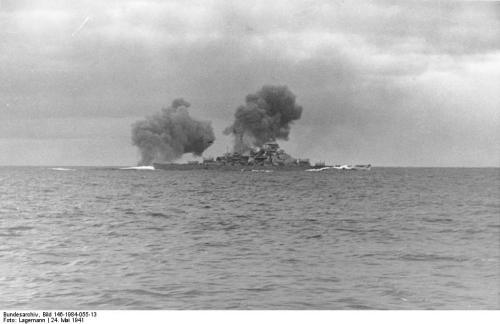
President Bush’s actually words were “Now, the American people have got to go about their business. We cannot let the terrorists achieve the objective of frightening our nation to the point where we don’t — where we don’t conduct business, where people don’t shop…” http://georgewbush-whitehouse.archives.gov/news/releases/2001/10/20011011-7.html

2 Comments

Filed under History, iraq,afghanistan, leadership, Military, national security, Political Commentary