Category Archives: Military

Erin Go Bragh, and Go Bayern München

Friends of Padre Steve’s World,

It’s Saint Patrick’s Day and as anyone with 45% Irish DNA should be doing I am donning the green. Of course it happens to be my 2014 German National Team, Manuel Neuer World Cup goalkeeper jersey. Of course I am sporting a red Bayern baseball cap, can’t help that since I watched Bayern München play and absolutely smash Mainz 6-0 while waiting for some friends to come by. during the match James Rodriguez score a hat trick for the first time this season, vastly increasing his value to the team in the last part of the season and maybe for a long time to come.

The win keeps Bayern ahead of Dortmund and increased the goal differential to seven goals. Since both teams are now out of the UEFA Champions League Bayern is going to take this to their 7th straight Bundesliga Championship. Two and a half months ago Dortmund led Bayern by 9 points on the table and what looked like an insurmountable goal differential. Now Bayern is resurgent and the talented but young Dortmund team is struggling. My prediction is that Bayern will win the Bundesliga and Dortmund finish second or third which will put them both in the UEFA Champions League in 2020.

But enough football for today. I may be 45% Irish by DNA and less than 5% German, I am a conflicted mix of Irish, Scottish, and German, with a large amount of English, Welsh, and non German Western Europeans, mostly French Huguenot, I am a man who is quite complex and often quite conflicted.

Conflicts aside, I love German Beer and Irish Whisky. I like European football more than American, and prefer Baseball to Cricket. But that doesn’t matter because my family, regardless of their ancestry or even incestry has been in this country for between 280 and 320 years which means that that I am a very conflicted American. I have many near and distant cousins who are African American, all of which are related to me through white ancestors, and their descendants who just happened to be slave owners, including men on both sides of my family who all fought for the Confederacy and their slave ownership rather than follow the majority in their part of Virginia and side with the Union. They all fought under the flag of the 8th Virginia Cavalry Regiment.

All that being said, I am an American with a highly conflicted genetic stew who happens to be defiant Unionist and abolitionist. I a fully for freedom and the understanding of the Declaration of Independence, and Abraham Lincoln that “all men are created equal,” and that we are engaged in a a conflict that will bring about “a new birth of freedom.”

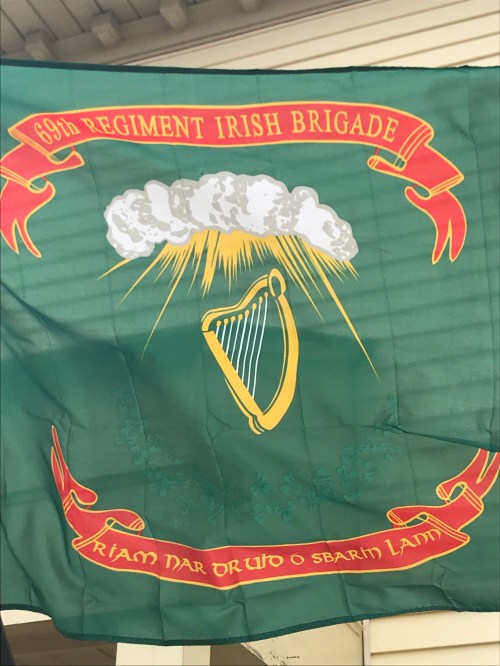
Today outside my home hang the 35 Star Circle Union flag of June 1863 and that of the 69th New York Volunteer Infantry, also known as the 1st Regiment Of the Irish Brigade. I will never display the flag of the 8th Virginia or any other secessionist Regiment at my home in the Virginia Tidewater.

So, in the spirit of my Irish ancestors, even the most distant who fought under the flag of the Union and the regiments of the Irish Brigade I raise my pint glass and say Erin go Bragh!

Until tomorrow,

Peace,

Padre Steve+

2 Comments

Filed under civil war, History, Military, Political Commentary

The Stuff Of Dictators: More Threats Of Violence From the President

Friends of Padre Steve’s World,

In 1989 Donald Trump wrote in a full page advertisement in the New York Daily News “civil liberties end when an attack on our safety begins.” He said that in relation to the Central Park Five, five teenagers who were falsely accused and convicted of the rape of a jogger in Central Park. In 2002 after the real assailant confessed and his crime verified by DNA evidence. Despite the reality Mr. Trump has continued to speak to that issue and claim that the five falsely convicted and imprisoned men are guilty.

Mr Trump repeated expressed his anger that they did not receive the death penalty, something that by the way is not part of the law in any state. Since becoming President the Mr Trump has suggested all sorts of extrajudicial and unconstitutional remedies to crime. Today he suggested doing that to gun owners who could be considered potential mass murderers. He told a group of Congressmen and Senators, as well as his own Vice President Mike Pence: “You could do exactly what you’re saying, but take the guns first, go through due process second.”

Now personally I don’t think that’s such a bad idea, but it still is unconstitutional. Earlier in the week the President proposed the death penalty to all convicted drug dealers. Again, no love for drug dealers but the President doesn’t get to impose sentences, but the President praised the extermination methods that Philippine President Duterte uses not just to kill suspected drug dealers but political opponents and members of the press. Of course the President has long suggested the political opponents should be jailed and the Press is an “an enemy of the people.” 

As I have written over the past few days in discussing the Reichstag Fire I am very concerned that as the walls close in on the Trump Presidency, that as the Muller investigation implicates more and more of his advisors and quite possibly family members, that as members of his administration like Hope Hicks admit that they lied for him, that the danger to our Republic only rises. I am afraid that there will be a Reichstag Fire moment that will allow the President to through already existing Executive orders and laws to scrap constitutional liberties and establish an authoritarian state. It’s not so much that he has to be popular to do so, the fact is that under threat of attack that most Americans will surrender liberty for the illusion of security. That was demonstrated in 2002 when the Patriot Act, an act so revoltingly un-American and totalitarian in its implications was passed overwhelmingly by both houses of Congress with hardly any resistance.

Today the President again made violent threats against his political opponents. He said:

“I can tell you I have the support of the police, the support of the military, the support of the Bikers for Trump – I have the tough people, but they don’t play it tough — until they go to a certain point, and then it would be very bad, very bad,”

That is what concerns me. For a President claim that the Army and Police are his personal protection force, for him to equate them to motorcycle gangs, for him to say that Nazis are fine people is extraordinarily evil and in complete defiance of the oath that he swore when he became President. In the past he has said similar things and during his campaign offered to pay the legal fees of anyone charged with attacking his opponents at his rallies.

Should a war break out, should there be a major terrorist attack, or anything that severely disrupts the country the mechanisms are in place for the President to declare the situation extraordinary and to take power. The thing is that no President has acted in such a way, but President Trump has repeatedly suggested violating the Constitution and praised foreign leaders like Dutarte, Putin, and Erdogan, men who all use such circumstances and laws to their advantage.

Timothy Snyder wrote:

“For tyrants, the lesson of the Reichstag fire is that one moment of shock enables an eternity of submission. For us, the lesson is that our natural fear and grief must not enable the destruction of our institutions. Courage does not mean not fearing, or not grieving. It does mean recognizing and resisting terror management right away, from the moment of the attack, precisely when it seems most difficult to do so. After the Reichstag fire, Hannah Arendt wrote that “I was no longer of the opinion that one can simply be a bystander.”

Of course Mr Trump has a hard core of loyal supporters who in his words would remain loyal to him “even if he shot someone on 5th Avenue.” Some are actually quite frightening, but in truth I am more frightened by the vast number of people in this country of every part of the political spectrum cannot tell the difference between fact and fiction or true and false, people how simply go along with the flow, especially in times of crisis.  Hannah Arendt, who saw the Nazi takeover of Germany in the beginning wrote:

“The ideal subject of totalitarian rule is not the convinced Nazi or the convinced Communist, but people for whom the distinction between fact and fiction (i.e., the reality of experience) and the distinction between true and false (i.e., the standards of thought) no longer exist.”

In a world such as the one that we live today it is those who simply go with the flow or are easily persuaded into accepting what in normal times they would not accept because the times are exceptional, or in a crisis believe what they are told and regardless of what happens to fellow citizens or neighbors turn their backs on injustice. Most are totally ordinary and unremarkable and are no different than so many others who committed terrible crimes against humanity and too part in genocide.

British Historian Laurence Rees wrote:

“human behavior is fragile and unpredictable and often at the mercy of the situation. Every individual still, of course, has a choice as to how to behave, it’s just that for many people the situation is the key determinate in that choice.” 

When people feel that a crisis makes a situation exceptional to the point that normal codes of conduct, social mores, laws, and ethics are Christopher Browning wrote in his book Ordinary Men:

“I fear that we live in a world in which war and racism are ubiquitous, in which the powers of government mobilization and legitimization are powerful and increasing, in which a sense of personal responsibility is increasingly attenuated by specialization and bureaucratization, and in which the peer group exerts tremendous pressures on behavior and sets moral norms. In such a world, I fear, modern governments that wish to commit mass murder will seldom fail in their efforts for being unable to induce “ordinary men” to become their “willing executioners.” 

My question is: when the crisis finally comes, what will Americans do?

I want to be hopeful. I am not a fatalist. I believe that we can all given the opportunity rise to greatness and defend our Constitution, civil liberties, and embody the principles of the Declaration of Independence. It has happened before. But that being said human history, especially the history of the past century shows us that more often than not that most people do not rise to the occasion. Snyder wrote:

“The European history of the twentieth century shows us that societies can break, democracies can fall, ethics can collapse, and ordinary men can find themselves standing over death pits with guns in their hands. It would serve us well today to understand why.”

In our time that is the most important consideration. With the complete Trumpification of the Republican Party that day is today. he has for all intents and purposes given political cover for his supporters to commit violence on his behalf. The peril is mounting.

Until tomorrow,

Peace

Padre Steve+

2 Comments

Filed under civil rights, culture, ethics, faith, History, laws and legislation, Military, nazi germany, News and current events

The Struggle for Women’s Rights: Nurses, Spies, and Soldiers in the Civil War

Clayton-Francis-L

Friends of Padre Steve’s World,

It’s been a couple of days since International Women’s Day and I am really surprised of how many men Insee attacking and denigrating women military members and combat veterans. I actually wonder how many of these Twitter Trolls have actually served in the military or combat, and how many simply live their lives through myth and video games, but obviously they have never served in combat with the women who serve not only in the United States military, but so many others.

Nor domthey study history, even going back to Biblical Times; Deborah the Judge and Military leader or Judith, the Spy and assassin. Likewise the forget Joan Of Arc, Molly Pitcher, and what this article deals with, the women who served in the American Civil War. In fact, some of these women were what we would now call Transgender. 

There will be more articles in this series. So until tomorrow, 

Peace

Padre Steve+

women-civil-war-sarah-edmonds-frank-thompson-631

Of course when war broke out the logical end of this train of thought led to the question of whether women should women be allowed to serve in the military. Legally and socially it was not possible for women to serve in the military in 1861, but this did not stop women from doing so. Even so, “women were not expected to defend their country, and when they did nevertheless and were found out, they learned that they were not necessarily a welcome addition to the military. Women who returned home after the Civil War as veterans reaped few of the societal rewards for having rendered such service.” [1] Quite a few women on both sides of the conflict chaffed about not being allowed to fight for their countries, their families and their causes, and despite official prohibitions that kept women from serving in any capacity but nursing, a good number of women found their way to go to war. While men in the North and South “were expected to enlist, any woman actively participating in the Civil War was an oddity if not a renegade.” [2] In some cases this involved hundreds of women taking male identities in order to fulfill their desires to serve their countries.

The motives of these women varied. In some cases women wanted gain the economic privileges of full citizenship, and for others the glory reserved to only to men. In our modern parlance those that took male identities would be considered transvestites or possibly transgender, but for them “transvestitism was a private rebellion against public conventions. By taking a male social identity, they secured for themselves male power and independence, as well as full status as citizens of their nation. In essence the Civil War was an opportunity for hundreds of women to escape the confines of their sex.” [3]

During the war hundreds of women went to war, dreaming of being a second Joan of Arc, taking on the identity of men, however, their idealistic vision of wanting to serve the cause of their country, was not viewed favorably by many, men and women alike, as “they were usually viewed by contemporaries as mentally unbalanced or immoral.” [4] Their morality was question, their motivation was questioned, and their character was questioned, all because they broke long held social, and religious barriers in order to fight for what they believed.

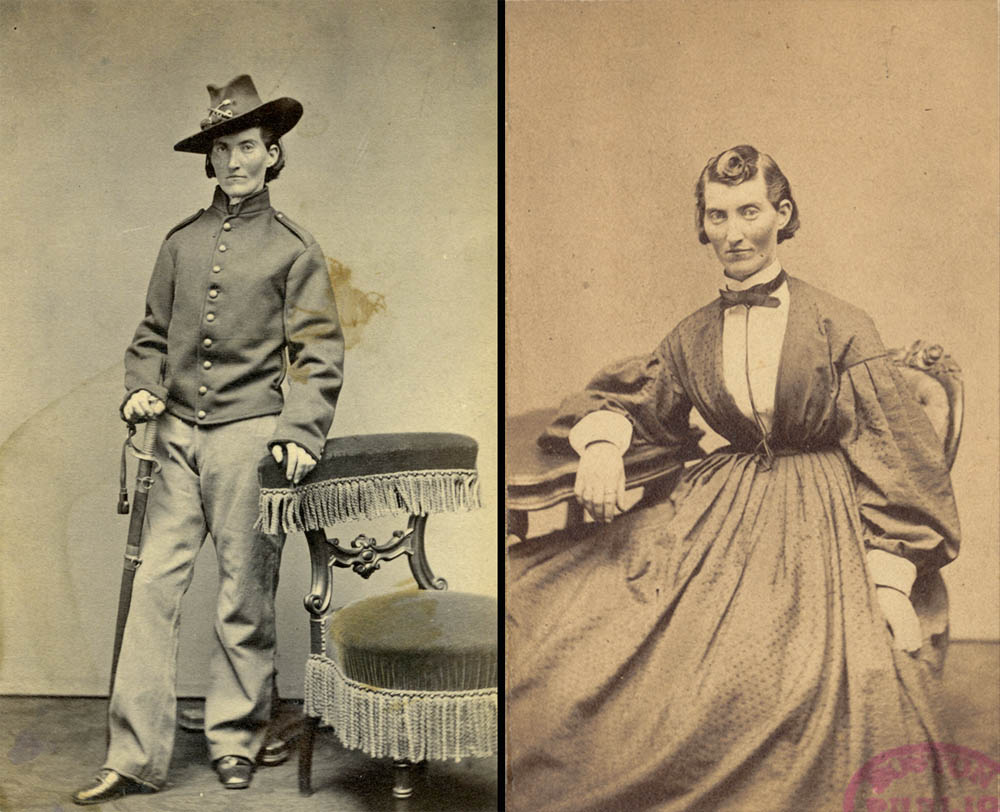
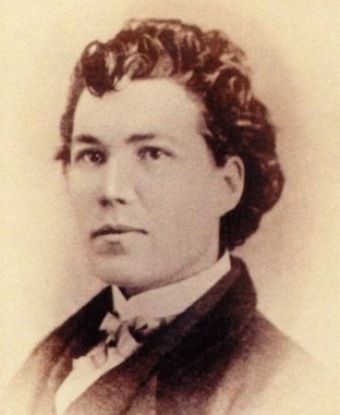
These brave and socially progressive women enlisted under male names and pretended to be men. Unless they were discovered to be women, or unless they confessed to their wartime service either during or after the war, most of their records were lost. In 1861 Private Franklin Thompson “enlisted in Company F of the 2ndMichigan Infantry…unknown to comrades, Thompson actually was Sarah Emma Edmonds.” [5] Edmonds served in the illustrious Iron Brigade until the disaster at Fredericksburg. Well known for her courage as Franklin Thompson, Edmonds participated in some of the bloodiest combats of the war. At Antietam she was caring for the wounded when she came upon a soldier who had been wounded in the neck. That soldier informed Edmonds that she was dying and after a surgeon came by and confirmed what the soldier said the dying soldier told Edmonds:

“I am not what I seem, but I am female. I enlisted from the purest motives, and I have remained undiscovered and unsuspected. I have neither father, mother nor sister. My only brother was killed today. I closed his eyes about an hour before I was wounded….I am Christian, and have maintained the Christian character ever since I entered the army. I have performed the duties of a soldier faithfully, and am willing to die for the cause of truth and freedom….I wish you to bury me with your own hands, that none may know after my death that I am other than my appearance indicates.” [6]

That unknown woman was not alone, at least nine women, eight Union and one Confederate, fought at Antietam and of those five were casualties. Five women, two Federal and three Confederate took part at Gettysburg. All three Confederate women at Gettysburg were either killed or wounded, or captured, including two women who took part in Pickett’s Charge. [7]

Edmonds_inline

Sarah Edmonds

Sarah Edmonds published a book Nurse and Spy in the Union Army while recovering from malaria in 1863. The book, which was published the following year, sold 175,000 copies, the proceeds that she donated to care for sick and wounded Union veterans. After the war, Edmonds attended Oberlin College, married, had three of her own children and adopted two more. She “became a member of the Grand Army of the Potomac, the organization for Union veterans of the Civil War. She applied for, and received, a military pension, and upon her death in 1898 was buried with full military honors.” [8] She was the only women admitted to the Grand Army of the Republic.

Another of the women to serve was Frances Louisa Clayton. Fighting for the Union as a member of the Minnesota State Militia Cavalry and 2nd Minnesota Battery, serving under the command of Ulysses S. Grant she was wounded at Fort Donelson. Like many other women soldiers, Clayton mastered the art of behaving as a man. She “became “a capital swordsman,” but also commanded attention with her “masculine stride in walking” and “her erect and soldierly carriage.” [9]

Albert-Cashier

However, most women were more discreet during and after the war regarding their true sexuality. Private Albert Cashier hid his sexuality identity for his entire term of service. He enlisted in August 1862 as a member of the 95th Illinois. Cashier was born in Ireland as a woman, Jennie Hodgers. He fought in forty battles and was discharged with the regiment in August 1865. At Vicksburg he was briefly captured by the Confederates while conducting a reconnaissance “but managed to escape by seizing a gun from one of her guards, knocking him down, and outrunning others. Comrades recalled Private Cashier climbing to the top of their fieldworks to taut the enemy into showing themselves.” [10]

After the war “Albert” returned home and lived as a “farmer and handyman and served as a caretaker in his church. He never married.” In 1890 he applied for and received a military pension and in 1911 the now elderly “man” was struck by a car and suffered a broken leg. The doctor treating him discovered that Albert was not a man, but a woman. But the doctor kept his confidentiality and without revealing “Albert’s” secret had the Union veteran admitted to the local Soldier’s and Sailors’ Home at Quincy, Illinois.” [11] A few years later the elderly “man” began to exhibit erratic behavior and was “committed to a public mental hospital and the word was out.” [12] With her story now sensational front page news and “old comrades in arms came to her defense.” [13] Her comrades had never known that “Albert” was a man during or after the war, while the news was a surprise to them they came to her defense. To combat some of the sensationalism in the media Albert’s fellow soldiers testified “to Albert’s bravery in combat and public good works in later life. Albert/Jennie died at Watertown State Hospital in 1915 at age seventy-one. The local post of the Grand Army of the Republic arranged for her burial. Her headstone reads: “Albert D.J. Cashier, Company G, 95th Illinois Infantry.” [14]

There are similar accounts of women who served as soldiers in the Confederate army including Mrs. Amy Clarke who enlisted with her husband and continued to serve until after his death at the Battle of Shiloh. Her gender remained secret until she was wounded and captured by Union forces. As “soon as she had recovered they gave her a dress and sent her back into Confederate lines; but a short time later she was seen in Mississippi making plans to re-enlist.” [15]

Wartime records are sketchy but as a minimum it is believed that “between 250 and 400 women disguised as men found their way into either the Federal or Confederate armies.”  [16] A more recent estimate is that in the Confederate army alone there were some 250 women who served as soldiers during the war. [17] Casualties were high for the women that are known to have served as soldiers, they had a “combined casualty rate of 44 percent” including the fact that fully “eleven percent of women soldiers died in the military.” [18] Some of those women are now well known but many others are lost to history. Most women tried to keep their sexual identities secret, even to the point of their death on the battlefield. Most of the women who served in the armies returned home to resume relatively normal lives after the war.

Other women would serve as spies for both sides, often rendering valuable assistance to their countries. The women who served as spies often took their lives into their hands; however, they often provided vital information to the Union or Confederate officers that they served. Pauline Cushman “parlayed her acting talents into a series of elaborate ruses that allowed her to pry information out of admiring and complaisant Confederate officers; Belle Boyd used an equal measure of talent in as a northern Virginia coquette to elide the same kind of information out of Federal officers.[19]

0065747

Elizabeth Van Lew

Even those women who were successful often suffered for their service during and after the war as they learned “that few people completely trusted or respected a spy, not even a “friend.” [20] Many, especially Southern women who spied for the Union were ostracized and persecuted in their communities after the war, and found little support from Northern politicians. Rebecca Wright, a young Quaker schoolteacher in Winchester, Virginia provided information that “enabled him to defeat General Early’s forces” in the Valley of 1864. She lost her job, and her former friends and neighbors boycotted her family’s businesses. Rejected for a pension, Sheridan helped Wright obtain “an appointment in a government office, remaining there for the rest of her days.” [21] Elizabeth Van Lew was a lifelong resident of Richmond and daughter of a wealthy businessman.  She helped Union prisoners escape from Richmond’s notorious Libby prison and when Grant besieged Petersburg, Miss Van Lew “supplied him with a steady stream of information” [22]

To be continued….

Notes

[1] Ibid. Blanton and Cook They Fought Like Demons p.209

[2] Silvey, Anita I’ll Pass for Your Comrade Clarion Books, New York 2008 p.9

[3] Ibid. Blanton and Cook They Fought Like Demons p.5

[4] Ibid. Massey Women in the Civil War p.79

[5] Ibid. Lowry The Stories the Soldiers Wouldn’t Tell  p.119

[6] Ibid. Silvey I’ll Pass for Your Comrade p.68

[7] Ibid. Blanton and Cook They Fought Like Demons pp. 15-16

[8] Ibid. Silvey I’ll Pass for Your Comrade p.90

[9] Ibid. Blanton and Cook They Fought Like Demons p.58

[10] Ibid. Blanton and Cook They Fought Like Demons pp. 16-17

[11] Ibid. Lowry The Stories the Soldiers Wouldn’t Tell p.121

[12] Ibid. Lowry The Stories the Soldiers Wouldn’t Tell p.121

[13] Ibid. Silvey I’ll Pass for Your Comrade p.90

[14] Ibid. Lowry The Stories the Soldiers Wouldn’t Tell p.121

[15] Ibid. Massey Women in the Civil War p.81

[16] Ibid. Guelzo Fateful Lightning p.394

[17] Ibid. McCurry Confederate Reckoning  p.87

[18] Ibid. Blanton and Cook They Fought Like Demons pp.206-207

[19] ibid. Guelzo Fateful Lightning p.395

[20] Ibid. Massey Women in the Civil War p.87

[21] Ibid. Massey Women in the Civil War pp. 103-104

[22] Ibid. Massey Women in the Civil War p.102

Leave a comment

Filed under civil rights, civil war, History, Military, national security, News and current events, Political Commentary

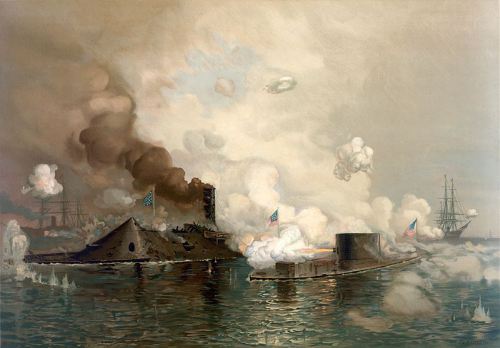
The Monitor and the Virginia at 157 Years: The Clash of Ironclads at Hampton Roads

800px-the_monitor_and_merrimac1

Friends of Padre Steve’s World

Today marks the 157th  anniversary of an event which changed naval warfare forever. It was a watershed event which ended the reign of the great wooden ships which plied the oceans of the world under massive fields of canvas sails. 

It took place just a few miles from my office, if it happened today I would certainly be able to watch it from beach any of the beaches were I work at Joint Base Little Creek – Fort Story.  

On that day, two very strange looking ships joined in battle. This is the story of the Battle of Hanpton Roads and the USS Monitor and CSS Virginia. 

Peace

Padre Steve+ 

On the morning of March 8th 1862 the CSS Virginia steamed slowly from her base at Portsmouth Virginia into Hampton Roads at the mouth of the Chesapeake Bay. Awaiting her was a US Navy squadron of wooden warships including the steam Frigate USS Minnesota, the Sloop of War USS Cumberland and Frigate USS Congress and a number of smaller vessels. The Virginia was an armored ram built from the salvaged remains of the large steam frigate USS Merrimack which had been burned at Gosport (Now Norfolk) Naval Shipyard. Her plans had been leaked to the US Navy which was also in the process of constructing a number of ironclad ships of different types. The first of these ships to be ready was the USS Monitor, a small ship mounting a single heavily armored turret mounting two powerful 11” Dalghren smoothbore guns was still steaming to Hampton Roads when Virginia came out for battle.

CSSVirginia1862.2.ws

During the ensuing fight of March 8th Virginia rammed and sank Cumberland which though fatally wounded disabled two of Virginia’s 9” in guns. She destroyed Congress by gunfire which burned and blew up and appeared to be in position to destroy Minnesota the following day as that ship had run hard aground. The losses aboard Cumberland and Congress were severe and included the Captain of the Congress and Chaplain John L. Lenhart of Cumberland, the first US Navy Chaplain to die in battle. During the battle Virginia had several men wounded including her Captain Franklin Buchanan.

Cumberland_rammed_by_Merrimac

Due to the coming of darkness and a falling tide the acting commander of Virginia, Lieutenant Catsby Ap Roger Jones her executive officer took her in for the night. During the night Monitor, under the command of Lieutenant John Worden arrived and took up station to defend Minnesota.

603px-Battle_of_Hampton_Roads_Map

The next morning Virginia again ventured out and was intercepted by the Monitor. The ships fought for over three hours, with Monitor using her superior speed and maneuverability to great effect. During the battle Monitor suffered a hit on her small pilothouse near her bow blinding her Captain. Monitor’s executive officer, Lieutenant Dana Greene, the son of Union Brigadier General George Sears Greene, the hero of Culp’s Hill at Gettysburg took command. Neither side suffered much damage but the smokestack of Virginia was pierced in several places affecting her already poor engine performance.  Jones broke off the action and returned to Gosport for repairs and Monitor remained on station.

Secretary of the Navy Gideon Welles wrote after the battle:

“the performance, power, and capabilities of the Monitor, must effect a radical change in naval warfare.”

USSMonitor1862.3.ws

It did. The battle showed the world the vulnerability of wooden warships against the new ironclads. Monitor in particular revolutionized naval warfare and warship construction. Her defining mark was the use of the armored gun turret which over the succeeding decades became the standard manner for large ships guns to be mounted. Turrets like the warships they were mounted upon grew in size and power reaching their apex during the Second World War.

arizon-main-battery2

Both Virginia and Monitor reached less than glorious ends. Virginia had to be destroyed by her crew to prevent her capture just over two months after the battle on May 11th 1862. Monitor survived until January 31st 1862 when she sank during a heavy storm off Cape Hatteras North Carolina with the loss of 16 of her 62 man crew. The remains of two of those men, recovered during the salvage of Monitor’s engines, turret, guns and anchor were interred at Arlington National Cemetery on March 8th 2012. The relics from Monitor and some from Virginia are displayed at the Mariners Museum in Newport News (http://www.marinersmuseum.org )while one of Virginia’s anchors resides on the lawn of the Museum of the Confederacy in Richmond.

Those early ironclads and the brave men who served aboard them revolutionized naval warfare and their work should never be forgotten.

Peace

Padre Steve+

Leave a comment

Filed under civil war, History, Military, Navy Ships, US Navy

Religion, Misogyny, Politics, and the Military

Friends of Padre Steve’s World,

As much as I struggle with faith, I still am a Catholic (not Roman) Christian. That being said I have to admit that many Christians, especially men, use historic interpretations of scripture to justify positions that are decidedly misogynistic and detrimental to women. These positions range from opposing the ordination or women to justifying the mistreatment, sexual abuse, and rape of women and being “God’s Will.”

In the movie Blazing Saddles there is a scene where Hedley Lamarr (played by Harvey Korman) is recruiting a gang of outlaws to drive the inhabitants of the town of Rock Ridge from their homes. One of the recruits is asked his qualifications and replies : “Rape, murder, arson, and rape.” Lamarr appears stunned and says “You said rape twice,” to wit the outlaw says “I like rape.” Lamarr than laughs heartily and hires him.

Sadly, the film illustrates the attitude of many many men than just outlaws. The film is illustrative of the Church and religious attitudes held by many in the Christian Church, as well as almost every religion, not just those that flow from the seed of Abraham.

The fact is that religion in general puts women in a subservient position, devoid of rights, devoid of authority. The fact is that the texts, or “Canons” that assume this position were all decided on by men and the succeeding doctrines were decided by men is determined to be the Will of God and the Word Of God. Opposing doctrines were heretical, that applies to Christians, Jews, Muslims, Mormons, and Jehovah’s Witnesses. I won’t address other major non-Abrahamic religions.

To be honest there are some denominations in Christianity and Judaism which have accepted women as full equals, to including in the matter of ordination or leadership, whether as pastors, priests, bishops, or rabbis. But most have not. That discrimination also extends to LGBTQ people, regardless of their gender.

I am white, straight, and married to the love of my life. I respect “big T” church tradition as it is recorded in the Creeds, but I don’t accept supposed “traditions” that deny the rights and worth of any of God’s people. John Dominic Crossan wrote:

“The past is recorded almost exclusively in the voices of elites and males, in the viewpoints of the wealthy and the powerful, in the visions of the literate and the educated.”

Likewise, Barbara Tuchman wrote:

“Theology being the work of males, original sin was traced to the female.”

Despite some of the success of the #MeToo movement the fact is that women in the United States experience a vastly different playing field than do men. This includes women in religion, government, business, and the military. Even successful women are treated with tremendous disrespect and held to a higher standard than their male counterparts. If the have a hard tough edge they are labeled as bitches, when men acting the same way would be admired for their toughness. Men can act out emotions of anger, rage, grief, or sadness without being vilified, they are simply being who they are, if women act out they are considered unfit for the offices they hold.

As a career military officer and chaplain I seen, up close and personal, a culture that on one hand gives lip service to respecting women, but in reality, perpetuate the abuse of women, and God forbid that those women be Lesbian or Trans, in which they are treated even worse, and that includes the military justice system.

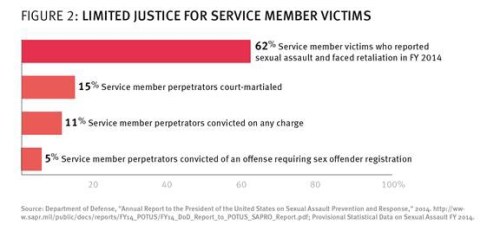
Today, Republican Senator Martha McSally of Arizona, a combat veteran Air Force fighter pilot spoke up that she had been raped by a superior officer while on active duty. I am sure that there are hundreds of not thousands more who have not spoken out, mainly due to the fear of retribution and the hurt it would cause their families. I know some of these women from different parts of my military career.

When it comes to sexual abuse or rape, God help a woman if she comes forward. She will be subjected to scrutiny and condemned in hearings, depositions, and at trial should it go that far. She will be treated as if she were the criminal, and even if she wins in court the damage will be lasting. As for those who did not report their their rapes out of legitimate fears of retribution from men in the institutions that they served, or from the men and institutions they were attending as students, they are held to an even higher standard of proof. “How dare they speak ill of successful men!”

It happens every day, and not just to high level well known women. I know far too many women in the military and in the ministry who have, after making legitimate grievances known, and won those cases been subjected to retribution from allies of the men who caused them harm. This happens all too often in the military where high ranking men can be assured that the religious establishment will defend them, and where senior ranking male Chaplains know that they can use the system to get retribution on their accusers, without any further danger.

It angers me when I see women in male dominated institutions be subjected to such abuse. So I will continue to speak up on such matters of the church, in the military, in government, and in the private sector. I refuse to be a bystander when I see such injustice continue.

But the fact is that far less talented men are held to a lower standard than incredibly talented women simply because they have a penis, sometimes, not even a very big one.

Until tomorrow,

Peace,

Padre Steve+

7 Comments

Filed under crime, culture, ethics, faith, LGBT issues, Military, News and current events, Political Commentary

Mahan, Halleck, and the Beginning of American Military Thought

Friends of Padre Steve’s World

Something a bit different. Again this is a part of one of the chapters of my Gettysburg and Civil War text, but this time dealing with two men who were the first American military theorists, Dennis Hart Mahan, the father of Alfred Thayer Mahan the great naval strategist and Henry Wager Hillock. Both men contributed to American military thought for over a century until they and their French-Swiss mentor Henri Jomini’s theories were overtaken by those of the Prussian Carl von Clausewitz. 

They both are interesting characters and both had an influence on American history today ion large part due to their influence on the education of most of the generals who conducted the Civil War, and in the case of Halleck in advising Abraham Lincoln during the war. 

I hope that you enjoy

Peace

Padre Steve+

West_Point

Background 

As we continue to examine the Civil War as the first modern war we have to see it as a time of great transition and change for military and political leaders. As such we have to look at the education, culture and experience of the men who fought the war, as well as the various advances in technology and how that technology changed tactics, which in turn influenced the operational and strategic choices that defined the characteristics of the Civil War and wars to come.

The leaders who organized the vast armies that fought during the war were influenced more than military factors. Social, political, economic, scientific and even religious factors influenced their conduct of the war. The officers that commanded the armies on both sides grew up during the Jacksonian opposition to professional militaries, and for that matter even somewhat trained militias. The Jacksonian period impacted how officers were appointed and advanced. Samuel Huntington wrote:

“West Point was the principal target of Jacksonian hostility, the criticism centering not on the curriculum and methods of the Academy but rather upon the manner of how cadets were appointed and the extent to which Academy graduates preempted junior officer positions in the Army. In Jacksonian eyes, not only was specialized skill unnecessary for a military officer, but every man had the right to pursue the vocation of his choice….Jackson himself had an undisguised antipathy for the Academy which symbolized such a different conception of officership from that which he himself embodied. During his administration disciple faltered at West Point, and eventually Sylvanus Thayer, the superintendent and molder of the West Point educational methods, resigned in disgust at the intrusion of the spoils system.” [1]

This is particularly important because of how many officers who served in the Civil War were products of the Jacksonian system and what followed over the next two decades. Under the Jackson administration many more officers were appointed directly from civilian sources than from West Point, often based on political connections. “In 1836 when four additional regiments of dragoons were formed, thirty officers were appointed from civilian life and four from West Point graduates.” [2]

While this in itself was a problem, it was made worse by a promotion system based on seniority, not merit. There was no retirement system so officers who did not return to the civilian world hung on to their careers until they quite literally died with their boots on. The turnover in the highest ranks was quite low, “as late as 1860, 20 of the 32 men at or above the rank of full colonel held commissions in the war of 1812.” [3] This held up the advancement of outstanding junior officers who merited promotion and created a system where “able officers spent decades in the lower ranks, and all officers who had normal or supernormal longevity were assured of reaching higher the higher ranks.” [4]

Robert E. Lee was typical of many officers who stayed in the Army. Despite his success Lee was constantly haunted by his lack of advancement. While he was still serving in Mexico having gained great laurels, including a brevet promotion to Lieutenant Colonel, the “intrigues, pettiness and politics…provoked Lee to question his career.” He wrote, “I wish I was out of the Army myself.” [5]

In 1860 on the brink of the war, Lee was “a fifty-three year-old man and felt he had little to show for it, and small hope for promotion.” [6] Lee’s discouragement was not unwarranted, for despite his exemplary service, there was little hope for promotion and to add to it, Lee knew that “of the Army’s thirty-seven generals from 1802 to 1861, not one was a West Pointer.” [7]

The careers of other exemplary officers including Winfield Scott Hancock, James Longstreet, and John Reynolds languished with long waits between promotions between the Mexican War and the Civil War. The long waits for promotion and the duty in often-desolate duty stations on the western frontier, coupled with family separations caused many officers to leave the Army. A good number of these men would volunteer for service in 1861 a go on to become prominent leaders in both the Union and Confederate armies. Among these officers were such notables as Thomas “Stonewall” Jackson, Ulysses S. Grant, William Tecumseh Sherman, Henry Halleck, George McClellan and Jubal Early.

The military education of these officers at West Point was based very technical and focused on engineering, civil, and topographic, disciplines that had a direct contribution to the expanding American nation. What little in the way of formal higher level military education West Point cadets received was focused the Napoleonic tactics and methods espoused by Henri Jomini as Clausewitz’s works had yet to make their way to America. Dennis Hart Mahan taught most military theory and tactics courses being taught at the academy in the formative years of so many of the men who would lead the armies that fought the American Civil War.

Many Americans looked on the French, who had been the allies of the United States in the American Revolution, favorably during the ante-bellum period. This was especially true of the fledgling United States Army, which had just fought a second war with Great Britain between 1812 and 1815, and “outstanding Academy graduates in the first half of the nineteenth century, such as Halleck and Mahan, were sent to France and Prussia to continue their education. Jomini was considered as the final word on the larger aspects of military operations, and American infantry, cavalry, and artillery tactics imitated those of the French Army.” [8]
Dennis_Hart_Mahan

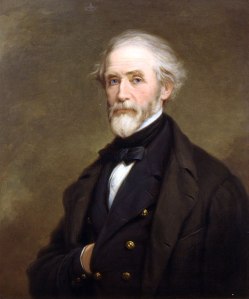
Respected but Never Loved: Dennis Hart Mahan

Mahan, who graduated at the top of the West Point class of 1824 was recognized as having a brilliant mind very early in his career, as a third classman that “he was appointed an acting assistant professor of mathematics.” [9] Following his graduation the brilliant young officer was sent by the army to France, where he spent four years as a student and observer at the “School of Engineering and Artillery at Metz” [10] before returning to the academy where “he was appointed professor of military and civil engineering and of the science of war.” [11] It was a position that the young professor excelled as subjected “the cadets…to his unparalleled knowledge and acid disposition.” [12]

Mahan spent nearly fifty years of his life at West Point, including nearly forty years as a faculty member he could not imagine living life without it. Thus he became “morbid when the Academy’s Board of Visitors recommended his mandatory retirement from the West Point Faculty” and on September 16th 1871 the elderly Mahan “committed suicide by leaping into the paddlewheel of a Hudson River steamer.” [13]

While he was in France Mahan studied the prevailing orthodoxy of Henri Jomini who along with Clausewitz was the foremost interpreter of Napoleon and Napoleon’s former Chief of Staff Marshal Ney. When we look at Mahan’s body of work in his years at West Point, Jomini’s influence cannot be underestimated. Some have noted, and correctly so, that “Napoleon was the god of war and Jomini was his prophet” [14] and in America the prophet found a new voice in that of Dennis Hart Mahan.

Thus, if one wants to understand the underlying issues of military strategy and tactics employed by the leaders of the Civil War armies, the professional soldiers, as well as those who learned their trade on the battlefield of America, one has to understand Jomini and his American interpreter Mahan.

Unlike the Prussian Clausewitz, whose writings were still unknown in America, Jomini saw the conduct of war apart from its human element and controlled by certain scientific principles. The focus in principles versus the human element is one of the great weaknesses of traditional Jominian thought.

The basic elements of Jominian orthodoxy were that: “Strategy is the key to warfare; That all strategy is controlled by invariable scientific principles; and That these principles prescribe offensive action to mass forces against weaker enemy forces at some defensive point if strategy is to lead to victory.” [15] Like Clausewitz, Jomini interpreted “the Napoleonic era as the beginning of a new method of all out wars between nations, he recognized that future wars would be total wars in every sense of the word.” [16] In his thesis Jomini laid out a number of principles of war including elements that we know well today: operations on interior and exterior lines, bases of operations, and lines of operation. Jomini understood the importance of logistics in war, envisioned the future of amphibious operations and his thought would be taken to a new level by Alfred Thayer Mahan, the son of Dennis Hart Mahan in his book The Influence of Sea Power on History.

To be fair, Jomini foresaw the horrific nature of the coming wars, but he could not embrace them, nor the concepts that his Prussian counterpart Carl von Clausewitz regarding the base human elements that made up war. “Born in 1779, Jomini missed the fervor of the Revolutionary generation and the romantic world view that inspired its greatest theorist, Jacques Antoine Guibert. He came to intellectual maturity during a period of codification and quest for stability in all spheres of life, including the waging of war.” [17] Jomini expressed his revulsion for the revolutionary aspects of war, and his desire to return to the limited wars of the eighteenth century:

“I acknowledge that my prejudices are in favor of the good old times when the French and English guards courteously invited each other to fire first as at Fontenoy, preferring them to the frightful epoch when priests, women. And children throughout Spain plotted the murder of individual soldiers.” [18]

Jomini’s influence was great throughout Europe and was brought back to the United States by Mahan who principally “transmitted French interpretations of Napoleonic war” [19] especially the interpretation given to it by Henri Jomini. However, when Mahan returned from France he was somewhat dissatisfied with some of what he learned. This is because he understood that much of what he learned was impractical in the United States where a tiny professional army and the vast expenses of territory were nothing like European conditions in which Napoleon waged war and Jomini developed his doctrine of war.

It was Mahan’s belief that the prevailing military doctrine as espoused by Jomini:

“was acceptable for a professional army on the European model, organized and fighting under European conditions. But for the United States, which in case of war would have to depend upon a civilian army held together by a small professional nucleus, the French tactical system was unrealistic.” [20]

Mahan set about rectifying this immediately upon his return to West Point, and though he was now steeped in French thought, he was acutely sensitive to the American conditions that in his lectures and later writings had to find a home. As a result he modified Jominian orthodoxy by rejecting one of its central tenants-primary reliance on offensive assault tactics.” [21] Mahan wrote, “If the offensive is attempted against a strongly positioned enemy… it should be an offensive not of direct assault but of the indirect approach, of maneuver and deception. Victories should not be purchased by the sacrifice of one’s own army….To do the greatest damage to our enemy with the least exposure of ourselves,” said Mahan, “is a military axiom lost sight of only by ignorance to the true ends of victory.” [22]

However, Mahan had to contend with the aura of Napoleon, which affected the beliefs of many of his students and those who later served with him at West Point, including Robert E. Lee. “So strong was the attraction of Napoleon to nineteenth-century soldiers that American military experience, including the generalship of Washington, was almost ignored in military studies here.” [23] It was something that many American soldiers, Union and Confederate would pay with their lives as commanders steeped in Napoleon and Jomini threw them into attacks against well positioned and dug in opponents well supported by artillery. Lee’s assault on Cemetery Ridge on July 3rd1863 showed how little he had learned from Mahan regarding the futility of such attacks, and instead trusted in his own interpretation of Napoleon’s dictums of the offense.

Thus there was a tension in American military thought between the followers of Jomini and Mahan. The conservative Jominian interpretation of Napoleonic warfare predominated much of the officer corps of the Army, and within the army “Mahan’s decrees failed to win universal applause.” [24] However, much of this may have been due in part to the large number of officers accessed directly from civilian life into the army during the Jacksonian period. Despite this, it was Dennis Hart Mahan who more than any other man “taught the professional soldiers who became the generals of the Civil War most of what they knew through the systematic study of war.” [25]

When Mahan returned from France and took up his professorship he became what Samuel Huntington the “American Military Enlightenment” and he “expounded the gospel of professionalism to successive generations of cadets for forty years.” [26]Some historians have described Mahan by the “star professor” of the Military Academy during the ante-bellum era. [27] Mahan’s influence on the future leaders of the Union and Confederate armies went beyond the formal classroom setting. Mahan established the “Napoleon Club,” a military round table at West Point.[28] In addition to his writing and teaching, Mahan was one of the preeminent influences on the development of the army and army leadership during the ante-bellum period.

However, Mahan and those who followed him such as Henry Halleck, Emory Upton and John Bigelow who were the intellectual leaders of the army had to contend with an army culture which evidenced “a distain for overt intellectual activities by its officers for much of the nineteenth and twentieth centuries….Hard fighting, hard riding, and hard drinking elicited far more appreciation from an officer’s peers that the perusal of books.” [29]

Mahan dominated the academy in many ways. For the most part Mahan ran the academic board, an institution that ran the academy, and “no one was more influential than Mahan in the transition of officership from a craft into a profession.”[30] Mahan was a unique presence at West Point who all students had to face in their final year before they could graduate and become a commissioned officer. “His Engineering and Science of War course was the seedbed of strategy and tactics for scores of cadets who later became Civil War Generals.” [31] That being said most of what Mahan taught was the science of engineering related to war and he “went heavy on the military engineering and light on strategy” [32] relying primarily on Jomini’s work with his modifications for the latter.

The prickly professor was “respected by his students but never loved.” One student described him as “the most particular, crabbed, exacting man that I ever saw. He is a slim little skeleton of a man and is always nervous and cross.” [33] As a teacher Mahan was exceptional, but he was exceptionally demanding of his students. Those cadets who had survived the first three years at the academy were confronted by this “irritable, erudite, captious soldier-professional who had never seen combat” yet who was “America’s leading military mind.” [34]

Mahan was “aloof and relentlessly demanding, he detested sloppy thinking, sloppy posture, and a sloppy attitude toward duty…Mahan would demand that they not only learn engineering and tactics, but that every manner and habit that characterizes an officer gentlemanly deportment, strict integrity, devotion to duty, chivalric honor, and genuine loyalty be pounded into them. His aim was to “rear soldiers worthy of the Republic.” [35] Continue reading

1 Comment

Filed under civil war, History, leadership, Military, us army

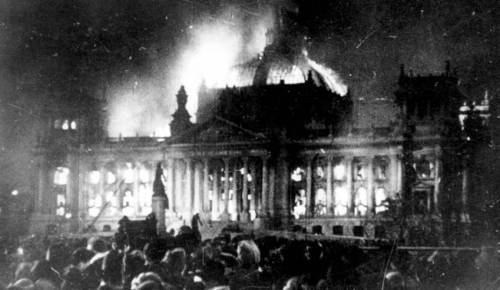
Non-Emergency National Emergencies: The Reichstag Fire and Trump’s Decree

riechstag fire
Friends of Padre Steve’s World,

There are times that is terrifying to be a historian who has specialized in the study of tyrannical regimes especially on the anniversaries of significant events that changed the course of nations. A couple of weeks ago President Donald Trump made good on his threat to declare a National Emergency because Congress would not approve funding for his wall along the Border with Mexico. The Declaration, which I expected would happen came after a government shutdown that lasted over a month followed by almost three weeks of Congressional negotiations to re-open the government. When the House and Senate passed a compromise bill that did not give Trump what he wanted he declared a State Of Emergency while at the same time commenting that he “didn’t have to do it.” 

Of course he didn’t have to do it. He did it in a juvenile fit of rage, even more than Hitler did after the Reichstag Fire. 

The Reichstag Fire,  the 86th anniversary of which is tomorrow, February 27th is a precedent setting state of emergency that brought with it very dire results.

The fire was set by Marinus (Rinus) van der Lubbea Dutch Communist who was acting alone. There was no proof that he had any German support, nor that any German political party was involved. However, Hitler, backed by the aging and doddering President Paul Von Hindenburg was given power to suspend constitutional rights indefinitely by acting under Article 48 of the Weimar Constitution through the Order of the President of the Reich for the Protection of People and State. I will discuss that tomorrow.

Ever since my undergraduate study working under Dr. Helmut Haeussler  at California State University Northridge I have studied the transition of German society from democracy to dictatorship. While my studies then and ever since focused on the rise of National Socialism in Germany, the fact is that what happened in Germany was not unique, it is a part of the human condition and the people of any country can find themselves under the foot of a dictatorship if the conditions are right. I believe that conditions in the United States have never been more ripe for the establishment of an authoritarian regime, possibly even a dictatorship, than they are today.

When I read through the text of President Trump’s speech at CPAC and the response of the NRA to the massacre in Parkland Florida shuddered last February, I shuddered. They were the words that an autocrat would use, and the vehemence of the CPAC crowd, which just a few years ago prided itself as being the intellectual bastion of conservatism. Speakers and panel members who dared to question the movement were heckled, jeered, and threatened. Mona Charen, a long time conservative who had worked for both William Buckley and Ronald Reagan, had to be escorted out by security officers concerned for her safety.

I realize that despite chaos that is engulfing the House of Trump; despite more and more of his advisors being indicted by the Muller investigation of the Trump campaign and family connections to Russia, the more I become more concerned that the unthinkable will happen and something will occur that will allow the President to seize power under the pretext of national security; most likely a war, or a major terrorist attack, using existing National Security Executive Orders dealing with the continuity of government functions as a result of catastrophic emergency. 

But the President chose to declare an emergency for which no evidence exists. Even today, the Commanding General Of U.S. Northcom reported that there was no military threat at the border in direct contravention to the words of the President and his actions, sending thousands of troops to the border with Mexico.

There are a lot of  laws in existence for a President to declare a state of emergency, the latest of which is National Security and Homeland Security Presidential Directive (National Security Presidential Directive NSPD 51/Homeland Security Presidential Directive HSPD-20) of 4 May 2007 which defines a catastrophic emergency as “any incident, regardless of location, that results in extraordinary levels of mass casualties, damage, or disruption severely affecting the U.S. population, infrastructure, environment, economy, or government functions.”

But this doesn’t fit the bill. Nor does the National Emergency Act of 1976 do the trick, though the Administration seems to be banking on it with the courts.

Trump has now made his declaration. But I am sure if his attempt is rebuffed by Congress or the Courts, his regime will act to suspend civil rights and liberties and maybe even suspend Congress and the courts in the name of security and under existing provisions. Sadly, I think that in such a case that very few people would resist such a takeover. Of course the 35% or so of people that would support him as he said, even if he shot someone on 5th Avenue would be at the forefront probably even using extrajudicial means to apprehend, persecute, or kill anyone suspected of disloyalty. But I also believe that many other people would follow all because they are afraid and desire security more than freedom.

Now the psychological preparation for such an event is not all Trump’s doing; for the last three decades many of those that now support him, especially the leaders of the Religious Right, Fox News, and radio and internet demagogues have prepared the ground for his rise.

Dr. Timothy Snyder, the historian from Yale has warned us in his book On Tyranny. He noted:

“Be calm when the unthinkable arrives. Modern tyranny is terror management. When the terrorist attack comes, remember that authoritarians exploit such events in order to consolidate power. The sudden disaster that requires the end of checks and balances, the dissolution of political parties, the suspension of freedom of expression, the right to a fair trial, and so on, is the oldest trick in the Hitlerian book. DO NOT FALL FOR IT.”

Human beings are the one constant in history, and human nature is very consistent when it comes to how we respond when under attack. One only has to think of the fear that followed the 9-11 attacks and the willingness of people to give the government vast new powers. Those included The Patriot Act and an authorization for the use of military force against Al Qaida which has not been updated or supplemented since 2001, and which has been used for operations around the world which are completely unconnected to the initial authorization.

I believe that the chances of such an event occurring have gone up exponentially.  Part of this is because the President and the Executive branch have not filled many critical ambassadorships, as well as thousands of key billets in the State Department, the Department of Defense, the Department of Justice, and the Department of Homeland Security. Even more concerning is the fact that the President is relying on non-Senate confirmed “Acting” cabinet members to serve in order to circumvent the Constitution.

This is a very dangerous time and every day I wake up wondering if this will be the day that our Republic as we knew it dies. I do not know if this will be the result of a war a major terror attack, or even an unexpected financial crisis, but as things spiral out of control I cannot shake the feeling that we are going to have our Reichstag Fire moment, and that we will not rise to the challenge. Instead I think that most Americans will give up freedom in the name of security simply because that is human nature and has been demonstrated throughout history on every continent. The President’s Declaration Of National Emergency qualifies as such an event.

James Madison noted:

“The means of defence against foreign danger have been always the instruments of tyranny at home. Among the Romans it was a standing maxim to excite a war, whenever a revolt was apprehended. Throughout all Europe, the armies kept up under the pretext of defending, have enslaved the people.”

Now is a time that we must all be awake and aware of what is going on in our country and the world. The storm clouds are building and we most be cognizant of the times or be engulfed and overwhelmed when the unthinkable arrives. That may not be pleasant to contemplate, but it is necessary.

I would like to believe that I will be proven wrong and honestly I want to be proven wrong because I do not want our nation to have to endure war, terrorism, or the rule of a tyrannical despot backed by fanatical and heavily armed followers, many of who are already discussing a new civil war and the extermination of their opponents by violent means. Sadly, some of these men and women are serving in the military and in various Federal, State, and local law enforcement agencies. If I am right, they will be the nucleus of quasi-government death squads, no different than in any dictatorship, and any resistor, regardless of Party, politics, ideology, religion, or even military service will be a potential target.

God I hope that I am wrong.

So, until tomorrow I wish you a good day, the conclusion of the article will appear tomorrow.

Peace,

Padre Steve+

1 Comment

Filed under civil rights, ethics, History, holocaust, laws and legislation, Military, national security, nazi germany, Political Commentary

Chronic Pain, Insomnia, Trumped Up National Emergencies and a brief Thought for the Night

Friends of Padre Steve’s World,

I had a very difficult time sleeping last night. Part, probably much was due to physical pain in my knees and especially my right hip. Then there was the pounding rain and wind that kept me awake, and finally the anxiety that I feel for our nation in the wake of President Trump’s “Trumped up” Declaration of National Emergency. I didn’t get to actual sleep until nearly 4 AM, in the military that’s 0400, if you work in the Trump White House Donald’s little hand is shoving a chicken leg down his gullet and and his big hand is on tweet. But I digress…

I’m tired despite having slept until almost 11:00 AM, since today was President’s Day I didn’t have physical therapy at our Navy clinic. I have an assessment on my shoulder at the physical therapy clinic for a nagging injury that has been afflicting me since my return from Iraq. I got treatment for it way back then but little has changed, it’s just gotten worse as I tried to get back some upper body strength doing pull-ups late this summer, and yes I’m still tired. I had a whole bunch of stuff that I started but just saved as drafts this evening.

So with that, especially the Trump National Emergency, I leave you with this thought:

Russian exile and Chess Grand Master Gary Kasparov who wrote:

“First of all, people here should understand that nothing is for granted. There were many warnings in the past, you know, but every time, Americans and Europeans—they believe that it’s like bad weather. It comes and goes. But the danger is real. I always want to quote Ronald Reagan, who said, “Freedom is never more than one generation away from extinction.” Now, probably, it’s not even one generation. Things can happen very quickly, because there’s so much power that comes in the hands of people who have very little affection for the values that make up the core of liberal democracy and the free world.” 

Because of that I believe that we must stand for principle and work for a new birth of freedom even as it seems that freedom itself is in danger due to the actions of the American President. We must stand or we will lose everything that generations of Americans as well as others have fought so hard to preserve, but it is difficult. As Max Boot wrote back in March of this year:

“Trump is sucking a substantial portion of America into his Orwellian universe. The rest of us have to struggle simply to remember that war isn’t peace, freedom isn’t slavery, ignorance isn’t strength.”

So until tomorrow,

Peace,

Padre Steve+

3 Comments

Filed under Loose thoughts and musings, mental health, Military, News and current events, Political Commentary, PTSD

The Crossing Of an American Rubicon: The Trumped Up National Emergency

Friends of Padre Steve’s World,

It has finally happened. President Trump finally declared his National Emergency because Congress did not give in to him, and because when he had solid House and Senate majorities he couldn’t garner a deal that would pass because of his own intransigence and stupidity ensured the inability to make a deal.

So here we are with a National Emergency that is based on his lies, and his inability to compromise the slightest to get a deal. After failing time and time again he shut down the Government for over a month, endangering the economy and national security in the process, even as the Mueller investigation indicted more of his close associates who appear to have quite extensive dealings with Russian agents, collaborators, and government officials. So in my view he is getting desperate, and more dangerous bit the minute.

I honestly expected that the President would use the cover of a major terrorist attack or war as cover to make his power grab. Right now al, he has done is offer a befuddled series of lies and excuses wrapped in a worthless, and plainly unconstitutional piece of paper as has ever been signed by an American President. Winston Churchill said of Russian intentions:  “It is a riddle wrapped in a mystery inside an enigma; but perhaps there is a key. That key is Russian national interest.” For Trump one can say that his intentions are clear, selfish, and washed with an enema. The key is Trump’s personal interest.” The irony is that his interests are all backed by the Russians.

It is sickening to watch as the Acting Secretary Of Defense is attempting to find the money and manpower needed for Trump’s Wall from military construction, MILCON accounts which includes everything from training facilities to tarmacs, runways to railheads, shipyards to firing ranges, drydocks to aircraft hangers, and everything that make the bases which support the troops in the field operating. Military family housing, medical facilities, schools operated by DOD which service military kids, and base security designed to protect bases from of all things, actual terrorists. Then he’s going after the DOD part of our nation’s drug interdiction programs, which is ludicrous in light of his rational that the Trump Wall is to keep out illegal drugs.

I will not compare Trump to Hitler because that would be an insult to the genocidal criminal dictator that Hitler was, not because Hitler was a good human being or worthy of any praise, but because he was a far better politician than Trump could ever hope to be. Hitler took advance of his opponents missteps, be they the political opponents, those in his own party, and European governments. But unlike Hitler, Trump delivers unforced error after error and claims to be a brilliant leader even while he is being rolled by men like Kim Jun Un, Vlad Putin, and so many others.

His only salvation is that some 35% of the American electorate, including the vast bulk of Republican legislators, are what he calls the most loyal followers, who in his words would vote for him even if he shot someone in the middle of 5th Avenue. I guarantee that if he called on them to kill that thousands would heed the call to kill his opponents, just like his Stormtroopers would before his accession to power; and how his SS, acting in concert with the Army and Police would decapitate the leadership of the SA Stormtroopers, including some of his earliest friends and allies during the Night of the Long Knives. Like Hitler, Trump’s only loyalty is to himself, all others are fungible, even his family if need be.

Now is a dangerous time. Declarations of National Emergency give the President great powers above what Article II of the Constitution normally permit. Unlike any other point in our history we now have a President is prepared to use those powers for his political survival and personal gain, sadly his GOP majority in the Senate has all but surrendered their Article I powers to the imperial President.

I do not know what will happen next. The State Of California has already sued to block the effort, the Democrats in the House Of Representatives are planning legislative and possible legal moves against it. Likewise, Trump’s move has divided Republicans. So obviously this will not be enough to cement his power, it is a ploy to distract as the Mueller Eagle circles its prey.

An animal that acts purely on instinct is most dangerous when cornered. It has become apparent that Trump does not act or live within the confines of reason or legality. His business and personal life has always shown that he is a predator speaking his own engorgment, even at the expense of wives, business partners, contractors, customers, or employees. It is the world that he lives in. It is the world that he imbibed from his father Fred Trump.

So my friends, do not let your guard down. We are in completely untested waters for Americans. What will happen tomorrow we don’t know, and we would be fools to prognosticate about. Thus we have to look at history and how other human beings have behaved in similar situations.

Milton Mayer wrote in his book They Thought They Were Free about a German colleague during the 1950s that had lived through the Hitler years as an academic. The man tried to explain how changes were so gradual that people like him who should have known better did not take action, if they did at all until it was too late. The man asked Mayer:

“How is this to be avoided, among ordinary men, even highly educated ordinary men? Frankly, I do not know. I do not see, even now. Many, many times since it all happened I have pondered that pair of great maxims, Principiis obsta and Finem respice—‘Resist the beginnings’ and ‘Consider the end.’ But one must foresee the end in order to resist, or even see, the beginnings. One must foresee the end clearly and certainly and how is this to be done, by ordinary men or even by extraordinary men? Things might have. And everyone counts on that might.”

To forsee the end of the Trump gambit is not hard. We have the benefit of seeing tyrants of history, including Hitler, with today’s authoritarian leaders. Trump has already deployed Federal troops to the U.S. Mexican Border in what most people, including many Republicans viewed as a political stunt. In the aftermath of his declaration he again went to Twitter and attacked the media as enemy of the people” and demanded retribution against his opponents. How long will it be until one of his militarized and propaganda filled believers goes on the attack. One did last week in El Paso, but thankful they were not armed. What is to keep Right Wing Trump supporters who have concealed carry permits to walk into any place and kill someone they believe to be an enemy of the people? 

The fact is there is that there is nothing that will keep this from happening. This makes me glad that I served in Iraq and on Naval boarding teams in the Persian Gulf completely unarmed, and also in a certain way for the PTSD that I suffer, because one of the afflictions if it can be called that is being very hyper vigilant. I won’t be caught by surprise if I can help it, and even unarmed I know enough how to disrupt and confuse an attacker to at least equalize a situation. After having credible threats to my life in 2009 and 2010 from a neo-Nazi long before I became outspoken in my beliefs I always remain alert, sadly, even on base, because I do take notice of the rather violent political messages on the bumper stickers and window decals of many fellow sailors, marines, and soldiers, active and retired.

I don’t want to be considered a pessimist, but I do forsee the end, unless a sea change that I don’t think will happen occurs. I fully expect something else to happen that allows Trump to expand his powers, an event that even many opponents would find hard to oppose. A Reichstag Fire moment, maybe, but possibly worse.

So with all those happy thoughts in mind, have a good night.

Until tomorrow,

Peace,

Padre Steve+


3 Comments

Filed under civil rights, History, laws and legislation, leadership, Military, national security, nazi germany, News and current events, Political Commentary

The Last Of the Carriers that Held the Line Found: USS Hornet Discovered 17,000 Feet Below the Pacific

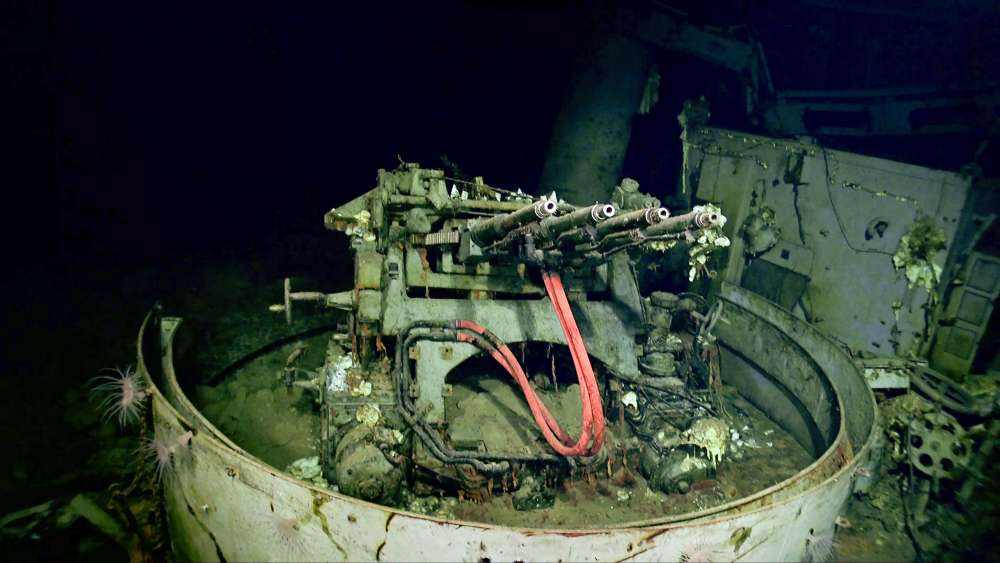
Quadruple 1.1 inch Anti-Aircraft Gun Mount on USS Hornet 

Friends of Padre Steve’s World,

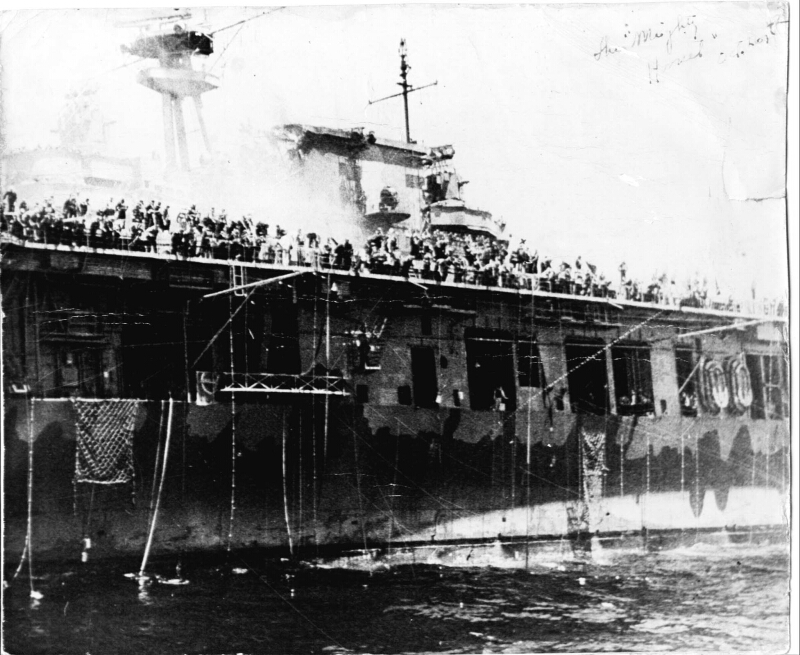
The crew and research teams on the late Paul Allen’s research vessel, the RV Petrel made a tremendous maritime discovery in late January near where Hornet sank following massive damage sustained during the Battle Of the Santa Cruz Islands on October 26th 1942.


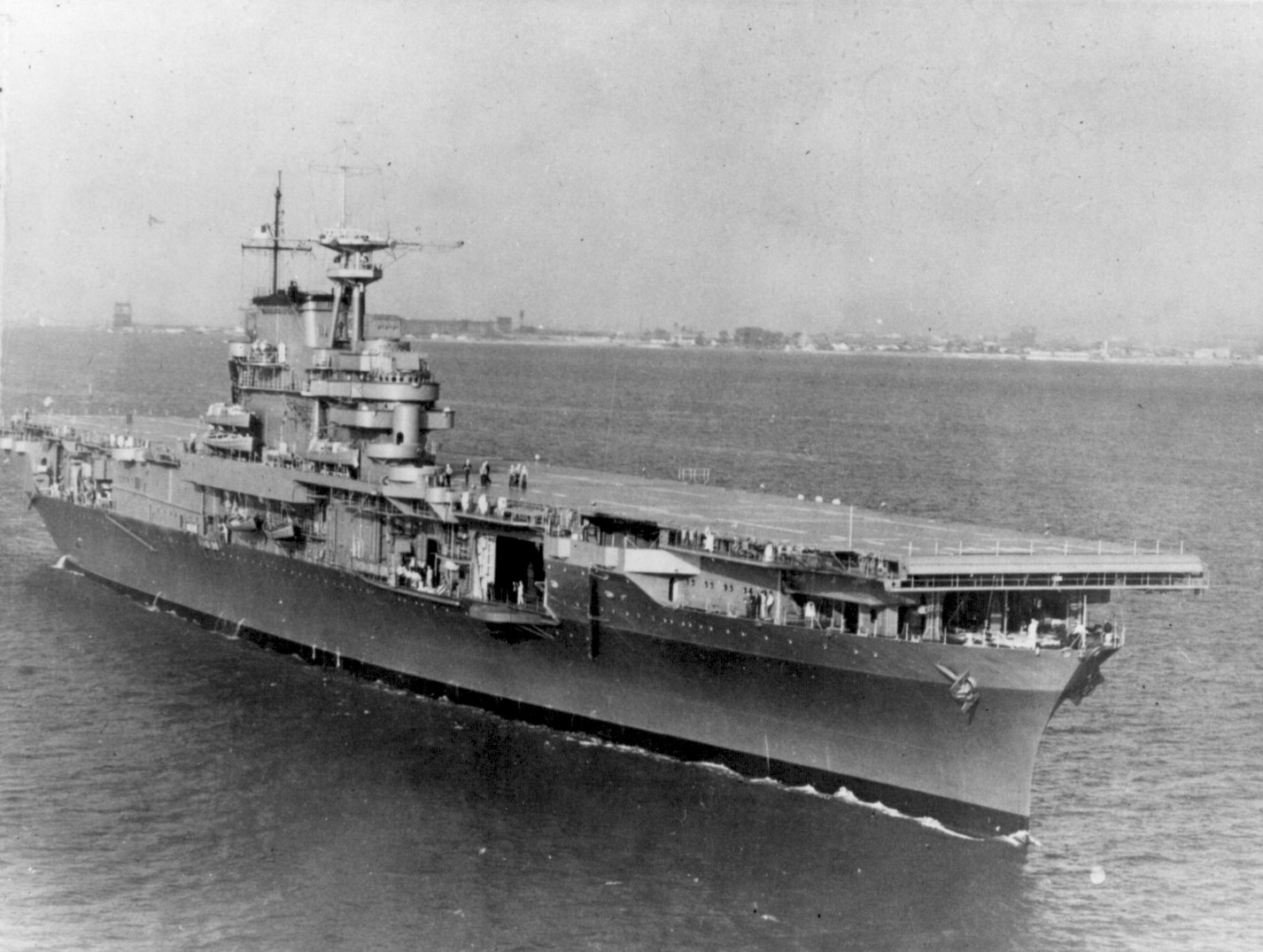
USS Hornet CV-8 Building at Newport News VA


Hornet as Completed off Hampton Roads shortly after Her Commissioning

The USS Hornet CV-8 was the third ship of the Yorktown Class and is sometimes referred to as her own one ship Hornet Class.  Laid down on 25 September1939 under the Naval Expansion act of May 17th 1938, Hornet was part of the pre-war naval build up authorized by President and Congress.  The previous Yorktown design was used to speed construction.  Hornet was slightly modified from her sisters Yorktown and Enterprise being 15 feet longer, 5 feet wider in the beam and displacing about 1000 tons more than her near sisters.  Her anti-aircraft armament was also slightly improved.  As with her near sisters Hornet had good protection except that her underwater protection was weak.  However, as would be born out in combat Hornet like her sisters would prove to be extraordinarily tough.

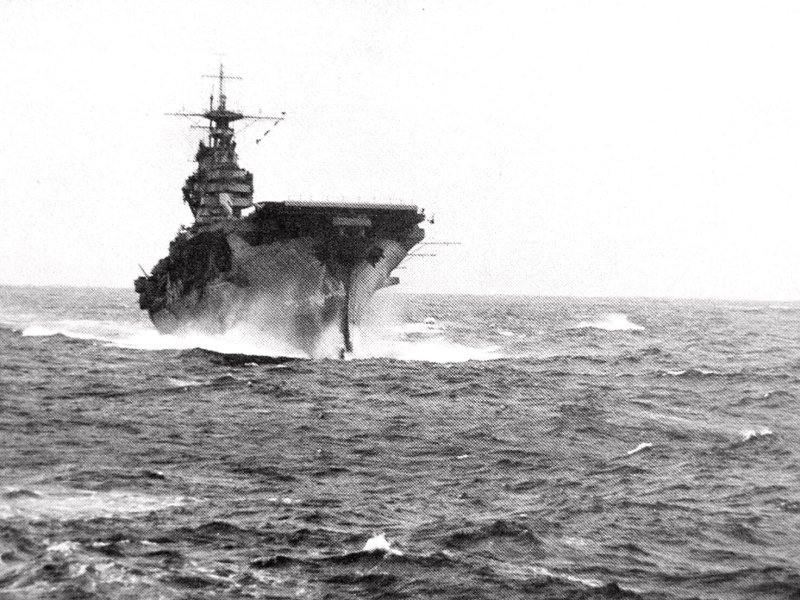
Hornet in Rough Seas Preparing to Launch the Doolittle Raid

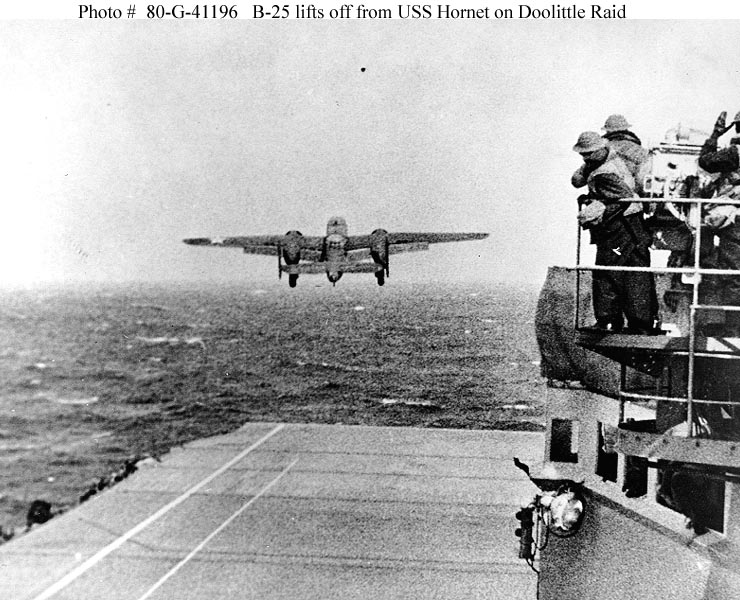
Hornet was launched on 14 December 1940 and commissioned 25 October 1941 with Naval Aviation pioneer Captain Marc A Mitscher Commanding. Hornet conducted her initial training and air group qualifications while operating out of Norfolk.  On February 2nd two Army Air Corps B-25 Medium Bombers were loaded aboard.  As Hornet put to sea the bombers were launched to the astonishment of the crew. Hornet departed Norfolk for the Pacific where she embarked 16 B-25s under the command of Colonel Jimmy Doolittle.  Hornet’s own air group was stowed in the hanger bay.  On April 2nd Hornet departed from San Francisco for a rendezvous with Admiral Halsey’s Task Force 16 and her sister ship Enterprise.  As the ship departed Mitscher informed the crew of their mission.  Hornet would launch Colonel Doolittle’s aircraft against the heart of the Imperial Japanese Empire, Tokyo.

Hornet Launching B-25

The plan was for the task force to sail to 400 miles from Japan and launch the bombers. Enterprise  was to provide air cover for the task force while Hornet’s air group was inaccessible while the bombers remained aboard.  On the morning of 18 April the task force was spotted by a Japanese patrol boat.  The craft was quickly dispatched by the heavy cruiser USS Nashville  but not before the craft had reported the presence of the task force.  Though the task force was still 600 some miles from Japan Halsey ordered that Doolittle’s aircraft be launched against Tokyo.  The attack while militarily insignificant came as a major surprise to the Japanese who anticipating a raid by naval aircraft believed that any attack could not take place until the following day.  Even more significantly the attack stunned the Japanese military establishment, especially the Navy. The attack would provoke Admiral Yamamoto to attack Midway in order to draw out the American carriers and destroy them.

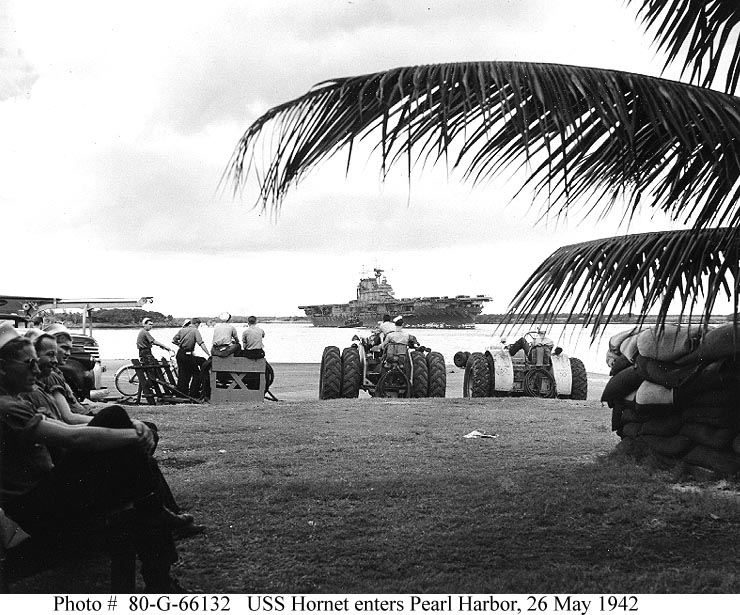
Hornet Arrives at Pearl Harbor Before Midway

Hornet along with Task Force 16 sailed back to Pearl Harbor arriving a week later and the mission would remain secret for over a year.  The task force steamed to assist the Yorktown and Lexington at the Battle of Coral Sea but that battle was over before they could arrive.  The task force returned to Pearl Harbor on the 26th of May and sail on the 28th for Midway.  Hornet’s air group was plagued with bad luck.  Torpedo Squadron 8, or Torpedo 8 commanded by LCDR John Waldron found and attacked the Japanese task force losing all aircraft and all pilots save one.  6 new TBF Avengers from her air group operating from Midway met with heavy losses in their attack against the Japanese.  Only one pilot from Torpedo 8 with Waldron’s group survived, Ensign George Gay.  Hornet’s dive bombers followed bad reports of the location of the Japanese carriers and took no part in the action.  Many would have to ditch in the ocean as they ran out of fuel.  Hornet’s air group would help sink the Japanese Heavy Cruiser Mikuma and heavily damaged Mogami on the 6th.  The Battle of Midway was one of the major turning points of the war.  The Japanese had lost six carriers which had attacked Pearl Harbor along with their aircraft and many of their highly trained pilots and flight crews. Coupled with their losses at Coral Sea the Japanese suffered losses that they could ill afford and could not easily replace.

Following Midway Hornet had new radar installed and trained out of Pearl Harbor until order to the Southwest Pacific to take part in the struggle for Guadalcanal.  By the time she arrived she was the only operational American carrier in the Pacific. Enterprise had suffered bomb damage at the Battle of Easter Solomons on August 24th; Saratoga was damaged by a submarine torpedo on August 31stand the Wasp was sunk by a submarine on September 15th.  In the space of 3 weeks the United States Navy had lost 3/4ths of its operational carriers in the waters off of Guadalcanal. Hornet now faced the Japanese alone, providing much of the badly needed air support for the Marines fighting ashore.

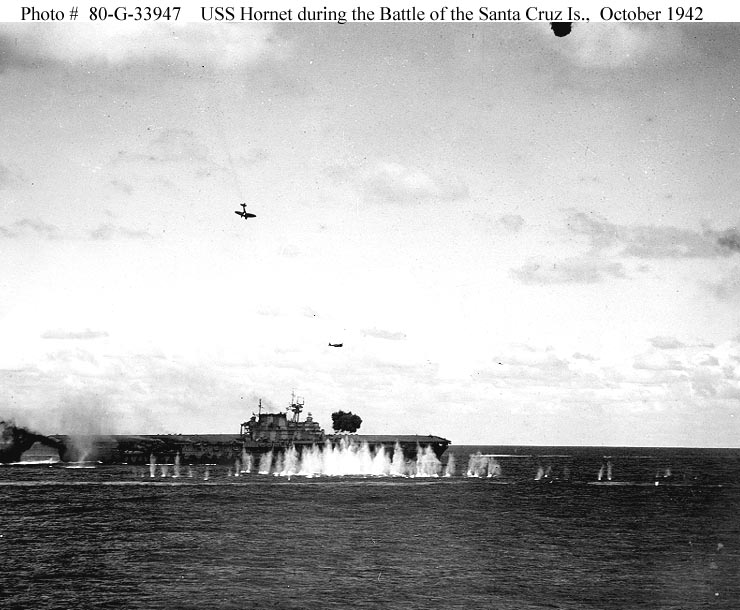
Hornet Under Attack: Note “Val” Dive Bomber about to crash ship

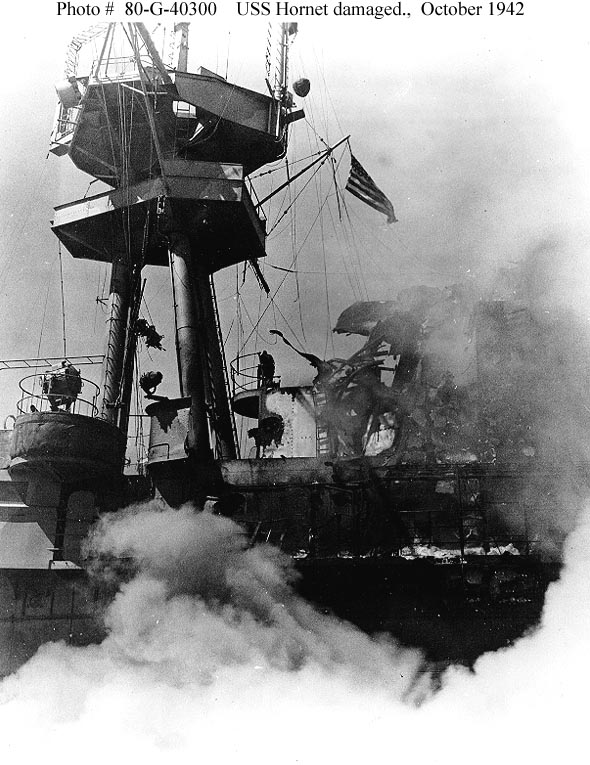
The Enterprise rejoined Hornet following hasty repairs off the New Hebrides Islands on October 24th.  On the 26th they joined battle with a Japanese task force of 4 carriers centered on the veterans Shokaku and Zuikaku. The Hornet’s aircraft attacked and seriously damaged Shokaku even as Japanese torpedo planes and dive bombers launched a well coordinated attack against Hornet. Hornet was hit by three bombs, two torpedoes and had two bomb laden Val dive bombers.  On fire and without power her damage control parties fought to regain control of the ship and extinguish the fires that blazed aboard her.

Hornet’s Damaged Island and Main Mast

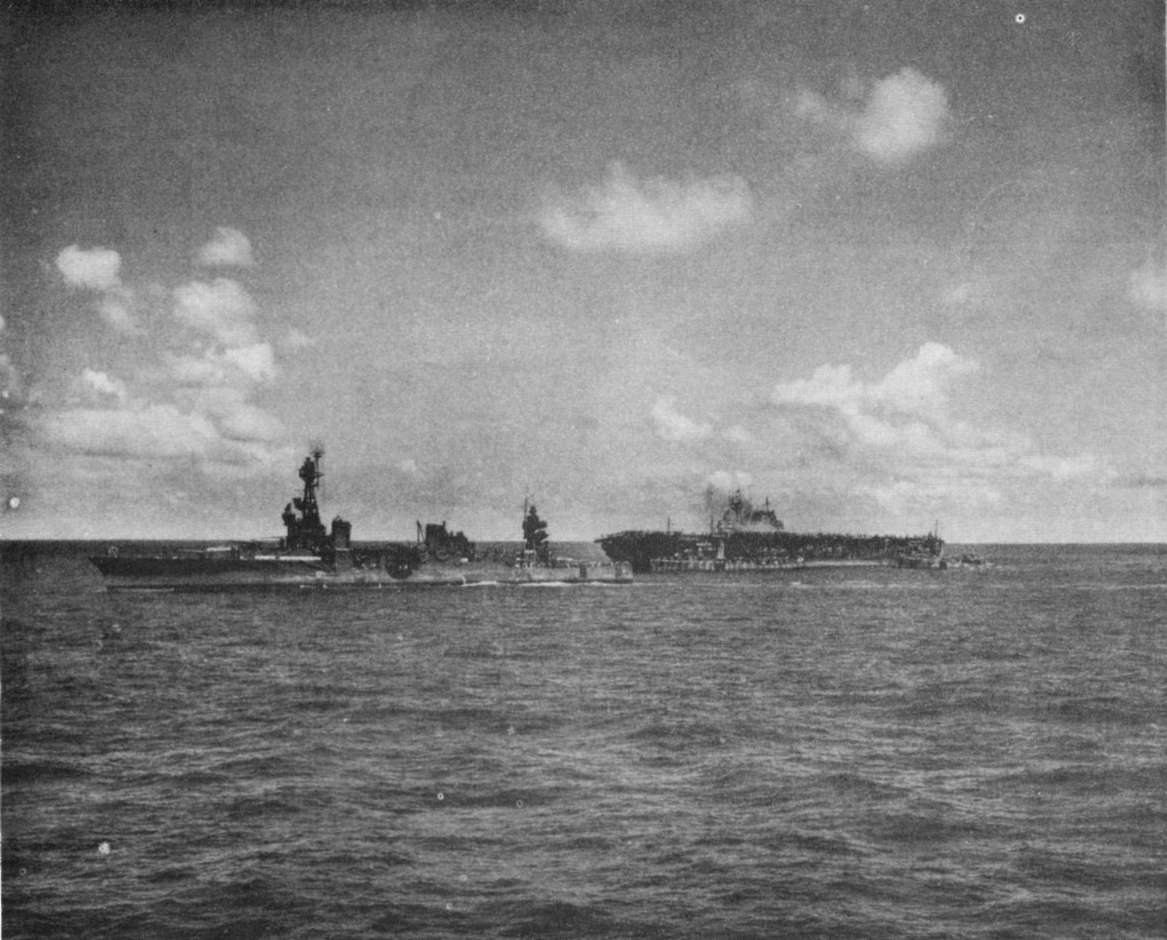
Assisted by the heavy cruiser Northampton which took her in tow her crew brought the fires under control and were close to restoring power when another Japanese strike group found her and put another torpedo into her.  This hit sealed the fate of Hornet. 

USS Northampton Preparing to take Hornet under Tow 

With this hit Hornet’s list increased and she was abandoned even as she was hit by another bomb.  With Japanese ships in the area it was decided to scuttle the ship. Escorting destroyers hit her with 9 torpedoes and over 400 rounds of 5” shells.  As Hornet blazed in the night her escorts withdrew and a Japanese surface force arrived. The destroyers Makigumu and Akigumo finished the heroic but doomed ship off with four of their 24” “Long Lance” torpedoes. She sank beneath the waves at 0135 hours on October 27th.

140 members of her crew went down with their ship.

Hornet Being Abandoned by Her Crew

In her last fight Hornet’s aircraft along with those of Enterprise mauled the air groups of Shokaku and Zuikaku, again inflicting irreplaceable losses among their experienced air crews.  In the battle Hornet  was hit by 4 bombs, two aircraft, 16 torpedoes and over 400 rounds of 5” shells, more hits than were sustained by any other US carrier in a single action during the war.  She was stuck from the Navy list on 13 January 1943 and her gallant Torpedo 8 was awarded the Navy Presidential Unit Citation “for extraordinary heroism and distinguished service beyond the call of duty” in the Battle of Midway.  Her name was given to the Essex Class carrier CV-12.

The new Hornet served throughout the war and served well into the Cold War.  She now rests as a Museum ship at Alameda California. There is currently no Hornet in commission today. With two new Gerald Ford Class carriers approved, one to be named Enterprise, it might be a a good thing to name the next of the class Hornet. 

The USS Hornet Association website is here:  http://www.usshornetassn.com/

The Museum site is here: http://www.uss-hornet.org/

Until tomorrow,

Peace,

Padre Steve+


1 Comment

Filed under aircraft, History, Military, Navy Ships, US Navy, World War II at Sea, world war two in the pacific